- Connect with our licensed Canadian insurance advisors
- Schedule a Call

BASICS
- Is Infinite Banking A Smart Financial Strategy?
- Understanding the Infinite Banking Concept
- Why Infinite Banking Appeals to Canadians Seeking Financial Freedom
- How Infinite Banking Strategy Helps Build Financial Independence
- Challenges and Misconceptions About Infinite Banking
- Who Should Consider Infinite Banking for Financial Freedom?
- How to Start Your Infinite Banking Journey
- Key Advantages of the Infinite Banking Strategy
- A Day-to-Day Struggle: Why More Canadians Are Exploring Infinite Banking
- Potential Drawbacks You Should Know
- The Future of Infinite Banking in Canada
- Is Infinite Banking a Smart Financial Strategy?
COMMON INQUIRIES
- Can I Have Both Short-Term and Long-Term Disability Insurance?
- Should Both Husband and Wife Get Term Life Insurance?
- Can I Change Beneficiaries on My Canadian Term Life Policy?
- What Does Term Life Insurance Cover and Not Cover?
- Does Term Insurance Cover Death?
- What are the advantages of Short-Term Life Insurance?
- Which Is Better, Whole Life Or Term Life Insurance?
- Do Term Life Insurance Rates Go Up?
- Is Term Insurance Better Than a Money Back Policy?
- What’s the Longest Term Life Insurance You Can Get?
- Which is better, Short-Term or Long-Term Insurance? Making the Right Choice
IN THIS ARTICLE
- What is the minimum income for Term Insurance?
- How Does Income Affect Your Term Life Insurance Policy?
- Can You Buy Term Life Insurance Online with a Low Income?
- How Can You Lower Your Term Life Insurance Cost?
- How Much Term Life Insurance Do You Need?
- Can Your Term Life Insurance Policy Be Adjusted Over Time?
- Why Term Life Insurance Is Ideal for Lower-Income Canadians
- Final Thoughts
- More on Term Life Insurance
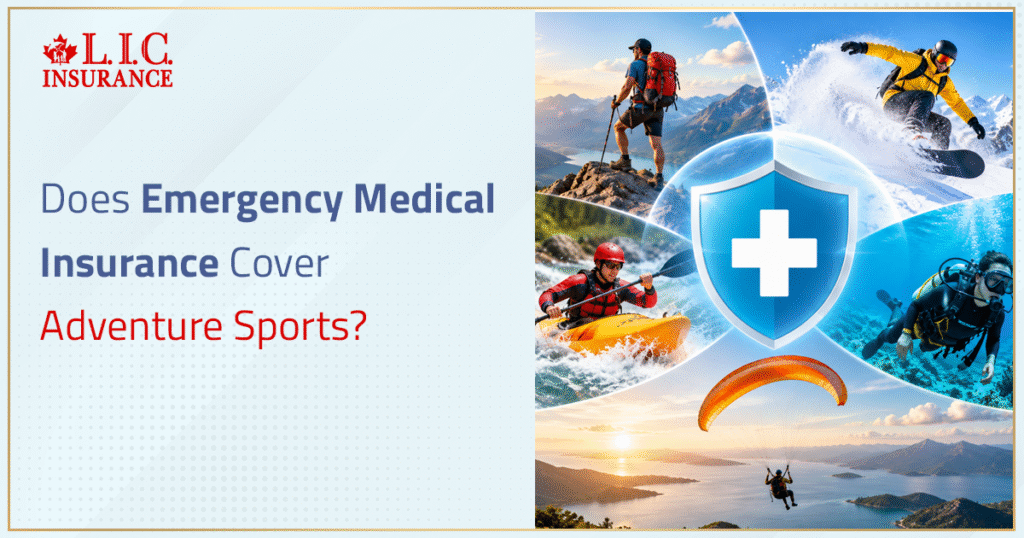
Does Emergency Medical Insurance Cover Adventure Sports?

By Harpreet Puri
CEO & Founder
- 11 min read
- Sep 28, 2026
SUMMARY
Emergency Medical Insurance in Canada can play a critical role for travellers participating in adventure sports, hiking, scuba diving, and outdoor activities across remote Canadian destinations. Emergency Medical Travel Insurance helps manage medical expenses, emergency medical evacuation, hospital visits, and unexpected illness costs while travelling. Coverage details, emergency room cost in Canada without insurance, activities coverage limitations, and Travel Medical Insurance Canada options are also discussed.
Introduction
A snowy path through a mountain trail in Canada might appear absolutely beautiful on a postcard, yet it only takes a minute for a situation to worsen drastically. One sudden tumble during off-trail skiing, one bad landing while ice climbing, or one emergency situation during scuba diving could suddenly change the course of an otherwise amazing vacation, with a medical catastrophe unfolding as a result.
Adventure tourism has become more prevalent in Canada in the last ten years. As indicated by Destination Canada, international tourists still consider Canada a preferred travel destination for wilderness travel, winter sports, and various outdoor adventures. Tourists are now travelling more often to the Canadian Rockies, British Columbia’s coastline, and even northern Canada to enjoy hikes, snowmobile trips, mountain biking, glacier climbing, and other types of adventure.
On the flip side, cases where people end up needing emergency health insurance due to accidents or illness have also increased. A visit to a Canadian hospital for foreign tourists who don’t have insurance could prove to be a huge expense. If it ever comes down to emergency medical transport or being hospitalized for a prolonged period of time, the bill could skyrocket.
Travellers usually make the mistake of assuming that Travel Insurance covers all their outdoor activities. We usually assist travellers in comparing Emergency Medical Insurance Canada plans, where adventure sports insurance could be part of the plan. Some insurance plans cover a wide range of outdoor activities, but some may have exclusions buried within their policy documents. Learning about how the Emergency Medical Insurance Canada plans work before you embark on your adventure trip is vital.
Understanding Emergency Medical Insurance In Canada
The publicly funded health care system of Canada is one of the sources of misinformation for tourists and temporary residents. Many people think that once they set foot into the country, all emergency medical services will be provided to them at no cost. The fact is that the government health insurance in Canada covers Canadian citizens only, while tourists and temporary residents will have to be financially responsible for any medical emergencies they may experience, unless they have purchased private medical insurance coverage.
It is especially critical for those travellers who are planning to take part in any outdoor activity that might entail receiving injuries that will be impossible to treat close to home and hospitals.
The expenses involved in treating an injury like a broken leg sustained while hiking in the mountains may include emergency transportation, diagnostic tests, surgery, consultations, rehabilitation, and much more. Moderate medical emergencies can still leave a tourist with quite high bills to pay, unless they had an appropriate insurance plan beforehand.
Some of the Emergency Medical Insurance benefits include reduced costs that can result from covering expenses related to emergencies overseas.
Medical coverage insurance for visiting tourists has been highly relevant because of changes to adventure tourism, which entails more than just sightseeing. Adventurous travels involve more physically challenging activities, which include exploring challenging terrains, extreme weather, frozen landscapes, and even isolation, making it difficult for one to get access to emergency services.
International students face similar concerns. Emergency Medical Insurance for international students in Canada sometimes includes restrictions involving adventure sports or organized recreational activities. Students planning ski trips, hiking excursions, scuba diving vacations, or snowboarding adventures should always review their medical coverage carefully before assuming every activity qualifies automatically.
It is always good to understand the implications of Emergency Medical Insurance in terms of transport, evacuation, rescues, among others.
Canada Travel Insurance And Why Adventure Travellers Need It
There are some inherent risks associated with a regular holiday. This could be anything from missing luggage, delayed flights, or food poisoning. In adventure travel, the risks associated are entirely different.
Adventure travel in Canada includes those tourists who want to venture out into challenging terrains. For some people, they wish to go snowboarding amidst the alpine region, while others would like to trek, glacier climb, wilderness kayak, or even scuba dive in the coastline regions of Canada. These types of ventures present risks that were not covered under traditional Travel Insurance policies.
This is why Travel Insurance in Canada is extremely important.
The majority of tourists choose Travel Medical Insurance Canada based on cost alone, without taking into consideration how well their coverage includes high-risk adventure pursuits. The truth is, the cheaper the policy, the smaller the coverage for emergency cases related to adventure activities.
One may buy a policy, but later find out that the activity was not covered as it was deemed risky, due to backcountry terrain, a professional guide, and special equipment used in the activity.
There is yet another issue associated with remote geography. There are vast wilderness areas in Canada that may require many hours of travelling before emergency teams can reach the injured traveller. In some cases, using helicopters and air ambulances may be the only viable solution.
If someone gets hurt during skiing in the remote region of northern British Columbia, then emergency teams may have to perform a helicopter extraction and provide trauma transport until he reaches the nearest hospital. If someone falls into trouble while diving in the Pacific Ocean, then his rescue will require an emergency transport to specialized decompression facilities.
Such cases may result in high medical costs that can grow quickly even in one day.
Another risk factor associated with adventure travel involves environmental threats. Such things as extreme weather conditions, avalanches, encounters with wildlife, ice instability, lack of visibility, cold temperature, etc., greatly increase the possibility of having a medical emergency.
In this regard, Travel Insurance not only protects travellers financially but also serves as a necessary protective measure against unexpected expenses.
What Counts As Extreme Sports Under Emergency Medical Insurance Coverage?
One of the greatest errors that travellers commit is when they assume that their definition of adventure sports is the same as that of the insurer.
Travellers think only extreme sportsmen or athletes require special cover. The activities that some insurance companies might categorize differently from those done by adventurers are many. Participation in a particular outdoor sport may be classified as risky based on terrain, environment, supervision, and equipment.
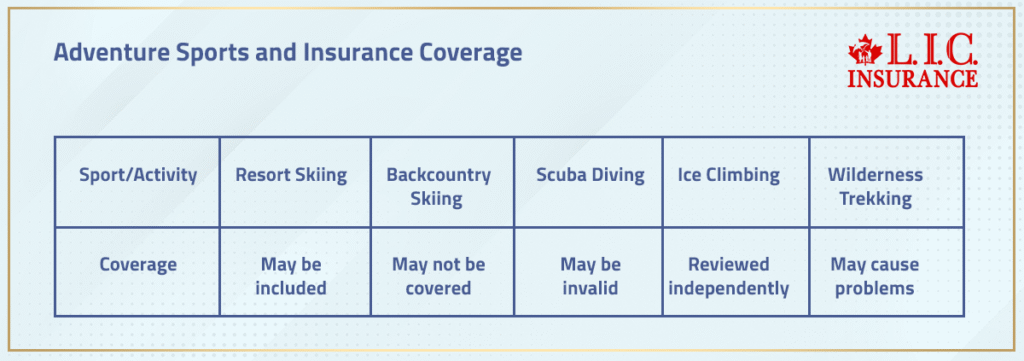
Backcountry skiing is among the adventurous sports that usually cause trouble to many policyholders. Skiing at resorts on designated trails may be included under some travel covers, while backcountry skiing may not be covered. The traveller will discover this after experiencing a misfortune.
Scuba diving is yet another sporting activity where many people experience challenges. Travellers might find their covers invalid for recreational dives because of a lack of observation of certain criteria.
Examples of adventure activities that are sometimes reviewed independently include ice climbing, heli-skiing, wilderness trekking, mountaineering, snowmobiling, river rafting, and mountain biking.
In some cases, even trekking could give rise to insurance problems if travellers violate local regulations, go off the beaten path, and venture into restricted wilderness areas during adverse weather.
It is a common practice for us to assist travellers in understanding how their insurance covers adventure activities prior to travelling, as many travellers do not realize that they are not covered by insurance when they think otherwise.
Travellers are often expected to disclose adventure activities to the insurer when filling out an application.
Emergency Medical Evacuation: The Most Overlooked Coverage
The majority of travellers tend to consider hospital costs while choosing Travel Insurance. In actual practice, however, emergency medical evacuation tends to become among the most expensive costs associated with emergency outdoor injuries in Canada.
Most adventures happen at remote locations, which are far from hospitals. In case one sustains an injury in a mountain environment, icy wilderness environment, offshore waters, or remote forested environments, emergency rescue procedures would entail the use of helicopters, specialized rescuers, air ambulances, and advanced coordination of emergency personnel.
In addition, all these can be costly before hospitalization takes place.
An injured traveller in the process of ice climbing may require helicopter evacuation from the steep locations before air ambulances transport the victim hundreds of kilometres away to trauma centers. Meanwhile, another traveller hurt in a backcountry ski trip may require rescue from avalanches along with emergency evacuation amid severe weather conditions.
The cost of an emergency medical evacuation may easily range into many thousands of dollars, depending on the place where this emergency occurs.
That is why it is very significant to have good coverage in this respect. Insurance policies which seem quite affordable at first sight may offer little or no help in cases like this.
The geography of Canada makes the problem even more relevant since emergency evacuation in such conditions becomes much more expensive.
Adventure travellers need to find out whether their insurance covers:
- Emergency evacuation
- Air ambulance transportation
- Remote rescue operations
- Medical escort services
- Specialized transportation coverage
We often explain that evacuation coverage may become more important than standard hospitalization benefits during wilderness emergencies.
Health Insurance Limitations Visitors Often Miss
Insurances usually have exclusions clauses, which most people never notice until they are refused insurance coverage for their claims.
Most tourists tend to spend all their time comparing the cost of emergency insurance, neglecting to read the terms and conditions of the insurance plan.
Some policies refuse coverage for any injury sustained while under the influence of alcohol and drugs or participating in dangerous sports and professional contests. Some may even refuse payment if the traveller ignores travel alerts issued by authorities.
Pre-existing medical conditions create another important issue.
A person who suffers from heart disease, breathing difficulties, or previous bone injuries may think that they are still covered by the insurance policy since they feel well during their trip. But insurers will always have a period of stability before travelling, and if there were changes in their condition before the trip started or changes in their treatment, their coverage would be limited.
Adventure sports enthusiasts can also have unique conditions related to guides, operators, or equipment. Failing to meet them can create complications when processing claims.
That’s why understanding your insurance policy before travelling is essential.
We take our time explaining exclusions to travellers because many insurance disagreements arise only because travellers did not comprehend their policy regarding their trips.
Comprehensive Coverage Vs Basic Travel Insurance
| Coverage Feature | Basic Travel Insurance | Comprehensive Coverage |
|---|---|---|
| Emergency Room Visits | Limited Coverage | Higher Protection Limits |
| Adventure Sports Coverage | Often Excluded | Frequently Available |
| Emergency Medical Evacuation | Restricted | Broad Coverage |
| Air Ambulance | May Not Apply | Commonly Included |
| Specialist Medical Treatment | Limited | Expanded Access |
| Remote Area Rescue | Minimal | Stronger Protection |
| Trip Cancellations | Basic | Enhanced Benefits |
When travelling through the Rocky Mountains, wild areas, and outdoors, one will find that complete coverage will be beneficial since medical evacuation costs can quickly rise when faced with an emergency situation. The lowest-priced Emergency Medical Insurance Policy may not be the most advisable to purchase for adventurous travel plans.
Emergency Room Cost In Canada Without Insurance
One of the most financially dangerous assumptions visitors make is underestimating the emergency room cost in Canada without insurance.
Even moderate injuries can become extremely expensive once diagnostic testing, specialist treatment, and hospitalization begin.
Approximate uninsured costs may include:
- Emergency room assessment: CAD $800–$3,000
- MRI or CT scan: CAD $1,500–$5,000
- Overnight hospitalization: CAD $3,000–$10,000+
- Orthopedic surgery: CAD $10,000–$40,000+
- Intensive care treatment: CAD $15,000+
- Air ambulance transportation: CAD $15,000–$50,000+
A traveller injured while snowmobiling or mountain biking may suddenly require emergency rescue, surgery, imaging, rehabilitation, and specialist care all within the same medical event.
According to Canadian Institute For Health Information (CIHI), Canadian health care costs continue rising because of operational demands, specialist shortages, and increasing emergency care requirements across provinces.
For uninsured foreign visitors, these expenses may become fully payable out-of-pocket.
How Much Emergency Medical Insurance Do I Need For Adventure Activities?
Travellers often inquire about the amount of Emergency Medical Insurance needed prior to coming into Canada.
No standard answer exists since each traveller is exposed to unique risks based on travel location, travel activity, travel length, age, and personal medical history.
For instance, a visitor who will spend several days travelling in the vicinity of large cities will likely be exposed to lower transportation risks than a traveller who engages in remote backcountry activities such as skiing or ice climbing.
A visitor who will do scuba diving in coastal regions will require better emergency evacuation insurance compared to a traveller who stays strictly in urban areas.
In general, adventurers benefit from Emergency Medical Insurance with higher coverage amounts because it allows covering very expensive expenses related to emergency transportation and evacuation in case of an accident.
The same goes for international students because many people believe that their educational insurance covers recreational travel such as skiing and hiking; however, this does not necessarily have to be true.
In most cases, we recommend travellers engaging in adventure activities to pay attention to the coverage amount rather than try to find the cheapest option available.
Entry Requirements, Safety Rules, And Local Laws In Canada
Adventure travel in Canada entails more than just buying insurance. The traveller must be aware of local laws, park rules, weather advisories, and safety considerations related to outdoor recreation.
There are national parks and wilderness areas where some activities require a permit, a certified guide, or special preparation prior to engaging in the activity. There are also avalanche areas, glacier areas, and remote mountain areas where special caution must be taken because the weather conditions in these places can become life-threatening very suddenly.
Disregarding the advice can have implications for the safety of the traveller and their eligibility for insurance.
Hikers, climbers, skiers, or snowmobilers should be mindful of weather advisories while on their adventure trips. The Canadian outdoors can change from benign to perilous within hours, especially in mountainous areas or northern Canada.
It is usually our reminder to the traveller that prudent planning forms an essential element of sound financial coverage.
Best Emergency Medical Insurance Options For Adventure Sports In Canada
Several insurers available through Canadian LIC may offer Travel Insurance solutions suitable for adventure travellers, depending on the activities involved and the traveller’s health profile.
Providers may include:
Different insurance policies may offer different levels of:
- Emergency medical evacuation
- Adventure sports coverage
- Deductible flexibility
- Visitor Insurance Protection
- International Student Coverage
- Multi-Trip Travel Insurance
- Single-Trip Emergency Medical Coverage
The best plan depends heavily on the traveler’s planned activities, destination, medical history, and travel duration.
How Canadian LIC Helps Adventure Travellers Stay Protected
Adventure Travel Insurance should never be approached casually. Many travellers purchase insurance quickly online without fully understanding how exclusions, deductibles, or evacuation limitations may affect them later.
We help travellers compare Emergency Medical Insurance Canada more carefully by reviewing:
- Planned adventure activities
- Coverage limitations
- Evacuation benefits
- Medical coverage amounts
- Deductible options
- Pre-existing medical conditions
- Claims procedures
We also help travellers understand how Emergency Medical Insurance works in Canada before they arrive, so there are fewer surprises if unexpected medical emergencies happen during the trip.
Final Thoughts
Canada continues to be among the top destinations for outdoor adventure vacations. Whether it is glacier climbing, wilderness hiking, snowboarding, or scuba diving, the country is filled with opportunities that tourists dream about for years.
However, adventure sports do put people at risk of sustaining grave injuries, experiencing emergency medical evacuation cases, incurring hospitalization costs, and facing sudden financial difficulties.
Having an adequate Emergency Medical Insurance Canada Plan can be helpful to ensure that travellers are shielded from the costs of extreme emergency procedures, treatments, evacuations, and other necessary actions when they face problems away from their homes.
Travellers should consider reviewing the terms and conditions associated with their Emergency Medical Insurance Canada plans regarding the kind of emergencies covered, exclusion clauses, emergency evacuation arrangements, and sport limitations.
It is usually the fine print that separates a situation that can be managed effectively without causing financial strain from one that could become overwhelming for the traveller.
Author: Harpreet Puri, Licensed Insurance Adviser | MDRT Qualifier
Experience: 14 Years In Life Insurance & Financial Planning
LinkedIn Profile:https://www.linkedin.com/in/harpreetpuricanadianlic/
Disclaimer:
The information provided is for general educational purposes only and should not be considered legal, medical, financial, or insurance advice. Emergency Medical Insurance Coverage, exclusions, benefits, and eligibility conditions vary between insurance policies and insurers. Travellers should review policy wording carefully and consult a licensed insurance advisor at Canadian LIC before purchasing coverage for adventure sports or outdoor activities in Canada.
FAQs
Some Emergency Medical Insurance Plans for Canada might provide for extensions in cases where travellers have made the decision to extend their trip due to delayed flights, a change in travel plans, or extended outdoor trips. The approval will generally depend on whether a medical situation has developed prior to making the request.
There exist some Travel Medical Insurance Canada policies that could assist you in replacing your medications if lost, stolen, or destroyed while travelling. This is particularly crucial for those venturing into distant regions where access to medical services could be difficult.
Most insurance companies provide family or group Travel Insurance that covers the medical emergencies of all travellers arriving in Canada as a group. This could assist the families undertaking adventure sports to continue enjoying the same level of medical cover within one Travel Insurance package.
Some medical emergency insurance companies permit hospital staff or physicians to get in touch with the company if the traveller is unable to contact the insurance company themselves in case of a medical emergency. Travellers going to rural areas in Canada must have their insurance documents with them throughout their trip.
Whether injuries sustained while using hired equipment in adventure sports will be covered depends largely on the quality and maintenance status of the equipment itself. Skiers, cyclists, and divers need to check whether using hired equipment qualifies them for Emergency Medical Insurance.
There might be certain limitations placed on some forms of Travel Insurance in cases where travellers knowingly enter zones that suffer from adverse weather, natural disasters, or travel advisories from government agencies. Checking Canada’s travel notices could help avoid complications in case of unforeseen circumstances.
There are many people who rely a lot on their phone’s navigation features while hiking or exploring the wilderness of remote areas in Canada, which unfortunately have poor network signals. Travel plans should still be made, even if there is active medical insurance coverage for emergencies.
Some comprehensive health insurance plans include emergency assistance services which would enable communication between the tourists and hospital or medical staff in case of emergencies. This becomes particularly useful for tourists who have no knowledge of the Canadian health care system.
Certain Travel Medical Insurance Canada plans may include limited emergency dental treatment if travellers suffer accidental injuries during outdoor activities or extreme sports. Coverage amounts and eligibility conditions often vary significantly between insurance policies.
Certain insurance providers will provide an opportunity to renew the health insurance for people visiting Canada while still within the territory, provided that the individual meets certain conditions. These conditions include the age of the traveller, his/her medical condition, as well as the type of insurance and emergency medical claims lodged.
Certain Emergency Medical Insurance Policies in Canada may facilitate the return transport home if you are sick or hurt so badly that continuing the journey is not possible for you. However, eligibility will depend on the physician’s advice and medical stability.
Winter travel in Canada may pose greater risks for Emergency Medical Insurance due to snow storms, slippery conditions, and cold weather that may impede emergency assistance. travellers who wish to engage in skiing, snowmobiling, and ice climbing may need more comprehensive Travel Insurance coverage than tourists travelling in summer.
Some insurance travel policies might have some coverage for missed connections due to a medical emergency, delay in treatment, or severe weather conditions. It mostly depends on the impact that this disruption might have on their travel plans and medical condition.
Professionally led adventure activities are seen more favourably by many insurance companies since the tour operators involved tend to adhere to more stringent safety measures and emergency plans. This might help mitigate some of the risks associated with outdoor recreational activities and emergencies.
There is a possibility that some Emergency Medical Insurance Coverage will cover the cost of temporary hotels or other accommodations if the traveller cannot return to their place of origin immediately following emergency care.
Injuries related to adventures need not be linked necessarily to extreme sports activities. Tourists undertaking photography safaris among wild animals, glacier treks, or backcountry hikes would also need medical insurance since the terrain and climatic conditions could pose significant hazards.
Some insurance plans could offer partial assistance for medical devices that may get damaged while travelling after sustaining injuries. However, this will be determined based on the insurer’s discretion and the circumstances of the claim.
The individuals participating in outdoor activities must have access to their emergency contacts, insurance policy information, identification documents, and medical information. This may not be possible for those who travel to remote places in Canada due to poor network access.
Some Travel Insurance companies specializing in Travel Insurance may provide some help for dealing with service animals in medical emergencies outside one’s home country. Those who travel with service animals need to take note of the policy conditions.
The chances of contracting an illness, weather changes, or a medical emergency may be greater when undertaking long-distance travel, particularly when involved in adventurous activities. Travellers visiting Canada for longer durations must check that their medical insurance policy is valid throughout the duration of their stay.
In certain circumstances, travellers can decide to opt for alternative or upgraded Travel Insurance Plans when they arrive at their destination because of major changes in their plans. Qualifications for Emergency Medical Insurance Canada plans might be contingent upon one’s current health and any prior claims filed.
It is becoming common for insurance companies to permit travellers to submit hospital bills, prescriptions, diagnoses, and treatment electronically when processing their claims. Maintaining electronic files on their medical costs and emergency treatment could possibly minimize processing delays.
Weather-related factors, such as poor visibility and rough terrain, might result in delays during the process of rescuing an adventurer when there are emergencies. Insurance policies that provide extensive cover will go far in helping cater to these expenses.
Some types of Medical Insurance Coverage offered to visitors to Canada may provide limited post-stabilization follow-up treatment. The coverage depends on whether the follow-up treatment is deemed to be directly linked to the original emergency medical condition.
Outdoor festivals, winter events, and tourism activities in Canada might still lead to unforeseen health emergencies that have nothing to do with extreme sports. Emergency Medical Insurance can assist in paying for hospital admission and emergency care following accidents at such events.
Sources and Further Reading

- Government Of Canada – Travel Insurance Factsheet
- Government Of Canada – Trip Interruption And Travel Health Insurance
- Canadian Institute For Health Information (CIHI)
- CIHI – Travel Burden And Hospital Access In Canada
- Parks Canada – National Parks And Safety Information
- IRCC – Immigration And Travel Requirements For Canada
- Destination Canada – Tourism And Outdoor Travel Insights
- Canadian LIC – Emergency Medical Travel Insurance In Canada
- Travel Medical Insurance In Canada – SBIS
- Travel Medical And Evacuation Coverage For Canada
- Public Service Health Care Plan – Emergency Travel Assistance Benefits
Key Takeaways
- Emergency Medical Insurance Canada is extremely important for travellers participating in adventure sports, outdoor activities, and wilderness tourism across remote Canadian destinations.
- Standard Travel Insurance may not automatically include emergency medical coverage for activities like backcountry skiing, scuba diving, ice climbing, or other extreme sports.
- Emergency medical evacuation and air ambulance transportation can become more expensive than hospital treatment itself, especially in rural areas Canada and mountainous regions.
- Medical insurance for visitors to Canada helps protect travellers from unexpected medical expenses, hospital visits, emergency treatment costs, and financial pressure caused by accidents or sudden illness.
- Travel Medical Insurance Canada policies vary significantly in terms of activities coverage, exclusions, deductibles, and protection for pre existing medical conditions.
- Adventure travellers should review policy wording carefully before departure because ignoring local laws, weather advisories, or safety conditions may affect Emergency Medical Insurance Coverage.
- Emergency room cost in Canada without insurance can become extremely high for foreign visitors, particularly when specialist treatment, surgery, or hospitalization becomes necessary.
- Comprehensive coverage often provides broader financial protection than basic Travel Insurance, especially for emergency evacuation, remote rescue operations, and outdoor adventure activities.
- International students, tourists, and temporary visitors should verify whether their Emergency Medical Insurance for international travel includes recreational sports and hazardous outdoor activities.
- Choosing the right Emergency Medical Travel Insurance before arriving in Canada can help travellers avoid major medical bills and reduce financial stress during medical emergencies.
Your Feedback Is Very Important To Us
IN THIS ARTICLE
- Does Emergency Medical Insurance Cover Adventure Sports?
- Understanding Emergency Medical Insurance In Canada
- Canada Travel Insurance And Why Adventure Travellers Need It
- What Counts As Extreme Sports Under Emergency Medical Insurance Coverage?
- Emergency Medical Evacuation: The Most Overlooked Coverage
- Health Insurance Limitations Visitors Often Miss
- Comprehensive Coverage Vs Basic Travel Insurance
- Emergency Room Cost In Canada Without Insurance
- How Much Emergency Medical Insurance Do I Need For Adventure Activities?
- Entry Requirements, Safety Rules, And Local Laws In Canada
- Best Emergency Medical Insurance Options For Adventure Sports In Canada
- How Canadian LIC Helps Adventure Travellers Stay Protected
- Final Thoughts
Sign-in to CanadianLIC
Verify OTP