- Connect with our licensed Canadian insurance advisors
- Schedule a Call

BASICS
- Is Infinite Banking A Smart Financial Strategy?
- Understanding the Infinite Banking Concept
- Why Infinite Banking Appeals to Canadians Seeking Financial Freedom
- How Infinite Banking Strategy Helps Build Financial Independence
- Challenges and Misconceptions About Infinite Banking
- Who Should Consider Infinite Banking for Financial Freedom?
- How to Start Your Infinite Banking Journey
- Key Advantages of the Infinite Banking Strategy
- A Day-to-Day Struggle: Why More Canadians Are Exploring Infinite Banking
- Potential Drawbacks You Should Know
- The Future of Infinite Banking in Canada
- Is Infinite Banking a Smart Financial Strategy?
COMMON INQUIRIES
- Can I Have Both Short-Term and Long-Term Disability Insurance?
- Should Both Husband and Wife Get Term Life Insurance?
- Can I Change Beneficiaries on My Canadian Term Life Policy?
- What Does Term Life Insurance Cover and Not Cover?
- Does Term Insurance Cover Death?
- What are the advantages of Short-Term Life Insurance?
- Which Is Better, Whole Life Or Term Life Insurance?
- Do Term Life Insurance Rates Go Up?
- Is Term Insurance Better Than a Money Back Policy?
- What’s the Longest Term Life Insurance You Can Get?
- Which is better, Short-Term or Long-Term Insurance? Making the Right Choice
IN THIS ARTICLE
- What is the minimum income for Term Insurance?
- How Does Income Affect Your Term Life Insurance Policy?
- Can You Buy Term Life Insurance Online with a Low Income?
- How Can You Lower Your Term Life Insurance Cost?
- How Much Term Life Insurance Do You Need?
- Can Your Term Life Insurance Policy Be Adjusted Over Time?
- Why Term Life Insurance Is Ideal for Lower-Income Canadians
- Final Thoughts
- More on Term Life Insurance
How Age Affects $1M Life Insurance Cost (2026 Guide)


By Harpreet Puri
CEO & Founder
- 09 min read
- Aug 14th, 2026
SUMMARY
$1M Life Insurance cost by age shows how monthly premiums rise over time and why the best age to buy Life Insurance matters. Term Life Insurance $1 million cost remains the most affordable for high-value Life Insurance Plans, while Million Dollar Whole Life Insurance in Canada builds cash value. Health class, medical exam results, and coverage amount shape pricing and long-term financial protection.
Introduction
Why $1M Life Insurance Coverage Is A Financial Necessity In Canada
There is a subtle change happening in Canadian households as well. While high coverage used to be quite unusual some years ago, nowadays it is the norm. One million is not too large an amount to be required in the field of Life Insurance because of the financial situation in this country. In other words, according to the information provided by the Canadian Life and Health Insurance Association, there are millions of people in this country who use the help of Life Insurance Policies in order to protect their income and finances.
Canadian LIC have over 15 years of experience in assisting individuals and families in comparing several Life Insurance companies and choosing the most affordable one.
It becomes quite clear from everyday interaction with customers that a large amount of money is needed for Life Insurance. Just think of the average mortgage in Canadian cities: it can amount to hundreds of thousands of dollars. Plus living costs and kids’ education, the final sum is equal to or is even more than one million. That is why Million Dollar Life Insurance Coverage has become rather popular nowadays.
$1M Life Insurance Cost By Age – What You Pay At Every Stage
Age is one of the most important considerations that determines Life Insurance prices. Age is a straightforward metric, yet its implications are immense. With younger applicants, life expectancy is higher, and the risk for insurers is low. However, as age advances, the likelihood of claiming rises significantly, and monthly premiums become more expensive.
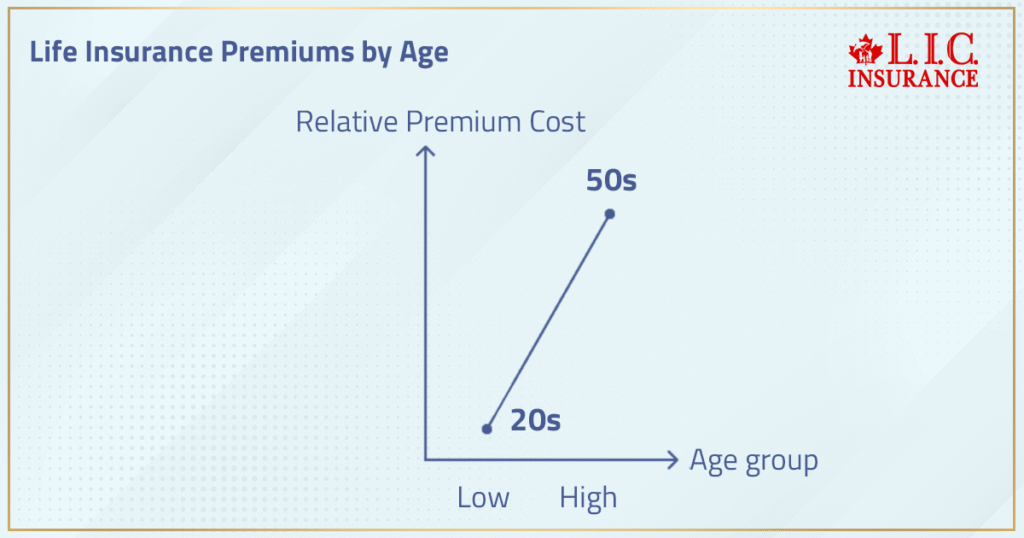
According to real pricing trends from various insurers like Sun Life Financial, Manulife, and Canada Life, the disparity in the price of $1 million Life Insurance varies dramatically based on age. For instance, an average person in their twenties who applies for Life Insurance will have a much cheaper premium compared to someone in their fifties with similar amounts.
Rate class and health class should also be noted in this context. Insurers consider health issues, past illnesses, lifestyle choices, and familial history to estimate risk levels. Two individuals in the same age bracket could end up paying entirely different premiums due to their preferred, standard, and sub-standard risks.
Many people are often shocked to discover that the rise in price with age is exponential rather than linear. While waiting for five to ten years may appear trivial, it may mean twice or thrice the current monthly premiums.
Sample Monthly Premiums For A Million Dollar Policy In Canada
Term Life Insurance $1 Million Cost (Estimated – Non-Smoker, Average Health)
These are sample monthly premiums and represent typical premiums for healthy individuals in an average health class by multiple companies. Although the exact premiums will differ based on underwriting results, the key point illustrated here is that there is a compound impact of age on cost.
When we provide Million Dollar Life Insurance quotes to our clients, the biggest money decision they make is whether to purchase their policies early or late. This is where you have the same amount of coverage, same terms, and the same coverage, but your premium differs based on when you buy.
Whole Life Insurance Cost for $1 Million Coverage
Whole Life Insurance follows a distinct approach to its operation. As opposed to Term Life Insurance, where the policyholder is covered for a specified duration of time, Whole Life Insurance Coverage is perpetual and comes with a savings element.
Example (Non-Smoker – From Sun Life Financial Data):
These Whole Life Insurance estimates are illustrative and based on aggregated pricing trends across major Canadian Life Insurance companies, including Sun Life Financial. Actual premiums vary based on health class, policy structure, and underwriting outcomes.
These figures represent the cost of Permanent Coverage. These increased premiums do not result from age alone; rather, they represent lifetime coverage, the buildup of cash value, and a certain payment in the future.
Whole Life Insurance in Canada tends to be part of more sophisticated planning, such as estate planning and pension income planning. The possibility of building up cash while at the same time having lifetime insurance coverage renders Whole Life Insurance a viable option for people with financial goals in the long run. But for those interested only in income replacement and low-cost insurance, Term Life Insurance is much cheaper.
Term Life Insurance Vs Whole Life Insurance Cost
The choice of Term versus Whole Life Insurance usually hinges on the intent of the policyholder. The former will provide adequate cover for protecting earnings in the prime earning years; the latter will go beyond this basic function and serve other financial objectives. But when it comes to expenses, there is little doubt.
Term Life Insurance delivers the same payout for a much smaller price tag, thereby making it the best choice for those who wish to have high-value Life Insurance Policies at affordable costs.
How Health Class Impacts Million Dollar Life Insurance Premiums
Even though age remains the main criterion, the health class will play an equally important role in setting up the insurance premium. An extensive list of parameters needs to be considered prior to allocating the insured person to a certain rate class.
People with good health conditions that allow them to get preferred rates will have much lower monthly premiums compared to individuals who face certain problems with their health condition, like hypertension, diabetes, or a habit of smoking.
Smokers generally cost significantly more compared to non-smokers. This discrepancy is due to the extra level of risk that comes about owing to lifestyle considerations. Differences in health conditions among non-smokers may also affect costs.
It is not uncommon to have clients surprised at how much health matters in terms of cost when it comes to insurance. Two people with identical coverage periods might end up paying quite different premiums owing to the class of their health condition.
Million Dollar Life Insurance Policy Without A Medical Exam
The world of insurance has undergone a great transformation with the advent of accelerated underwriting. Nowadays, most companies dealing with Life Insurance offer products that do not entail a medical examination, meaning one can obtain insurance within minutes.
This convenience comes at a price, however. Products that do not necessitate a medical examination cost more since insurers make judgments on the basis of incomplete information. Instead of conducting a comprehensive medical exam, insurers examine the health history, medication history, and other digitally available information.
A medical examination may help to cut costs for applicants in good health by allowing insurers to conduct comprehensive underwriting.
The Best Age To Buy Life Insurance (Critical Insight)
There is no doubt that the one major thing which stands out among all is that the best time to invest in a Life Insurance Plan is the earliest possible time. Mathematics always proves this statement true.
When someone decides to buy a Life Insurance Policy worth a million dollars at the age of twenty, then he or she manages to get low payments on a monthly basis for several years to come. On the other hand, the very same person buys a similar policy later at the age of forty or fifty, then he or she will pay much higher amounts for that.
Real Scenario: Waiting Costs More Than You Think
Scenario: Same Coverage ($1M, 20-Year Term)
This situation brings out an absolute truth about Life Insurance. The level of coverage will be the same. The death benefit will not change. However, the overall amount payable will vary greatly depending on when the purchase was made.
A delay in making a purchase for a period of ten years would increase the overall amount to twice its value. Waiting for twenty years would raise it many times more than this.
How Much Coverage Do You Really Need?
The amount of Life Insurance Coverage one should have will depend on their personal financial liabilities. There is generally a rule of thumb, whereby one’s coverage will be ten to fifteen times their annual income, but more often than not, reality is different from this rule.
A person’s mortgage, daily living, cost of schooling, and provision of finance to take care of dependants into the future are all considerations. For most people, a minimum of $1 million in coverage will be ideal.
Our experience shows that people who purchase insufficient insurance will end up changing their plans in the future. Changing coverage when a person is older will only result in expensive premiums.
Choosing The Right Life Insurance Companies In Canada
The Canadian insurance industry comprises many established companies that are recognized for their strong claim-paying ability and sound finances. In addition to this, Canadian LIC collaborates with several federally insured companies that work according to the guidelines set by the Canadian Insurance Act and the province, which include the Financial Services Regulatory Authority of Ontario. It is important that all recommendations comply with the required laws, rules, regulations and standards related to compliance and consumer protection, along with insurers’ claim paying abilities.
Companies such as Sun Life Financial, Manulife and Canada Life are always rated among the top insurance companies. Each insurer has its own set of underwriting criteria and pricing schemes. That is why it is crucial to compare at least two carriers.
Using the brokerage service enables you to compare several companies at once and get the best pricing and adequate coverage.
Why Regulatory Oversight Matters In Life Insurance
The Canadian Life Insurance system is regulated according to strict regulations. Provincial financial services agencies, for instance, the Financial Services Commission of Ontario, license and regulate Life Insurance companies, and industry organizations, such as the Canadian Life and Health Insurance Association, provide guidance and reporting guidelines. Through this process, insured individuals can benefit from financially secure insurance institutions.
Strategies To Lock In Affordable Million Dollar Life Insurance
Finding affordable insurance has less to do with taking shortcuts and more to do with timing, physical well-being, and smart decision-making. Buying Term Life Insurance early, staying healthy, and choosing the right term all help in making insurance cheaper.
Shopping around for better prices among competing insurance firms helps ensure that consumers don’t pay more for something worth just as much. Small differences in premium payments may amount to substantial savings in the long run.
Nevertheless, nothing beats good timing. Waiting simply means paying more in the end.
Million Dollar Life Insurance Payout – What Your Family Receives
A Million Dollar Life Insurance payout offers financial help at a crucial time. It does not attract tax in Canada, and so the money is all yours to do with as you wish.
It helps pay off debt, provides income for your family, and stabilizes finances for the future. The Million Dollar Life Insurance payout is your foundation.
Final Thoughts On Securing A Million Dollar Policy At The Right Age
The impact of age on Life Insurance costs extends to every facet of the equation, from the beginning of the process to its sustained feasibility. The contrast between the two approaches goes beyond mere dollars; it encompasses freedom and assurance.
One million dollars in coverage represents much more than a mere figure; it symbolizes a dedication to safeguarding financial obligations, ensuring that one’s family and legacy will thrive.
From the standpoint of the Canadian Life Insurance Company, the trend holds true time and time again. Those who take initiative benefit from favourable prices, a wider range of options, and overall financial efficacy.
Written By: Harpreet Puri
Licensed Insurance Adviser | MDRT Qualifier
With over 14 years of experience in Life Insurance, wealth planning, and tax-efficient strategies for Canadians.
Disclaimer:
This content is for informational purposes only and does not constitute financial or insurance advice. Premiums, coverage, and eligibility vary by insurer, health class, and underwriting. Examples are estimates and may differ from actual quotes. Consult a licensed advisor before making decisions.
FAQs
Most Term Life Insurance Plans have the provision for converting the plan into a permanent Life Insurance Plan without the need for a new medical examination. An individual who has a $1 million Term Life Insurance Plan and is paying around $55 per month can convert the plan into a permanent one when he is about 45 years old; however, he might have to pay $400-$700 per month now.
A million dollars can lose its worth through the effects of inflation. With the average inflation rate at 3%, for instance, $1,000,000 is worth about $550,000 after 20 years. Fortunately, there are certain types of Life Insurance that provide the option to gradually increase the policy limit.
In Term Life Insurance, the monthly payments remain constant throughout the selected period. Thus, if you pay $45 per month for 20 years starting at 30 years old, your monthly payments will be constant until 50 years old. In the case of Permanent Life Insurance, the premiums can fluctuate, depending on the policy design.
Permanent Life Insurance is indeed often employed for estate planning purposes. An example of this would be a $1 Million Dollar Policy that helps offset the capital gains tax due on the sale of investment property, where the capital gains tax might amount to $300,000 or more.
The approval process depends on the underwriting process. Traditional insurance products that need a medical examination can be processed within 2 to 6 weeks. Faster underwriting processes can provide approval of an insurance product worth $1 million within just a few hours or days.
When your health condition gets better, you might become eligible for a different premium classification upon applying again. As an instance, a person who pays around $120 per month for term insurance as a smoker aged 40 can decrease his monthly premiums to roughly $70 by living one year as a non-smoker.
Premiums differ according to age and risk classification; however, major players in the Life Insurance market, including Sun Life Financial, Manulife, and Canada Life, always provide competitive premiums. A young adult who is classified as healthy can pay premiums ranging from ~$40-$55 per month, while someone in their 50s may be required to pay premiums of ~$180-$320 monthly.
Yes, today most insurance providers offer online tools that will calculate a one-million-dollar insurance quote online. The tools take into account the person’s age, his or her health condition, and the amount of coverage sought. For example, using age thirty-five and excellent health can produce an approximate Term Life Insurance cost of $50 per month, while changing the age from thirty-five to forty-five can raise the cost to $95-$120 per month.
The difference is significant because of life expectancy as well as risk. While the monthly premium paid by a healthy individual at 30 years old for a One Million Dollar Policy under Term Life Insurance is likely to be ~$40-$60, by the time that person turns 60 years old, he/she could end up paying ~$350-$700+.

Sources and Further Reading
- Sun Life Financial –
https://www.sunlife.ca/en/insurance/life/rates/
(Life Insurance rates in Canada, including age-based pricing examples for Term Life Insurance)
- Sun Life Financial – https://www.sunlife.ca/en/insurance/life/permanent-life-insurance/whole/whole-life-insurance-rates-in-canada/
(Whole Life Insurance pricing, cash value growth, and long-term cost factors)
- Sun Life Financial –
https://www.sunlife.ca/en/insurance/life/how-much-is-life-insurance-in-canada/
(Factors affecting Life Insurance cost, including age, health class, and coverage amount)
(Term Life Insurance structure, coverage options, and how premiums vary by age)
- Canada Life –
https://www.canadalife.com/insurance/life-insurance/term-life-insurance/when-should-you-get-term-life-insurance.html
(Insights on the best age to buy Life Insurance and how timing affects premiums)
(Term Life Insurance features, coverage ranges, and online quote availability)
- Financial Services Regulatory Authority of Ontario (FSRA) –
https://www.fsrao.ca/consumers/life-and-health-insurance
(Regulation, licensing, and consumer protection standards for Life Insurance in Canada)
Key Takeaways
- Age Drives $1M Life Insurance Cost The Most
The difference in $1M Life Insurance cost by age is significant—buying in your 20s or 30s locks in much lower monthly premiums compared to waiting until your 40s or 50s. - Term Life Insurance $1 Million Cost Remains The Most Affordable Option
Term Life Insurance provides the same death benefit at a fraction of the cost, making it the preferred choice for High Value Life Insurance Plans focused on income replacement. - Whole Life Insurance Offers Lifelong Coverage But Higher Premiums
Million Dollar Whole Life Insurance in Canada includes a cash value component and permanent coverage, but comes with a substantially higher monthly cost. - Health Class And Medical Exam Strongly Impact Pricing
Your health status, medical history, and lifestyle factors determine your rate class, directly affecting Life Insurance cost and final premiums. - Delaying Your Decision Increases Long-Term Costs
Waiting even a few years can double or triple Million Dollar Life Insurance premiums for the same coverage amount and term length. - Coverage Amount Should Match Real Financial Responsibilities
A Million Dollar Policy helps cover mortgage balance, living expenses, income replacement, and final expenses, ensuring long-term financial protection. - Comparing Multiple Insurance Companies Helps Reduce Costs
Shopping across providers like Sun Life, Manulife, and Canada Life can reveal better monthly rates for identical coverage. - No Medical Exam Policies Offer Speed, But At A Higher Cost
Accelerated underwriting allows faster approvals, but policies without a medical exam typically come with higher premiums. - Timing And Health Are The Biggest Cost Advantages
Securing Life Insurance early while in good health ensures affordable coverage and protects against future health-related pricing increases.
Your Feedback Is Very Important To Us
IN THIS ARTICLE
- How Age Affects $1M Life Insurance Cost
- $1M Life Insurance Cost By Age – What You Pay At Every Stage
- Sample Monthly Premiums For A Million Dollar Policy In Canada
- Whole Life Insurance Cost for $1 Million Coverage
- Term Life Insurance Vs Whole Life Insurance Cost
- How Health Class Impacts Million Dollar Life Insurance Premiums
- Million Dollar Life Insurance Policy Without A Medical Exam
- The Best Age To Buy Life Insurance (Critical Insight)
- Real Scenario: Waiting Costs More Than You Think
- How Much Coverage Do You Really Need?
- Choosing The Right Life Insurance Companies In Canada
- Why Regulatory Oversight Matters In Life Insurance
- Strategies To Lock In Affordable Million Dollar Life Insurance
- Million Dollar Life Insurance Payout – What Your Family Receives
- Final Thoughts On Securing A Million Dollar Policy At The Right Age
Sign-in to CanadianLIC
Verify OTP