- Connect with our licensed Canadian insurance advisors
- Schedule a Call

Basics
REVIEWS
COMMON INQUIRIES
BASICS
- Is Infinite Banking A Smart Financial Strategy?
- Understanding the Infinite Banking Concept
- Why Infinite Banking Appeals to Canadians Seeking Financial Freedom
- How Infinite Banking Strategy Helps Build Financial Independence
- Challenges and Misconceptions About Infinite Banking
- Who Should Consider Infinite Banking for Financial Freedom?
- How to Start Your Infinite Banking Journey
- Key Advantages of the Infinite Banking Strategy
- A Day-to-Day Struggle: Why More Canadians Are Exploring Infinite Banking
- Potential Drawbacks You Should Know
- The Future of Infinite Banking in Canada
- Is Infinite Banking a Smart Financial Strategy?
COMMON INQUIRIES
- Can I Have Both Short-Term and Long-Term Disability Insurance?
- Should Both Husband and Wife Get Term Life Insurance?
- Can I Change Beneficiaries on My Canadian Term Life Policy?
- What Does Term Life Insurance Cover and Not Cover?
- Does Term Insurance Cover Death?
- What are the advantages of Short-Term Life Insurance?
- Which Is Better, Whole Life Or Term Life Insurance?
- Do Term Life Insurance Rates Go Up?
- Is Term Insurance Better Than a Money Back Policy?
- What’s the Longest Term Life Insurance You Can Get?
- Which is better, Short-Term or Long-Term Insurance? Making the Right Choice
IN THIS ARTICLE
- What is the minimum income for Term Insurance?
- How Does Income Affect Your Term Life Insurance Policy?
- Can You Buy Term Life Insurance Online with a Low Income?
- How Can You Lower Your Term Life Insurance Cost?
- How Much Term Life Insurance Do You Need?
- Can Your Term Life Insurance Policy Be Adjusted Over Time?
- Why Term Life Insurance Is Ideal for Lower-Income Canadians
- Final Thoughts
- More on Term Life Insurance
Do I Need A Medical Exam For A Visitor Visa In Canada?

By Pushpinder Puri
CEO & Founder
- 12 min read
- Sep 10, 2026
SUMMARY
Visitor Insurance Canada and Visitor Visa Insurance Plans explained with clear guidance on medical exam requirements, Visitor Insurance Coverage, and when an immigration medical examination is needed. Covers Visitor Insurance for parents visiting Canada, options for Visitor Insurance with pre-existing conditions, and compares monthly vs lump sum Visitor Insurance in Canada to support informed decisions.
Introduction
The Canadian visitor visa application process seems relatively simple, but there is one aspect that frequently causes confusion among many – whether the applicant needs a medical test before they enter Canada. There are some people who think all applications require a medical test, and others who think none do. In reality, the answer lies somewhere in the middle, and misinterpretation could result in delays or rejection of visa applications.
Immigration, Refugees and Citizenship Canada states that most short-term visitors to Canada are exempt from medical tests for immigration purposes, particularly if they plan to stay less than six months. On the other hand, there are particular instances when an individual needs to undergo a medical evaluation before being granted permission to enter Canada.
On the other hand, there is yet another reality that is parallel to this need. The cost of health care for non-residents is quite high. According to information collected by the Canadian Institute for Health Information, the cost of hospitalization for foreign patients may even be in the thousands for just one visit. That’s where Visitor Insurance Canada comes into play, regardless of whether a medical exam is necessary.
To understand how these two elements complement each other, it is important to ensure that you receive an approved visa without any problems.
Understanding Visitor Insurance Canada And Visitor Visa Requirements
The first myth that applicants bring with them is that the medical test and the Visitor Insurance Plans have the same role in the process. This is quite incorrect, since they are two totally separate aspects of the process.
The role of the medical test is to see whether a person will pose a health risk to Canadian citizens or will place undue pressure on the healthcare system. It is an immigration measure, not a protection against any kind of cost. Visitor Insurance Plans, however, exist solely for the purposes of your own protection against the costs incurred by unexpected illnesses during your stay.
As a rule, the Canadian government does not require visitors to have insurance, even when it comes to a regular visit visa application. However, the fact remains that for the parents and grandparents visiting via the Super Visa program, insurance is obligatory.
Who Needs A Medical Examination For Visitor Visa Applicants?
It is not mandatory for all immigrants to undergo a medical check-up prior to immigrating. Rather, it depends on some risk factors set out by Immigration, Refugees and Citizenship Canada.
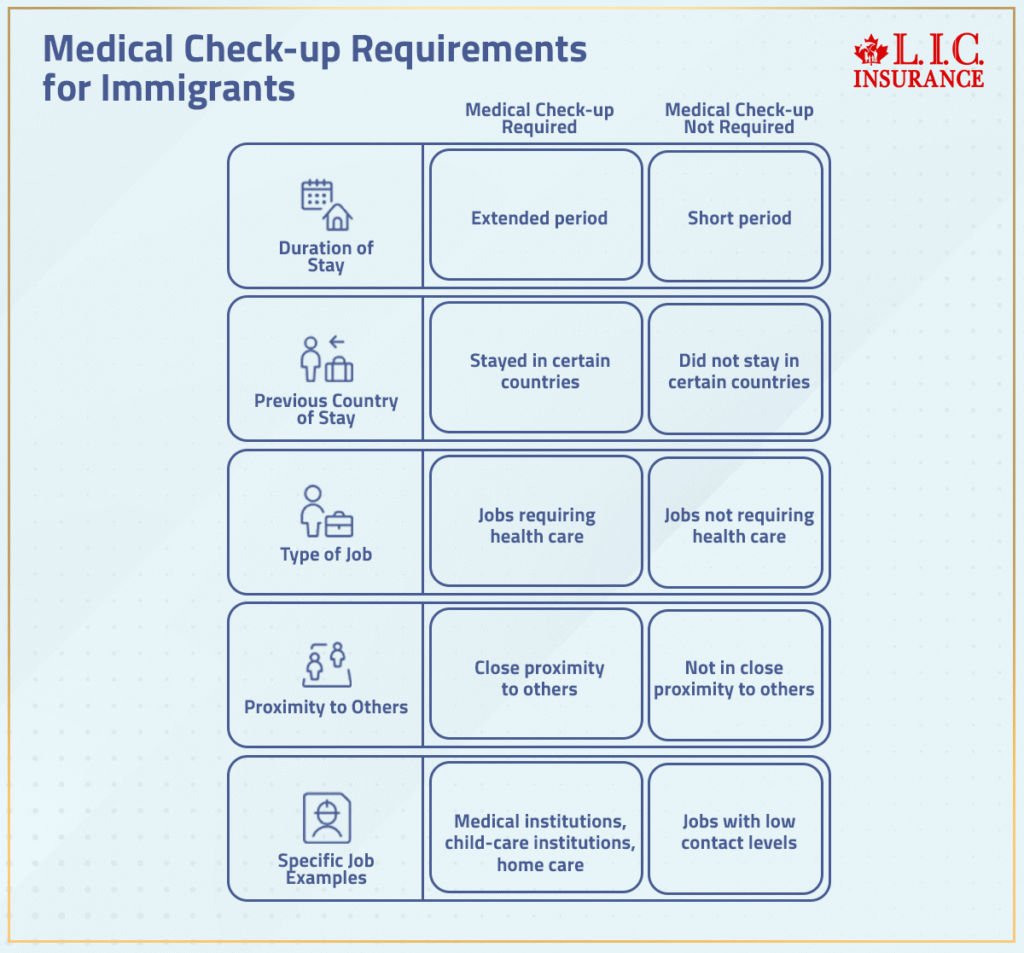
Generally speaking, a medical exam is needed in cases where candidates belong to some groups. They include those who wish to remain for an extended period of time, have stayed in certain countries before, and want to take up jobs in areas that require health care.
Jobs in which people are in close proximity to others are closely scrutinized. For instance, this covers medical institutions, child-care institutions, and jobs that involve caring for kids, elderly people, or individuals with special needs at home. It is obvious why this type of job increases the risks of spreading communicable diseases.
This means that a medical examination will be an inevitable step in applying for a visa.
When A Medical Exam Is Required For Visitor Visas In Canada
The period of stay will determine whether you need to undergo a medical examination or not. If your stay in Canada is expected to be longer than six months, there might be some additional questions about your health condition.
An immigration medical examination is required when any of the following circumstances apply. If the person applied to enter Canada while living in a listed country within the last year or plans to work in certain jobs, or if his/her application is made under the Parent and Grandparent Super Visa.
The Canadian visa office does not assume that people know the medical examination requirements beforehand. Therefore, when the visa application is filled out, a person will receive instructions regarding further actions, if required.
The examination itself will help to be efficient and keep Canada’s healthcare system safe from too many people.
Situations Where A Medical Exam Is Not Required
For short-term tourist visas, particularly for those issued within six months, a physical check-up may be optional.
Nonetheless, it should be emphasized that an exemption from a physical check-up does not guarantee complete protection against unforeseen circumstances. For instance, a visitor might experience certain medical problems during their stay, which could be very expensive if the person is not covered by appropriate Visitor Insurance Policies.
It is always advised to have Visitor Insurance in Canada, even if it is not necessary.
Immigration Medical Examination Process Explained
In case there is a need for a medical check-up to be done, this should only be done via an authorized panel physician. The panel physicians are selected by the government of Canada, and they are the only professionals permitted to perform the medical check-up.
The applicant is not allowed to go to his/her personal doctor to perform the test. He/she has to schedule an appointment with the authorized physician before submitting his/her application or after getting directions from the immigration authorities.
The medical check-up is then sent to the system directly, usually through electronic means.
This standardized procedure ensures that all immigrants are evaluated using the same medical criteria.
What Happens During The Physical Examination?
The physical examination should not be as daunting as some applicants think. This is a standard procedure aimed at evaluating an individual’s general health status and identifying any conditions that would need further attention.
The physical examination usually involves going through the medical history of the applicant, conducting a general physical examination, and conducting various tests, including a chest X-ray to detect conditions such as tuberculosis. Blood and urine tests may also be conducted, depending on the age and background of the applicant.
The aim is not to disqualify applicants unfairly but to guarantee that those who come into Canada are not health hazards.
Vaccination Records And Medical History Requirements
While not required at all times, presenting a vaccination history can make the whole procedure less troublesome and decrease the chances of having more tests done. People who manage to provide a history of previous vaccinations tend to have an easier time.
A review of one’s medical history is also quite critical. If there is anything that the person failed to report at the beginning, there might be some issues when going through the visa procedure.
It is also worth noting the importance of being honest and open in this situation.
Documents Required For Your Medical Exam
At the time of attending the medical test, one needs to carry valid identification documents such as a passport, previous medical history, and a list of all medications being taken at the moment.
In certain circumstances, there could also be some additional forms or documentation required. Sometimes, there may also be situations where results would have to be provided in a sealed envelope or sent electronically to the visa authorities.
Preparation will help in avoiding any hitches here.
Learn more about What documents do I need to buy Visitor Insurance?
Medical Exam Results And Visa Decision Process
After completion of the exam, the assessment process moves on to be conducted by the relevant immigration officials and not by the doctor conducting the exam.
In case of doubt, the applicant will be required to have more tests or clarifications done. Most of the time, however, the process is smooth for applicants with clear records.
This decision is a culmination of the medical evaluation in conjunction with other issues of the visa application.
Visitor Insurance Coverage And Why It Matters Even Without A Medical Exam
The potential costs remain high, even if a medical examination is not required. Health care services are not free of charge for tourists in Canada, and costs can be easily driven up.
In fact, according to the Canadian Institute for Health Information, expenses associated with the provision of emergency medical care for foreigners may be measured in thousands of dollars. This renders Visitor Health Insurance Coverage an indispensable tool for parents coming to Canada, among others.
Modern Visitor Health Insurance Plans may also offer coverage for visitors with existing conditions, if such persons meet certain criteria and conditions set forth in the policy.
Monthly Vs Lump Sum Visitor Insurance Canada – What Should You Choose?
The decision of whether to pay monthly or in a lump sum for Visitor Insurance in Canada will be dependent on financial convenience and considerations of cost efficiency.
Paying Visitor Insurance premiums on a monthly basis lowers upfront costs but is likely to be more expensive in the long run.
By contrast, paying a lump sum fee offers a more cost-effective alternative and ensures that there is no chance of any premium lapses that might cause Visitor Insurance Coverage gaps.
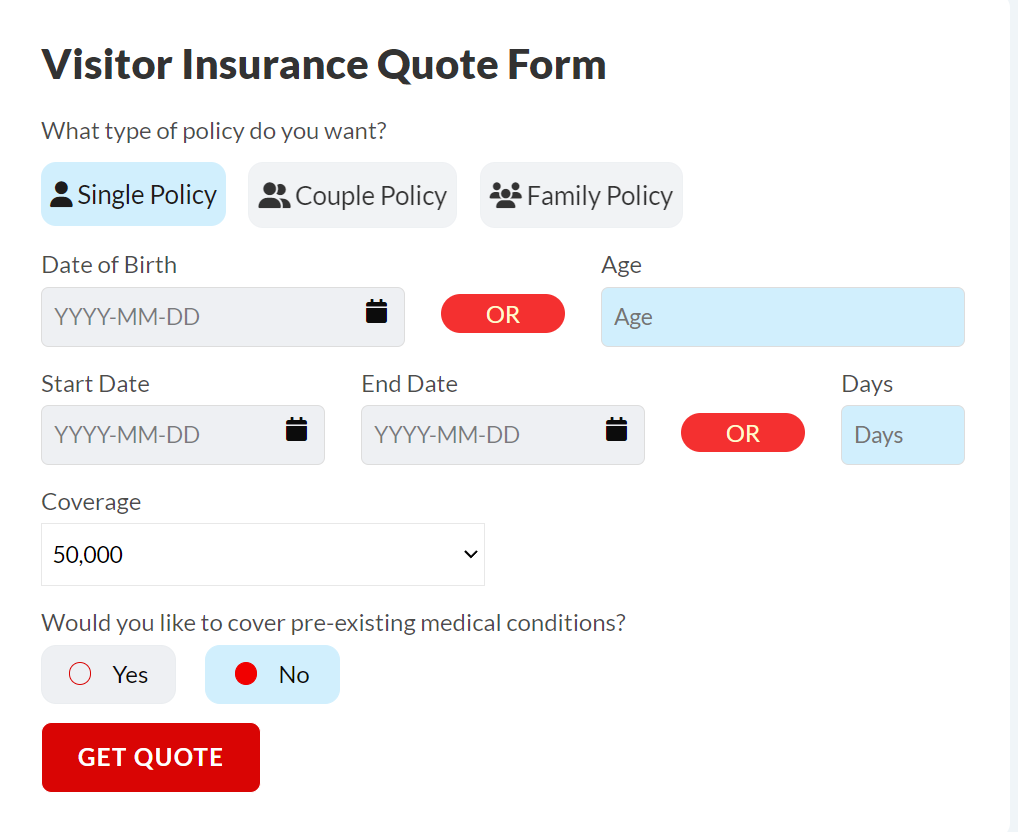
Getting a detailed Visitor Insurance quote will enable visitors to compare different plans before making an informed choice.
Special Cases – Super Visa, Long-Term Stay, And Family Members
Some visa types include more stringent criteria. For instance, for the Parent and Grandparent Super Visa, a medical check-up is mandatory, along with insurance coverage.
This applies to other relatives too, meaning that those who will be staying long-term in Canada are medically fit and have their finances covered.
In contrast to ordinary visitor visas, these instances may require thorough investigations, making it crucial to observe each phase of the procedure.
Common Mistakes Visa Applicants Make During The Medical Exam Process
Even small oversights during the medical exam stage can delay or negatively impact your visa application.
- Ignoring IRCC Instructions – Not carefully following guidance from Immigration, Refugees and Citizenship Canada can lead to incomplete or incorrect submissions.
- Wrong Doctor Selection – Booking with a regular doctor instead of an approved panel physician makes the exam invalid.
- Incomplete Medical History – Hiding or missing details about past conditions can trigger delays or additional testing.
- Missing Required Documents – Forgetting essentials like your passport or medical forms can result in rescheduling.
- No Vaccination Records – Not carrying prior vaccination records may lead to repeated tests or longer processing time.
- Delaying the Appointment – Waiting too long to book your medical exam can push your entire visa process off schedule.
- Skipping Additional Tests – Ignoring requests like a chest X-ray or lab work can lead to application refusal.
- Assuming It’s Optional – Some applicants wrongly believe the medical exam is not mandatory when instructed.
- Ignoring Visa Office Emails – Missing updates or requests from the visa office can halt your application progress.
- Not Submitting Extra Documents – Failure to provide additional documentation when requested can result in rejection.
Final Thoughts – Do You Really Need A Medical Exam For A Visitor Visa?
Whether you need to undergo a medical examination is determined only by your personal circumstances. The vast majority of visitors will not be required to do so; however, certain other factors may affect the need for an examination.
One thing which should remain constant is the need for proper financial preparation. Even if no medical examination is necessary, Visitor Insurance will ensure that any medical surprises do not become costly.
A properly prepared individual realizes that he or she needs to be prepared from two perspectives at once.
Author: Pushpinder Puri, Licensed Insurance Adviser | MDRT Qualifier
Experience: 14 Years In Life Insurance & Financial Planning
LinkedIn Profile:https://www.linkedin.com/in/harpreetpuricanadianlic/
Disclaimer:
This content is for informational purposes only and does not constitute immigration, medical, or insurance advice. Requirements for a medical examination or visitor visa may change based on policies from Immigration, Refugees and Citizenship Canada. Always verify details with official government sources or qualified professionals. Individual cases may vary depending on personal circumstances.
FAQs
Yes, rescheduling is feasible if you let the panel physician know ahead of time and comply with any revised guidelines from the visa office. Nevertheless, continuous rescheduling may cause delays in processing your application. Remember to document your new appointment.
Yes, indeed, there is a fee that varies depending on which country you are in and which clinic you are going to. There will be separate fees for any additional tests, such as X-rays, blood work, or other specialist tests. You will have to pay for these tests directly at the clinic.
Where there is no panel doctor available, one has to notify the visa office along with a satisfactory reason for the same. There may be exceptional instances when an alternate course of action is recommended by the authorities. Documentation can play a vital role here.
In the majority of instances, test scores will be transmitted via computer rather than being physically delivered to the applicant. The clinic might give an overview, although the evaluation will ultimately be performed by the immigration department. You may get feedback via the visa application process.
Yes, continuous medication can affect your assessment. You should provide complete information regarding any prescriptions that you might be taking currently. This will help your doctor give you a correct report. Any concealment of information can result in your delay.
Yes, after submitting the application, one is supposed to undertake the medical examination within the designated time period. Failure to meet the deadline could mean that the application for the visa could be delayed or denied. It is always important to ensure that one checks their messages carefully.
No, but most temporary visitor visas don’t need a medical exam unless there are certain criteria that apply. The visa officer can ask you to have a medical examination depending on your travel history, profession, or for reasons of public health. Some visa candidates are approved without having a medical test at all.
Immigration medical examination fees depend on the country, facility, and type of examinations that one requires. The basic fee is not much, but other examinations, such as a chest X-ray will increase the cost. The fees are payable directly to the panel doctor and do not form part of Canadian Visitor Insurance.
Yes, a number of accredited clinics do give you the chance to schedule a doctor’s appointment online. This could be from the panel doctors who have been accredited by the relevant authorities and whom you can contact. Booking online can facilitate getting dates faster.
One must have a valid passport, medical history information, and medication information. In case one is advised to do so, one should also carry all the forms filled out at the time of applying for their visa and any other information that is asked of them.
A physical checkup normally does not last for more than one hour, although the total time needed to complete the process will depend on the examinations that need to be done. For instance, if you need a chest x-ray or laboratory examination, the results could take several days.
Sources and Further Reading
- Immigration, Refugees and Citizenship Canada – Medical Exams For Temporary Residents
https://www.canada.ca/en/immigration-refugees-citizenship/services/application/medical-police/medical-exams/requirements-temporary-residents.html - Immigration, Refugees and Citizenship Canada – Do You Need A Medical Exam For A Visa?
https://ircc.canada.ca/english/helpcentre/answer.asp?qnum=441&top=16 - Government of Canada – Immigration Medical Exams Overview
https://www.canada.ca/en/immigration-refugees-citizenship/services/application/medical-police/medical-exams.html - Government of Canada – Visitor Visa Application Guide
https://www.canada.ca/en/immigration-refugees-citizenship/services/application/application-forms-guides/guide-5256-applying-visitor-visa-temporary-resident-visa.html - Envoy Global – Canada Medical Exam Requirement Updates
https://www.envoyglobal.com/news-alert/canada-updates-medical-exam-requirements-for-temporary-residents/ - GTAMed Immigration Medical – eMedical System And Exam Results
https://www.gtamed.ca/site/blog/2026/01/21/emedical-system-canada - CanApprove Immigration – Canada Immigration Medical Exam Overview
https://canapprove.com/blog/canada-immigration-medical-exam/ - Immigration Medical Toronto – Visitor Visa Medical Exam Insights
https://www.immigrationmedtoronto.com/blog/do-you-need-a-visitor-medical-exam-for-your-canada-visa/
Key Takeaways
- Medical Exam Not Always Required – Most short-term visitor visas do not need a medical examination, unless specific risk factors apply.
- Stay Duration Matters – If you plan to stay over six months or work in sensitive roles, an immigration medical exam may be required.
- Panel Physician Is Mandatory – The exam must be completed by an approved panel physician, not your personal doctor.
- Visa Office Gives Instructions – You only complete the medical exam when requested during the visa application process.
- Exam Includes Standard Checks – A typical physical examination may include a chest x-ray, lab tests, and review of your medical history.
- Visitor Insurance Still Critical – Even without a medical exam, Visitor Insurance Canada is essential due to high healthcare costs.
- Super Visa Has Strict Rules – Applicants under this category must complete both a medical examination and have valid Visitor Insurance Coverage.
- Costs Are Out Of Pocket – Fees for the medical examination and related tests must be paid directly to the clinic.
- Delays Are Common With Mistakes – Missing documents or ignoring visa office instructions can slow down the entire process.
- Plan Ahead For Smooth Approval – Understanding both medical and insurance requirements ensures a faster and stress-free visa outcome.
Your Feedback Is Very Important To Us
Your responses help identify real challenges faced during the visa application and medical examination process. All answers remain confidential.
IN THIS ARTICLE
- Do I Need A Medical Exam For A Visitor Visa In Canada?
- Understanding Visitor Insurance Canada And Visitor Visa Requirements
- Who Needs A Medical Examination For Visitor Visa Applicants?
- When A Medical Exam Is Required For Visitor Visas In Canada
- Situations Where A Medical Exam Is Not Required
- Immigration Medical Examination Process Explained
- What Happens During The Physical Examination?
- Vaccination Records And Medical History Requirements
- Documents Required For Your Medical Exam
- Medical Exam Results And Visa Decision Process
- Visitor Insurance Coverage And Why It Matters Even Without A Medical Exam
- Monthly Vs Lump Sum Visitor Insurance Canada – What Should You Choose?
- Special Cases – Super Visa, Long-Term Stay, And Family Members
- Common Mistakes Visa Applicants Make During The Medical Exam Process
- Final Thoughts – Do You Really Need A Medical Exam For A Visitor Visa?
Sign-in to CanadianLIC
Verify OTP