- Connect with our licensed Canadian insurance advisors
- Schedule a Call

BASICS
- Is Infinite Banking A Smart Financial Strategy?
- Understanding the Infinite Banking Concept
- Why Infinite Banking Appeals to Canadians Seeking Financial Freedom
- How Infinite Banking Strategy Helps Build Financial Independence
- Challenges and Misconceptions About Infinite Banking
- Who Should Consider Infinite Banking for Financial Freedom?
- How to Start Your Infinite Banking Journey
- Key Advantages of the Infinite Banking Strategy
- A Day-to-Day Struggle: Why More Canadians Are Exploring Infinite Banking
- Potential Drawbacks You Should Know
- The Future of Infinite Banking in Canada
- Is Infinite Banking a Smart Financial Strategy?
COMMON INQUIRIES
- Can I Have Both Short-Term and Long-Term Disability Insurance?
- Should Both Husband and Wife Get Term Life Insurance?
- Can I Change Beneficiaries on My Canadian Term Life Policy?
- What Does Term Life Insurance Cover and Not Cover?
- Does Term Insurance Cover Death?
- What are the advantages of Short-Term Life Insurance?
- Which Is Better, Whole Life Or Term Life Insurance?
- Do Term Life Insurance Rates Go Up?
- Is Term Insurance Better Than a Money Back Policy?
- What’s the Longest Term Life Insurance You Can Get?
- Which is better, Short-Term or Long-Term Insurance? Making the Right Choice
IN THIS ARTICLE
- What is the minimum income for Term Insurance?
- How Does Income Affect Your Term Life Insurance Policy?
- Can You Buy Term Life Insurance Online with a Low Income?
- How Can You Lower Your Term Life Insurance Cost?
- How Much Term Life Insurance Do You Need?
- Can Your Term Life Insurance Policy Be Adjusted Over Time?
- Why Term Life Insurance Is Ideal for Lower-Income Canadians
- Final Thoughts
- More on Term Life Insurance
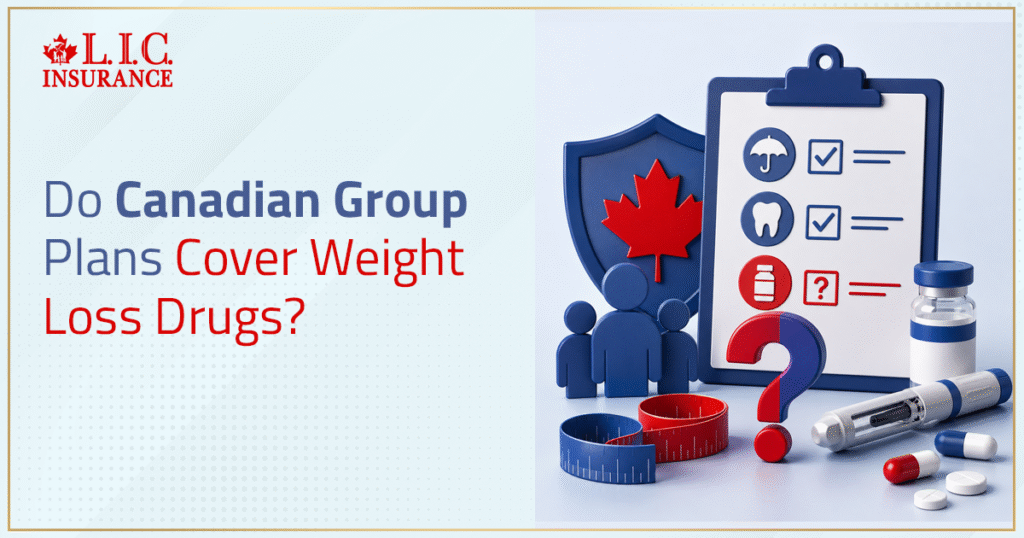
Do Canadian Group Plans Cover Weight Loss Drugs?
By Harpreet Puri
CEO & Founder
- 10 min read
- Aug 19th, 2026
SUMMARY
Group Health Insurance Canada coverage for weight loss medications in Canada depends on plan design, eligibility, and cost controls. GLP-1 drugs, obesity medications, and prescription drug access vary across Group Benefits Plans, private insurance plans, and provincial plans. Factors like prior authorization, chronic conditions, and healthcare provider approval influence coverage, while health spending account options help manage the high costs of weight loss treatment.
Introduction
The problem of obesity in Canada is no longer considered one of self-discipline and choice. Obesity is seen as a relapsing disease requiring prolonged treatment. According to the Canadian Medical Association and statistics from Statistics Canada, over 26% of Canadians already have this problem, and this percentage is growing constantly, causing more difficulties for healthcare systems, companies, and insurance companies.
Meanwhile, the development of advanced medicines for weight loss in Canada, such as those based on GLP-1, is changing the attitude of doctors toward obesity. Such medicines are now used regularly since their effectiveness was confirmed by various studies. Nevertheless, one crucial problem has not been solved yet—access.
From our daily experiences, the demand for these drugs is increasing much more quickly than insurance policies can cope with. This has resulted in an ever-increasing disparity between medical recommendations and financial accessibility. Most people believe that under their Group Health Insurance Canada coverage plan, these drugs will be covered, but find out soon enough that their coverage is severely limited.
It is very important for both the employer and the employee to understand how their drug coverage is provided by their Group Benefits Plans.
What’s Changing In 2026
The Canadian landscape for weight loss drugs is rapidly evolving in 2026. One of the notable trends is the imminent launch of semaglutide generics in 2026 after its patent expires in early 2026. According to industry forecasts, pricing may experience a significant reduction compared to existing GLP-1 weight loss products. This factor may affect insurers’ design of group benefit plans moving forward.
Meanwhile, Canadian insurance companies are reducing access to expensive medications by introducing more stringent prior authorization and step therapy criteria. Nonetheless, with cheaper drug options becoming available in Canada, it is anticipated that coverage for weight loss will increase gradually. Plan sponsors and employers should be mindful of any changes to drug formularies, given the supportive nature of CRA guidelines for health spending accounts.
Quick Answer – Does Insurance Cover Weight Loss Medications In Canada?
The short answer is that weight loss drugs are not consistently covered in Canada, and access depends entirely on the type of insurance plan and how it is structured.
| Coverage Type | Are Weight Loss Drugs Covered? |
|---|---|
| Public Plans | Not covered (except for diabetes use) |
| Group Insurance Plans | Sometimes (with strict conditions) |
| Personal Insurance | Rarely covered |
The public healthcare system in Canada does not normally cover the costs associated with weight-loss pills, even when they have been authorized by Health Canada. This applies only when such drugs are used to treat diseases like diabetes and not obesity.
Group Health Insurance, on the other hand, is somewhat flexible. If the employer offers such a health insurance plan, the patient may be covered for certain types of medication. However, the patient will have to meet stringent guidelines to get prior approval for using these drugs.
Does Provincial Plan Coverage Vary For Weight Loss Drugs?
| Province | Public Coverage | Key Conditions | Notable Policy |
|---|---|---|---|
| Ontario | Not covered for obesity alone | Covered for diabetes under ODB | Strict criteria for diabetes drugs |
| Alberta | Not covered for obesity alone | Covered for diabetes (ACA) | Alberta Blue Cross employer plans vary |
| British Columbia | Not covered for obesity alone | PharmaCare covers diabetes drugs | Limited exceptions |
| Quebec | Not covered for obesity alone | RAMQ covers diabetes only | Private plans more flexible |
Why Coverage For Weight Loss Remains Limited In Canada
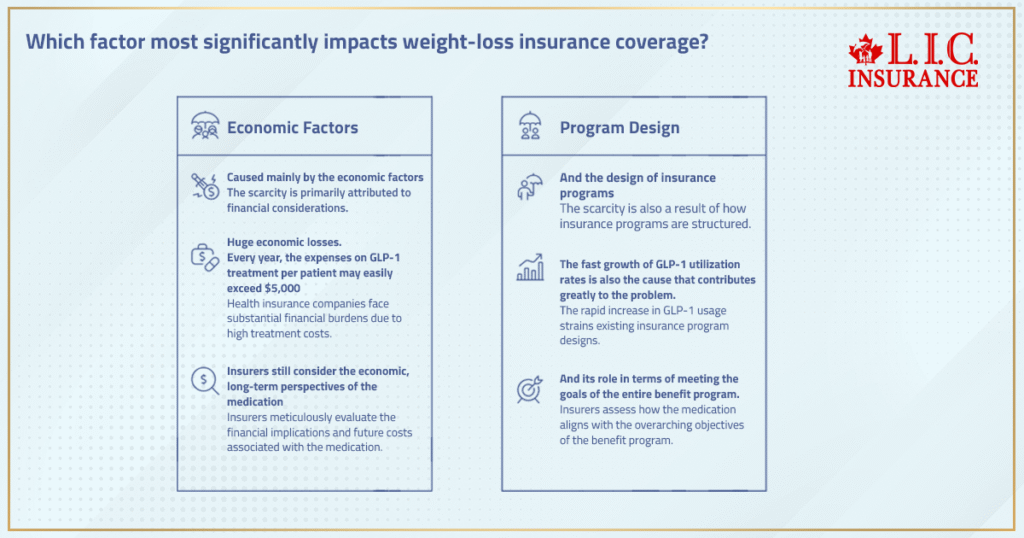
Indeed, modern drugs like GLP-1s are an unprecedented breakthrough in the area of chronic weight management, which, however, involves huge economic losses. Every year, the expenses on GLP-1 treatment per patient may easily exceed $5,000, whereas the treatment should be continuous due to the nature of obesity. For health insurance companies, it becomes quite problematic to provide patients with the necessary assistance.
The fast growth of GLP-1 utilization rates is also the cause that contributes greatly to the problem. In fact, there was a real explosion of GLP-1 prescriptions in Canada; the rates are much higher than those assumed at the stage of the design of many Group Insurance programs.
Although Health Canada approves GLP-1s, insurers still consider the economic, long-term perspectives of the medication, and its role in terms of meeting the goals of the entire benefit program.
Group Benefits Plans – How A Benefits Plan Handles Weight Loss Medications
The Canadian Group Benefits Plan in Canada is flexible, meaning that there is no standard coverage package. The employers are responsible for making choices on what they should cover in their Group Insurance packages. Weight loss drugs are usually not mandatory but considered elective.
Typically, weight loss Medication Coverage can be classified into three groups: those that do not include the medications, those that conditionally cover them, and those that indirectly cover them. The first group excludes weight loss drugs because of their low importance or high cost. The second group covers the medications with certain medical requirements, while the third group includes weight loss medications indirectly through means like health spending accounts.
Employers must weigh the health outcomes of their workers against the ability to estimate premium expenses accurately. High drug prices make it difficult for small firms to estimate their costs of insurance coverage. Employers may prefer covering acute diseases or providing Critical Illness Coverage to obese patients.
GLP-1 Drugs And Modern Obesity Treatment In Canada
The availability of GLP-1 drugs has revolutionized the approach to treating obesity. GLP-1 drugs act through suppressing appetite, delaying gastric emptying, and increasing insulin sensitivity, resulting in a reduction in body weight.
Examples of GLP-1 drugs that are currently used include Ozempic and Wegovy. They are administered via a once-a-week injection and are considered one of the best options for people suffering from diseases related to obesity.
Nonetheless, the main challenge lies in the different purposes of the two drugs. While Ozempic is used to treat diabetes, Wegovy is indicated for obesity. This makes a significant difference when it comes to insurance considerations.
What Generic Semaglutide Means For Group Plan Coverage In 2026
The key innovation that is anticipated to come into the Canadian market will be generic semaglutide. Following the expiration of the patent covering semaglutide in January 2026, more affordable versions will become available from the middle of 2026 onwards. Preliminary estimates show that prices will reduce to roughly $100-$150 per month, according to market access analysis and pharmaceutical pricing estimates by IQVIA, compared with $400-$570 currently offered by branded treatments such as Wegovy. Although final prices will still be subject to manufacturers entering the Canadian market and provincial negotiations, preliminary pricing forecasts in Canada are in line with the global experience with post-patent GLP-1 drugs.
This represents a big change that will affect Group Insurance Plans. At the moment, most of the GLP-1 medications on the market are specialty drugs, which makes them subject to different approval processes than other drugs. But this might change when generic drugs hit the market; insurers might decide to include them in regular drug tiers.
For plan sponsors, this means that instead of having to exclude obesity medication from group health plans because of cost factors, employers can consider using generics to help manage costs and improve health outcomes among employees.
It should be noted that as of April 2026, this process has not yet been fully completed. At the moment, insurance providers are considering the potential impact of generics on drug formularies. It pays to stay ahead of the curve, as it can result in a competitive advantage.
Approved For Weight Loss – Medications Approved By Health Canada
Some drugs that are approved for weight management by Health Canada are Wegovy, Saxenda, and Contrave. All three drugs have been approved for weight management purposes, and they assist patients in managing their weight properly.
Although approved by Health Canada, not all drugs can be accessed automatically through group benefits programs. Insurance companies categorize such drugs as specialized drugs and require additional processes before allowing them into the benefit program.
Having drugs listed in a company’s formulary does not mean that they will be accessed. On the contrary, insurance companies consider other aspects in deciding whether an individual can access them or not.
Off-Label Use And Why Some Weight Loss Drugs Get Denied
An important issue in relation to prescribing medications comes up when the medications are prescribed for off-label use. Off-label use refers to the use of the drugs for applications other than those specified officially for their use.
In this case, Ozempic is normally prescribed for weight loss despite the fact that it is approved for use in diabetes cases. Even though the prescription may be legitimate, the insurer will most likely refuse to cover this type of use for the drug.
What results from this is that the patient receives medical advice from their health care practitioner, yet there is no way in which they can claim insurance benefits.
Coverage Requirements – How To Qualify For Weight Loss Medication Insurance
Coverage qualification procedures on Group Insurance policies are elaborate and sometimes rigorous. Evidence has to be provided that proves that the treatment is required, and no other method of treatment has been successful.
Prior approval by the insurer is common in most plans before the treatment is covered. This involves providing documents about the threshold values of body mass index, unsuccessful modification in lifestyle choices, as well as the presence of chronic ailments like diabetes and hypertension.
Step therapy is another method employed by most insurers before covering the treatment. Step therapy involves the use of inexpensive methods before moving to costlier ones, such as GLP-1 treatments.
Cost Of Weight Loss Medications In Canada
| Medication | Monthly Cost | Annual Cost |
|---|---|---|
| Ozempic | $200–$300 | $2,400–$3,600 |
| Wegovy | $400–$570 | $5,000–$7,000 |
| Saxenda | $450–$600 | $5,400–$7,200 |
| Mounjaro | $300–$450 | $3,600–$5,400 |
These high costs explain why insurers approach coverage cautiously. For many individuals without access to Group Insurance Plans, the financial burden can be prohibitive.
When Coverage Gets Approved
One of our clients in Ontario reached out to us after receiving a prescription for Wegovy. They had a BMI over 32 and were suffering from several medical issues, such as sleep apnea and high blood pressure.
After providing adequate paperwork, along with documentation showing unsuccessful attempts at weight loss programs, the insurance company authorized coverage. The drug was covered by 80% by the insurance and the rest through a health savings account.
In six months, our client saw noticeable results in weight loss and better health.
When Coverage Gets Denied
On the other hand, there is another client who had been recommended to use Ozempic only for weight loss purposes. Although there might be some logical reasoning behind the prescription, since there was no diabetes condition present and the BMI requirements were not met, the insurance claim was rejected.
As can be seen from the above example, the coverage differs immensely depending on the specific case in question, despite the medication being identical in both cases.
Which Insurers Cover Weight Loss Medications In Canada
Coverages vary among insurance companies, although there are some general trends. Leading insurance companies like Canada Life Insurance Company, Manulife Financial, Sun Life Financial, and Alberta Blue Cross have different degrees of coverage depending on their plan designs.
Generally, the coverages are not automatic. Employers will have to select certain classes of drugs, which still need to pass through stringent selection procedures.
How Major Canadian Insurers Handle Weight Loss Drug Coverage
| Insurer | GLP-1 Coverage Available? | Conditions Required | HSA Compatible? | Notes |
|---|---|---|---|---|
| Canada Life | Conditional | BMI 30+, prior authorization | Yes | Plan design dependent |
| Manulife | Conditional | BMI + chronic condition link | Yes | Managed formulary approach |
| Sun Life | Conditional | Step therapy + clinical review | Yes | Wellness integration options |
| Alberta Blue Cross | Conditional | Diabetes or comorbidities | Yes | Employer opt-in required |
These comparisons are indicative rather than definitive, as coverage varies by plan. Employers should review plan documents carefully or request a customized Group Insurance quote to understand real-time eligibility and cost structures.
Health Spending Account – Alternative Coverage Strategy
The concept of a health spending account has proved to be an effective means for many organizations. Rather than paying for all medications at full cost, organizations have set aside money that employees can utilize towards qualified healthcare costs.
Weight loss drugs that are recommended by healthcare providers and fall under the guidelines of CRA may qualify to be paid using such an arrangement.
Other Obesity Treatment Options Covered Under Group Insurance
Without even considering medications, there are a lot of health benefits provided by many group benefit programs that cover complementary approaches such as behavioural therapy, nutrition counselling, and exercise.
For those who need something more serious, like bariatric surgery, there is often coverage for those suffering from very serious medical conditions.
Why Claims Get Denied Under Group Insurance Coverage
Denial is very common and mostly results from either administrative or clinical issues. Some of the common causes of denials include lack of necessary documentation, not meeting BMI requirements, or absence of prior authorization.
Insurance companies are wary of semaglutide generics as well as other forms of the drug not yet fully approved by the insurer’s formulary.
Role Of Chronic Conditions In Getting Coverage Approved
The existence of pre-existing diseases greatly enhances the chances of approval. Pre-existing illnesses like diabetes, sleep apnea, and heart problems highlight the medical justification for the intervention.
In cases where obesity is shown to be associated with other illnesses, insurance companies tend to approve coverage due to the financial benefits that accrue from good health.
Employer Guide: Should You Add Weight Loss Drug Coverage To Your Group Plan?
From an employer’s perspective, providing weight loss drugs as part of a benefits program will be both a financial consideration and a strategic one since there is growing demand for them. In our consulting practice, we find that the provision of such benefits makes sense in some cases, depending on certain factors. If the employees in the company have higher instances of chronic diseases like diabetes and cardiovascular risk, then providing assistance in obesity management will help in better health outcomes and fewer disabilities.
However, cost remains a key factor. If even a small percentage of employees begin using GLP-1 drugs at current pricing, overall plan expenses can rise significantly. This is why many employers adopt hybrid strategies rather than full coverage.
Practical solutions include providing limited access via a health savings account, incorporating wellness initiatives related to weight loss, or using tiered prescription drug plans with prior authorization requirements. In this way, the employer can assist their workers without compromising their bottom line.
It is the only viable long-term strategy for small- and medium-sized companies.
Get A Group Insurance Quote
Working in close collaboration with employers, we will develop a Group Insurance Policy that fits into the practical requirements of your business. The inclusion of various flexible options, such as drug benefits and health spending account coverage, will enable the company to assist its employees while remaining fiscally secure.
Getting an appropriate quote for Group Insurance is the first step towards finding this balance.
Final Thoughts
The discussion around obesity medications in Canada is changing, but insurance structures have yet to catch up with this development. It is becoming evident that weight loss medications fall under the umbrella of chronic disease management in the same way as other illnesses do. However, in contrast to diabetes and heart disease treatment, there is yet to be a consistent approach towards insurance coverage for obesity-related issues.
When it comes to the strategic perspective, both employers and their employees have to reconsider their approach to Group Health Insurance in Canada. Standard benefits plans will no longer be sufficient for high-cost/high-impact treatments, and those companies that plan their group benefits programs strategically will find themselves in a position where they are capable of supporting their employees’ health while being financially prudent at the same time.
Employees, in turn, have to understand how coverage differs depending on the treatment and what documents must be provided for reimbursement purposes. The key to having an approved claim lies in the way the treatment is presented and documented, and whether the patient meets all the insurer’s criteria.
Looking into the future, the Canadian market is expected to witness steady growth in coverage based on new clinical evidence and improvements in insurer models. Indeed, there are already efforts to include GLP-1 medications under stricter, yet more rigorous rules, especially when associated with other diseases like diabetes or heart problems. As insurers collect further evidence, the basis for inclusion will become more substantial.
We are already witnessing progressive companies embrace this new reality by offering tailor-made Group Insurance Plans that not only meet present medical requirements but also take future medical challenges into account. The future of obesity treatment coverage in Canada will not be dictated by one particular regulation but rather by how well the plans are developed to accommodate new medical breakthroughs.
For the time being, the best tactic is strategy. The proper mix of planning, medical records, and guidance is the key to success.
Author: Harpreet Puri, Licensed Insurance Adviser | MDRT Qualifier
Experience: 14 Years In Life Insurance & Financial Planning
LinkedIn Profile:https://www.linkedin.com/in/harpreetpuricanadianlic/
Disclaimer:
This content is for informational purposes only and does not constitute medical, financial, or insurance advice. Coverage for weight loss medications in Canada varies by Group Benefits Plan, insurer, and eligibility criteria. Consult a licensed advisor and a healthcare provider for personalized guidance. Policies and guidelines from Health Canada and insurers may change without notice.
FAQs
Certainly, provincial drug plans in Canada can indirectly influence the development of private drug plans. The insurance industry frequently follows provincial drug plans when making their assessments on obesity drugs that have been approved by Health Canada.
Eligible drugs prescribed for weight loss that are funded by the health spending account may be considered a non-taxable benefit if they qualify as medical expenses according to CRA. This is a tax-effective strategy of managing the costs of treatment that is not wholly funded by group benefits.
The insurers analyze the treatment patterns and the time frame involved, along with their effect on cost factors. As the obesity problem is chronic in nature, it becomes important to see whether the prolonged use of medication will result in improved health and fewer claims in the future.
Yes, some organizations have integrated such programs into their benefit plans to help with weight loss. Involvement in these programs, which involve exercise and behavioural therapy, improves your chances of getting approval for drugs for weight loss in selected Group Insurance Coverage programs.
Some of the major insurance companies, including Canada Life, Manulife, Sun Life, and Alberta Blue Cross, may offer coverage of prescription drugs for obesity treatments under some Group Benefits Plans. Coverage is dependent on the way that benefits plans are designed, as well as the decision to cover weight loss medications in Canada.
The majority of employer-based insurance policies need a clinical validation prior to issuing any prescription for weight loss medications. In this case, there is usually the necessity to confirm the medication prescribed by a doctor and that it falls under approved uses in treating and managing obesity conditions.
GLP-1 injections are not necessarily covered by canadian employer health benefits. Although these medications have received approval from Health Canada, their inclusion and coverage depend on plan provisions, price restrictions, and the drug’s inclusion within the insurance provider’s list of medications used to treat obesity.
Eligibility is usually determined on the basis of medical necessity as well as the existence of any health issues linked with being overweight. The benefits package of Group Insurance determines whether or not the coverage of weight loss drugs is consistent with their policy.
The amount of coverage offered differs significantly based on the insurance benefits package; however, most Group Insurance benefits coverages use either percentage coverage or yearly coverage for prescription drugs. At times, partial coverage is granted by the insurance, with the rest covered using a health care fund.

Sources and Further Reading
- Health Canada – Drug approvals and regulatory updates for obesity medications
https://www.canada.ca/en/health-canada/services/drugs-health-products/drug-products.html - Canadian Medical Association – Obesity as a chronic disease and treatment access insights
https://www.cma.ca/ - Statistics Canada – Data on obesity prevalence among Canadian adults
https://www.statcan.gc.ca/ - Obesity Canada – Clinical guidelines and obesity treatment framework
https://obesitycanada.ca/ - CADTH – Drug reimbursement and cost-effectiveness reviews for semaglutide
https://www.cadth.ca/ - IQVIA – Pharmaceutical pricing trends and market access insights
https://www.iqvia.com/ - Ontario Ministry of Health – Ontario Drug Benefit (ODB) formulary
https://www.ontario.ca/page/get-coverage-prescription-drugs - Alberta Health – Alberta drug benefit list and coverage policies
https://www.alberta.ca/drug-benefit-list-and-drug-review-process.aspx - Government of British Columbia – PharmaCare coverage details
https://www2.gov.bc.ca/gov/content/health/health-drug-coverage/pharmacare - Régie de l’assurance maladie du Québec – Quebec public drug insurance plan
https://www.ramq.gouv.qc.ca/en/citizens/prescription-drug-insurance
Key Takeaways
- Access to weight loss medications in Canada depends heavily on how a Group Health Insurance Canada plan is structured, as public systems rarely provide coverage for obesity treatment alone.
- Group Benefits Plans may include coverage for GLP-1 drugs and other obesity medications, but approval is typically conditional on medical criteria, plan design, and cost controls.
- The introduction of generic semaglutide in 2026 could significantly reduce cost and improve accessibility, influencing how insurers update formularies and coverage policies.
- Employers play a critical role as plan sponsors, with options to manage costs through tiered drug coverage, prior authorization, and health spending account integration.
- Provincial plans focus primarily on diabetes-related drug coverage, making private and employer-sponsored plans essential for broader coverage for weight loss treatment.
Your Feedback Is Very Important To Us
Please share your experience with Group Health Insurance Canada and access to weight loss medications in Canada. Your responses help improve plan design and coverage guidance.
IN THIS ARTICLE
- Do Canadian Group Plans Cover Weight Loss Drugs?
- What’s Changing In 2026
- Quick Answer – Does Insurance Cover Weight Loss Medications In Canada?
- Does Provincial Plan Coverage Vary For Weight Loss Drugs?
- Why Coverage For Weight Loss Remains Limited In Canada
- Group Benefits Plans – How A Benefits Plan Handles Weight Loss Medications
- GLP-1 Drugs And Modern Obesity Treatment In Canada
- What Generic Semaglutide Means For Group Plan Coverage In 2026
- Approved For Weight Loss – Medications Approved By Health Canada
- Off-Label Use And Why Some Weight Loss Drugs Get Denied
- Coverage Requirements – How To Qualify For Weight Loss Medication Insurance
- Cost Of Weight Loss Medications In Canada
- When Coverage Gets Approved
- When Coverage Gets Denied
- Which Insurers Cover Weight Loss Medications In Canada
- How Major Canadian Insurers Handle Weight Loss Drug Coverage
- Health Spending Account – Alternative Coverage Strategy
- Other Obesity Treatment Options Covered Under Group Insurance
- Why Claims Get Denied Under Group Insurance Coverage
- Role Of Chronic Conditions In Getting Coverage Approved
- Employer Guide: Should You Add Weight Loss Drug Coverage To Your Group Plan?
- Get A Group Insurance Quote
- Final Thoughts
Sign-in to CanadianLIC
Verify OTP