What Is the Main Disadvantage of Term Life Insurance?

The decision to opt for the right policy becomes very important when it comes to securing your family’s financial future. Many Canadians prefer the Term Life Insurance Policy because of its simplicity and the lesser costs involved. However, even as many appreciate the advantages that come with such a policy, the disadvantages, most especially the main one, are hardly talked about.

What is the main disadvantage of Term Life Insurance?

By Canadian LIC, April 12, 2024, 18 Minutes

What is the main disadvantage of Term Life Insurance

The decision to opt for the right policy becomes very important when it comes to securing your family’s financial future. Many Canadians prefer the Term Life Insurance Policy because of its simplicity and the lesser costs involved. However, even as many appreciate the advantages that come with such a policy, the disadvantages, most especially the main one, are hardly talked about.

40-year-old John, a father of two children, took a 20-year Term Life Insurance Policy in order to protect his family if he died before them. That financially sounded good at that time when the children were really small. Fast forward to John turning 60; his term policy is about to expire. His children are in college, and he knows the renewal of his policy or, for that matter, a new one at his age today would come up far more expensive; besides, rising health issues may not really allow him to purchase a new policy without hassles. Actually, this is a prevalent issue among policyholders who get Term Life Insurance, and it serves to highlight the primary drawback of this kind of coverage, which is impermanence.

This blog will talk about some of the reasons why temporality in Term Life Insurance might be a major downside, especially how it affects policyholders like John and the various ways howt this risk can be avoided. We help guide the decision-making process with full-of-information decisions regarding Term Life Insurance, all its benefits, and limitations. Travel with us to learn relatable problems, advice from experts, and stories that will motivate you to figure out how to get Term Life Insurance in Canada.

The Core Issue: The Temporal Limit of Term Life Insurance

The Core Issue The Temporal Limit of Term Life Insurance

The Expiry Problem

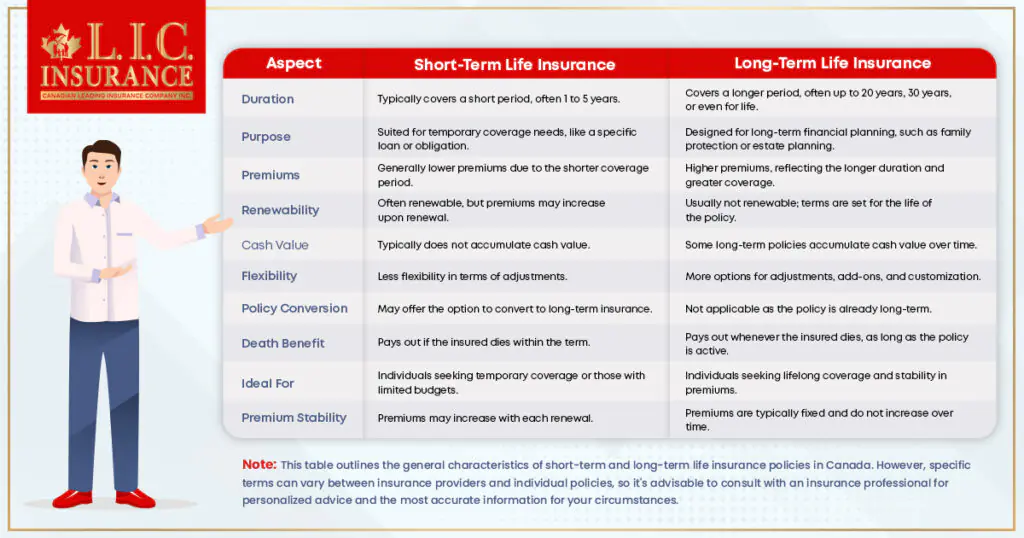
The very basic problem with a Term Life Insurance Policy is that by its very nature, it has a fixed number of years for coverage—usually between 10 to 30 years—set out by the policy. Your policy will be void of cover for any claims after this period until you either renew the policy or take out a different type of cover.

Lisa is a young professional who, at 25, took out a 25-year term life policy. As she approaches her 50th birthday, Lisa finds herself in a robust career, still supporting her aging parents and a teenager heading to university soon. Her term policy is nearing its end, and she faces potentially high premiums for new coverage due to her age and the onset of diabetes.

Increasing Premiums upon Renewal

If you decide to renew your term insurance or convert it to a Permanent Plan, be prepared that the premiums most likely would be very high. Two of the largest considerations for the cost of your insurance in converting your plan could show significant increases in what you have to pay for them: age and health.

Michael has a term life policy and was diagnosed with a chronic condition just the other day. His premiums skyrocketed, and, quite affordably, an otherwise good plan turned into a financial burden, reflecting one of the more common worries among people who are fast approaching the expiration of their term life policies.

Evaluating the Implications: Financial Insecurity

Lack of Long-Term Security

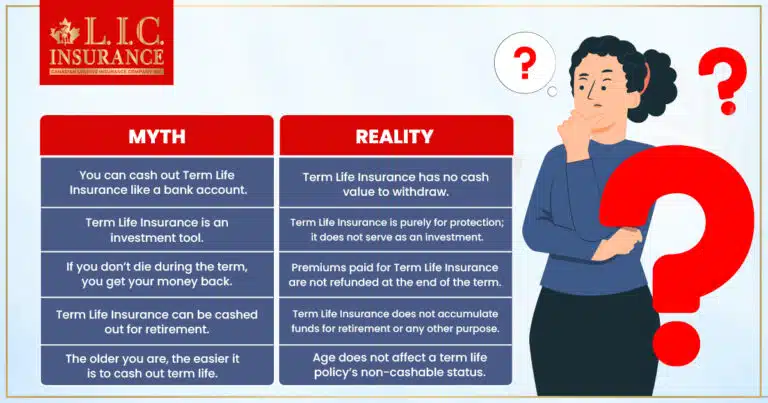
The Term Life Insurance Policy doesn’t have a cash value. If you die before the end of the term of the agreement, you lose the payments you paid and get nothing in return. This can be disheartening as you get older.

Emily chose to have Term Life Insurance in her thirties. Now that she is in her sixties, everything she has been paying for through all the years—well, it’s gone with no benefits accrued, and she has no element of savings in her insurance to at least help her in retirement.

Reliance on Predicting Future Needs

This, in turn, requires that you predict the number of years over which you will need coverage. This prediction is extremely uncertain and, hence, rarely accurate. This inaccuracy may mean that your dependents remain unprotected at a time when they need protection.

When Tom and Karen were planning their family’s future, they thought a 20-year Term Life Insurance would suffice. Two years later, the policy expired, and so did Tom expire two years later in a fatal accident that left his family vulnerable and unprepared financially.

What Can Be Done? Strategies to Mitigate Risks

Understanding the limitations of a Term Life Insurance Policy is crucial, but it’s just as important to learn how to deal with them to maintain continuous and comprehensive protection. Here, we explore three strategic approaches to mitigate the inherent risks associated with term policies, ensuring you can enjoy the Term Life Insurance Benefits without undue worry.

Consider Layering Policies

One effective strategy to counter the temporary nature of Term Life Insurance is to layer multiple policies with staggered terms. This method allows you to adjust coverage as your financial responsibilities evolve over time, ensuring that you’re not over-insured or paying for unnecessary coverage.

Sarah, an entrepreneur who is 30 years old, got a 20-year Term Life Insurance Policy when her first child was born so that her family could pay for major expenses if she died too soon. As her business expanded, she found that her financial responsibilities were also growing, not decreasing as she had thought. Sarah layered a second 10-year term policy when she turned 40 to adjust to this new reality. This staggered approach allowed her to maintain adequate coverage during her peak financial obligations without overlapping or wasting resources.

Explore Conversion Options

Many Term Life Insurance policies come with an option to convert to Whole Life Insurance Policies or Universal  Life Insurance Policies. This option can be activated without a medical exam, providing a safety net for those who might face health issues later in life. Conversion ensures that your insurance protection can evolve into a Permanent Plan, securing long-term benefits beyond the original term.

Mark, who was diagnosed with a chronic illness near the end of his Term Life Insurance Policy, was concerned about his insurability. He opted to convert his term policy into a whole life policy. This decision not only secured his coverage for the rest of his life but also allowed him to start building cash value that could support his wife and potentially cover medical costs in the future. The conversion feature in his Term Life Insurance was a saviour, enabling him to maintain insurance coverage despite his changed health circumstances.

Plan for the End of the Term

Proactive financial planning and regular reviews of your Term Life Insurance Policy are crucial for preparing for its expiration. This strategy involves setting aside funds specifically for end-of-life expenses or aligning your policy’s term with significant financial milestones like debt repayment or retirement.

Emily and Jack, a couple with a keen eye on the future, purchased a Term Life Insurance Policy aligned with their mortgage repayment schedule. They knew that their financial burden would significantly reduce once the mortgage was fully paid. By planning their Term Life Insurance to end concurrently with their mortgage, they could reallocate funds to retirement savings and other investments. They also set up a separate savings account to accumulate funds specifically for potential healthcare needs in later years, ensuring they were prepared for financial shifts post-term insurance coverage.

Concluding Thoughts: Making the Smart Choice with Canadian LIC

While Term Life Insurance coverage offers undeniable benefits, such as affordability and simplicity, its temporary nature poses a significant risk, particularly as you age. Understanding these limitations is crucial in crafting a comprehensive financial plan that ensures long-lasting security for you and your loved ones.

As you consider your insurance options, remember that Canadian LIC stands ready to assist you in understanding these complex choices. We specialize in helping Canadians like you find the Term Life Insurance Policy that best fits your needs while preparing for future transitions. Don’t wait until it’s too late—get in touch with Canadian LIC today to ensure that your insurance coverage adapts to your life’s changes and continues to protect those who matter most. Secure your legacy with Canadian LIC, and let us help you make the informed decision that will bring you peace of mind for years to come.

Find Out: Do I get Money Back from Term Life Insurance?

Find Out: Why get Term Life Insurance?

Get The Best Insurance Quote From Canadian L.I.C

Call 1 844-542-4678 to speak to our advisors.

Best Insurance Plans Helpline From Canadian L.I.C

Frequently Asked Questions(FAQs) About Term Life Insurance

Term Life Insurance can often raise many questions, especially when trying to determine how to protect your financial future best. Let’s discuss some of the most common questions about Term Life Insurance policies and their benefits based on solid, real-life stories of our clients that you will find quite relatable.

Term Life Insurance Policy refers to a life insurance contract that provides coverage at a fixed rate of payments for only a given limited period—the term of coverage. The policy runs only for the term duration, and at the expiry of the term, the policy expires unless it is renewed or converted to Permanent Life Insurance.

Tom bought a 20-year Term Life Insurance Policy when his first child was born. It is an income protection policy to meet Tom’s family’s financial security needs through the years when they most require it—such as while the children are dependent on his income or until his mortgage gets settled.

Select the term length that coincides with your major financial obligations and life milestones—the length you will need to be able to provide for your dependents.

Jason took a 25-year Term Life Insurance Policy matching the number of years he will have to be able to pay off his mortgage in full and have his children done with schooling. This strategic alignment ensured he would only pay for necessary coverage within his years of highest financial responsibility.

Coverage ceases at the end of the policy term. The benefits payable by the insurer in a Term Life Insurance Policy occur only after the death of the insured, but in case the insured outlives the term, there shall be no benefits to claim unless otherwise provided for in the policy by renewal or converting.

Linda, a 55-year-old healthy woman, was abruptly left without insurance after she turned 85 because she outlived the 30-year term for life insurance. Facing higher premiums for a new term at her current age, she explored other financial safety nets, including investing in a retirement fund.

The advantages of Term Life Insurance include its affordability, as it typically has lower premiums compared to Permanent Life Insurance. It provides a significant death benefit during the term of the policy, offering financial protection for dependents. Term Life Insurance is also simple to understand and easy to purchase, with clear terms and coverage amounts.

The disadvantage of term insurance is that it offers no cash value or investment component, unlike whole life insurance. If you outlive the policy, there’s no payout, and you may need to renew it, often at a higher premium. Additionally, coverage is only for a specific period, so if you still need life insurance beyond the term, it could become more expensive or harder to obtain.

Term Life Insurance is more affordable than Permanent Life Insurance, making it a great option for people looking for temporary coverage. However, Permanent Life Insurance builds cash value over time, while Term Life Insurance does not. If you need coverage for a longer duration or want to accumulate savings through your policy, Permanent Life Insurance may be more suitable.

Yes, Term Life Insurance is often a good option for young families. It provides affordable coverage that can help protect the family’s financial security in case of the unexpected death of a breadwinner. The policy can be tailored to match the years when the family is most financially dependent.

Some Term Life Insurance Policies offer a conversion option that allows you to switch to Permanent Life Insurance without undergoing another medical exam. This can be advantageous if your health has changed, and you still need long-term coverage.

Term Life Insurance coverage is an excellent option for many, but not for everyone. It’s generally best for someone looking for affordable coverage during some high-need years. However, if you are seeking to have lifelong coverage with a feature of saving, then the whole or Universal  Life Insurance policy will be the best choices.

Emily,bought term insurance as a young career woman, the time of retirement was around the corner, and she surely wished that she had bought a life policy that had a savings element to it. Reflecting on her needs, she advises younger friends to consider their long-term financial goals when choosing between term and permanent insurance.

It is imperative that you revisit your Term Life Insurance Policy in case of a major change in your financial condition. You may increase your coverage or take out other policies to cover new responsibilities.

After receiving a major promotion at work, Raj realized that his increased income allowed him to afford better security for his growing family. So, he bought another Term Life Insurance Policy that would, in case of his death, be sure to support the family living if something happened to him; this policy did not allow the foreclosure to be made from the new home.

It is imperative that you revisit your Term Life Insurance Policy in case of a major change in your financial condition. You may increase your coverage or take out other policies to cover new responsibilities.

After receiving a major promotion at work, Raj realized that his increased income allowed him to afford better security for his growing family. So, he bought another Term Life Insurance Policy that would, in case of his death, be sure to support the family living if something happened to him; this policy did not allow the foreclosure to be made from the new home.

Usually, the younger a person is when he takes out Term Life Insurance, the lesser the amount of premiums he will pay. It’s just because the younger persons are considered lesser risks by the insurers.

Mia, being 25 years of age, undertook a Term Life Insurance Policy with a negligible premium to be paid, as she was young and proper health was certified at the time of policy issuance. Her brother had waited until he was 45, facing much higher premiums for the same insurance because he was at much more risk due to his age.

Yes, holding several Term Life Insurance policies at the same time is actually a form of “laddering,” and this could work very well in helping to make the coverage period more accurately suited to your specific time-bound financial obligations.

Simon, the man of forethought, structured three staggered Term Life Insurance policies with different maturities to match the milestones in his financial liabilities. One of these policies covered the early career debts, the second covered the children’s education costs, and the third covered the expected retirement expenses, ensuring that this coverage did not unnecessarily duplicate each other and corresponded with his decreasing financial requirements.

The standard Canadian rule for Term Life Insurance, as a death benefit, is issued free from tax in Canada. However, premiums paid for standard Term Life Insurance draw no tax benefit either.

On the part of Anita’s family, they were relieved that the death benefit arising from her Term Life Insurance was free from income tax, allowing them to use the full amount to deal with their financial needs without worrying about a tax burden.

To maximize the benefits of a Term Life Insurance Policy to your family, ensure that the designations of the beneficiaries on the policy are updated and that the coverage amount is enough for the needs of the beneficiaries to be met without straining from any financial source.

Every year, when Carlos reviewed his term life policy, he would make updates to the beneficiary designations by including his new daughter and increasing the benefit amount to reflect the current increase in the cost of living and education expenses for his children.

Of course, if you do cancel your Term Life Insurance, there are usually no penalties, just that you lose all those paid premiums, and no benefits are going to be paid out. So, it’s worth considering why you’re canceling it and whether there might be better alternatives better fitting to your needs.

Julie was much better off financially than she had expected to be, and so she was ready to cancel the Term Life Insurance. However, a financial consultation with a pro convinced her to keep the cheap cushion, reassured by the financial security it offered her family.

Sources and Further Readings

To deepen your understanding of Term Life Insurance and to assist you in making informed decisions about your insurance needs, here are some recommended sources and materials for further reading. These resources provide valuable insights into the intricacies of Term Life Insurance policies, their benefits, and strategies to optimize your coverage.

Recommended Sources

Life Insurance Basics by the Insurance Bureau of Canada

This comprehensive guide offers an overview of life insurance options available in Canada, including detailed sections on Term Life Insurance. It’s an excellent resource for understanding policy basics and comparing different types of insurance.

Insurance Bureau of Canada – Life Insurance

Canadian Life and Health Insurance Association (CLHIA) Guide to Life Insurance

CLHIA provides a detailed booklet that explains life insurance in a straightforward manner, including chapters on choosing the right type of policy and the specific advantages of Term Life Insurance.

CLHIA – Consumer’s Guide

“Personal Finance for Canadians for Dummies” by Eric Tyson and Tony Martin

A primer on personal finance that includes practical advice on managing life insurance, this book is great for understanding how Term Life Insurance fits into a broader financial strategy.

Available on Amazon and other book retailers.

“The Intelligent Investor: The Definitive Book on Value Investing” by Benjamin Graham

While not specifically about insurance, this book provides foundational knowledge on investment and risk management, which are crucial when considering life insurance as part of your financial portfolio.

Available on Amazon and other book retailers.

Online Resources

Investopedia – Term Life Insurance

A resourceful online platform for financial education, Investopedia offers detailed articles on Term Life Insurance, including its pros and cons, ideal candidates for policies, and how it compares to other types of life insurance.

Investopedia – Term Life Insurance

NerdWallet – Compare Life Insurance Plans

NerdWallet provides tools for comparing different life insurance plans, including Term Life Insurance, and offers advice tailored to Canadian consumers.

NerdWallet – Life Insurance

Government of Canada – Financial Consumer Agency

This official site includes resources to help consumers understand various financial products, including life insurance policies. It offers guidance on purchasing insurance and understanding your rights and responsibilities as a policyholder.

Financial Consumer Agency of Canada – Life Insurance

Blogs and Articles

MoneySense – How to Choose the Right Type of Life Insurance

MoneySense is a Canadian financial education website that features articles on choosing the right life insurance. Their content is straightforward and tailored to Canadian audiences.

MoneySense – Choosing Life Insurance

The Globe and Mail – Financial Health Section

This national news outlet provides insightful articles about financial planning and insurance strategies, often featuring expert advice and user-friendly guides on navigating life insurance decisions.

The Globe and Mail – Financial Health

By exploring these sources and further reading materials, you can gain a more comprehensive understanding of Term Life Insurance policies, their benefits, and how to effectively integrate them into your financial planning. Whether you are a new policyholder or looking to refine your existing insurance strategy, these resources will equip you with the knowledge to make confident and informed decisions.

Key Takeaways

Your Feedback Is Very Important To Us

better understand the challenges and concerns that people commonly face with Term Life Insurance, particularly regarding its main disadvantage of temporary coverage, we would appreciate your participation in this short feedback questionnaire. Your responses will help us improve our content and provide more targeted advice to meet your needs.

Term Life Insurance Feedback Questionnaire

    1. Personal Details

    Full Name:


    2. Feedback Questions


    The above information is only meant to be informative. It comes from Canadian LIC’s own opinions, which can change at any time. This material is not meant to be financial or legal advice, and it should not be interpreted as such. If someone decides to act on the information on this page, Canadian LIC is not responsible for what happens. Every attempt is made to provide accurate and up-to-date information on Canadian LIC. Some of the terms, conditions, limitations, exclusions, termination, and other parts of the policies mentioned above may not be included, which may be important to the policy choice. For full details, please refer to the actual policy documents. If there is any disagreement, the language in the actual policy documents will be used. All rights reserved.

    Please let us know if there is anything that should be updated, removed, or corrected from this article. Send an email to Contact@canadianlic.com or Info@canadianlic.com

    Can I Buy Whole Life Insurance for My Child?

    Have you ever wondered if your child would have a safe future? Children’s Life Insurance is one way to protect your finances, but you may not be clear on the benefits and what this child Life Insurance policy entails for your child’s future. Many parents and guardians have to deal with this at some point when they are trying to figure out insurance.

    Can I Buy Whole Life Insurance for My Child?

    By Harpreet Puri, April 11, 2024, 11 Minutes

    Can I Buy Whole Life Insurance for My Child

    Have you ever wondered if your child would have a safe future? Children’s Life Insurance is one way to protect your finances, but you may not be clear on the benefits and what this child Life Insurance policy entails for your child’s future. Many parents and guardians have to deal with this at some point when they are trying to figure out insurance.

    Most of them then talk about how different things in life caught them off guard. Like Maria, who lives in Toronto and is a single mother. In every situation, Maria always tried to make sure that her daughter Sophia had some money saved up. However the many choices and rules that came with insurance were too much for her. She knew what Whole Life Insurance was, but she wasn’t sure how it could help someone so young like Sophia.

    It can be hard to tell if getting Whole Life Insurance for your child in Canada is a good idea. Hence, this blog seeks to clarify that. The first thing we’ll talk about is what Whole Life Insurance is, what its benefits are, and how much Life Insurance is if you decide to buy Life Insurance each month. What else are we going to find out? How might this policy help protect your child’s future? Let’s discuss securing a bright and secure future for your children and how Canadian LIC can be of help in such a noble cause to purchase Life Insurance.

    Whole Life Insurance Explained

    Permanent Life Insurance includes Whole Life Insurance, whereby the insured person is basically guaranteed insurance cover for their entire life as long as regular payments are continued.
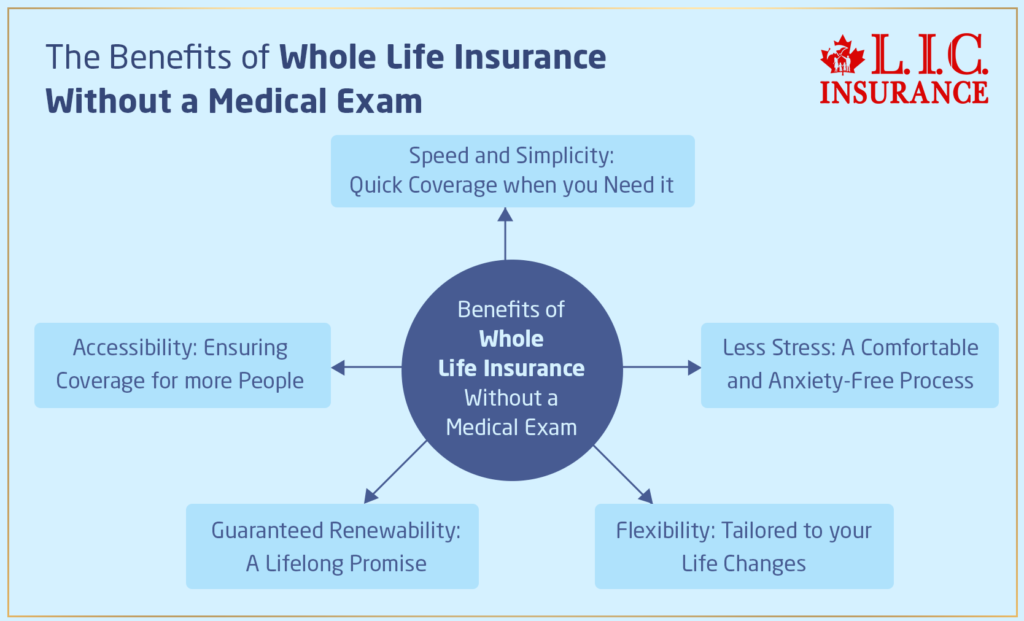
    Whole Life Insurance is a type of permanent life insurance designed to provide lifelong protection. This means that once the policy is active, the insurance coverage continues until the death of the insured, regardless of age or health changes—so long as the premiums are paid on time. It removes the worry of outliving the policy, which is a concern with term life plans. This lifetime guarantee of coverage offers peace of mind to policyholders and their families, especially when planning for long-term financial security.

    Unlike Term Life Insurance, which covers one for only a term or a particular period, Whole Life Insurance has an investment feature whereby the cash value accrues over some time.
    Term Life Insurance provides protection for a fixed number of years—typically 10, 20, or 30 years—and pays out only if the insured passes away within that period. In contrast, Whole Life Insurance not only guarantees lifelong coverage but also includes a built-in savings component known as cash value. Over time, part of the premium you pay is set aside and invested by the insurance company. This accumulated amount grows steadily and safely, offering an extra layer of financial benefit on top of the death benefit.

    This cash value can be a significant advantage as it grows tax-deferred and can be borrowed against if needed.
    One of the key advantages of Whole Life Insurance is that the cash value grows on a tax-deferred basis, meaning you won’t pay taxes on the growth as long as it stays within the policy. Over the years, this can lead to substantial accumulation. Additionally, the cash value serves as a financial resource that you can borrow against, usually at a lower interest rate compared to traditional loans. Whether it’s funding your child’s education, managing emergencies, or supplementing retirement income, this feature gives you financial flexibility while keeping your life insurance coverage intact.

    Why Consider Whole Life Insurance for Your Child?

    Why Consider Whole Life Insurance for Your Child

    Financial Security Against the Unforeseen

    Financial security is the reason for having Life Insurance, and Whole Life Insurance doesn’t differ here. Imagine that an entire family has to deal with some unexpected hardships. This is the case for one of our clients from Edmonton, James, who lost his brother unexpectedly. His brother had a Whole Life Insurance Policy, which became a financial safety net for his children.

    Buying Life Insurance for your child shall ensure that, if something tragic befalls the child in the near future, then his or her financial needs can be taken care of well—exactly as it happened for James’s nieces.

    Locking in Low Premiums

    Not surprisingly, as you age, all of your bills tend to go up. Interestingly, Life Insurance policies and whole life don’t increase in cost on a monthly basis when insuring a child. As seen to be less of a risk, the children receive a lower premium. These rates are locked in, remaining constant as your child matures, offering significant savings over time.

    In Mississauga, Anita bought Whole Life Insurance for her 15-year-old son for what seemed like a very small amount of money. She paid for it over several months. This has been a very smart and cost-effective choice over the years, as everything has stayed the same.

    Building a Financial Foundation

    That’s because the cash value accumulating on Whole Life Insurance Policies is more than just a figure on paper; it is financial security for your child. This cash value grows tax-deferred over the life of the policy and can be borrowed against when your child might need it for major life events, such as funding for higher education, a down payment on a first home, or even seeding their startup capital.

    Consider that Rahul in Vancouver is using the cash value from his whole-life policy to help start his very own tech company—a venture that likely would have been out of reach without that critical opening-stage infusion.

    Developing a Savings Habit

    These basic facts, if introduced from the earliest, would guide an individual to be financially responsible and literate when one gets into adulthood. A Whole Life Insurance does more than insure; it teaches. It truly serves as a tool to teach your child the core of savings and planning for the future.

    The features of a Whole Life Policy are just what Lisa in Calgary started to talk to her daughter about from the age of twelve. This early education helped her daughter value the money and understand how much security a financial plan brings.

    By choosing to take up a Whole Life Insurance Policy for your child, not only will you be securing them, but you will also be teaching your child life lessons worth learning. Every premium paid is a contribution to their current protection and, at the same time, to their future security and independence.

    It is an investment that educates fiscal responsibility. And doesn’t it feel comforting that with that decision, you are putting your child on the road to lifetime financial prudence?

    Investing in your child’s future is a profound step. Essentially, Whole Life Insurance Coverage is more than just an assurance; it presents a proactive strategy for preparing your child for them to emerge as the financially stable and responsible adult that they should become.

    So, why not take this step today? Start a conversation with an advisor on how getting Whole Life Insurance Policies now comes with significant benefits for your child’s tomorrow. So, secure their future—one smart choice at a time.

    The Story of Amir and His Whole Life Insurance Decision

    Imagine being first-time parents of twins. The joy that overpowers the heart at the twin additions to life is unimaginable, and so is the huge sense of responsibility that makes one feel daunted. That is exactly what Amir, our client, the dad from Vancouver, was feeling. The arrival of twin daughters threw up a fundamental question: how to secure their financial future? Like any other parent, Amir too looked forward to making investments for his children’s future. However, he was not very clear on how he should go about doing this.

    But it wasn’t until his daughters were born that Amir started looking for opportunities for investment. He talked to other parents, read a number of articles, and even attended seminars. Along the way, he figured out that, indeed, the most critical thing would be securing a future of economic security for his children.

    This is a concern many of you might also have. How do you choose the right option that offers both security and growth? Amir does some of his own research to determine if a Whole Life Insurance Policy would be right for him. He gets advice from many financial advisors on making a sound decision when it comes to a Whole Life Insurance Policy.

    He was advised that Whole Life Insurance Policies is different from Term Life Insurance in the sense that Whole Life Insurance Policies would cover the daughters for the whole of their life and not for any fixed term. This, coupled with the investment element of the whole life policies building up cash value over time, did seem a good footing for financial planning.

    But the major consideration was the Whole Life Insurance Monthly Cost. Whole Life Policy monthly premiums, considering also the cash value, are normally more expensive than Term Life Policy monthly premiums because Whole Life Insurance Policyholders pay until life is lost. Amir had to do the math, look at his budget, and weigh this against potential future benefits. That was really a hard decision, more so considering the long-term financial commitment that would be involved.

    Many of you might be in Amir’s shoes, wondering if the higher premiums are justifiable. Thus reasoned Amir: This may cost more on a monthly basis, but the price is fixed and will not rise with his daughters’ age, despite prospective increases in premiums for new insurance owing to age or health difficulties. By locking in the cost now, he could avoid higher premiums later in their life.

    Plus, Amir saw this choice as a way to learn, and he did it by getting Whole Life Insurance Coverage. This is in such a way that through such an arrangement, he could instill financial planning for his daughters right from their formative years. They would grow up knowing that they have some sort of a financial cushion if they do need it for college education or to get their first house. It is also possible to borrow against this cash value if there are times of financial hardship.

    He bought a whole-Life Insurance policy that would cover both of his daughters. He took it as dual benefit: first, he had secured his daughters’ future, and second, he was making them money-wise. His decision to take Whole Life Insurance Coverage brought peace of mind since if he died, his earnings may have died with him, but the insurance would leave a sufficient sum for his daughters, which would enable them to have a secure future.

    So, the question for you guys is: do you all really need something that can secure your children’s future while they can also learn a good financial lesson? If it is so, then definitely go for this Whole Life Insurance. Although the monthly cost would be more in the beginning, the benefits of it are attractive. You can provide them with a financial security blanket that grows and matures with them, getting them ready for anything in life, as Amir’s dad did for his daughters.

    How to Choose the Right Whole Life Insurance Policy

    • Coverage Needs: This is to estimate the amount of coverage based on the future needs of the children in terms of educational expenses and startup money at early adulthood period.
    • Whole Life Cost per Month: It is necessary to understand what expenses this monthly Whole Life Insurance Policies cover. The required monthly premiums have to be sufficient to cover the holder’s lifetime and still allow the holder to comfortably take care of other financial obligations.
    • Insurance Provider: Always go for a reliable provider with a good track record. You may go for, say, Canadian LIC, which is very good in dealing with customers and offers a wide range of coverages to choose from.
    • Policy Features: Check for the extra benefits and the riders, making it a more worthwhile policy, such as waiver of premium in case of disability by the holder.

    Find Out: Is Whole Life Insurance expensive?

    Find Out: What’s the biggest risk for Whole Life Insurance?

    Conclusion: Why Act Now?

    Whole Life Insurance Policies purchased for a child is buying not only a good financial future but, in return, peace of mind for the parent. With the insights shared in this blog, you have the best judgment to make an informed decision which will benefit your child in the years to come.

    We strongly advise you not to procrastinate over this vital decision of your children’s Life Insurance policies. The advantages of Whole Life Insurance, such as low premiums and financial security, are literally reaped if taken since birth. Canadian LIC is with you, walking along all these steps of this vital financial journey. 

    Contact us today on 1 416 543 9000  to ensure your children’s future is as promising as you imagine it. Do it now; secure your child’s future financially with the top insurance brokerage in Canada—Canadian LIC.

    Get The Best Insurance Quote From Canadian L.I.C

    Call 1 844-542-4678 to speak to our advisors.

    Best Insurance Plans Helpline From Canadian L.I.C

    Frequently Asked Questions(FAQ's) About Whole Life Insurance for Children

    A Whole Life Insurance Policy is a form of Permanent Life Insurance, which keeps the insured for all his or her life, subject to premiums being paid on schedule. However, contrary to a Term Life Insurance Policy with an expiry date, Whole Life Insurance caters to an investment component that can also be cashed out. There is cash at the disposal of the holder to be used during their lifetime under conditions.

    Yes, you can get whole life insurance for your child in Canada. Many parents choose this to lock in low premiums and build lifelong financial security. It also creates a cash value that can be accessed later in life.

    Before buying whole life insurance for a child, check the policy’s cash value growth, premium payment options, and the ability to transfer ownership when your child becomes an adult. It’s a long-term decision, so compare plans carefully.

    To choose the best whole life insurance policy for a child in Canada, look at factors like guaranteed cash value, dividend potential, policy flexibility, and the company’s reputation. Consult with a trusted insurance advisor to compare top providers.

    Parents often buy whole life insurance for their children to secure lifelong coverage, build savings, and ensure their child is insurable even if health issues arise later. It’s also a gift of future financial flexibility.

    You can buy whole life insurance through licensed insurance advisors, brokers, or directly from insurance companies. Online platforms now also make it easier to compare and buy whole life insurance with child-focused options.

    The monthly fee for Whole Life Insurance for a child could vary with several underlying aspects, including the amount of coverage, the health of the child, and the provider you choose. Normally, the premium for children is also lower than that for adults, as the risk is relatively low for young and healthy people.

    The case with a family, for example, is when parents decide to buy Whole Life Insurance for a newborn. They can opt to pay a level premium, approximately 50 dollars a month, a rate that never increases for the life of the child, thus avoiding the burden of not only age but possibly high premium hikes related to health in the future.

    Yes, Whole Life Insurance does allow for the accumulation of cash value, and it may do so prior to a child reaching the age of 18, but it almost always requires the permission of the holder, who would be the parent. This cash can be borrowed against or withdrawn for various needs, such as funding educational expenses or another large investment for child development. This feature carries out the required flexibility in Whole Life Insurance, making it a dynamic tool for long-term financial planning.

    In such an eventuality, where you are not able to meet the premiums, various choices abound according to the terms of your policy. Such a policy may allow you to use the cash value you have been collecting to pay for the outstanding premiums on a temporary basis while at the same time covering your duties.

    Alternatively, one can reduce the amount of coverage to a level where the premiums that will be payable are affordable. The most important thing is to have such discussions with your insurance advisor to understand the right steps that do not make the policy’s benefits fly away.

    In such an eventuality, where you are not able to meet the premiums, various choices abound according to the terms of your policy. Such a policy may allow you to use the cash value you have been collecting to pay for the outstanding premiums on a temporary basis while at the same time covering your duties.

    Alternatively, one can reduce the amount of coverage to a level where the premiums that will be payable are affordable. The most important thing is always to have such discussions with your insurance advisor to understand the right steps that do not make the policy’s benefits fly away.

    There are good reasons to begin early with a Whole Life Insurance Policy for your child. Premiums are very low, as children are in excellent health, and these are on top of having a rate lock for life. It further has the aspect of the policy being held for an extended period. Hence, cash value has more time to grow. Starting now maximizes the investment benefit and ensures that your child stands a better chance when it comes to financial security in the future, as many smart parents have done.

    One of the appealing aspects of Whole Life Insurance is its tax benefits. The cash value in Whole Life Insurance is, as a matter of fact, tax-deferred: the person is not supposed to pay taxes on the growth as long as the money sits inside the policy.

    Additionally, the death benefit paid out from the policy is generally tax-free to the beneficiary. This makes it an appealing choice to parents, such as Lisa from Montreal, who was looking at getting the full benefits of her financial support to her son, not being burdened with taxes.

    Whole Life Insurance has a guaranteed cash value growth rate provided by the insurance company. Some even earn dividends that could either buy extra coverage, reduce future premiums, or, in some cases, pay cash to the policy owner. Making it a valuable resource; this is considered compound growth.

    Take, for example, the case of John, who is an Edmonton dad. He bought a policy for his daughter and used the dividends to pay for his first year at university. Again, this example brings home the realistic applications of these whole-life policies.

    Yes, you can always buy Whole Life Insurance for your child, whether he has health issues or not. The only thing is that it might affect the monthly Whole Life Insurance cost or the terms of the Whole Life Insurance Policy. The insurer will require medical examinations or detailed health information on your child before he/she is issued with the policy. It’s worth taking your time to look around and talk to a number of Life Insurance companies so that you can get the best policy for your child.

    Parents in Halifax, like Shah, who has two young boys, one of whom has severe asthma, will sometimes be able to find the right insurance for their asthmatic child with insurers who will take into account the child’s health conditions.

    First, before considering this policy for the child, it is good to consider the extent of coverage, premiums, and stability and reputation of the company, including any additional benefits like riders that could play a vital role in the future of the child. Look out for the policy features where the premium is waived off and can be raised to the fullest sum assured without any more medical examination.

    Jane of Surrey has gone for a policy with a built-in education fund rider that provides her peace of mind for securing her family.

    It is always a good practice to review your child’s Whole Life Insurance Policy from time to time, especially when some major life events have taken place, like improving or changing your financial situation, or your child getting to a landmark age.

    This will be, in turn, instrumental in ensuring that the coverage is still adequate and able to optimize the investment portion of the policy. One way to think about it is like making regular checks on a long-term investment. For example, Simon from Quebec changes his approach as his children get older and their needs change.

    We hope that this has cleared up some of the questions you may have had when considering purchasing Life Insurance for your child. If you have more questions or would like advice tailored to your situation, consider speaking with a financial adviser who can guide you based on your family’s specific needs.

    Sources and Further Reading

    To deepen your understanding of Whole Life Insurance for children in Canada, and to help you make informed decisions, here are some recommended sources and further reading options. These resources offer comprehensive insights into Life Insurance policies, their benefits, and considerations.

    Books

    “Personal Finance For Canadians For Dummies” by Eric Tyson and Tony Martin

    A great starting point for anyone new to personal finance in Canada. This book covers a range of topics including insurance policies and provides practical advice for managing your financial life.

    “The Insurance Maze: How You Can Save Money on Insurance and Still Get the Coverage You Need” by Kimberly Lankford

    This book offers valuable insights into navigating the complex world of insurance, helping you understand how to choose the best policies, including Life Insurance, for your family’s needs.

    Online Resources

    Canadian Life and Health Insurance Association (CLHIA) – www.clhia.ca

    The CLHIA website provides detailed information about Life Insurance products available in Canada, including Whole Life Insurance. It also offers guides and publications that can help clarify insurance terms and benefits.

    Insurance Bureau of Canada (IBC) – www.ibc.ca

    This site is a valuable resource for information on all types of insurance available in Canada, including detailed sections on Life Insurance. It also provides tips on choosing the right policy and how to file claims effectively.

    Articles

    “Understanding Whole Life Insurance” – Investopedia

    This article provides a detailed breakdown of Whole Life Insurance, explaining the core concepts, benefits, and considerations that come with this type of policy.

    “Why Whole Life Insurance Works Well for Kids” – Forbes

    A comprehensive look at the reasons parents might consider Whole Life Insurance for their children, discussing long-term benefits and strategic financial planning.

    Blogs and Forums

    RedFlagDeals Forums – Insurance Section – www.redflagdeals.com

    A Canadian forum where real users share their experiences and advice on insurance matters, including discussions about Whole Life Insurance Policies for children.

    Moneysense – www.moneysense.ca

    A Canadian personal finance website that regularly publishes articles on insurance, investments, and savings plans, which can be beneficial for understanding how Whole Life Insurance fits into a broader financial strategy.

    These resources provide a solid foundation for understanding the complex world of insurance and will help you make informed decisions about securing a Whole Life Insurance Policy for your child in Canada. Whether you’re reading expert-written books, browsing through regulatory information, or engaging with community discussions, you’re taking important steps toward ensuring financial security and peace of mind for your family’s future.

      1. Personal Details

      Full Name:


      2. Feedback Questions


      Thank you for taking the time to provide your feedback. Your responses will help us better understand the needs and challenges parents face, and how we can better support those considering Whole Life Insurance for their children.

      The above information is only meant to be informative. It comes from Canadian LIC’s own opinions, which can change at any time. This material is not meant to be financial or legal advice, and it should not be interpreted as such. If someone decides to act on the information on this page, Canadian LIC is not responsible for what happens. Every attempt is made to provide accurate and up-to-date information on Canadian LIC. Some of the terms, conditions, limitations, exclusions, termination, and other parts of the policies mentioned above may not be included, which may be important to the policy choice. For full details, please refer to the actual policy documents. If there is any disagreement, the language in the actual policy documents will be used. All rights reserved.

      Please let us know if there is anything that should be updated, removed, or corrected from this article. Send an email to Contact@canadianlic.com or Info@canadianlic.com
      Who Should Opt for Whole Life Insurance?

      When you’re trying to figure out your insurance options, do you ever get stuck and frustrated because you feel like you’re studying an ancient script instead of making a good decision for your financial future? This makes most Canadians feel lost

      Who Should Opt for Whole Life Insurance?

      By Harpreet Puri, April 05 2024, 8 Minutes

      Who Should opt for Whole Life Insurance

      When you’re trying to figure out your insurance options, do you ever get stuck and frustrated because you feel like you’re studying an ancient script instead of making a good decision for your financial future? This makes most Canadians feel lost sometimes, especially when they need to choose the best Whole Life Insurance Policy for themselves.

      Let’s say the topic of financial planning comes up at a family reunion. You may have had family members who had problems because they didn’t have the right insurance. One explained how his inheritance had left him with an unexpected tax obligation, while the other stated that he needed to use the cash value in an emergency. Knowing these stories makes you realize how important a Whole Life Insurance Policy is to our lives.

      The next big job is to compare Canadian Whole Life Insurance Quotes. It’s really like trying to find a needle in a haystack. How does one choose what might be best when there are so many people and plans? This blog post will try to clear up some of the confusion surrounding this choice by going over the whys, the whos, and the hows of choosing Whole Life Insurance.

      It will do this by using real-life examples and problems that people keep facing. Continue reading to explore the world of Whole Life Insurance. There are a lot of challenges out there, but it is still not that difficult either.

      Who Should Opt for Whole Life Insurance?

      The Young Professional: Building a Financial Foundation

      Meet Alex, a young professional barely in the commencement phase of his career. Alex represents those at the beginning of their career journey with huge dreams and aspirations. Whole Life Insurance may appear to be very early for any one individual, such as Alex, but precisely at this phase of life, such a decision can turn out to be most useful.

      Whole Life Insurance is your financial safety net; it ensures that the protection of your finances grows along with the growth of your responsibilities. It is taking care of what could happen and building firm ground for their future financial growth.

      The Family Person: Securing Your Loved Ones’ Future

      If not exactly you, think of a woman like Priya who balances between family and personal life. For people like Priya and many others in similar shoes, the well-being of their most cherished is of prime importance.

      A Whole Life Insurance Policy assures taking care of the family’s financial needs right from the day-to-day expenses to their education in the future during any unforeseen event. It’s about giving your family a safety net so the dreams you’ve built together can withstand any storm.

      The Business Owner: Protecting Your Legacy

      Meet Jamal, an entrepreneur who’s really gone to town when it comes to building up his business. For Jamal and a million others, a Whole Life Policy is more than just a personal safety net; it’s a way to take care of business.

      The structuring may be done in a way that shields the company from undue influence by the third party, in a way that allows for the covering of the debt and even a smooth transition of ownership. In such a backdrop, taking a Whole Life Policy is an advisable option for them to secure what they are working for in terms of building a legacy.

      The Pre-Retiree: Planning for Golden Years

      Linda is nearing retirement and looking forward to enjoying the fruits of her labour. For pre-retirees like Linda, Whole Life Insurance is a crucial component of retirement planning. It offers the peace of mind that comes with knowing your spouse will be taken care of and your estate will be protected from taxes, fees, and legal complications. It is all about ensuring that your golden years are actually golden and free from financial worries.

      The Struggle is Real: Comparing Whole Life InsuranceQuotes in Canada

      The journey of trying to find the perfect Whole Life Insurance Policy is bumpy, to say the least. Piles of information and pressures from making a perfect decision about your finances are enough to make anyone feel like they are on the road to nowhere. Let’s look at each of these in more detail in the eyes of these Canadians:

      Alex’s Analysis Paralysis

      When Alex tried to compare Whole Life Insurance Quotes in Canada, he was bombarded with the options. The technical jargon and fine print joined to present a near impossibility to know what each plan would be about, so he was the victim of analysis paralysis. What Alex needed was a simplified way to compare these quotes with uniform parameters – coverage, benefits, and whole life premiums – in a manner that made sense to him.

      Priya’s Search for Clarity

      Flexibility and adaptability, as per the changes in family needs, were the challenges Priya faced in looking for an appropriate policy. Priya went through so many complex features in Whole Life Policies, trying to understand what would be good for her family’s future. Priya’s struggle underscores the importance of transparent information that speaks directly to the consumer’s needs.

      Jamal’s Need for Customization

      Jamal’s entrepreneurial journey called for comprehensive Life Insurance Coverage, flexible as per his uniquely dynamic nature of business. But most of the time, the process of quote comparisons felt like fitting a square peg into a round hole. What Jamal was looking for was tailor-making a policy that befits his business strategy and future goals.

      Linda’s Search for Value

      In Linda’s case, she found a plan offering good value both in the long run and in terms of quality of coverage. The plan should be of the kind which could support her planning of retirement and offer both financial safety and peace of mind. This clearly indicates that good Whole Life Policies are those that obviously state the benefits with no hidden costs or conditions. Find Out: Is Whole Life Insurance expensive? Find Out: How the Whole Life Insurance Policy work? Find Out: The biggest risk for Whole Life Insurance

      Ending Note: Choosing Canadian LIC for Your Insurance

      The stories of Alex, Priya, Jamal, and Linda are just the tip of the iceberg with regard to the many issues and challenges Canadians may need to address when making their decision about Whole Life Insurance Coverage. The bottom line? Paying for a Whole Life Insurance Policy is not only to secure against the unknown but an investment in your future and that of your loved ones.

      Canadian LIC places you on the frontier of ease of decision-making. We bring a comprehensive approach to quote comparisons for Whole Life Insurance in Canada, bringing clarity, customization, and value so that you can select the policy that best fits your needs.

      Whether you are a professional young man, family person, and business owner like Alex, Priya, and Jamal, respectively, or almost retiring like Linda, Canadian LIC is your partner in solidifying a future full of peace and prosperity.

      Don’t let the complexity throw you off; seize this life opportunity to secure the financial future of your loved ones. Contact Canadian LIC today and take the first step toward ensuring a financially sound tomorrow.

      Find Out: The difference between Whole Life and Money Back Policy

      Find Out: Can you convert Universal Life Insurance to Whole Life Insurance?

      Get The Best Insurance Quote From Canadian L.I.C

      Call 1 844-542-4678 to speak to our advisors.

      Best Insurance Plans Helpline From Canadian L.I.C

      FAQs: Understanding Whole Life InsurancePolicies in Canada

      Just imagine you are in a pretty crowded market, and every stall at the market has a signboard that the fruits served within are the best. How do you actually make a choice? Just like the way one would scrutinize the quality, cost, and freshness of fruits, comparing Whole Life Coverage quotes is a similar process.

      Start listing your financial goals and coverage needs. Use the online insurance calculator or, better, meet a broker like Canadian LIC who simplifies this process to let you choose features, benefits, and whole life premiums. Don’t forget: the cheapest option is never the best. Consider the value each policy brings to your life story.

      Think of buying a Whole Life Insurance Policy that is very much the same as you think of choosing a lifetime partner: It’s a commitment that requires thorough consideration. Key factors to consider are whether the policy is flexible to life changes, the extent of its cash value growth, which determines how good its investment growth potential is, and the reputation of the insurer relative to their reliability.

      Also, consider whether the premium payment suits your budget and financial goals. It’s like deciding on a journey together, where mutual growth and adaptability are paramount.

      It is as if you were walking a path in the woods and suddenly saw how a much more beautiful route unfolded right in front of you. Your whole financial landscape could change, and therefore, you have to remain flexible in your Whole Life Policy.

      In other words, you can make your policy changes, like adjusting the death benefit or tapping into the cash value component for loans or withdrawals.

      However, such changes really should be discussed in the first place with your Life Insurance company or a trusted advisor to understand their implications fully and be sure that your policy will still be operative and effectively fulfill your needs.

      Making sure you get your money’s worth from your Whole Life Policy is a bit like taking care of a garden. It needs ongoing care and attention. Start by reviewing your policy details to understand the benefits and features.

      The client is supposed to always compare Whole Life Insurance Quotes in Canada to the prevailing conditions that are in the market should there be any that would require alterations in the policy.

      Discuss the policy’s performance periodically with your Life Insurance company or financial advisor to be sure it is on track for your changing financial objectives. A well-managed policy can provide long-lasting security and growth like a well-cared garden.

      Visualize planning for a hike only to discover that the trail is way more difficult than you had planned. If one realizes that the Whole Life Insurance premiums are beginning to weigh down, then it’s important for such a person to have the situation sorted out in due time.

      You may always contact your insurance company to adjust your coverage to lower the premiums or explore alternative payment plans. Some policies, however, offer enough flexibility on such issues, enabling you to keep the coverage without additional financial burden. Remember, communication is key to finding a solution that keeps you on track toward your financial summit.

      The older you get, it seems like going on new adventures is very intimidating, but never is securing your financial future too late. Taking a Whole Life Policy in the 50s can still mean substantial benefits, including providing for dependents, contributing to estate planning, and even building cash value.

      It’s all about finding the right policy that matches one’s current stand in life. When comparing Whole Life Insurance Quotes in Canada, be certain to look for policies designed for later stages in life; the chosen plan must offer the kind of protection and peace of mind deserved.

      Imagine planting a tree in your backyard. Initially, it requires care and patience, but over time, it provides shade, beauty, and even fruit. A Whole Life Insurance work pretty much the same way. This may look like an out-of-pocket expense at first look, but actually, it is a long-term investment in the form of building cash value that grows tax-deferred, providing a death benefit to your beneficiaries and potentially even dividends if your policy is with a participating company. With time, it becomes the foundation of your financial planning, providing both security and growth. When you compare Whole Life Insurance Quotes in Canada, think of it as choosing the best spot to plant your tree, ensuring it will thrive for generations.

      Missing premium payments can feel like stumbling on a smooth path. Most Whole Life Insurance Policies, however, do include a grace period of probably about 30 days, which allows holders to get caught up without losing coverage. In the event that the problem becomes chronic, the money value in your policy would be used to make premium payments, and therefore, your policy would remain in force.

      It is always nice to be in touch with your insurance provider concerning what options are available, such as changes in payment plans. Please remember that insurance companies take into consideration that the path on this journey will not always be smooth. In most instances, measures should be put in place so that you can be sure of retaining your coverage during difficult times.

      The cash value component of your policy can almost be thought of as a rainy-day fund because it is something against which you can borrow for emergencies. Over time, your Whole Life Insurance Policy accumulates cash value that you can borrow against for emergencies, such as unexpected medical bills or urgent home repairs.

      It sort of works like a financial safety net that assures one of certain resources to fall back on. However, it’s important to manage this carefully, as loans against your policy can reduce the death benefit if not repaid. When comparing Whole Life Insurance Quotes in Canada, consider how the policy builds cash value and the terms for accessing it.

      The choice of the beneficiary is the choice of the one who will carry your torch after you. It’s a significant decision that should reflect your wishes and financial planning goals. Mostly, the family, such as a spouse or children, is chosen in order to secure the financial security of those members.

      You could also name a trust or a charity if you ever have certain legacy goals in mind. That’s a flexible option that you could change with the changes in your life. Bear in mind your relationship to the beneficiary and how the death benefit will pertain to your general estate planning when setting up your Whole Life Insurance.

      Yes, the tax advantages of a Whole Life Insurance Policy are like finding a hidden treasure on a well-traveled path. The great majority of cases will find the beneficiary’s death benefit to be nontaxable, thus allowing him or her to enjoy the full fruits of the financial proceeds, which are meant to be provided for him or her. Moreover, the cash value grows on a tax-deferred basis, meaning you don’t pay taxes on the growth while it accumulates. These tax advantages make Whole Life Insurance a valuable component in your financial planning toolkit, giving benefits during your life and for those of your heirs.  Compare the Whole Life Insurance Quotes in Canada and compare whether, through this method, such tax benefits would indeed be of any use to serve your financial goals and estate planning. You don’t have to go through the process of getting Whole Life Insurance in Canada by yourself. Like a guide leading you through unfamiliar terrain, resources and professionals are available to help you compare Whole Life Insurance Quotes in Canada, select the right policy, and adjust your path as your life evolves. You can also change your policy as your needs change. Remember, the journey to financial security is unique for everyone, but with the right Life Insurance plan, you can ensure that your financial goals and the well-being of your loved ones are protected.

      The above information is only meant to be informative. It comes from Canadian LIC’s own opinions, which can change at any time. This material is not meant to be financial or legal advice, and it should not be interpreted as such. If someone decides to act on the information on this page, Canadian LIC is not responsible for what happens. Every attempt is made to provide accurate and up-to-date information on Canadian LIC. Some of the terms, conditions, limitations, exclusions, termination, and other parts of the policies mentioned above may not be included, which may be important to the policy choice. For full details, please refer to the actual policy documents. If there is any disagreement, the language in the actual policy documents will be used. All rights reserved.

      Please let us know if there is anything that should be updated, removed, or corrected from this article. Send an email to Contact@canadianlic.com or Info@canadianlic.com
      Do Term Life Insurance Rates Go Up?

      Welcome to the elaborate study of the Term Life Insurance Rates in 2024 in Canada. Many people find it hard to understand the ins and outs of Term Life Insurance. This is especially true if they are new to the world of insurance or wish to make changes to a Term Life Insurance coverage they already have. This route is genuinely loaded with intricate details, unexpected turns, and, sure, a few inconveniences spread throughout the journey. But don’t worry! We’re here to help you see your way through all these challenges, especially when it comes to that most-important question, “Do Term Life Insurance Rates go up?”

      Do Term Life Insurance Rates go up?

      By Canadian LIC, Aril 02, 2024, 15 Minutes

      Do Term Life Insurance Rates Go Up

      Welcome to the elaborate study of the Term Life Insurance Rates in 2024 in Canada. Many people find it hard to understand the ins and outs of Term Life Insurance. This is especially true if they are new to the world of insurance or wish to make changes to a Term Life Insurance coverage they already have. This route is genuinely loaded with intricate details, unexpected turns, and, sure, a few inconveniences spread throughout the journey. But don’t worry! We’re here to help you see your way through all these challenges, especially when it comes to that most-important question, “Do Term Life Insurance Rates go up?”

      The Relatable Struggles with Term Life Insurance

      What if, one evening, you receive a Term Life Insurance Policy renewal notice in the mail? Your heart sinks a little as you notice the rates have gone up since you last checked. This all-too-common situation among Canadians often makes them feel confused and frustrated by the apparent unpredictability of term insurance life rates 2024. Why does this happen? How can you go through these changes without feeling lost or overwhelmed? Now, therefore, stay with us as we take you through these questions, sharing relatable stories with you and giving you the knowledge to make decisions with regard to your Term Life Insurance in 2024.

      Find Out: Can you cash out a Term Life Insurance Policy?

      Decoding Term Life Insurance Rates in 2024

      Decoding Term Life Insurance Rates in 2024

      The Basics of Term Life Insurance Rates

      So, first of all, let’s understand what is meant by “Term Life Insurance Rates.” Basically, these are the monthly payments that you are going to be required to make in order to be assured of a Term Life Insurance coverage in force for a certain “term” or period of time. This is what will be paid out if you die within that period. But here’s where it gets interesting – what determines these rates, and why might they change over time?

      Let’s understand this better with a real-life story. Just like any other couple, Alex and Jordan decided to buy Term Life Insurance while purchasing their first home together. The premiums that they needed to pay at first were relatively within the budget. But as they were on their way through the renewal period, they were surprised that the rates were up. In this matter, a question arises: “Is it just normal? Did we make mistakes?”

      Find Out: Do you get money back from Term Life Insurance?

      Factors Influencing Term Life Insurance Rates

      The Term Life Insurance cost may be influenced by a number of things, which might include your age, health, lifestyle, and the amount of coverage you want. Naturally, as a person grows older, so will the level of premiums go up, since the level of risk to be taken by the insurers increases as one gets older. Changes in your health or lifestyle (like starting to smoke) can also impact your rates.

      But beyond individual factors, there’s a broader picture. The industry itself is set at the mercy of economic conditions, regulation changes, and medical technology advances. All these factors could cause insurers to adjust how they assess risk and, therefore, premiums.

      Trends in Term Life Insurance Rates for 2024

      And in 2024? The trend tells us that while remaining very competitive, several factors contribute to rate adjustments. For example, advanced technology in health monitoring gives insurers a reason to offer even more personalized rates, which are a double-edged sword for policyholders.

      Understanding Rate Increases: Strategies and Solutions

      Understanding Rate Increases Strategies and Solutions

      Shop Around for Competitive Rates

      This, then, is all the more reason to shop around when your rates on your Term Life Insurance coverage are headed north. Rates from insurers can differ greatly, and in fact, what was the best deal just a few years ago could be far from it now. Use online comparison tools or consult with an insurance broker to find the best rates available to you.

      Reevaluate Your Coverage Needs

      Your insurance needs change with every stage of life. For example, you may have initially purchased insurance to protect a mortgage you now have very little balance on. Reevaluating your coverage amount may lead to lower life insurance premiums.

      Consider Lifestyle Changes for Better Rates

      Basically, the life you lead largely determines the rates you pay for your insurance. Simple changes, such as quitting smoking or improving your fitness, can lead to lower premiums. Insurers often offer better rates to individuals who demonstrate a commitment to healthy living.

      Average Cost of Term Life Insurance by Age

      Tabular Representation of Annual Term Life Insurance Rates ($500,000 Coverage for 20 Years, Preferred Health Applicants)

      Rates for Non-Smokers

      Age Men’s Yearly Rate Women’s Yearly Rate
      20 $221 $181
      30 $225 $190
      40 $340 $288
      50 $288 $655
      60 $4,575 $3,187

      Rates for Smokers

      AgeMen’s Yearly RateWomen’s Yearly Rate
      20$775$557
      30$815$670
      40$1,497$1,163
      50$3,526$2,565
      60$8,773$6,155

      Get The Best Insurance Quote From Canadian L.I.C

      Call 1 844-542-4678 to speak to our advisors.

      Best Insurance Plans Helpline From Canadian L.I.C

      Engaging with Your Insurance Provider: Tips and Tactics

      With Term Life Insurance Rates changing constantly, it’s more important than ever to keep the lines of communication open with your life insurance companies. We will, therefore, try to guide you on how to hold a constructive discussion with your insurer so that your Term Life Insurance does not fall out of line with what you need and expect.

      Understanding Your Policy Inside Out

      Now, suppose you are Maria, and you have just finished looking over your Term Life Insurance Policy with terms and clauses that you can’t quite understand. Maria, being Maria, got a hold of her life insurance company for clarification on the matter regarding the policy. Make sure you understand the coverage, from how much is provided to even the possibility of changing rates, and don’t ever be surprised by it later on. Never hesitate to ask your life insurers to explain any complex insurance jargon or complicated insurance matters. This understanding forms the foundation of a transparent and beneficial relationship with your insurer.

      Regularly Reviewing Your Policy

      Life changes, and so do your insurance needs. Take the example of David, who has children just out of college, and he is left over-insured. You can also keep your Term Life Insurance Policy up to date and lower your rate by telling the life insurance company about all the changes in your life. This way, the coverage will change to reflect those changes. It is helpful to review either annually or when life-significant events have occurred, such as marriage, the birth of children, or purchasing a home; this will ensure that the coverage does not get out of alignment with the needs and financial goals.

      Understanding Rate Changes

      When Sarah noticed her Term Life Insurance Rates 2024 had increased, her initial reaction was one of frustration. However, rather than accepting the hike as a given, Sarah engaged in a conversation with her provider to understand the reasons behind the rate adjustment. It’s vital to inquire why your rates have changed and what factors have contributed to this increase. This may clear or, in some cases, even result in an allowance to understand the reason for the changes in rates and negotiate rates or find alternative coverage that is more favoured on either side.

      Exploring Discounts and Loyalty Programs

      Most companies provide discounts and loyalty programs, a fact many policyholders are not aware of. Take, for example, the case of Alex, who finds out he is liable for receiving a discount because he belongs to a professional association. Looking at discounts can, in fact, see your Term Life Insurance premiums knocked down a peg or two. Those can be from your profession, lifestyle habits, or the simple fact that you have multiple Term Life Insurance policies from the same insurer. Do not hesitate to ask your provider what kind of discount programs you could avail of to make your Term Life Insurance Policy cheaper.

      Providing Feedback and Expressing Concerns

      Remember, communication is a two-way street. Just as you are seeking clarity and support from your life insurance companies, they are also seeking it from your feedback. In case, like Jenna, you have some concerns with regard to your policy or, for that matter, the level of service that you are receiving, make it a point to address these concerns. Constructive feedback may lead to better services and policies that will ensure quality service delivery to the policyholders. Your insurance provider is supposed to serve you, and you can be of great help in making them better at serving their clients.

      Staying Informed About Industry Trends

      Economic conditions, technological advances, regulatory reforms—the life insurance landscape is always changing. Knowing and being aware of such trends may help one make a future-based decision in coverage. For instance, since you find out that the rates across the industry are projected to rise, you may want to consider locking into a longer-term policy so that you are guaranteed of the current rates.

      In doing so, you will keep your Term Life Insurance Policy within the limits of your specifications while at the same time establishing a relationship with your insurer based on mutual understanding and respect for each of the parties. Therefore, engaging your insurer should not be an annual one-off task but the beginning of a perpetual dialogue that will help protect your financial future. Let your journey with Term Life Insurance in 2024 be one of informed decisions, clear communication, and confidence in the coverage you’ve chosen.

      The Final Verdict: Making the Wise Choice with Canadian LIC

      As we wrap up our journey through the landscape of Term Life Insurance Rates 2024, remember that knowledge is power. Like most great things in life, insurance coverage can be daunting, but you can surely get what you need. Whether you meet those rate increases face to face or just looking to make the most informed decision about your insurance needs, Canadian LIC is here to help. We want to provide you with the best coverage options that adjust to your particular case. Don’t let confusion or uncertainty hold you back from securing the protection you and your loved ones deserve. Contact Canadian LIC today, and take the first step towards peace of mind with a Term Life Insurance Policy that’s right for you.

      By engaging with this blog and seeking solutions together, we can demystify Term Life Insurance and make informed decisions that benefit us all. Do not let fears of rate hikes keep you from saving up your future in good financial shape. Instead, let’s approach Term Life Insurance with confidence, equipped with all the information and encouragement you might require to make the best decisions for your family and yourself.

      Find Out: The longest Term Life Insurance you can get

      Find Out: All about Term Life Insurance in detail

      Get The Best Insurance Quote From Canadian L.I.C

      Call 1 844-542-4678 to speak to our advisors.

      Faq's

      Imagine Sarah: she had this great rate locked in for her Term Life Insurance Policy at age 30. Now, at 40, she is seeing her rates for the renewals of her policy coming in at a higher bracket. So, just like Sarah, you may be wondering why this happens. Term Life Insurance Rates can generally change because of the age and the health of the insured, as well as because of the risk assessment by the insurer. With age, the risk increases, and the insurance company may need to pay out benefits. Economic factors and advancements in healthcare and technology also play roles in adjusting these rates over time.

      Alex just doesn’t want to suffer through another increase in rates, so he asks his insurance broker if he can “lock them up.” The answer is “yes,” and the answer is “no.” When purchasing a Term Life Insurance Policy, you set your rates for that term. For example, if you purchase a 20-year term policy in the year 2024, your rates are level until the term has expired; however, when it comes time for renewal, your rates are then recalculated based on your age and possibly other factors at that time. Choosing a longer term can help you enjoy stable rates for more years.

      Liam wants to make sure he’s getting the best deal on his Term Life Insurance. To find out which company offers the cheapest Term Life Insurance in 2024, Liam needs to shop for Term Life Insurance policies with at least three to five different insurers. Tools and websites which compare rates can be invaluable. Therefore, you may want to work with an independent insurance broker who gives impartial advice and is always looking to get you the best rates for your specific needs. And, of course, reevaluate your needs from time to time. Perhaps your life situation has qualified you for lower rates or changed in a way that you don’t need the high-dollar policy.

      Jenna, a new fitness enthusiast, wonders whether quitting smoking really will make a difference in her life insurance premiums. Age, health, lifestyle choices (such as smoking), term length, and the length of the term life policy are among the factors affecting it. In the event of positive changes in your health and lifestyle, this may warrant more favourable rates. It’s always a good thing to let your insurer know of such changes so that you may be eligible to pay lower Term Life Insurance premiums.

      Miguel is comparing a 10-year Term Life Insurance Policy with a 20-year term. He does find that rates for the longer term period are indeed higher. And he wonders why it is so. In fact, the term length has a direct effect on your rates, and it does this by changing the risk to the insurer over the changed period of time. A longer one would lock your rate in for more years, reducing the risk of increasing rates as you age within that period of time. However, that also means the insurer assumes greater risk in paying out, which is reflected in the higher premium. Choosing the right term length depends on balancing your need for coverage with the life insurance premium you’re comfortable paying.

      Elena, who is trying to tighten up her budget, searches for ways to cut down her life insurance premiums without cutting off her coverage. Several ways can be followed to reduce the Term Life Insurance Policy premium: One is leading a healthy lifestyle; insurers do offer lower rates most of the time to those who are at very minimal risk of developing health-related issues. You could also consider adjusting your coverage amount if your financial responsibilities have decreased. Also, shopping around is likely to unravel cheaper alternatives for insurance. One would also be wise to review one’s policy regularly to ensure that it is offering the needed protection and not over-insured.

      After getting a renewal notice with such a massive increase, Tom wonders what can be done. If your rates on Term Life Insurance have gone up considerably, then one thing to do would be to call the insurer and understand the reason for the same. There could be an error, or there could even be provisions in your current policy pertaining to making an adjustment in the rates. The error could also emanate from your insurer, or within your current policy, there are provisions that give room for rate adjustment. One should also consider shopping around for quotes from other insurers to find a better rate. Finally, consulting with a financial advisor or insurance broker can provide personalized advice on how to proceed.

      So, with these FAQs, we tried to dig deeper into Term Life Insurance Rates 2024 and the Term Life Insurance policies. Remember, each case is different, and what worked for Sarah, Alex, or Jenna may not be an ideal solution for you. Always consider your individual needs and circumstances when making insurance decisions.

      The above information is only meant to be informative. It comes from Canadian LIC’s own opinions, which can change at any time. This material is not meant to be financial or legal advice, and it should not be interpreted as such. If someone decides to act on the information on this page, Canadian LIC is not responsible for what happens. Every attempt is made to provide accurate and up-to-date information on Canadian LIC. Some of the terms, conditions, limitations, exclusions, termination, and other parts of the policies mentioned above may not be included, which may be important to the policy choice. For full details, please refer to the actual policy documents. If there is any disagreement, the language in the actual policy documents will be used. All rights reserved.

      Please let us know if there is anything that should be updated, removed, or corrected from this article. Send an email to Contact@canadianlic.com or Info@canadianlic.com

      Which Life Insurance Is Most Popular?

      To protect one’s financial future in the unpredictable Canadian setting, getting Life Insurance went from being a choice to an absolute must. Going through all the different insurance choices is like trying to find your way through a thick forest without a map. An important thing for many is to find out what kind of Life Insurance is most popular among these tons of options. This blog goes into that search in great detail, focusing on the popularity and, more importantly, the usefulness of Money-Back Life Insurance and Term Insurance with money-back policies. This blog will really help the reader sort through all the choices and make a decision.

      Which Life Insurance Is Most Popular?

      By Canadian LIC, March 28, 2024, 12 Minutes

      Which Life Insurance Is Most Popular

      To protect one’s financial future in the unpredictable Canadian setting, getting Life Insurance went from being a choice to an absolute must. Going through all the different insurance choices is like trying to find your way through a thick forest without a map. An important thing for many is to find out what kind of Life Insurance is most popular among these tons of options. This blog goes into that search in great detail, focusing on the popularity and, more importantly, the usefulness of Money-Back Life Insurance and Term Insurance with money-back policies. This blog will really help the reader sort through all the choices and make a decision.

      Understanding the Struggle

      Just imagine yourself standing at a crossroads with paths going in different directions, all having signs reading “Term Life Insurance Policy,” “Whole Life Insurance,” “Universal Life Insurance,” etc. Your work wouldn’t only be choosing a way but choosing a path through which one gets peace of mind and is assured of being secured financially for loved ones in your absence.

      Heavy responsibility on your shoulders, right? The struggle to make an informed decision is real, compounded by the fear of choosing a path that might lead to regret. This is what many Canadians are grappling with today: where to find an insurance policy that not only promises them protection but, in the course of their lifetime, offers financial benefits to them. This is where Money-Back Life Insurance policies and Term Insurance with money-back policies can really show the way.

      Money Back Life Insurance Policy: A Smart Choice

      Money Back Life Insurance Policy

      Money-Back Life Insurance is no less than security coverage for the uncertain life of a human being; in fact, it is a plan that provides financial benefits. The easy premiums that you pay are such that part of your money comes back to you at stipulated regular intervals. It is an insurance policy and a sound financial strategy through which you can secure your family’s future, covering your present and any unwanted loss. It’s now very easy to get a Money-Back Life Insurance Policy Quote in Canada. This is a popular way to protect yourself and save money.

      Find Out: Everything about Money Back Life Insurance

      The Practical Choice: Term Insurance with Money Back Policy

      Term Insurance with Money Back Policy swings at the other end, providing a simple and non-complex insurance option that offers the best of both worlds. In essence, it is as if you rented a safety deposit box to put your valuable things in. You even pay lots of money like the one in the first example, so much time as you are going to occupy it, and if at the end of the term, you take some of your things out, you can even get some of the money back.

      This is really a compromise for those who for lack of a better term, this “hybrid solution” solves the main problem that most Canadians have with insurance: they want a safety net but don’t want that safety net to make them feel like they are throwing money into a black hole.

      Making the Choice: Factors to Consider

      Factors to Consider the Life Insurance

      Risk Tolerance: The degree of your comfort in taking risks. Whole Life and Money-Back Policies contain an element of investment that every individual may not like.

      Savings Savvy: A Universal Life Policy could allow some flexibility if you’re comfortable with investments.

      Real-Life Solutions

      Take, for example, John and Maria, a young couple just starting to build their family. So, in the maze of Life Insurance products out there, John and Maria are looking to, of course, take care of their child and figure out how they’ll do their mortgage and their retirement. This is where Term Insurance with a money-back policy comes in to meet them halfway: protection for a term, with some assurance of the return of money if the policy is not claimed.

      Then comes Amina, a professional singleton in her thirties who cares deeply about her financial independence and security. A Money-Back Life Insurance Policy ensures not only peace of mind over her family’s future but is also a perfect fit for building a strong financial portfolio.

      Get The Best Insurance Quote From Canadian L.I.C

      Call 1 844-542-4678 to speak to our advisors.

      Best Insurance Plans Helpline From Canadian L.I.C

      Conclusion: The Call to Action

      The journey through the forest of Life Insurance coverage options is challenging but not impossible. Be it the temptation to get some money back with a Money-Back Life Insurance Policy or the practical thing to do with Term Insurance that has a money-back policy, the point is to take that plunge. Never fear; your decision to take Life Insurance coverage or not is your own. Ask for a money-back policy on your Life Insurance today or discuss the matter with a financial advisor about money-back Term Insurance. Secure your family’s future with a money-back policy. The right time to act is now.

      For sure, navigating through the intricate maze of Life Insurance in Canada does take insight into the respective financial goals, needs, and circumstances. Money-back and Term Insurance with money-back schemes are the policies that dominate, mainly due to the way they blend security with a money return. Engaging with these choices in light of your own insurance needs can help you make the best decision for you and your own long-term financial well-being. After all, the best time to plant a tree was twenty years ago; the second best time is now. Act now and secure your future. Let your Life Insurance policy be the stepping stone towards financial security not only for your lifetime but also for that of your family.

      Find Out: Is Term Insurance better than money back policy?

      Find Out: Will you get money back from Term Life Insurance?

      Get The Best Insurance Quote From Canadian L.I.C

      Call 1 844-542-4678 to speak to our advisors.

      FAQ'S

      The Money-Back Life Insurance is a type of Life Insurance in which coverage is given at the death of the policyholder, along with returning some portion of the premiums paid if the policyholder survives during the policy term.

      A Term Insurance policy with a money-back policy works the same as a normal Term Insurance policy, wherein coverage for a certain span of time is provided. However, this is different from traditional Term Insurance in that if the policyholder’s term exists, then he or she gets certain parts of the paid premiums back.

      Yes, generally, the Money-Back Life Insurance policies and Term Insurance with money-back policies are costlier than the standard Term Life Insurance policies as they offer a return of premium features.

      You will probably get access to the quote of Money-Back Life Insurance policies from most of Canada’s Life Insurance companies online. You will only have to click a few buttons, and from your home, you will be able to compare several policies with their characteristics.

      The main benefit is the return of premium features. This means if one outlives the policy term, a part of the premiums is given back to him; therefore, it is financially appealing to persons in need of coverage but at the same time wanting to be sure that their monies are not “wasted” if the coverage goes unused.

      The Money Back Life Insurance Policy is suitable for those who seek the double benefit of Life Insurance protection along with the opportunity to earn some returns on the outgoing premium. This makes it very appealing to those who want to bundle their insurance premiums with wider financial planning strategies.

      Yes, that is generally accepted, with age limits variably dependent on the insurer. Usually, the younger and healthier you are, the better terms you’ll get for your policies, but do check with each individual insurer, as they might have age limits and terms applied to them.

      Although the money-back feature can be an added financial benefit, serious consideration of its terms and the return rate compared to other options should be given. In other words, Life Insurance with a money-back feature should be considered essential protection.

      The ‘return of premium’ feature will mitigate the risk of ‘losing’ the premiums if the policy is not claimed by giving a partial refund at the end of the term. The disadvantage of this feature is, most often, policies that have it do not come with a policy premium when compared to policies without that option.

      Moreover, a policy that gets cancelled in the early years could be subject to surrender charges, where one may not get all the paid premiums. Details will be as per the terms of your policy, so it’s always better for you to understand the cancellation terms before you finally buy the policy.

      These FAQs will help to enhance understanding and help potential policyholders make informed decisions regarding their Life Insurance Coverage choices in Canada, especially when considering the nuanced options of Money Back Life Insurance policies and Term Insurance with money back policies.

      Sources and Further Reading

      For readers interested in exploring more about Money Back Life Insurance policies, Term Insurance with money back policies, and Life Insurance options in Canada, the following sources and resources offer valuable information. These references can provide deeper insights, help compare different insurance products, and guide personal financial planning decisions.

      For readers interested in exploring more about Money Back Life Insurance policies, Term Insurance with money back policies, and Life Insurance options in Canada, the following sources and resources offer valuable information. These references can provide deeper insights, help compare different insurance products, and guide personal financial planning decisions.

      Insurance Bureau of Canada (IBC): The IBC offers comprehensive guides on various types of Life Insurance available in Canada, including money back policies. Their resources are invaluable for understanding the basics of insurance, policy comparisons, and consumer rights. Visit IBC

      Canadian Life and Health Insurance Association (CLHIA): CLHIA provides detailed publications and resources about Life Insurance products, including Term Life Insurance and money back policies. Their guides can help consumers make informed decisions about their insurance needs. Visit CLHIA

      Further Reading:

      Remember, while these sources and resources can provide valuable information, it’s crucial to critically evaluate the advice and data presented, considering how it applies to your individual circumstances and financial goals.

      Key Takeaways

      Your Feedback Is Very Important To Us

        1. Personal Details

        Full Name:


        2. Feedback Questions


        The above information is only meant to be informative. It comes from Canadian LIC’s own opinions, which can change at any time. This material is not meant to be financial or legal advice, and it should not be interpreted as such. If someone decides to act on the information on this page, Canadian LIC is not responsible for what happens. Every attempt is made to provide accurate and up-to-date information on Canadian LIC. Some of the terms, conditions, limitations, exclusions, termination, and other parts of the policies mentioned above may not be included, which may be important to the policy choice. For full details, please refer to the actual policy documents. If there is any disagreement, the language in the actual policy documents will be used. All rights reserved.

        Please let us know if there is anything that should be updated, removed, or corrected from this article. Send an email to Contact@canadianlic.com or Info@canadianlic.com
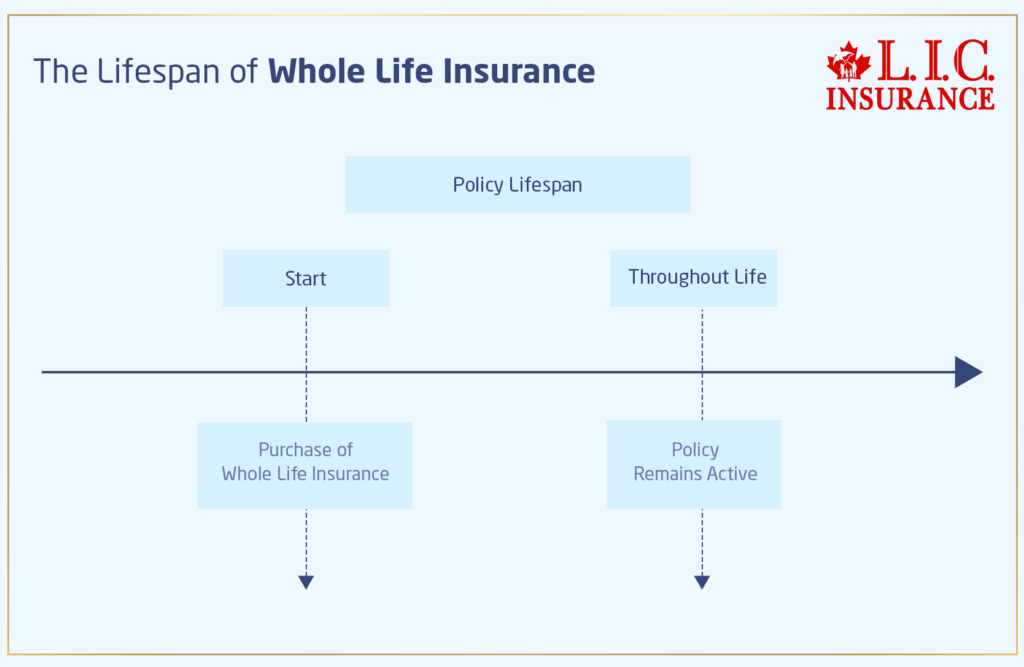
        The Basics of International Student Insurance Plans

        How Do You Choose Term Insurance?

        Today, we are going to talk about how to choose Canadian Term Life Insurance, which is a very important topic.

        Think of Canadian Term Life Insurance as a financial compass. It’s not something you plan to use daily, but in moments of uncertainty, it points you and your family in the right direction, ensuring you don’t lose your way. Being able to figure out how to use this tool can be like managing the busy stock markets: it’s exciting, a little scary, and full of unknowns. How do you begin? What is the smartest thing to do? Which

        How do you choose Term Insurance?

        By Canadian LIC, March 15, 2024, 8 Minutes

        How do you choose Term Insurance

        Today, we are going to talk about how to choose Canadian Term Life Insurance, which is a very important topic.

        Think of Canadian Term Life Insurance as a financial compass. It’s not something you plan to use daily, but in moments of uncertainty, it points you and your family in the right direction, ensuring you don’t lose your way. Being able to figure out how to use this tool can be like managing the busy stock markets: it’s exciting, a little scary, and full of unknowns. How do you begin? What is the smartest thing to do? Which investments or insurance plans, in this case, will give you the most return?

        There is some good news, though: Like making a smart purchase, choosing the right Canadian Term Life Insurance Coverage is a lot of work. First, you look at your collection or the people and things you want to keep safe. After that, you think about the time of your policy, just like you would plan the length of an investment. In the same way that you choose investments that offer good returns without too much risk, you look for insurance that covers a lot without costing too much.

        When you first start looking into policies, Canadian Term Life Insurance premiums, and benefits, it can seem like a very complicated world. However, Canadian Term Life Insurance Policy does become simpler over time, just like the stock market does, as you learn more about it and gain experience. But don’t worry; we will understand it together here, making sure you have all the information you need to make the right decisions.

        Therefore, let us take advantage of this time to plan our finances and set our goals. By the end of this blog, picking out Canadian Term Life Insurance will no longer be a difficult job but an excellent choice. With the right information and a well-thought-out plan, what seemed hard at first will become easy to follow, protecting your family’s future in the most practical manner possible.

        Getting Into the Basics: What's Canadian Term Life Insurance?

        Imagine a Canadian Term Life Insurance Policy as if you’re renting a special box to keep your very important things safe. It’s not for keeping them safe forever, but just for a time you choose. Here’s how to think about it, made simple:

        What if we say that you have to rent a locker for your most special things, like a safe spot where you can keep your treasures when you go on a big trip? Canadian Term Life Insurance Policy works pretty much the same way. It’s like renting a shield for yourself and your family. It’s not something you keep forever, but it’s there to help you out during times when you really need that extra protection.

        You decide how long you need this protection. It could be 10, 20, or 30 years—like choosing how long to rent your safe box.

        This insurance keeps your family’s money safe, like how a safety box keeps jewelry safe. If something happens to you, this insurance helps your family.

        Unlike some insurance that lasts your whole life, Term Insurance is like a short-term agreement. You’re not tied down forever.

        Imagine you’re packing a box with your most important things. You get to decide how big the box should be and how long you need to keep it safe. It’s like that with this insurance — you choose how much protection you need and for how long. It puts you in charge, just like choosing the perfect box for your precious items.

        Think of this insurance as a good deal at the market. It usually doesn’t cost as much, which means more people can afford it. It’s like finding that sweet spot where you get what you need without spending too much, making sure everyone has the chance to keep their important things safe.

        Knowing you have this protection offers comfort and mental satisfaction..

        Canadian Term Life Insurance is simpler to get your head around, especially if insurance seems complicated. It’s straightforward—protection for a time, then it ends.

        Think of Canadian Term Life Insurance as setting up a financial protection net for your family, just for a bit, without locking you into a forever plan. It’s a smart pick if you’re looking to keep your family safe in the future but want to keep things straightforward and adaptable.

        Find Out: Everything about Term Life Insurance in detail

        Find Out: Why to get Term Life Insurance

        Why Canadian Term Life Insurance Fits the Bill

        Let’s understand this in comparison to how you’d pack for a dream journey. You wouldn’t drag every item from home, just the essentials for the trip. Canadian Term Life Insurance is just like that carefully packed suitcase, each item chosen with love to safeguard your family’s financial journey. They know they’ll have what they need until the mortgage is paid off or until the kids are old enough to handle life on their own.

        Choosing the Length

        Picking the length of your Canadian Term Life Insurance Policy is pretty much like deciding how long you’ll rent your place. Opting for a short-term lease can be perfect for temporary situations, say a job relocation that has you moving cities for a bit. Conversely, if you’re settling down and things look steady, signing up for a longer lease makes more sense. That’s how you should approach your insurance, too.

        Think about how long your family will rely on this safety net. It could be until you’ve paid off the big debts or until the kids are all grown up and making their own way in the world. Matching the term of your policy with these life milestones ensures you’ve got coverage just as long as you need it, no more, no les

        Look for the Best Term Life Insurance Quotes

        Shopping around for a great deal on a major purchase, say a family car, really mirrors the hunt for the perfect Canadian Term Life Insurance Quote. You’re aiming for that sweet spot where the cost meets quality head-on. It’s a world of choices out there, much like scrolling through car listings to find one that fits just right with your family’s needs and budget.

        The trick is in comparing those options side by side, ensuring you land a policy that offers solid coverage without stretching your wallet too thin. Just like you wouldn’t settle for the first car you see, diving into insurance quotes to find the one that ticks all the boxes is the way to go.

        Lifestyle and Health: The Personal Touch

        Take your health and way of life as if they were stocks in your financial portfolio. The total performance—or, in this case, the cost—of your Canadian Term Life Insurance Policy is based on many stocks, which are different parts of your lifestyle and health. Your premiums may go up if you live an adventurous life or have a complicated medical history. This is similar to how high-risk investments can change the volatility and possible returns of your portfolio. It’s important to be honest about these parts of your life, as well as have a well-balanced business plan where every choice is made with an eye on how it will affect the whole portfolio. This makes sure that your insurance policy fits perfectly with your story, with no gaps or misalignments. This is similar to how a carefully chosen investment plan fits with your financial goals and risk tolerance.

        Get The Best Insurance Quote From Canadian L.I.C

        Call 1 844-542-4678 to speak to our advisors.

        Best Insurance Plans Helpline From Canadian L.I.C

        Putting the Details Together

        Getting a Canadian Term Life Insurance insurance policy without fully knowing it is like putting together a hard puzzle without looking at the picture on the box. You need to know every part, every step, and what you want to happen. If any part of your policy seems as unclear as a secret message, you should ask for more information. It’s important to understand every part to make sure the big picture—your coverage—is exactly what you wanted.

        Finalizing the Policy

        Finding the right Canadian Term Life Insurance isn’t about achieving perfection on the first attempt. It might require patience, a few adjustments, and perhaps revisiting certain memories, but the perfect fit is out there. And remember, we are right here to help guide you, ensuring we craft the narrative that best safeguards your family’s future one step at a time.

        Find Out: What is the longest Term Life Insurance you can get?

        Find Out: Do you get Money Back for Term Life Insurance?

        Find Out: Can you cash out Term Life Insurance Policy?

        Get The Best Insurance Quote From Canadian L.I.C

        Call 1 844-542-4678 to speak to our advisors.

        Frequently Asked Questions(FAQs): Understanding Canadian Term Life Insurance

        Let’s suppose you are lending your favourite book to a friend for a bit. Canadian Term Life Insurance is sort of like that, but it has a safety net for your family. It’s there to help out if you’re not around, but only for a time you choose. Think of it as a temporary helping hand.

        You’re right; it’s a bit like planning a road trip and figuring out how many snacks you need. You want enough to get you to where you’re going. In insurance terms, think about the big stuff coming up – paying off the house and the kids finishing school. You want your policy to last until these big milestones are taken care of.

        Totally doable. It’s like looking for sales when you need a new pair of sneakers. You want a good deal but also good quality. Take your time, shop around, and you’ll find insurance that fits your budget without skimping on the essentials.

        No worries. It’s like shopping for jeans; there’s a fit out there for everyone. Your insurance might cost a bit more if you’ve got some health problems, but don’t let that stop you. There’s something out there for pretty much everyone.

        It’s like wearing a seatbelt. Sure, you’re a great driver, but you wear it just in case. Getting insurance while you’re young and fit can save you money. Rates are lower, and let’s face it, it’s just smart planning.

        Think of renting an apartment (term life) versus buying a home (whole life). Renting gives you flexibility without a lifelong commitment. Whole life insurance is more of a long-term deal, offering coverage plus some added perks.

        It’s like starting a new show on Netflix. You’ve got to dig around, read some reviews, and maybe watch a few trailers. Take your time exploring options, comparing what you get versus what you’ll spend, and you’ll find the right fit.

        Sure thing. It’s a bit like deciding to buy after you’ve been renting. Many policies let you switch to a more permanent option. Just make sure to check the details first.

        It’s a bit like planning a grocery list for a big party. You estimate how much food you’ll need so nobody goes hungry. For Canadian Term Life Insurance, think about what your family would need to keep the lights on and the pantry stocked if you weren’t around. Cover the big bills and a bit extra for the day-to-day stuff.

        They stay mostly the same, which is pretty cool. Knowing your costs aren’t going to jump up out of nowhere allows you to budget better.

        The sooner, the better. Like catching a movie early so you don’t hit spoilers. Younger buyers often get better rates. So, if you’re thinking about Canadian Term Life Insurance Coverage, now’s good.

        It’s kind of like choosing where to eat out. You want a place with good reviews, fair prices, and great service. Do your homework on Canadian Term Life Insurance companies to find one that treats you right and stands by their word.

        First step, don’t stress. Reach out to your insurance company. It’s like talking to your landlord if rent’s going to be late. Often, they can work with you to adjust your Canadian Term Life Insurance plan and keep you covered.

        Hope that helps make Canadian Term Life Insurance Coverage a little less mysterious! Just remember, it’s all about finding what fits your life and gives you peace of mind.

        Sources and Further Reading

        For further reading and to go deep into the details of choosing Term Life Insurance, consider exploring the following resources:

        Remember, choosing the right Term Life Insurance is a critical decision for your financial security and peace of mind. Take the time to research, compare, and consult professionals if necessary, to ensure you make the best choice for you and your family.

        Key Takeaways

        Your Feedback Is Very Important To Us

          1. Personal Details

          Full Name:


          2. Feedback Questions


          The above information is only meant to be informative. It comes from Canadian LIC’s own opinions, which can change at any time. This material is not meant to be financial or legal advice, and it should not be interpreted as such. If someone decides to act on the information on this page, Canadian LIC is not responsible for what happens. Every attempt is made to provide accurate and up-to-date information on Canadian LIC. Some of the terms, conditions, limitations, exclusions, termination, and other parts of the policies mentioned above may not be included, which may be important to the policy choice. For full details, please refer to the actual policy documents. If there is any disagreement, the language in the actual policy documents will be used. All rights reserved.

          Please let us know if there is anything that should be updated, removed, or corrected from this article. Send an email to Contact@canadianlic.com or Info@canadianlic.com
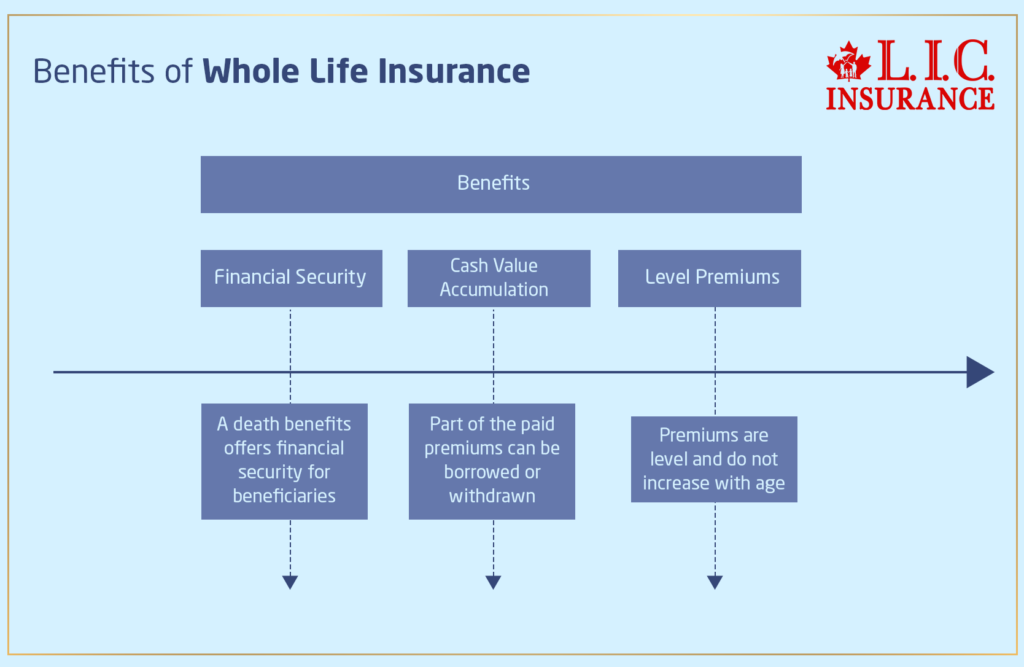
          What Is the Best Age to Buy Universal Life Insurance?

          Has it also happened to you that you are in a pleasant family get-together with the smell of food cooking and sounds of laughter all around, and you see your kids playing and think about how to keep them safe and happy, not just today, but in the future too? Many of us feel like this in a lot of our happy moments. Don’t we? The best solution to this is Life

          What Is the Best Age to Buy Universal Life Insurance?

          By Canadian LIC, March 14, 2024, 8 Minutes

          What Is the Best Age to Buy Universal Life Insurance

          Has it also happened to you that you are in a pleasant family get-together with the smell of food cooking and sounds of laughter all around, and you see your kids playing and think about how to keep them safe and happy, not just today, but in the future too? Many of us feel like this in a lot of our happy moments. Don’t we? The best solution to this is Life Insurance. It might seem like a big, confusing topic if you have not ever thought about it seriously, but it’s the only perfect way to ensure your family is okay, even when you’re not around to take care of them.

          Let’s understand this better through Alex’s story. Alex began looking into life insurance to make sure that his family would always have what they needed. At first, it seemed hard, but he learned that starting at the right time can make things much easier and better for his family.

          Universal Life Insurance can very well help protect your family. This blog will help you understand how it works. It’s not as hard as it sounds; it’s all about making sure the people you love are safe and sound. So, let’s take this step together and make sure you can enjoy many more happy moments with your family without worrying about the future.

          If you have thought about Universal Life Insurance, then you might have many questions related to it, especially if you are new to insurance, and a very important one among them is the right time to start with it. Don’t worry; you are not alone. Many of us get stuck in our financial decisions, hoping to secure our family’s future without understanding where to start. Continue reading, and all your doubts will get clear as you will discover how to make your life and that of your loved ones better and more secure.

          Let’s First Know What Universal Life Insurance

          It’s important to know what Universal Life Insurance is before we try to figure out the best age to buy it. An increasing cash value component and a death benefit are both features of Universal Life Insurance, a type of permanent life insurance. It stands out because payments are flexible, and there is a chance to build wealth without paying taxes on it right away. Think of it as an insurance policy that is tied to a savings account. The choices you make could affect how your money grows in this account.

          Find Out: The Benefits of Universal Life Insurance

          The Best Age to Buy Universal Life Insurance

          You don’t have to go through the world of Universal Life Insurance Plans by yourself. Let’s take a look at it together, focused on the best age to start at, and see how this choice fits into the bigger picture of your life.

          Start Early: In Your 20s and 30s

          Let’s say you want to start saving money in a savings jar. In your 20s or 30s, every coin or note you drop in has the chance to multiply, building a bigger fund over time. This is much like getting Universal Life Insurance early. At this youthful stage, you’re likely in better health, which means lower insurance costs—think of it as a bonus for getting ahead of the game.

          Yet, it’s not just about the immediate savings. The cash value part of your policy—kind of like a special savings account inside your insurance—grows best with more time. As you add to it, just like adding to your savings jar, it expands, becoming a solid foundation that can support big future plans, like owning a home or retiring comfortably.”

          How to Implement This in Your Life:

          Building Foundations: 40s

          By the time you reach your 40s, you’re in the midst of life’s marathon, balancing responsibilities such as family, home, and future planning. You’ve taken care of your money, so now it’s time to make sure it gives you the best harvest. Because it is flexible, Universal Life Insurance can be used in a lot of different ways.

          Right now is a very important time to strengthen the protection system for your family, and it’s also a great time to start saving diligently for retirement. The cash value of a Universal Life Insurance policy can complement your retirement savings, providing an additional source of income if managed wisely.

          How to Implement This in Your Life:

          Starting Late: 50s and After

          Are you entering your 50s or later without Universal Life Insurance? It’s not too late. Now, it’s about preservation and legacy. While premiums may be higher, the value of securing a legacy for your heirs or providing for a surviving spouse can’t be overstated.

          This stage is about strategic financial decisions, ensuring that the ones you love are protected and your life’s work is preserved. It’s also a time to consider the tax advantages of Universal Life Insurance, providing your heirs with a tax-efficient inheritance.

          How to Implement This in Your Life:

          Universal Life Insurance Canada Pros and Cons

          Pros:

          Cons:

          Implementing Universal Life Insurance in Daily Life

          Understanding is one thing; applying this knowledge is another. Here are a few steps to integrate Universal Life Insurance into your financial planning effectively

          The Bottom Line

          Alongside helping you choose the ideal insurance policy for you and your family, working with expert insurance brokers has its advantages. Here’s how you will benefit from hiring an insurance broker in Toronto before choosing a policy:

          Get The Best Insurance Quote From Canadian L.I.C

          Call 1 844-542-4678 to speak to our advisors.

          Best Insurance Plans Helpline From Canadian L.I.C

          Faq's

          Universal life policies are permanent life insurance types that bring together death benefits with a savings component. This savings component can grow based on the policy’s investments, providing flexibility in premiums and the potential for cash value accumulation.

          The best age to consider Universal Life Insurance is in your 20s or 30s, as you’ll qualify for lower premiums and give the cash value component more time to grow. However, purchasing in your 40s or even 50s and beyond can still offer significant benefits, such as financial security for your loved ones and estate planning advantages.

          Yes, you can purchase Universal Life Insurance in your 50s or later. Even though the premiums may be higher due to age and health considerations, it can still provide valuable coverage and serve as a tool for estate planning and leaving a legacy.

          Starting early makes it possible for you to lock in lower premiums due to your age and health. Additionally, the longer your policy is in place, the more time the cash value has to grow, potentially providing you with a substantial financial resource in the future.

          Yes, one of the main features of Universal Life Insurance is its flexibility, including the ability to adjust premium payments. You can pay more to increase the cash value more quickly or pay less if finances are tight as long as enough value is available to cover the costs of insurance.

          The main advantages include flexibility in premiums and death benefits, the potential for cash value growth, and lifelong coverage. It also offers tax advantages, such as tax-deferred growth of the cash value component.

          Yes, there are risks, including the possibility that the investment component may not perform as expected, which can affect the cash value and potentially increase the premiums needed to keep the policy active. It’s important to regularly review and manage your policy with the help of a financial advisor.

          Universal Life Insurance can be very valuable in estate planning. It can provide a tax-efficient way to transfer wealth to your heirs, help cover estate taxes, and make sure that the ones you love are financially cared for after your death.

          <p>Universal Life Insurance policies can be a good investment for some people, as they offer a combination of life insurance protection and the opportunity to grow cash value within a tax-advantaged account. The investment component depends on the chosen sub-accounts or funds, which can vary in performance. It&#8217;s essential to consider your financial goals, risk tolerance, and the cost of the insurance component when evaluating if it&#8217;s a suitable investment for you.</p>
           

          Universal Life Insurance is a type of permanent (or whole) life insurance that offers lifelong coverage as long as premiums are paid. It places both the death benefit with a cash value component together, allowing for more flexibility in premiums and the potential for investment growth.

          Yes, Universal Life Insurance can lapse if the cash value of the policy cannot cover the cost of insurance and other expenses and if no additional premiums are paid. Policyholders need to monitor their policy’s performance and make adjustments to premiums or the death benefit as necessary to prevent lapsing.

          The cost of the insurance component within a universal life policy can increase with age. However, Universal Life Insurance offers flexible premiums, allowing policyholders to adjust the amount they pay. They can utilize the accumulated cash value to cover the cost of insurance as they age, potentially offsetting increases in premiums due to aging.

          Yes, one of the primary features of Universal Life Insurance is its cash value component. Part of the premiums paid into the policy goes towards the cost of insurance, and the excess can be invested, allowing the cash value to grow over time. Under certain conditions, Policyholders can withdraw or take loans against the cash value.

          Universal Life Insurance is a good idea for individuals looking for flexible life insurance coverage that also helps in financial planning. It’s well-suited for those who want the potential to grow cash value within their policy on a tax-advantaged basis, have a need for permanent insurance coverage, and are comfortable with the investment risks involved. It can also be strategic for estate planning, providing tax-efficient wealth transfer to heirs.

          Yes, consulting with a financial advisor is very necessary. They can help assess your financial situation, goals, and needs to determine if Universal Life Insurance is the right choice for you and guide you through the process of selecting and managing a policy.

          The above information is only meant to be informative. It comes from Canadian LIC’s own opinions, which can change at any time. This material is not meant to be financial or legal advice, and it should not be interpreted as such. If someone decides to act on the information on this page, Canadian LIC is not responsible for what happens. Every attempt is made to provide accurate and up-to-date information on Canadian LIC. Some of the terms, conditions, limitations, exclusions, termination, and other parts of the policies mentioned above may not be included, which may be important to the policy choice. For full details, please refer to the actual policy documents. If there is any disagreement, the language in the actual policy documents will be used. All rights reserved.

          Please let us know if there is anything that should be updated, removed, or corrected from this article. Send an email to Contact@canadianlic.com or Info@canadianlic.com
          Is Whole Life Insurance Expensive?

          Have you ever thought that what would be the cost of your mental peace? Specifically, when it comes to ensuring your loved ones are cared for after you’re gone? In the world of financial security, Whole Life Insurance policies can be trusted with full faith. But, many of you might be wondering, at what cost? Today, let’s understand the monthly cost of Whole Life Insurance.

          Is Whole Life Insurance Expensive?

          By Pushpinder Puri,  March 11, 2024, 8 Minutes

          Is Whole Life Insurance Expensive?

          Have you ever thought about the cost of your mental peace? Specifically when it comes to ensuring your loved ones are cared for after you’re gone? In the world of financial security, Whole Life Insurance policies can be trusted with full faith. But, many of you might be wondering, at what cost? Today, let’s understand the monthly cost of Whole Life Insurance.

          A Warm Welcome to the World of Whole Life Insurance

          Whole Life Insurance policy vs Term Life Insurance policy

          Can you think of financial protection that stays with you from the moment you grab onto it until your very last breath? That’s what a Whole Life Insurance Policy offers. It’s not just about the payout upon death; it’s about building cash value over time, a feature that distinguishes it from Term Life Insurance Plans. But with great benefits come great questions: “Is it too expensive for me?” Now, let’s get to know about this together.

          Understanding Whole Life Insurance Monthly Cost

          When talking about Whole Life Insurance, it’s essential to know that the monthly cost can vary widely. Several factors influence this, such as your age, health, the policy’s death benefit, and any additional riders you choose to add. But don’t let the complexity scare you! 

          Here’s a simplified table to give you a rough idea:

          Age GroupApproximate Monthly Cost for a $100,000 Policy

          Age GroupApproximate Monthly Cost for a $100,000 Policy
          20s$80 – $100
          30s$100 – $130
          40s$130 – $170
          50s$170 – $230
          60s$230 – $300+

          Note: These are approximate figures to give you an idea. Actual rates can vary.

          Is It Worth the Investment?

          But you might say, “Those numbers look a little high! And yes, Whole Life Insurance can be more expensive than Term Life Insurance. But do you remember that cash value we discussed? That is a portion of your premium that accrues tax-deferred. As time passes, this becomes a considerable investment, which would not be available in Term Life Insurance.

          Enter Maria, a 30-something young professional. Well, she decides to talk to an Expert who suggests her investing in a Whole Life Insurance Policy. Yes, she pays a higher premium every month than she would for a term policy, but she sleeps well at night knowing she’s building a financial cushion that her family can draw on or that she can borrow against if need be.

          A Closer Look

          Let’s try to do it with some more real stories to understand how this works:

          • John, 40s, healthy: John buys a Whole Life Insurance Policy for $150 per month. Now, fast forward to 30 years later, John has a $200,000 death benefit for his family as well as a large cash value that he can tap into at any time, strengthening his financial safety net.
          • Sara, 50s, with some low-level health issues: Sara pays a little over $220 a month for a premium. That sounds high, but given her health condition as well as the blanket coverage, it’s a strategic play for her peace of mind and her family’s financial future.
          • Alex, 30s, super healthy: Alex started Whole Life Insurance in the early part of his career. He pays around $120 a month for a $250,000 policy. As the years go by, Alex not only receives the death benefit to his loved ones but also accumulates cash value that continues to grow, allowing him to access it for future financial needs, such as purchasing a home or paying for his children’s education.
          • Linda, late 50s, smoker: Understanding the increased risks involved with her smoking, Linda chooses a Whole Life Insurance Policy. Her premium is about $350 a month for a $150,000 policy. Though the premium is expensive because of her age and smoking status, the policy will ensure her family has financial support in the event of an untimely death, and she likes that there is cash value accumulation she can access as another safety net.

          These scenarios illustrate the versatility and lifetime advantages of Whole Life Insurance, demonstrating how policies can be customized to fit the individual situations of policyholders. But like we talked about before, the premiums sound high (especially for people like Linda), but the guaranteed death benefit together with cash value potential give you a dynamic way of planning for financial security.

          Key Takeaways

          Whole Life Insurance is a combination of insurance that gives you death benefit security and the chance to accumulate cash value over time. If you’re in tip-top shape, have increased risk factors, or are somewhere in between, there is a policy structure that should correlate to your financial goals and needs. It makes sense before explaining the entire process that better understanding these few examples can give you an insight into how people in every age group or with every history of health can reap the security and financial planning benefits of Whole Life Insurance.

          Realize that these scenarios are simplified to illustrate the potential impacts and benefits. Actual premiums and policy values will vary based on many factors including your specific health status and lifestyle choices and which insurance provider’s policies you apply for. Always a good idea to reach out to a financial advisor or insurance specialist for a personalized quote and advice specific to your situation.

          Find Out: How does a Whole Life Insurance policy work?

          Get The Best Insurance Quote From Canadian L.I.C

          Call 1 844-542-4678 to speak to our advisors.

          Best Insurance Plans Helpline From Canadian L.I.C

          Making the Decision

          Now, you might be thinking, “Is Whole Life Insurance right for me?” It’s a valid question and one that deserves careful attention. Think about your long-term financial goals, your family’s needs, and how a Whole Life Insurance Policy fits into that situation. Yes, the premiums are higher, but the benefits extend well beyond your lifetime, offering a blend of financial security and growth potential.

          Find Out: What is the biggest risk for Whole Life Insurance?

          Concluding Thoughts: Time to Take Action

          In conclusion, Whole Life Insurance is definitely more expensive than other forms of insurance, but the long-term benefits can be priceless. Not only is it insurance, but it is a financial strategy that scales with you, bringing peace and security to your dependents.

          If you still haven’t taken the plunge, keep in mind that the sooner you buy, the cheaper your policy is likely to be. And how does that translate to what the world sees in general? Speak to a financial adviser if you pay to you line some numbers and decide if a Whole Life Insurance Policy is appropriate or not for you.

          Because Whole Life Insurance is much more than Whole Life Insurance monthly costs. But perhaps Whole Life Insurance coverage may be the answer to that peace that we all seek.

          Note: The numbers provided are for illustrative purposes only. For a detailed quote and more information, consult with a licensed insurance professional in Canada.

          Find Out: The Benefits of Whole Life Insurance

          Get The Best Insurance Quote From Canadian L.I.C

          Call 1 844-542-4678 to speak to our advisors.

          FAQs on Whole Life Insurance Policy and Monthly Cost

          Think of it as a safety net that’s always there, from the moment you say “yes” to it, till your very last day. A Whole Life Insurance Policy is just that. Unlike a winter coat that you outgrow or wear out, this policy sticks with you for your entire life, offering your loved ones financial protection and even growing a little savings pot (cash value) on the side. It’s like having a loyal friend who’s always got your back.

          It works just like a subscription service, like your favorite streaming platform, but you’re getting contentment instead of movies. You pay a fixed monthly amount, which doesn’t change, making it easy to plan your finances. Part of this payment goes towards keeping your insurance active (so your family is protected), and part of it goes into a savings account within your policy, which grows over time.

          It’s just like a subscription service, like your favourite streaming platform, except you’re getting contentment instead of the movies. You have to pay a certain amount of fixed price every month, which remains the same, making the planning of your finances easier. A portion of this payment is allotted to keep your insurance active (therefore protecting your family) and a portion of it goes to a savings account within your policy which grows, over time.

          The awesome thing is that it absolutely does not! Your rate is locked in when you sign up, and it doesn’t change. So whether you’re just getting started or you’ve been with us for decades, your monthly cost is stable.

          If you’re trying to live off the land using discount coupons, you’ll pay less, no? Similarly, although the monthly cost is fixed, you can “lower” your overall expenses by staying healthy (lower rates for non-smokers and healthy people) or choosing a plan that fits just so—not too big, not too small. It’s about striking the right balance that works for your needs and budget.

          Like comparing an all-weather coat to a summer jacket, it may cost more to invest in the coat now, but you’ll get an extra layer of protection and a garment that lasts you through every season. In the same way, Whole Life Insurance provides lifetime coverage and accumulates cash value over time. So, compared to term insurance (the summer coat), it may seem more expensive, but actually, you are getting much more value for every rupee.

          Absolutely! Consider your policy as a piggy bank. It grows when you continue to build on it over time. If you ever need to borrow, you can borrow against the cash value you’ve built. It’s like you are loaning money to yourself — with the intention to pay it back, of course. It is one of the unique perks that make Whole Life Insurance so different.

          If you’re going to take an expensive trip. You’d need a map, right? Likewise, Whole Life Insurance needs some planning before the decision. Think about your long-term financial goals, your family’s needs and whether you want more than just insurance (such as a savings component). It’s somewhat like selecting the most suitable travel partner who’s on board for the long term with you.

          That’s a roller-coaster ride, if you may. A word of caution: If you hit a bump in the road and struggle to pay your premium, relax. Most policies allow for a grace period, and you can catch up. Or, if your policy has accrued enough cash value, you could use it to fund your premiums for a time. It’s like having a spare battery for your phone.

          Yes, it does! So, think of it like opening a seed in your garden. With some sunlight and water , over time, it blossoms into a huge, incredible tree. Just like that, the cash value in your policy accumulates as you pay it down with interest. This part of your policy is actively working, accumulating wealth, and providing future security.

          Absolutely! When you retire, you can draw on the cash value you’ve accumulated over the years, treating it as a private pension to help fund your retirement.

          Simply put, the death benefit is the money upon your death that your family gets, and the cash value is a savings component you can access while you’re alive.

          Not always. It’s like applying to be a member at a club. Some clubs may want to greet you first; others will embrace you immediately. Like Whole Life Insurance, some plans may require you to take a health test before determining your monthly cost, though these plans also have “no exam” options. These may be slightly more expensive because the insurer is taking a greater risk by not assessing your health upfront.

          A Whole Life Insurance Policy offers life coverage for the lifetime as the name itself suggests. It is your steadfast companion that remains at your side through thick and thin, from the policy’s inception to the end of your journey. The permanency of this benefit is part of why Whole Life Insurance is such a valuable component of long-term financial planning.

          Yes, there are! It’s like a tiny financial canope. The cash value in your Life Insurance Policy grows tax-deferred, which means you do not pay taxes on the growth as it accumulates. And, if properly managed, the death benefit to your beneficiaries is generally tax-free.

          Planting Seeds: Your Whole Life Insurance Policy With regular injections (which is your Whole Life Insurance monthly cost), this seed develops into a powerful tree. This tree gives here things important to you: A stable shade (protection of your family if you’re not here) and fruits (uncovering a method of saving something named cash value). It’s a lifelong commitment with lasting rewards.

          Not only does whole life insurance provide lifelong financial protection for your family, but it also creates a cash value that grows slowly as you put money in it. It’s ideal for anyone who’s interested in long-term security and financial growth in one place.

          Riders are like add-on components (for example, moon roofs) to your Whole Life Insurance Policy. Key options include:

          • Accidental Death Rider: An Additional payout in case of an accident.
          • Waiver of Premium Rider: This allows you to keep your policy in force if you are unable to work as a result of illness.
          • Critical Illness Rider: It pays a lump sum when you are diagnosed with a serious illness.

          These tailor your policy to better suit your needs.

          Even if you are single, a Whole Life Insurance Policy can be a smart move. It makes sure your final expenses are paid and also saves up a cash reserve you can tap into later in life. These savings also lower the cost of Whole Life Insurance / monthly payments if you get insured while you are younger and prepare you for whatever comes next, alone or not.

          We’re far from the only questions you might have here; however, the FAQs answered above are merely scratching the surface. We hope you’re now properly informed about Whole Life Insurance policies and their monthly costs. And, of course, everybody’s experience is different, so it’s a bit like searching for a glove that fits perfectly. If you’re interested or have further questions, you can ask an expert who can assist you and guide you toward making the right decision for you and your family.

          The above information is only meant to be informative. It comes from Canadian LIC’s own opinions, which can change at any time. This material is not meant to be financial or legal advice, and it should not be interpreted as such. If someone decides to act on the information on this page, Canadian LIC is not responsible for what happens. Every attempt is made to provide accurate and up-to-date information on Canadian LIC. Some of the terms, conditions, limitations, exclusions, termination, and other parts of the policies mentioned above may not be included, which may be important to the policy choice. For full details, please refer to the actual policy documents. If there is any disagreement, the language in the actual policy documents will be used. All rights reserved.

          Please let us know if there is anything that should be updated, removed, or corrected from this article. Send an email to Contact@canadianlic.com or Info@canadianlic.com
          Can I Leave My Life Insurance to My Child?

          Have you ever thought about the future in a way that brings both worry and hope? If you want to build a life full of memories, achievements, and dreams. Among these dreams is the desire to ensure that your loved ones, especially your children, are taken care of, no matter what life throws your way. This is where the magic of Life Insurance steps in—not just as a policy but as a promise, a promise to secure your child’s future. But can you really leave your Life Insurance to your child? Let’s explore this question, unraveling the possibilities and guiding you through making Life Insurance not just a cost but a valuable investment in your family’s future.

          Can I Leave My Life Insurance to My Child?

          By Canadian LIC, March 5, 2024, 8 Minutes

          Can I Leave My Life Insurance to My Child?

          Have you ever thought about the future in a way that brings both worry and hope? If you want to build a life full of memories, achievements, and dreams. Among these dreams is the desire to ensure that your loved ones, especially your children, are taken care of, no matter what life throws your way. This is where the magic of Life Insurance steps in—not just as a policy but as a promise, a promise to secure your child’s future. But can you really leave your Life Insurance to your child? Let’s explore this question, unraveling the possibilities and guiding you through making Life Insurance not just a cost but a valuable investment in your family’s future.

          The Basics of Life Insurance Beneficiaries

          Let’s start with a simple question: What is a beneficiary? In Life Insurance, a beneficiary is the person or entity you choose to receive the money from your policy when you’re no longer here. It’s like leaving a final gift to someone you care for deeply, ensuring they’re financially secure even when you can’t be there to support them.

          Let’s understand this better with an example. Maria is a single mother of two who works hard to provide for her family. She knows that if something were to happen to her, her children would face not just emotional loss but a financial one, too. So, Maria decides to take out a Life Insurance policy and names her sister, Ana, as the beneficiary, with the understanding that Ana will use the funds to take care of Maria’s children. This decision gives Maria peace, knowing her children will be looked after financially.

          Have you ever thought about who you would choose as your beneficiary? It’s a decision that speaks volumes about your relationships and your hopes for your loved ones’ futures. Reflecting on this can help you understand the importance of making such a choice with care and consideration.

          Find Out: What is Life Insurance and How does it work?

          Can You Leave Life Insurance to Your Child?

          Now, the main question is, “Can I leave my Life Insurance to my child?” The short answer is yes, you can, but there are some important details to consider.

          Firstly, while you can name your child as a beneficiary if they are minors (under 18 or 21, depending on where you live), they cannot directly receive the Life Insurance proceeds until they reach adulthood. This doesn’t mean you shouldn’t do it; it just means you need to plan carefully how the money will be managed until they are old enough.

          Common myths debunked

          Planning Ahead

          You can set up a trust or use the Uniform Transfers to Minors Act (UTMA) account to ensure your child benefits from the Life Insurance proceeds without any legal hiccups. This allows you to appoint someone you trust to manage the funds on behalf of your child until they’re old enough.

          Why Consider This Route?

          Leaving your Life Insurance to your child, with the proper safeguards in place, can provide them with a significant financial head start. Whether it’s for their education, their first home, or other life adventures, it’s a way to be part of their journey long after you’re gone.

          Find Out: Why buy Life Insurance for kids?

          Life Insurance Cost: Understanding What You’re Paying For

          When it comes to Life Insurance, one of the first questions people ask is, “How much will it cost?” Understanding Life Insurance costs is necessary because it’s not just about paying premiums; it’s about investing in your family’s future.

          Breaking Down the Cost

          Life Insurance premiums—the amount you pay for your policy—can vary widely based on several factors, including the type of policy you choose, your age, health, and the amount of coverage you want. Generally, there are two main types of Life Insurance: Term Life Insurance, which covers you for a specific period, and Whole Life Insurance, which offers lifelong coverage and includes an investment component.

          Investing in Your Child’s Future

          When you pay for Life Insurance, you’re not just covering a potential financial gap; you’re also making a Life Insurance investment in your child’s future. Think of it this way: if something were to happen to you, the policy’s death benefit could help cover college tuition, contribute to your first home, or support your dreams in ways you’ve always hoped to.

          Think about how important it is to you to protect your child’s future. Is it about ensuring they can continue their studies without financial limitations? Or it’s about providing kids with some form of security as they enter adulthood. Considering the Life Insurance cost as an investment in these dreams can shift your perspective on the premiums you’re paying today.

          Alternatives for Young Beneficiaries

          If you’re hesitant about leaving your Life Insurance directly to your child, especially if they are a minor, you’re not alone. Many parents and guardians worry about managing the funds until their child is mature enough to responsibly handle such a significant amount. Fortunately, there are several alternatives to ensure your child benefits from your Life Insurance policy without the potential for mismanagement.

          Establishing a Trust

          One popular option is to set up a trust to hold the Life Insurance proceeds. A trust lets you specify how and when the money will be distributed to your child. For example, you could decide that the funds should be used for educational expenses initially, and then any remaining funds be made available to them when they reach a certain age, such as 25 or 30.

          Let’s understand it better with the case of John and Linda, who set up a trust for their daughter, Emily. They wanted to ensure that Emily’s college education would be covered, so they specified in the trust that funds should first be used for tuition, room, and board at a university. Only after her graduation would Emily gain access to the remaining funds to use as she saw fit. This approach satisfied John and Linda, knowing Emily’s education and future were secure.

          Designating a Custodian under UTMA

          Another option is the Uniform Transfers to Minors Act (UTMA), which allows you to name a custodian to manage the assets for the benefit of your minor child. The custodian will have the authority to use the funds for the child’s benefit, following the guidelines you’ve set until the child reaches the age of majority specified by your state.

          Why Consider These Alternatives?

          Both trusts and UTMA accounts offer more control over how the Life Insurance proceeds will be used, ensuring that the money benefits your child in the way you intend. They also protect the funds from being misused and can provide a structured financial upbringing for your child, teaching them the value of money and responsible spending.

          Find Out: The best age to buy Life Insurance

          Making Life Insurance an Investment in Your Child’s Future

          You can change your perspective on Life Insurance by viewing it as an investment in your child’s future rather than merely a safety net. It’s about more than just the death benefit; it’s about creating opportunities for your child that can last a lifetime.

          The Growth Potential of Life Insurance Policies

          Whole Life Insurance Policies, in particular, come with an investment component known as cash value. This part of your policy grows over time, is tax-deferred, and can be borrowed against or withdrawn for various needs, such as funding your child’s education or helping them buy their first home. It’s a way of ensuring that, regardless of what happens, you can contribute financially to your child’s milestones.

          Example: Consider Sarah, who purchased a whole Life Insurance policy when her daughter, Mia, was born. Over the years, the policy’s cash value grew steadily. By the time Mia was ready to go to college, Sarah could use some of this cash value to help pay for tuition, easing the financial burden on the family and allowing Mia to graduate with less student loan debt.

          Strategic Planning for Future Use

          When you think of Life Insurance as an investment, planning strategically for how it can best serve your child’s future needs is essential. This might mean setting up a policy early in your child’s life to maximize growth or choosing a policy with specific investment options that are similar to your long-term goals.

          Give a thought to how a Life Insurance investment could open up for your child. What dreams do you have for their future, and how could the strategic use of Life Insurance help realize them? Reflecting on these questions can help you see Life Insurance in a new light—not just as a cost or a requirement, but as a proactive step towards building your child’s secure and prosperous future.

          Steps to Naming Your Child as a Beneficiary

          Choosing to name your child as a beneficiary of your Life Insurance policy is a significant decision that comes with its own set of considerations and steps. Here are the following points that will make you understand how to go about it, ensuring that your intentions for your child’s financial future are clearly laid out and legally sound.

          Consult with a Financial Advisor or Insurance Agent

          Before making any decisions, speaking with a professional

          who can offer personalized advice based on your financial situation and goals is wise. They can help you understand the implications of naming a minor as a beneficiary and explore alternatives like setting up a trust or UTMA account.

          Decide on the Right Type of Policy

          Whether it’s Term Life Insurance for temporary coverage or Whole Life Insurance for lifelong coverage and investment benefits, choosing the right policy type is essential. Consider what you aim to achieve with the policy’s proceeds and how it fits into your broader financial plan.

          Designate a Trustee or Custodian

          If your child is a minor, you’ll need to appoint a trustee (if you’re setting up a trust) or a custodian (for a UTMA account) to manage the funds until your child reaches adulthood. You should implicitly trust this person to act in your child’s best interest.

          Fill Out the Beneficiary Designation Form Carefully

          When you’re ready to name your child as a beneficiary, ensure that you fill out the designation form with precise details. Suppose you’re using a trust or UTMA account. In that case, you’ll need to include the name of the trust or custodian as the beneficiary, following the specific instructions provided by your insurance company.

          Review and Update Regularly

          Life changes, and so might your wishes for your Life Insurance policy. Regularly review your beneficiary designations and policy details to ensure they come in line with your current intentions. This is especially important after major life events like the birth of another child, divorce, or marriage.

          Interactive Checklist:

          Now that you know the steps to naming your child as a beneficiary, think about how this fits into your overall plan for their future. Are there people in your life whom you trust to manage the funds if necessary? How often do you plan to review your choices to ensure they remain the same as your wishes? Taking these steps is not just about financial planning; it’s about laying a foundation for your child’s future that’s as safe and strong as your love for them.

          Find Out: Is Life Insurance worth it after the age of 70?

          Get The Best Insurance Quote From Canadian L.I.C

          Call 1 844-542-4678 to speak to our advisors.

          Best Insurance Plans Helpline From Canadian L.I.C

          Engaging with Professionals

          As you set up Life Insurance and decide on a beneficiary, engaging with professionals can provide invaluable guidance, mental peace, and clarity. Whether you’re at the beginning of this journey or looking to change an existing policy, here’s how and why you should consider reaching out to experts in the field.

          When to Talk to a Life Insurance Agent

          Finding the Right Professional

          Not all insurance agents and financial advisors are created equal. Look for professionals who have experience with clients in situations similar to yours and who come highly recommended by trusted friends or family members. Certifications and memberships in professional organizations can also indicate an agent’s expertise and commitment to their field.

          Find an Agent Near You

          Many insurance companies and financial advisory firms offer tools on their websites to help you find local agents. These tools typically allow you to enter your zip code and see a list of agents in your area, along with their contact information and sometimes ratings or reviews from clients.

          Preparing for Your Meeting

          To get the most out of your meeting with a Life Insurance agent or financial advisor, come prepared with a list of questions and any relevant documents, such as an existing Life Insurance policy, details about your financial situation, and thoughts on your goals for the policy. Being well-prepared can make the meeting more productive and help the professional give you customized advice.

          Think about what you hope to achieve by getting the help of a Life Insurance agent or financial advisor. What questions do you have for them? How do you envision your child benefiting from your Life Insurance policy? Taking the step to consult with a professional can help ensure that your Life Insurance strategy suits your goals for your family’s future, offering you clarity and confidence in your decisions.

          Find Out: 10 Best Life Insurance Plans in Canada

          Coming to The End

          We’ve gone over the basics of Life Insurance, from designating a beneficiary to making sure your child benefits from your foresight and financial planning. Life Insurance is more than simply a policy; it is the foundation of a safe future for the people you care about the most.

          As we conclude, remember that the decision to leave Life Insurance to your child is a profound expression of love and responsibility. It’s about ensuring that, even in your absence, your child’s future is bright, their dreams attainable, and their security intact. Life Insurance offers a way to be there for your child, supporting them through life’s milestones long after you’re gone.

          Take Action

          Reflect on what you’ve learned and consider taking the next steps:

          Your actions today lay the groundwork for your child’s tomorrow. You can create a legacy of love, security, and opportunity with thoughtful planning and informed decisions

          Faq's

          If you don’t name a beneficiary, or if your beneficiary predeceases you and you haven’t named an alternate, the Life Insurance proceeds will typically go into your estate. This can lead to a longer, more complicated process for your heirs to access the funds, potentially involving probate court.

          Yes, you can change your beneficiary at any time. Life Insurance policies are designed to be flexible in this regard, allowing you to update your beneficiary designations as your life circumstances change. It’s a good practice to review your policy regularly and make updates as needed.

          This depends on your specific circumstances and goals. Leaving the money directly to your child is straightforward but may not be advisable if they are a minor or if you have concerns about their ability to manage the funds responsibly. A trust offers more control over how and when the money is distributed, making it a better option for many families.

          Setting up a trust and specifying the use of funds for educational purposes is one of the most effective ways to ensure that Life Insurance proceeds are used as you intend. You can designate a trustee to oversee the distribution of funds according to the terms you’ve set, such as paying for tuition, books, and other educational expenses.

          Life Insurance proceeds that go directly to your child could impact their eligibility for need-based financial aid since the funds could be considered part of their assets. However, if the proceeds are placed in a trust, they may not be counted as the child’s assets, depending on how the trust is structured. It’s important to consult with a financial advisor or attorney to understand the implications fully.

          The above information is only meant to be informative. It comes from Canadian LIC’s own opinions, which can change at any time. This material is not meant to be financial or legal advice, and it should not be interpreted as such. If someone decides to act on the information on this page, Canadian LIC is not responsible for what happens. Every attempt is made to provide accurate and up-to-date information on Canadian LIC. Some of the terms, conditions, limitations, exclusions, termination, and other parts of the policies mentioned above may not be included, which may be important to the policy choice. For full details, please refer to the actual policy documents. If there is any disagreement, the language in the actual policy documents will be used. All rights reserved.

          Please let us know if there is anything that should be updated, removed, or corrected from this article. Send an email to Contact@canadianlic.com or Info@canadianlic.com
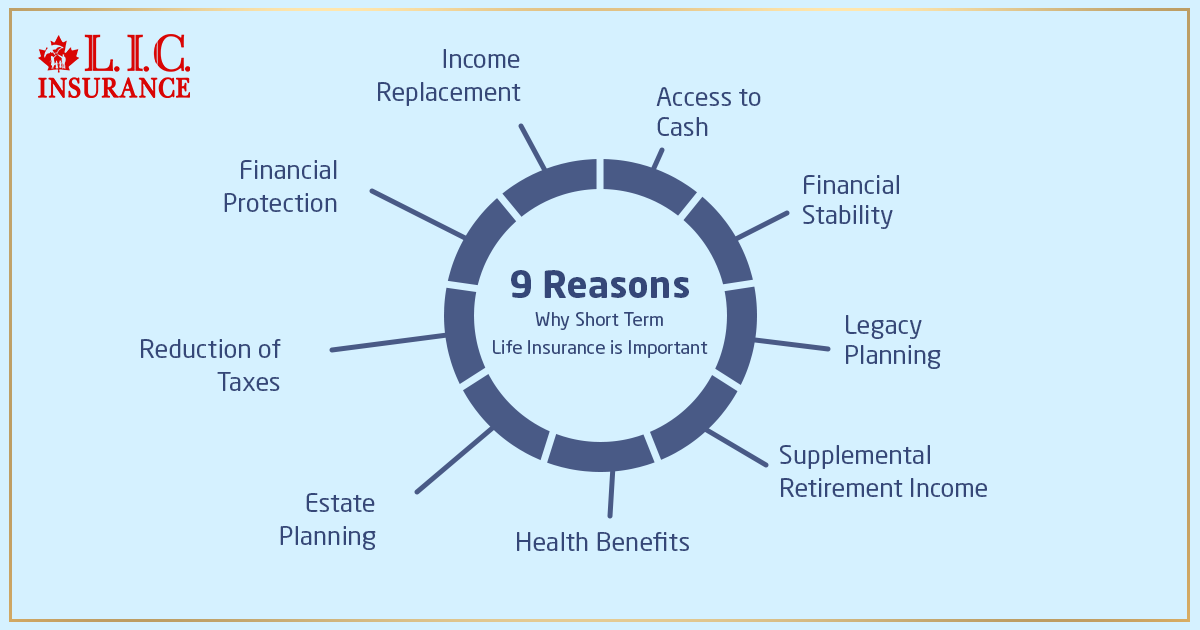
          Celebrating 1000 Reviews on Google

          In the world of insurance, trust and credibility stand as the pillars that support the foundation of any successful brokerage. Today, we’re not just celebrating a number; we’re celebrating a significant milestone that reflects the trust, satisfaction, and loyalty of our clients. Canadian LIC, a leading insurance brokerage in Canada, has officially reached the landmark achievement of receiving 1000 good reviews on Google. This momentous occasion is not just a testament to our dedication to excellence but also a reflection of the enduring relationships we’ve built with our clients across the country.

          Celebrating 1000 Reviews on Google

          By Canadian LIC, February 28 , 2024, 6 Minutes

          Celebrating 1000 Reviews on Google

          In the world of insurance, trust and credibility stand as the pillars that support the foundation of any successful brokerage. Today, we’re not just celebrating a number; we’re celebrating a significant milestone that reflects the trust, satisfaction, and loyalty of our clients. Canadian LIC, a leading insurance brokerage in Canada, has officially reached the landmark achievement of receiving 1000 good reviews on Google. This momentous occasion is not just a testament to our dedication to excellence but also a reflection of the enduring relationships we’ve built with our clients across the country.

          A Journey Built on Trust and Excellence

          Our journey to this point has been nothing short of remarkable. From our humble beginnings, Canadian LIC has always prioritized the needs and well-being of our clients. Our mission has been clear from day one: to provide comprehensive, reliable, and personalized insurance solutions that secure the futures of individuals, families, and businesses alike. Reaching 1000 reviews on Google clearly indicates that we’re fulfilling this mission, one satisfied client at a time.

          The Power of Positive Feedback

          Every review we’ve received is more than just a rating; it’s a story. A story of a family that felt protected in times of uncertainty, a business that found a reliable partner to safeguard its assets, or an individual who received the support they needed when it mattered most.

          Taravat Mazarei

          I recently purchased super visa insurance for my Grandmother from Gangan. I must say, I had a fantastic experience from start to finish. She was incredibly helpful in guiding me through the process and answering all of my questions. Overall, I highly recommend this company to anyone seeking super visa insurance. Their professionalism, efficiency, and quality coverage truly exceeded my expectations.

          Asha Premsagar

          “Exceptional support! Swift responses, clear communication, and a dedicated team. I got a chance to work with Akanksha from Canadian LIC, and she was really helpful, knowledgeable, patient, and responsive to my inquiries. She guided me through the entire process with professionalism.

          Overall, my experience has been excellent. I would recommend them to anyone seeking reliable insurance coverage with excellent customer service.

          Ankush Attri

          The customer service team at Canadian LIC has consistently exceeded my expectations. They were highly responsive, knowledgeable, and always eager to assist with all inquiries or concerns I had. Their commitment to providing excellent service truly sets them apart. They offered me a diverse range of policies from which I could pick the one best suited for me. I’ll be recommending this team to my friends and family for all their insurance needs.
          Thank you so much.

          Manoj Kumar

          “Highly recommend Canadian LIC – Akanksha for Super Visa Insurance! They provided exceptional help and support in getting insurance for my parents’ travel to Canada. Smooth process and excellent service. 5 stars!”

          AND MORE

          These stories collectively paint a picture of a brokerage that goes above and beyond to meet and exceed the expectations of its clients.

          Positive feedback not only serves as a motivator for our team to continue delivering exceptional service but also acts as a source of trust for potential clients seeking trustworthy and efficient insurance solutions in Canada. It reinforces our reputation and helps us stand out in a competitive landscape.

          Commitment to Client-Centric Service

          At Canadian LIC, our clients are the heart of our business. This belief has guided our approach to service, ensuring that every interaction is personalized, respectful, and empathetic. Our team of dedicated professionals is committed to providing expert advice, comprehensive coverage options, and unwavering support throughout the insurance journey. Reaching 1000 reviews reflects this commitment and our clients’ trust in us.

          Continuous Improvement and Innovation

          While celebrating this milestone, we also recognize the importance of continuous improvement and innovation. The insurance landscape is ever-changing, and staying ahead requires an unwavering commitment to adapt and evolve. At Canadian LIC, we are continuously exploring new ways to enhance our services, leverage the latest technologies, and expand our product offerings to meet the changing needs of our clients.

          Looking Ahead: The Future of Canadian LIC

          As we celebrate this milestone, we’re also looking to the future with optimism and excitement. The journey doesn’t end here. Our goal is not only to maintain the level of excellence that earned us these 1000 good reviews but also to set new benchmarks in the insurance industry. We are committed to expanding our reach, enhancing our services, and continuing to build strong, lasting relationships with our clients.

          Get The Best Insurance Quote From Canadian L.I.C

          Call 1 844-542-4678 to speak to our advisors.

          Best Insurance Plans Helpline From Canadian L.I.C

          A Heartfelt Thank You

          We couldn’t have reached this milestone without the trust, support, and feedback of our valued clients. To everyone who took the time to leave a review, share their experience, and recommend our services to others, thank you from the bottom of our hearts. Your trust and satisfaction are what drive us to do better every day.

          To our dedicated team of professionals who have worked tirelessly to provide the best possible service: your hard work, expertise, and passion have been vital in reaching this milestone. This achievement is as much yours as it is Canadian LIC’s.

          Join the Celebration

          We invite you to join us in celebrating this milestone. Whether you’re a long-time client, a recent addition to the Canadian LIC family, or considering our services for your insurance needs, we’re here to serve you with the same commitment to excellence that has brought us this far.

          Hence, reaching 1000 reviews on Google is a significant achievement for Canadian LIC, but it’s just the beginning. We remain dedicated to serving our clients with integrity, professionalism, and a commitment to excellence. Here’s to the next thousand reviews and beyond as we continue to build a brighter, more secure future for all our clients. Thank you for your trust and support. Let’s continue this incredible journey together.

          The above information is only meant to be informative. It comes from Canadian LIC’s own opinions, which can change at any time. This material is not meant to be financial or legal advice, and it should not be interpreted as such. If someone decides to act on the information on this page, Canadian LIC is not responsible for what happens. Every attempt is made to provide accurate and up-to-date information on Canadian LIC. Some of the terms, conditions, limitations, exclusions, termination, and other parts of the policies mentioned above may not be included, which may be important to the policy choice. For full details, please refer to the actual policy documents. If there is any disagreement, the language in the actual policy documents will be used. All rights reserved.

          Please let us know if there is anything that should be updated, removed, or corrected from this article. Send an email to Contact@canadianlic.com or Info@canadianlic.com
          What Is the Difference Between Money Back Policy and a Whole Life Policy?

          Finding your way around the world of life insurance in Canada can be hard, especially since there are so many choices. Among these, two prominent types stand out: the Money Back Life Insurance Policy and the Whole Life Policy. We will go over the main differences, features, and benefits of these plans in this blog to help you make the correct decision.

          What Is the Difference Between Money Back Policy and a Whole Life Policy?

          By Harpreet Puri, February 22, 2024, 8 Minutes

          What Is the Difference Between Money Back Policy and a Whole Life Policy

          Finding your way around the world of life insurance in Canada can be hard, especially since there are so many choices. Among these, two prominent types stand out: the Money Back Life Insurance Policy and the Whole Life Policy. We will go over the main differences, features, and benefits of these plans in this blog to help you make the correct decision.

          What is a Money Back Life Insurance Policy?

          A Money Back Life Insurance Policy is a type of life insurance plan that not only offers coverage over a specific period but also promises returns at regular intervals. This plan is particularly appealing to those who seek both insurance coverage and periodic returns as part of their financial planning.

          Key Features of Money Back Plans

          Periodic Returns: The distinctive feature of a money back plan is that it provides periodic payments to the policyholder, known as survival benefits, during the policy term.

          Death Benefit: In the unfortunate event of the policyholder’s demise, the nominee receives the sum assured, irrespective of the already-paid survival benefits.

          Maturity Benefit: If the policyholder outlives the policy term, they receive a lump sum amount as a maturity benefit.

          Find Out: Everything about Money Back Life Insurance Policy

          What is a Whole Life Policy?

          Contrastingly, a Whole Life Policy provides lifelong coverage, typically up to the age of 100. Unlike the Money Back Life Insurance Policy, it does not offer periodic returns but focuses on delivering a substantial death benefit to the nominee upon the policyholder’s demise.

          Key Features of Whole Life Policies

          Lifelong Coverage: This policy remains active for the policyholder’s entire life, offering peace of mind with continuous coverage.

          Death Benefit: The primary feature is the guaranteed payout to the beneficiaries upon the policyholder’s death.

          Cash Value: Some Whole Life Policies accumulate cash value over time, which can be borrowed against if needed.

          Find Out: The biggest risk of Whole Life Insurance

          Comparing Money Back Plans and Whole Life Policies

          When you compare money back plans and Whole Life Policies, several key distinctions emerge:

          Coverage Duration: Money Back Plans have a fixed term, while Whole Life Policies cover you for life.

          Payment Structure: Money Back Plans provide periodic payouts, whereas Whole Life Policies typically offer a death benefit only.

          Investment Component: Money Back Plans have a more pronounced investment aspect, offering periodic returns. Whole Life Policies, conversely, focus on lifelong coverage with a potential cash value accumulation.

          Get The Best Insurance Quote From Canadian L.I.C

          Call 1 844-542-4678 to speak to our advisors.

          Best Insurance Plans Helpline From Canadian L.I.C

          Taxation and Benefits in Canada

          Tax-Free Death Benefits: Both Money Back Life Insurance Policies and Whole Life Policies in Canada offer tax-free death benefits. This means that when the policyholder passes away, the sum assured, which is paid to the beneficiaries, is not subject to income tax. This feature is particularly important for estate planning, ensuring that loved ones receive the full financial benefit.

          Non-Tax-Deductible Premiums: Unlike some other financial instruments, the premiums paid towards both Money Back and Whole Life Insurance Policies are not tax-deductible. This means you cannot claim a tax deduction for the amount you pay as premiums on your annual tax return.

          Tax-Deferred Growth in Whole Life Policies: Whole Life Insurance Policies often include a savings component that accumulates cash value over time. The growth of this cash value is tax-deferred, meaning you don’t pay taxes on the interest, dividends, or capital gains as long as they remain invested in the policy.

          Access to Cash Value: Policyholders of Whole Life Insurance can access the cash value through loans or withdrawals. While loans against the policy’s cash value are generally tax-free, withdrawals may be subject to taxation, especially if the amount withdrawn exceeds the premiums paid.

          Estate Planning and Wealth Transfer: Both types of insurance policies play a significant role in estate planning and wealth transfer. The tax-free nature of the death benefit makes these policies a strategic tool for transferring wealth to the next generation or settling estate debts without burdening beneficiaries with additional taxes.

          Potential for Creditor Protection: In some provinces in Canada, life insurance policies can offer creditor protection. This means that in certain situations, the cash value of your policy and the death benefit may be protected from creditors, which can be an essential consideration for business owners and professionals.

          Funding for Final Expenses: Life insurance policies, including Whole Life and Money Back Policies, can be used to fund final expenses such as funeral costs, which are inevitable and often substantial. The tax-free payout can ease the financial burden on families during a difficult time.

          No Capital Gains Tax at Maturity for Money Back Policies: For Money Back Policies, the lump sum received upon policy maturity is typically free from capital gains tax. This makes it an attractive option for those looking to receive a payout at a later stage in life without worrying about the tax implications.

          Flexibility in Beneficiary Designation: Policyholders have the flexibility to name anyone as a beneficiary, including family members, friends, or charitable organizations. This flexibility allows for strategic planning regarding who benefits from the policy and how it is similar to your overall estate plan.

          Role in Retirement Planning: While not a primary retirement tool, the cash value component of Whole Life Insurance can supplement retirement income. The tax-deferred growth can accumulate over the years and be accessed in retirement, potentially providing a financial cushion.

          Who Should Choose Which Policy?

          The choice between a Money Back Plan and a Whole Life Policy depends on individual financial goals and needs:

          If you prioritize receiving periodic returns while having life coverage, a Money Back Life Insurance Policy may be more suitable.

          On the other hand, if your focus is on providing long-term financial security to your loved ones with a robust death benefit, a Whole Life Policy could be the better choice.

          The End

          Choosing the right life insurance policy is an essential decision that impacts not just your financial planning but also the future security of your loved ones. In Canada, both Money Back Life Insurance Policies and Whole Life Policies offer unique benefits and features. While Money Back Plans provide the dual advantage of insurance coverage and periodic financial returns, Whole Life Policies ensure lifelong coverage and a significant death benefit

          As you consider your options, remember that the right choice fulfills your long-term financial objectives and life circumstances. We encourage you to engage with financial experts and compare money back plans, features, and benefits thoroughly. Making the right choice today can secure your family’s financial future and bring mental peace. Don’t hesitate to take this important step towards saving your family’s future.

          faq's

          A Money Back Policy can be a good choice for individuals who seek periodic returns in addition to life insurance coverage. It combines the benefits of an investment and a life insurance policy, making it suitable for those with specific financial goals like funding education, retirement, or other milestones.

          In Canada, the death benefit from a Money Back Policy is generally tax-free. However, the taxation of survival benefits and maturity benefits can vary and may be subject to certain conditions. It’s advisable to consult a tax advisor for specific guidance.

          Whole life insurance policies can be a good investment for those seeking a combination of lifelong insurance coverage and a cash value component. They offer a fixed death benefit and a savings account that grows tax-deferred. However, they are generally more expensive than term insurance, so they may only be suitable for some.

          In Canada, the death benefit received from a whole life insurance policy is generally tax-free. However, if the policy has a cash value component and you surrender the policy, the cash value may be subject to taxes.

          Whole life insurance makes sense for individuals who require lifelong coverage, have long-term financial dependents, or are interested in estate planning. It’s also suitable for those who want to accumulate a tax-deferred savings component through their insurance.

          Whole life insurance is considered “paid up” when no further premium payments are required to keep the policy in force. This can occur after a set number of years or at a certain age, as specified in the policy terms.

          Whole life insurance starts accumulating cash value after the initial few years of premium payments. The cash value grows tax-deferred over the life of the policy and can be borrowed against or withdrawn under certain conditions.

          Whole life insurance can be purchased from insurance brokers, financial advisors, or directly from insurance companies in Canada. It’s important to compare policies from different providers to find one that best suits your needs.

          The “best” whole life insurance policy varies depending on individual needs and preferences. Researching and comparing policies from reputable insurance companies is advisable, considering factors like premium costs, coverage benefits, and company ratings.

          Whole life insurance covers the policyholder’s entire life, providing a death benefit to the beneficiaries and a cash value component that grows over time. It can also cover funeral expenses and debts and financially support dependents.

          Whole life insurance is generally more expensive than Term Life Insurance because it offers lifelong coverage and includes a savings component. The exact cost varies based on the policy’s features and the individual’s circumstances.

          A correct statement about whole life insurance is: “Whole life insurance provides lifelong coverage with a guaranteed death benefit and accumulates cash value over time.”

          Whole life insurance may be considered better than term insurance for those seeking lifelong coverage, a guaranteed death benefit, and a cash value savings component. It’s suitable for long-term financial planning and estate purposes, unlike term insurance, which only provides coverage for a specific period.

          Whole life insurance does not expire as long as premiums are paid. It provides coverage for the lifetime of the insured, typically up to 100 years.

          No, whole life insurance premiums generally remain level and do not increase with age once the policy is in force. The premium is set at the start of the policy and is calculated based on the insured’s age, health, and coverage amount at that time.

          A Money Back Life Insurance Policy provides coverage for a fixed term and offers periodic returns (survival benefits), along with a death benefit. In contrast, a Whole Life Policy offers lifelong coverage with a death benefit and potentially accumulates cash value but does not provide periodic returns.

          Generally, the survival benefits from a Money Back Plan are not taxable. However, consulting with a financial advisor for the latest tax-related information is always advisable.

          Yes, some Whole Life Insurance Policies accumulate cash value over time, which you can borrow against. The specifics depend on the terms of your policy.

          If you outlive the term of your Money Back Life Insurance Policy, you will typically receive a lump sum amount as a maturity benefit.

          Is a Money Back Life Insurance Policy a good investment option?

          While both policies offer a death benefit, the Whole Life Policy primarily focuses on providing a substantial death benefit as lifelong coverage, whereas the Money Back Plan combines the death benefit with periodic survival benefits.

          The ability to switch between policies depends on the terms of your insurance provider. Some insurers may allow such changes, while others may not.

          The cost of each policy type varies based on factors like coverage amount, policy term, and individual risk factors. Money Back Plans might be more expensive due to their additional feature of periodic returns.

          Individuals looking for lifelong insurance coverage and a significant death benefit, usually for estate planning or leaving a legacy, may find Whole Life Policies more suitable.

          Choosing between these policies depends on your financial goals, need for periodic returns, coverage duration preference, and investment appetite. It’s advisable to consult with a financial advisor to help make this decision.

          Money-back insurance provides life coverage for a specified term and pays out a portion of the sum assured at regular intervals as survival benefits. If the policyholder survives the policy term, they receive a lump sum as a maturity benefit. In the event of the policyholder’s death during the term, the nominee receives the full sum assured, regardless of the already-paid survival benefits.

          Whole Life Insurance provides coverage for the policyholder’s entire life, typically up to 100 years. It guarantees a death benefit to the beneficiaries upon the policyholder’s demise. Some policies also accumulate a cash value over time, which can be borrowed against. Premiums are usually higher compared to term life insurance, given the lifelong coverage and cash value benefits.

          Universal Life Insurance is a type of Permanent Life Insurance like Whole Life Insurance, but it offers more flexibility. Policyholders can adjust their premiums and death benefits within certain limits. Universal Life also offers a savings element that grows based on market interest rates, whereas Whole Life Insurance has a fixed interest rate on its cash value component.

          Choosing between term and whole life insurance depends on your financial goals, coverage needs, and budget. Term life insurance is suitable for those seeking affordable, temporary coverage for a specific period, such as until children are financially independent. Whole life insurance is more appropriate for those seeking lifelong coverage, with an additional component of cash value accumulation.

          The cost of Whole Life Insurance varies based on factors like age, health, the sum assured, policy terms, and additional riders. Typically, Whole Life Insurance is more expensive than term life insurance due to its permanent coverage and cash value component. Getting a personalized quote from an insurance provider for accurate pricing is best.

          Common riders for Whole Life Insurance include the Accidental Death Benefit Rider, Waiver of Premium Rider, Disability Income Rider, Critical Illness Rider, and Long-Term Care Rider. These riders enhance the policy with additional benefits, offering protection against specific circumstances.

          Modified Whole Life Insurance is a type of Whole Life Policy where premiums start lower and increase after a specified period. This can make initial payments more affordable, but it’s important to plan for higher future premiums.

          The amount of life insurance you need depends on your financial obligations, debts, income, dependents’ needs, and long-term financial goals. A common rule of thumb is to have a policy that’s 5-10 times your annual income, but this varies based on individual circumstances.

          Even if you’re single with no dependents, life insurance can be beneficial. It can cover your debts and funeral expenses and provide financial support to aging parents or a charity of your choice. It also locks in your insurability in case your situation changes in the future.

          The above information is only meant to be informative. It comes from Canadian LIC’s own opinions, which can change at any time. This material is not meant to be financial or legal advice, and it should not be interpreted as such. If someone decides to act on the information on this page, Canadian LIC is not responsible for what happens. Every attempt is made to provide accurate and up-to-date information on Canadian LIC. Some of the terms, conditions, limitations, exclusions, termination, and other parts of the policies mentioned above may not be included, which may be important to the policy choice. For full details, please refer to the actual policy documents. If there is any disagreement, the language in the actual policy documents will be used. All rights reserved.

          Please let us know if there is anything that should be updated, removed, or corrected from this article. Send an email to Contact@canadianlic.com or Info@canadianlic.com
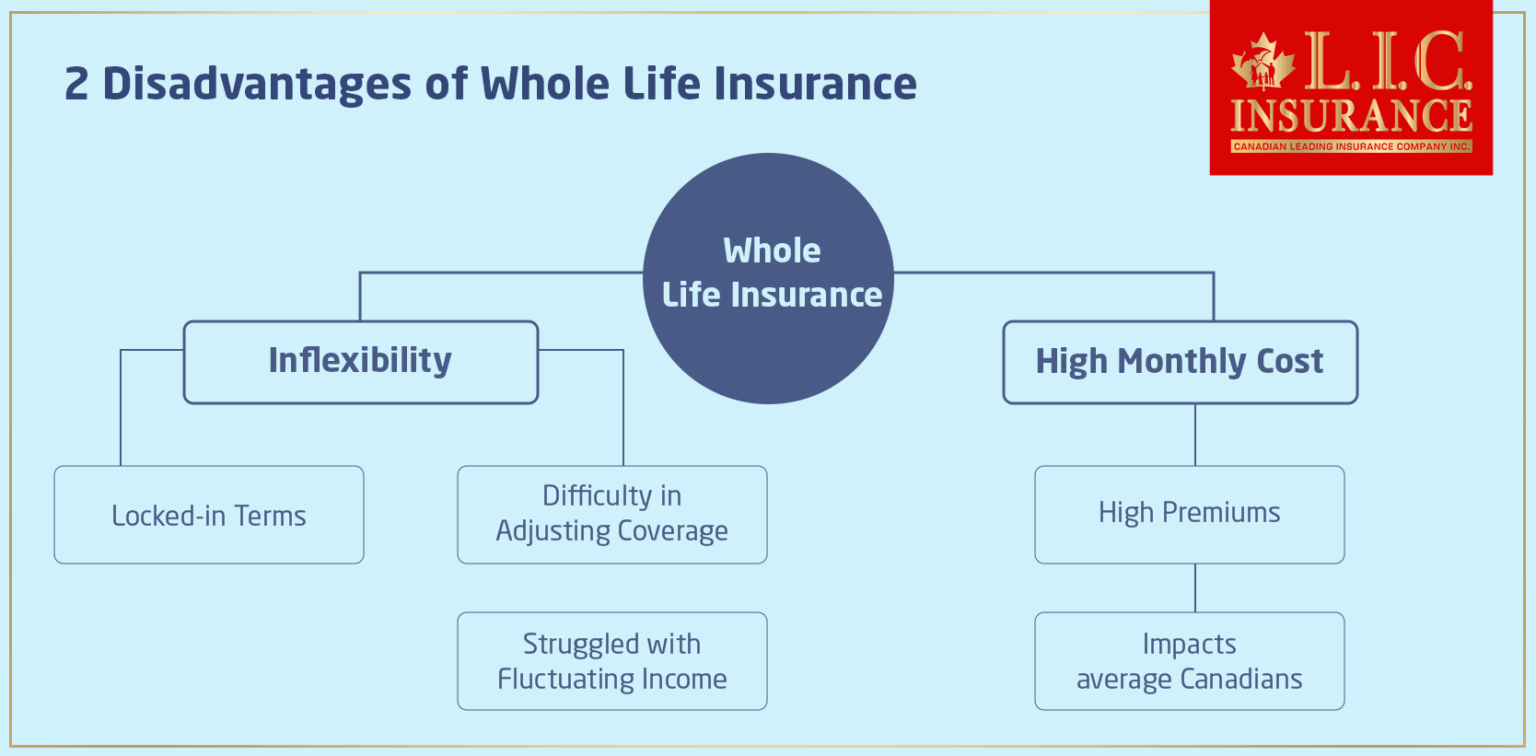
          Are There Any Tax Benefits for Life Insurance?

          When it comes to financial planning, Life Insurance is usually seen as a protective measure that will help your family if you die too soon. In Canada, though, Life Insurance is useful for more than just safety, especially when it comes to taxes. Understanding how Life Insurance can help you save on taxes can be a big part of your financial plan. This blog’s goal is to look into these benefits. So keep reading to learn more about the subject.

          Are There Any Tax Benefits for Life Insurance?

          By Canadian LIC,  February 21, 8 Minutes

          Are There Any Tax Benefits for Life Insurance?

          When it comes to financial planning, Life Insurance is usually seen as a protective measure that will help your family if you die too soon. In Canada, though, Life Insurance is useful for more than just safety, especially when it comes to taxes. Understanding how Life Insurance can help you save on taxes can be a big part of your financial plan. This blog’s goal is to look into these benefits. So keep reading to learn more about the subject.

          The Basics of Life Insurance

          The Basics of Life Insurance
          Before going into the tax benefits, let’s first understand what a Life Insurance policy entails. In Canada, Life Insurance policies are agreements between an individual (the policyholder) and an insurance company. Upon the death of the insured, the policy pays out a death benefit to designated beneficiaries. There are mainly two types of Life Insurance – Term Life InsuranceWhole Life and Universal Life Insurance and offer coverage for the insured’s lifetime.

          Tax-Free Death Benefit

          One of the primary tax benefits from Life Insurance is the tax-free death benefit. Regardless of whether you choose a term or a permanent policy, the death benefit paid to your beneficiaries is generally free from federal and provincial income tax. This aspect is very important as it ensures that your beneficiaries receive the full amount of the policy without any deductions, providing them with financial security and the ability to:

          Tax-Deferred Growth in Permanent Life Insurance

          Permanent Life Insurance policies offer a unique feature – a cash value component that grows over time. This cash value accumulation is tax-deferred, meaning you don’t pay taxes on the growth as long as the policy is in force. This allows your investment to grow more efficiently over time. However, it’s important to note that tax may be applicable if you decide to withdraw funds from the cash value.

          Tax Advantages of Policy Loans

          Another significant aspect of Permanent Life Insurance is the ability to take out loans against the policy’s cash value. These loans can be a tax-advantaged way to access funds. You’re essentially borrowing from yourself, and the loan amount is not subject to tax. However, it’s vital to understand that the loan amount, along with interest, may reduce the death benefit and cash value if not repaid.

          Estate Planning and Life Insurance

          Life Insurance can play an essential role in estate planning. The death benefit from a Life Insurance policy can provide the funds to pay any estate taxes due upon your death, ensuring that your heirs are not burdened with significant tax liabilities. This can be particularly important in preserving the value of an estate for your beneficiaries.

          Get The Best Insurance Quote From Canadian L.I.C

          Call 1 844-542-4678 to speak to our advisors.

          Best Insurance Plans Helpline From Canadian L.I.C

          Considerations for Business Owners

          For business owners, Life Insurance can provide unique tax benefits. It can be used to fund buy-sell agreements or provide key person insurance, both of which can offer tax-efficient solutions for business continuity and succession planning.

          Is Life Insurance Right for You?

          Is Life Insurance Right for You

          Each person has different needs when deciding if Life Insurance is a good addition to their financial plan. A lot of personal factors need to be carefully thought through. In this evaluation, it’s not enough to just know that Life Insurance exists; you also need to know how it fits into your particular situation. Let us talk more about what you should think about.

          Understanding Your Financial Goals

          Your financial aspirations should be considered when deciding whether to incorporate a Life Insurance policy into your plan. Are you looking to provide security for your family after you’re gone, or are you more focused on aspects like saving for retirement or planning for your children’s education? A Life Insurance policy can serve multiple purposes. Besides offering peace of mind about your family’s financial security, certain types of Life Insurance come with cash value components that grow over time, which can be an asset for long-term financial goals.

          Analyzing Family Needs

          Your family’s needs are a topmost priority when considering Life Insurance. If you are a primary breadwinner, how will your family manage financially in your absence? A Life Insurance policy ensures that your family’s standard of living can be maintained in the event of your untimely demise. It can provide for essentials like daily living expenses, mortgage payments, and educational costs for your children. This protective shield is one of the most profound expressions of care and responsibility towards your family.

          Evaluating Tax Situation

          Understanding the tax benefits of Life Insurance is vital. In Canada, for instance, the death benefit from a Life Insurance policy is generally tax-free, which means your beneficiaries receive the full amount. Additionally, permanent Life Insurance policies offer a tax-deferred growth opportunity on the cash value. This means you won’t pay taxes on the policy’s growth until you withdraw the money, potentially allowing for more significant growth over time. These tax advantages can substantially benefit your overall financial strategy, especially if you’re in a higher tax bracket.

          Considering Your Current Age and Health

          Age and health are significant factors in determining the cost and type of Life Insurance. Generally, the younger and healthier you are, the lower the premiums. It’s advisable to consider Life Insurance at an early stage to lock in lower rates and better terms. However, even if you’re older or have health issues, Life Insurance options are still available, though they might come at a higher cost.

          Consulting a Financial Advisor

          Given the complexities surrounding a Life Insurance policy and the tax benefits from Life Insurance, consulting with a financial advisor is invaluable. An advisor can provide personalized advice based on your unique financial situation, goals, and family needs. They can help you learn the various types of Life Insurance policies, explain their benefits and limitations, and how they fit into your overall financial plan.

          Find Out: What is the best age to buy Life Insurance?

          Bottom line: Life Insurance payouts are usually tax-free in Canada

          If you want to make the best decisions about your financial future, you need to know about the tax benefits of Life Insurance in Canada. Life Insurance isn’t just a form of protection; it can also be a helpful instrument for planning your finances, with tax benefits that can help you and the ones who will benefit from you.

          If you’re considering integrating Life Insurance into your financial plan, it’s time to take action. Reach out to a financial advisor to discuss your options and how a Life Insurance policy can enhance your financial well-being. Remember, the right policy can provide not only mental peace but also significant tax advantages that can positively impact your financial journey.

          Find Out: Is Life Insurance a good investment in Canada?

          Get The Best Insurance Quote From Canadian L.I.C

          Call 1 844-542-4678 to speak to our advisors.

          Contact us now to learn more about Life Insurance and your taxes

          Uncover the full potential of Life Insurance in your financial strategy with Canadian LIC, a leading insurance brokerage in Canada. Our expert team specializes in simplifying the complexities of Life Insurance and its tax benefits, ensuring you make the best decisions. Whether securing your family’s future, planning for retirement, or protecting business interests, Canadian LIC tailors solutions to your unique needs. Contact us now to explore how Life Insurance can enhance your financial planning. Trust Canadian LIC to guide you toward the most beneficial Life Insurance policy for your specific situation.

          Find Out: Is it worth having Life Insurance after the age of 70?

          Faq's

          In Canada, a Life Insurance policy’s most significant tax benefit is that the death benefit paid to beneficiaries is generally tax-free. Additionally, with Permanent Life Insurance policies, the cash value grows tax-deferred. This means you won’t owe taxes on any growth within the policy unless you make a withdrawal.

          Absolutely. Life Insurance can be a strategic component of estate planning. The tax-free death benefit can provide the funds necessary to cover any estate taxes, ensuring that your heirs are not burdened with significant tax liabilities and preserving the value of your estate.

          Age and health are essential factors in determining the cost and availability of Life Insurance. Typically, younger and healthier individuals receive lower premiums. However, there are policies available for older individuals or those with health issues, though they may come at a higher cost.

          Yes, policyholders can access the cash value of their permanent Life Insurance through loans or withdrawals. However, it’s important to note that this can reduce the death benefit and may have tax implications.

          Term Life Insurance provides coverage for a specified period and pays out only if the policyholder dies during that term. Permanent Life Insurance, on the other hand, provides coverage for the policyholder’s entire life and includes a cash value component that grows over time.

          Yes, consulting with a financial advisor is highly recommended. They can help you understand how a Life Insurance policy fits your overall financial goals and advise on the best type of policy for your needs.

          Choosing the right policy involves assessing your financial goals, family needs, health status, and budget. It’s advisable to compare different policies and consult with a financial advisor to find a policy that best suits your individual circumstances.

          Yes, the death benefit from a Life Insurance policy can be used by beneficiaries to pay off debts, including mortgages, personal loans, or credit card debts, thereby relieving financial stress during difficult times.

          In Canada, beneficiaries generally do not have to pay taxes on the death benefit received from a Life Insurance policy. The amount is typically paid out tax-free, making it a financially efficient way to transfer wealth or provide for your loved ones after your passing.

          For individuals, Life Insurance premiums are not typically tax-deductible in Canada. However, there are certain situations, especially in the context of business-related Life Insurance, where premiums may be deductible. It’s always best to consult with a tax professional for specific advice in these cases.

          Life Insurance is taxable in Canada under certain circumstances. For instance, if the policyholder surrenders a permanent Life Insurance policy, the cash value received over and above the premiums paid can be subject to taxation. Additionally, if a corporation is the beneficiary of a policy, there may be tax implications.

          The deductibility of Life Insurance premiums for business owners in Canada depends on the purpose and structure of the policy. If the policy is used as collateral for a business loan, a portion of the premiums may be deductible. The specific amount and eligibility should be discussed with a tax professional.

          A cost that can be taken out of your gross income to lower your taxable income is called an income tax deduction. When you take deductions, the amount of income that is taxed goes down. This could mean that you owe less in taxes generally.

          Yes, Life Insurance can be an effective tax planning tool in Canada. Its tax-free death benefit, potential for tax-deferred growth in permanent Life Insurance policies, and the possibility of using insurance for business-related tax strategies make it a versatile tool in financial and tax planning.

          While Life Insurance proceeds are generally not taxable, they cannot directly reduce the tax on your final tax return. However, the tax-free nature of the death benefit can provide significant financial relief to beneficiaries, which can indirectly impact the overall tax situation of an estate.

          In most cases, you do not need to report Life Insurance payouts on your tax return in Canada, as the death benefit is typically tax-free. However, if there are any taxable elements (like interest earned on the payout), you should report those. Always consult with a tax professional for accurate reporting.

          Using your Life Insurance policy as collateral for a loan does not in itself trigger a tax. However, if you surrender the policy or it lapses with an outstanding loan, the policy proceeds used to pay off the loan may be considered taxable income to the extent they exceed the policy’s adjusted cost basis.

          The above information is only meant to be informative. It comes from Canadian LIC’s own opinions, which can change at any time. This material is not meant to be financial or legal advice, and it should not be interpreted as such. If someone decides to act on the information on this page, Canadian LIC is not responsible for what happens. Every attempt is made to provide accurate and up-to-date information on Canadian LIC. Some of the terms, conditions, limitations, exclusions, termination, and other parts of the policies mentioned above may not be included, which may be important to the policy choice. For full details, please refer to the actual policy documents. If there is any disagreement, the language in the actual policy documents will be used. All rights reserved.

          Please let us know if there is anything that should be updated, removed, or corrected from this article. Send an email to Contact@canadianlic.com or Info@canadianlic.com
          Can You Convert Universal Life to Whole Life?

          Universal Life Insurance policies offer flexibility and customizable features, making them an attractive option for many Canadians seeking financial protection and investment opportunities. However, circumstances change, and you may find yourself wondering if you can convert your Universal Life Insurance policy to Whole Life Insurance. In this blog, we will learn the process of converting Universal Life Insurance to whole life, addressing key considerations, benefits, and potential drawbacks.

          Can You Convert Universal Life to Whole Life?

          By Pushpinder Puri, February 14, 2024, 11 Mins

          Can you convert Universal Life to Whole Life

          Members have the flexibility to customize their Universal Life policy, which makes it an attractive option for many Canadians looking for protection and investment opportunities. But life throws us curves, and so you’re probably wondering can I convert my Universal Life Insurance to Whole Life Insurance.” This post will address the specifics, including various pros and cons, of replacing Universal Life Insurance and considering a whole life conversion.

          Understanding Universal Life Insurance Policies

          But, before we get into converting let’s get what Universal Life Insurance means?

          Universal Life Insurance: One form of Permanent Life Insurance is a policy which bundles a death benefit with a savings portion. The traditional plan provides policyholders the ability to change both the premium payments they make and the death benefit they receive as their financial situation and objectives change. Universal Life Policies have cash value accumulations, which allows the policyholder to save over time.

          Exploring Whole Life Insurance

          Whole Life Insurance, on the other hand, provides lifelong coverage with fixed premiums and guaranteed cash value accumulation. Unlike Universal Life Insurance, where premiums and death benefits can fluctuate, Whole Life Insurance offers stability and certainty, making it a popular choice for those seeking long-term financial security.

          Universal Life Insurance vs. Whole Life: An Overview

          In comparing universal life policies to Whole Life Insurance, it really is important to recognize that they have different features, and one may be more appropriate than the other based on their specific financial needs and objectives.

          Universal Life Insurance Policies:

          Universal Life Insurance Policy provides flexibility and customizable features, enabling policyholders to adjust Universal Life Insurance premiums, payments, and death benefits according to their changing financial situations. Most of these policies also have a savings component that builds cash value over time. The policyholder can access this value through policy loans or withdrawals, offering increased liquidity for different financial needs.

          Whole Life Insurance Policies:

          Whole Life Insurance offers permanent coverage and stable Whole Life Insurance hauliers, and guaranteed cash value growth. Drastically different from universal life policy … Financial Planning Moreover, Whole Life Insurance policies provide a guaranteed death benefit, meaning that a predetermined payment is made to the beneficiaries upon the death of the person whose life was insured.

          More: Know the benefits of Whole Life Insurance

          Key Differences

          Universal Life Insurance vs Whole Life Insurance

          Universal Life Insurance vs Whole Life Insurance. The most noticeable variation between the two is flexibility and stability. Universal Life Insurance Flexible premium payments and flexible death benefit options for those with changing financial needs. In contrast to this, Whole Life Insurance provides stability and security with fixed premiums and guaranteed cash value accumulation giving you worry free financial security all your life.

          Can You Convert Universal Life Insurance to Whole Life in Canada?

          Convert Universal Life Insurance to Whole Life in Canada

          Can I convert my Universal Life Insurance policy to Whole Life Insurance in Canada? Yes, it can be converted, but this is subject to change and depends on your provider and policy terms. There are some advantages to converting your Universal Life Insurance into Whole Life, such as:

          Key Considerations Before Converting

          The points below will come in handy for you when considering converting a Universal Life Insurance to a Whole Life Insurance:

          Benefits of Converting Universal Life Insurance to a Whole Life Insurance Policy

          Here are the reasons you’re going to love converting your Universal Life Insurance policy to Whole Life Insurance in Canada:

          Why Some Canadians Consider Switching from Universal to Whole Life

          Just as Canadians’ financial needs evolve throughout their lives, so does the type of life insurance that makes sense at any given time. One of those shifts has come in the form of more clients wanting to exchange their currently flexible but complicated Universal Life Insurance for the guaranteed protection of Whole Life Insurance. Generally it’s not a decision made in the dead of night — it tends to happen as years of expertise, the evolution of life stages, or a reconsideration of long-term financial security.

          And with that, below are the main reasons people are re-evaluating their universal life vs whole life strategy and making the change:

          1. Shift from Wealth-Building to Stability

          For most Canadians, when they first purchase a Universal Life Insurance policy, it is the investment options and flexibility that attracts them to the concept. Such features would be appealing to younger policyholders or business owners seeking to accumulate wealth with coverage in place.

          But when it comes to retirement or estate planning, the appetite for flexibility often takes a back seat to the need for predictability. In that case Whole Life Insurance — which has level premiums, guaranteed cash value, and a level death benefit — is more attractive. For many, the move isn’t just about returns, but about setting up a financial legacy with as few variables as possible.

          2. Concerns Over Market Volatility and Interest Rate Risk

          Universal Life policies are partially underpinned by market-linked or interest-sensitive elements. These can perform well in favourable circumstances, but the negative is that some can perform poorly when markets move to within the band or interest rates fall, and this is what Canadians are used to seeing during economic downturns and crazy financial times.

          This is where Whole Life truly gains the upper hand in the universal life vs Whole Life argument. Your death benefit and cash value are shielded from the vagaries of the market because Whole Life Insurance does not rely upon it. Consequently, it is gaining popularity as a choice in the Canadian market for cautious individuals or those who have had poor past experiences with proportional returns, who value the protection offered by Whole Life guarantees.

          3. Underperformance Compared to Initial Projections

          Quite possibly one of the most prevalent areas of regret among Universal Life policyholders is seeing real outcomes fall short of those initially presented at the point of sale. Perhaps the investment didn’t grow as large, the policy required higher premiums to continue in effect, or charges dissipated the gains.

          Down the years, the gap between the sale and in reality has made a lot of people rethink the whole life vs universal life debate. Whole Life, spent prudently, offers stable returns, but premiums will generally be higher, which can be more advantageous if you are seeking an inheritance to create or assist in transferring expenses.

          4. Complexity vs. Simplicity in Policy Management

          Universal Life Insurance requires regular monitoring and financial decision-making. Policyholders may need to:

          • Review investment performance


          • Adjust death benefits


          • Monitor the cost of insurance increases


          • Pay attention to market trends


          For busy families, aging individuals, or anyone not keen on micromanaging their insurance portfolio, this can become overwhelming. By contrast, Whole Life Insurance is hands-off: fixed premiums, a clear schedule of cash value growth, and no market exposure.

          When people compare universal life vs whole life, the simplicity of Whole Life becomes a major selling point—especially for those approaching retirement or managing multiple financial responsibilities.

          5. Emotional Drivers: Estate Planning, Peace of Mind, and Family Security

          Estate Planning and Peace of Mind for Family Security

          Not every financial decision is number-oriented — many of them are very emotionally based. When individuals get older, the need for a proper, tax-saving, and reliable legacy grows greater. In that case, Whole Life Insurance will give more people peace of mind.

          With Whole Life, there is no concern about whether a down market will affect the death benefit or need to deal with policy complexities. With the universal life vs whole life controversy, the latter provides emotional comfort, especially for those planning to support children, grandchildren, or charities to continue after they leave.

          We have people who have crossed over to make this change simply because they do not like the uncertainty. They like the idea of knowing their loved ones are going to have a guaranteed, tax-free income no matter what happens. Something that Universal Life does not necessarily offer.

          Potential Drawbacks and Considerations

          While there are numerous advantages of converting your Universal Life Insurance policy to Whole Life Insurance, be sure to look at the following drawbacks:

          Get The Best Insurance Quote From Canadian L.I.C

          Call 1 844-542-4678 to speak to our advisors.

          The Cost of Converting

          If you are interested in knowing how much actually costs you when you need to convert your Universal Life Insurance policy to Whole Life Insurance in Canada, here is a tip. While converting a policy, there are some financial concerns that can impact your overall financial strategy. So here is what you should know about the cost factors of converting your Universal Life Insurance policy:

          Exploring the Cost Considerations

          Being aware of the cost implications of switching your Universal Life Insurance policy to Whole Life Insurance entails cautious consideration and planning. Below are some guidelines that can assist you in proceeding with the process successfully:

          How Hidden Cost Structures Impact Conversion Decisions in Canada

          One under-considered element in the universal life insurance versus whole life debate is the effect of internal policy cost structures, infrequently revealed in simplified examples. Numerous Canadians searching to determine if they can transfer universal life to whole life do not consider how these internal fees, like mortality and expense (M&E) fees or cost-of-insurance rate hikes, stealthily consume cash value, particularly on older Universal Life policies.

          In contrast to Whole Life Insurance, where fees tend to be level and incorporated into the fixed premium, Universal Life policies can increase internal fees over time, especially as the policyholder gets older. If not controlled, this can lead to the policy becoming underfunded, needing higher out-of-pocket payments to keep coverage in force.

          This subtle level of financial pressure is causing more Canadian policyholders to reconsider the whole life vs universal life debate, no longer simply about investment control or death benefit, but also on cost predictability. When to convert, gaining insight into what portion of today’s cash value is consumed by these internal fees becomes paramount.

          Financial experts advise seeking a complete cost breakdown disclosure prior to starting a conversion. This frequently neglected process keeps clients converting from Universal Life to Whole Life in the know and with confidence, particularly when attempting to construct a lifelong, secure financial foundation.

          When Does It Make Sense to Convert?

          Whether or not you should replace your qualifying universal life insurance with whole life insurance is a complex decision which requires you to consider your financial situation, goals, and really what is important to you. There is no one-size-fits-all answer, but, basically, some circumstances that might indicate converting would be wise are the following:

          Consulting with Universal Life Insurance Providers

          When determining whether or not to convert your Universal Life policy to Whole Life, it is critical to work with the best Universal Life insurance companies and investigate your options to make sure that the decision fits with the long-term financial plan and goals. Universal Life Insurance companies can also provide valuable information, advice, and support to help you with the conversion so that you make the most advantageous decisions for your circumstances and goals.

          Need Help Getting Life Insurance Coverage?

          Wondering if you should convert your Universal Life Insurance to Whole Life in Canada? At the same time, there are resources to help you get what you need and want in terms of coverage.

          The Bottom Line: Making The Perfect Decision

          In summary, you can turn a Universal Life Insurance policy into Whole Life Insurance in Canada, and it has plenty of rewards: stability, security, and cash value growth. But you should first look at your policy’s specifics, how much coverage you need, and what your financial goals are before you do. Work with someone you trust. Your insurance advisor or financial professional can help you through the conversion process and ensure it is suitable for your financial goals and priorities. Choose wisely and best for you and your family’s financial protection and peace of mind!

          Get The Best Insurance Quote From Canadian L.I.C

          Call 1 844-542-4678 to speak to our advisors.

          Best Insurance Plans Helpline From Canadian L.I.C

          FAQ's

          Conversion eligibility depends on your policy terms. Check with your provider.

          No, the coverage amount and death benefit should remain unchanged.

          Stability, guaranteed cash value, and fixed premiums distinguish whole life.

          The timeline varies; initiate early and coordinate closely with your provider.

          Reach out to your provider, advisor, or financial professional for tailored guidance.

          The above information is only meant to be informative. It comes from Canadian LIC’s own opinions, which can change at any time. This material is not meant to be financial or legal advice, and it should not be interpreted as such. If someone decides to act on the information on this page, Canadian LIC is not responsible for what happens. Every attempt is made to provide accurate and up-to-date information on Canadian LIC. Some of the terms, conditions, limitations, exclusions, termination, and other parts of the policies mentioned above may not be included, which may be important to the policy choice. For full details, please refer to the actual policy documents. If there is any disagreement, the language in the actual policy documents will be used. All rights reserved.

          Please let us know if there is anything that should be updated, removed, or corrected from this article. Send an email to Contact@canadianlic.com or Info@canadianlic.com
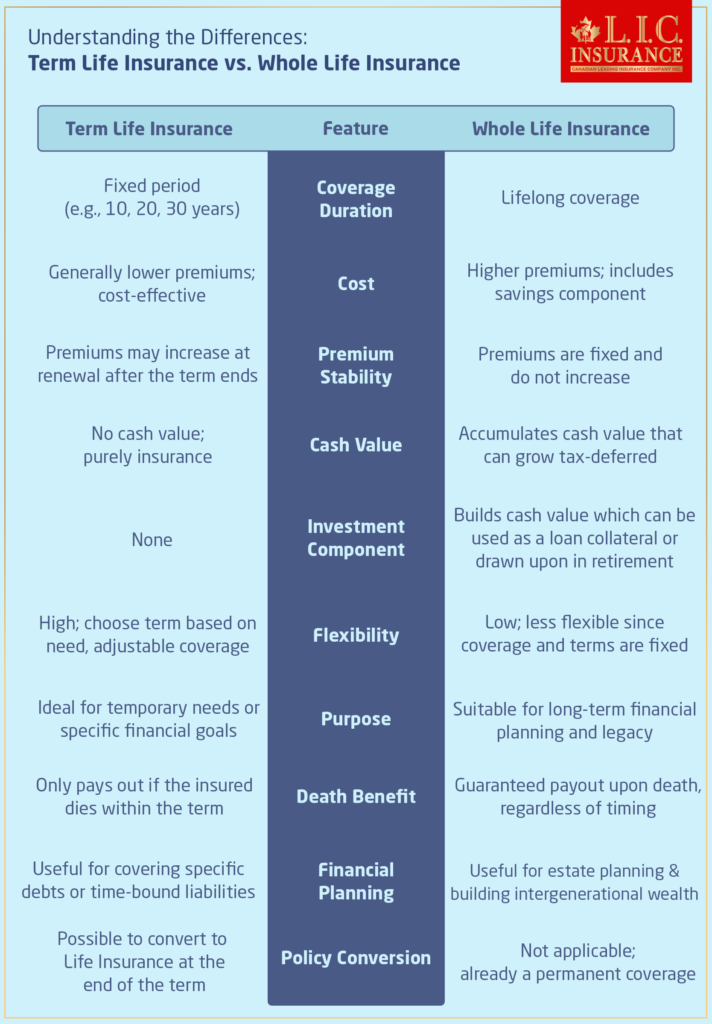
          Understanding How Does a Whole Life Insurance Policy Work: A Comprehensive Guide

          When you search for ‘how does a Whole Life Insurance Policy work’, you’re seeking details on a financial product that offers lifelong coverage; a Whole Life Insurance Policy is not just about the death benefit; it’s a way to build cash value over time, which complements your financial portfolio. With level premiums and a guaranteed payout, Whole Life Insurance operates as both insurance and investment. This article will guide you step-by-step through the working mechanics of a whole life policy, helping you understand its role in your long-term financial plan without overwhelming you with complexity.

          Understanding How Does a Whole Life Insurance Policy Work: A Comprehensive Guide

          By Canadian LIC, February 13, 2024, 6 Minutes

          Understanding How Does a Whole Life Insurance Policy Work

          When you search for ‘how does a Whole Life Insurance Policy work’, you’re seeking details on a financial product that offers lifelong coverage; a Whole Life Insurance Policy is not just about the death benefit; it’s a way to build cash value over time, which complements your financial portfolio. With level premiums and a guaranteed payout, Whole Life Insurance operates as both insurance and investment. This article will guide you step-by-step through the working mechanics of a whole life policy, helping you understand its role in your long-term financial plan without overwhelming you with complexity.

          Key Takeaways

          Understanding Whole Life Insurance Policies

          As the name suggests, a Whole Life Insurance Policy is a type of permanent life insurance that provides coverage for the policyholder’s entire life. Unlike Term Life Insurance, which covers a specific period, a permanent life insurance policy like Whole Life Insurance or Universal Life Insurance Policy provides lifelong coverage with guaranteed death benefits and level premiums for the insured’s entire life. This type of policy is often seen as a cornerstone of long-term financial planning, offering a level of stability and predictability that few other financial products can match.

          Understanding how life insurance works, especially in the context of a Whole Life Insurance Policy, is quite simple. The policyholder pays regular premiums, which are allocated to cover death benefits, the insurer’s operating costs and profits, and contribute to the policy’s cash value. This cash value is a distinctive feature of Whole Life Insurance, serving as a savings mechanism that grows over time and can be accessed in various ways.

          More: What is the biggest risk for Whole Life Insurance?

          Key Components of a Whole Life Policy

          Three fundamental elements form the foundation of a Whole Life Insurance Policy: the guaranteed death benefit, level premiums, and the cash value component. The guaranteed death benefit is a fixed sum of money that is paid out to the beneficiaries upon the death of the policyholder. This benefit is particularly attractive as it provides a reliable safety net for the policyholder’s loved ones.

          The second component, level premiums, offers financial predictability. The premiums are calculated based on the insured’s life expectancy and remain consistent throughout the policy’s term. This means that the policyholder pays the same amount each month without increases.

          Lastly, a portion of these premium payments contributes to the cash value component, which grows over time and offers an additional layer of financial security.

          More: Know the benefits of Whole Life Insurance

          How Premiums Are Allocated

          Whole Life Insurance premiums get distributed between the death benefit and the cash value component., and they remain level for the life of the policy. As the policyholder ages, the cost of insuring their life increases, which influences how premiums are allocated between the cash value and the insurance cost.

          Interestingly, once enough cash value has accrued, it can be used to pay the premiums, achieving a ‘paid up’ status. This unique feature not only enhances the policy’s appeal but also demonstrates the financial flexibility offered by Whole Life Insurance.

          The Cash Value Component: Growth and Access

          The cash value component plays a vital role in a Whole Life Insurance Policy, which can provide a source of funds that policyholders can access during their lifetime. This feature adds flexibility and additional benefits to the policy. This feature essentially acts as a forced savings account, which grows over time on a tax-deferred basis. The cash value doesn’t accrue immediately upon purchasing the policy. It typically begins to accumulate after the first two to five years. The insurance company invests the cash value, and it grows at a fixed rate set by the insurer, typically ranging from 1% to 3.5%.

          Policyholders can access the cash value in their Whole Life Insurance Policy in different ways. These include withdrawals, loans, and even surrendering the policy. It’s important to note that these methods of accessing the cash value come with their own implications, which we will discuss in more detail shortly.

          Tax-Deferred Growth

          The tax-deferred growth of the cash value component of Whole Life Insurance offers several advantages:

          The cash value is not subject to taxes as it increases.

          This tax-deferred growth allows the money in the cash value to compound more quickly because it’s not reduced by taxes each year.

          Faster accumulation of cash value leads to increased financial benefits.

          Moreover, dividends paid by the insurance company to the policy’s cash value are generally not taxable. This tax advantage, combined with the guaranteed minimum rate of return on the cash value and its fixed growth rate, enhances the policy’s stability and predictability for the insured.

          Accessing Cash Value: Loans, Withdrawals, and Surrenders

          Whole-life insurance policyholders can tap into their policy’s cash value through loans, withdrawals, or a policy surrender. Policy loans offer financial flexibility during emergencies, and the best part is they do not have tax implications. However, any outstanding loan balance and interest will reduce the death benefit.

          Withdrawals from the cash value of a policy have the following characteristics:

          They are tax-free up to the amount of premiums paid.

          Excess withdrawals over the premiums paid may be taxable.

          Excess withdrawals could lead to a reduction in the death benefit.

          Finally, surrendering the policy allows a policyholder to:

          Access the accumulated cash value.

          But at the cost of surrender fees and potential taxes on the gains.

          Terminate the policy, which means forfeiting the death benefit.

          Death Benefits and Beneficiaries

          The death benefit represents a crucial feature of Whole Life Insurance. This is a predetermined sum that the insurance company pays out to the beneficiaries upon the death of the policyholder. It’s important to note that this payout is generally not subject to income tax. The policyholder can distribute the death benefit in varying percentages among multiple beneficiaries.

          However, if no beneficiary is named on a Whole Life Insurance Policy, the death benefit defaults to the policyholder’s estate. This could potentially cause delays and extra costs. In certain states, spouses may automatically have rights to a portion of the death benefits, requiring written consent for naming other beneficiaries. Beneficiaries can choose to receive the death benefit as a lump-sum payment, in installments, or converted into an annuity.

          Guaranteed Death Benefit

          The guaranteed death benefit stands as a key characteristic of a Whole Life Insurance Policy. This is a payout that the insurance company promises to pay to beneficiaries upon the policyholder’s death. To ensure this guaranteed death benefit, policyholders must regularly pay their premiums. The amount of this benefit remains constant throughout the life of the policy and is paid out tax-free to the beneficiaries.

          Unlike Term Life Insurance, which only pays a death benefit if the policyholder dies within a specified term, a Whole Life Insurance Policy ensures the death benefit is payable at any time as long as premiums are paid and the policy is in force. This provides a level of certainty and peace of mind that policyholders highly value.

          Choosing and Updating Beneficiaries

          It’s essential to carefully select and update beneficiaries when managing a Whole Life Insurance Policy. This process requires consideration of who will first receive the death benefit and who should receive it if the primary beneficiary cannot. This typically occurs due to life events such as marriage, divorce, or the birth of children. It’s also worth noting that policyholders can designate a wide range of candidates as beneficiaries, including family members, trusts, estates, charities, or legal entities.

          Special considerations must be taken when naming minors as beneficiaries due to complications in the payout process, which can be managed by appointing a guardian or establishing a trust. Beneficiary designations can be revocable, allowing the policyholder to make changes at any time or irrevocable, which are locked in unless the beneficiary consents to a change.

          Beneficiaries may not receive automatic notification of their status and should be informed by the policyholder about the policy’s existence and instructed on how to make a claim in the event of the policyholder’s death.

          Comparing Whole Life Insurance to Term Life Insurance

          But how does Whole Life Insurance stand up against Term Life Insurance? There are some key differences to consider. Term Life Insurance offers coverage for a set duration, like 10, 20, or 30 years, and benefits are only paid if the insured person dies within this term. On the other hand, Whole Life Insurance covers the insured person until death, regardless of when that might be.

          Moreover, Whole Life Insurance includes a cash value component, which is absent in Term Life Insurance. This means there is an investment component in Whole Life Insurance that can provide financial benefits over time, whereas Term Life Insurance purely provides a death benefit.

          Coverage Length and Premiums

          In terms of coverage duration, Term Life Insurance provides coverage for a fixed period, such as 10, 20, or 30 years, while Whole Life Insurance provides coverage for the insured’s entire lifespan. This means that Whole Life Insurance can offer coverage that matures at ages like 90, 100, or 120, providing a level of long-term security that Term Life Insurance simply can’t match.

          In terms of premiums, Term Life Insurance typically has lower initial premiums compared to Whole Life Insurance. This reflects its coverage for a specific term and the absence of cash value accumulation. However, these premiums can increase during each renewal period.

          On the other hand, Whole Life Insurance premiums are higher but fixed and level throughout the life of the policy, offering financial stability and predictability, which is an important factor to consider when evaluating life insurance cost.

          Cash Value vs. No Cash Value

          Whole Life Insurance and Term Life Insurance differ significantly in terms of the cash value component. This difference is important to consider when choosing the right insurance policy for your needs. In a Whole Life Insurance Policy, a portion of the premiums paid is allocated to cash value, which can grow over time. This cash value component serves as a type of savings account within the policy that the policyholder can access in various ways.

          In contrast, Term Life Insurance:

          It does not have a cash value component. It has no investment component or cash accumulation. If the policyholder outlives the term of the policy, no benefits are paid out. Therefore, while Term Life Insurance may be cheaper initially, it lacks the cash value component that can provide financial benefits over the long term.

          More: What’s the longest Term Life Insurance you can get?

          More: Guide to Term Life Insurance

          Get The Best Insurance Quote From Canadian L.I.C

          Call 1 844-542-4678 to speak to our advisors.

          Best Insurance Plans Helpline From Canadian L.I.C

          Customizing Your Whole Life Insurance Policy with Riders

          Riders introduce a level of adaptability and personalization to Whole Life Insurance policies. Riders are optional provisions that can be added to a policy to enhance its coverage. These riders add specific conditions or benefits to the policy, allowing policyholders to tailor their coverage to their specific needs and circumstances. Some common riders include:

          Accidental death benefit rider

          Waiver of premium rider

          Long-term care rider

          Disability income rider

          Guaranteed insurability rider

          By adding these riders to your policy, you can customize your coverage and ensure that it meets your unique needs.

          Before purchasing a policy, policyholders should ensure it includes the specific riders they want, as the types and costs of riders vary between insurance companies. Some common riders include options like:

          Return of premium

          Waiver of premium

          Accidental death

          Long-term care

          Critical illness

          Common Whole Life Insurance Riders

          Policyholders have a range of popular riders to consider while personalizing their Whole Life Insurance Policy. An Accelerated Death Benefit rider allows policyholders with a terminal illness to access part of the death benefit amount while still alive, which can be essential for paying for end-of-life care.

          Another popular rider is the Waiver of Premium Rider. This excuses the policyholder from paying future premiums if they become permanently disabled or lose income due to injury or illness before a certain age. Riders like these can add significant value to a policy and provide additional peace of mind for policyholders.

          Evaluating Insurers and Policies

          In the process of considering a Whole Life Insurance Policy, it’s vital to assess both the insurance companies and the particular policies they propose. A financially strong insurance company has a better chance of being around in the future to pay out claims, thus ensuring policyholder security. It’s also important to compare Whole Life Insurance quotes from several insurers to find the best rate for the same coverage.

          Thorough research on insurers is crucial to confirm they are among the top-performing Whole Life Insurance companies. Investigating an insurer’s complaint index through the National Association of Insurance Commissioners website can provide insights into their customer service reputation.

          Financial Strength Ratings

          Financial strength ratings matter immensely for life insurance companies since these ratings reflect the insurer’s capacity to fulfill its financial obligations. And ensure the payment of significant benefits upon claims. Major credit rating agencies like A.M. Best, Fitch, Moody’s, and Standard & Poor’s assess the financial stability of insurance companies and their ability to fulfill long-term commitments.

          Strong financial strength ratings suggest that a Life Insurance company is well-positioned to honour its policies, even many decades into the future, and provide policyholders with confidence in the company’s longevity and reliability. Financially strong insurers often have a conservatively invested portfolio and a history of paying dividends to policyholders, reflecting their commitment to financial obligations.

          Comparing Quotes and Features

          In the process of evaluating Whole Life Insurance policies, it’s essential to juxtapose quotes and features from a variety of insurers. The internal rate of return (IRR) of Whole Life Insurance policies’ death benefits is crucial to compare, as it reflects the efficiency at which premiums are used towards the expected death benefit.

          When all other factors, like financial ratings and death benefits, are equal, the policy with the highest IRR at the lowest premium is often the better choice. Comparing different insurers’ policy illustrations, which forecast policy performance over time, is essential in determining the best Whole Life Insurance Policy. Working with an independent broker can be beneficial, as they can offer guidance and scenarios from multiple insurers to assist in a comprehensive policy comparison.

          Summary

          Get in touch with insurance experts today for the best quotes on Whole Life Insurance

          Get The Best Insurance Quote From Canadian L.I.C

          Call 1 844-542-4678 to speak to our advisors.

          Faq's

          The main disadvantage of Whole Life Insurance is that it is much more expensive than Term Life Insurance and may have higher premiums. This can be a financial challenge for individuals who are young or have limited extra cash available.

          The cost of a $1 million-dollar Whole Life Insurance Policy can vary based on factors such as age, health, and policy type. On average, a 30-year-old non-smoking male in good health can expect to pay around $954 per month for such a policy, which is significantly more expensive than Term Life Insurance.

          A whole life policy pays out the death benefit to beneficiaries upon the insured’s death, and it also accumulates cash value over time, which can be accessed through policy loans, withdrawals, or surrender.

          You can make money with Whole Life Insurance by using it as an investment through methods such as withdrawing or taking a loan on the cash value, creating generational wealth, collecting dividends, or surrendering the policy if it’s no longer needed.

          The key components of a Whole Life Insurance Policy are the guaranteed death benefit, level premiums, and the cash value component, ensuring a secure investment for the future.

          The Whole Life Insurance monthly cost in Canada is influenced by various factors, including age, gender, health status, smoking status, coverage amount, and the insurance company’s underwriting criteria.

          The Whole Life Insurance monthly cost is typically fixed for the duration of the policy. However, premiums may vary based on factors such as the insurance company’s financial performance and adjustments to mortality rates.

          To calculate the Whole Life Insurance monthly cost, you can use online calculators provided by insurance companies or work with an insurance agent who can provide personalized quotes based on your individual circumstances.

          Yes, many insurance companies in Canada offer the option to pay Whole Life Insurance premiums monthly, in addition to quarterly, semi-annually, or annually. This flexibility allows policyholders to manage their budgets more effectively.

          Some insurance companies may offer discounts on Whole Life Insurance premiums, such as preferred rates for non-smokers or discounts for bundling multiple insurance policies with the same provider.

          Generally, the Whole Life Insurance monthly cost tends to increase with age, reflecting the higher risk of mortality as policyholders grow older. However, purchasing a policy at a younger age typically results in lower premiums.

          Yes, some insurance companies allow policyholders to change the frequency of premium payments to lower the Whole Life Insurance monthly cost. However, it’s essential to consider the long-term impact on the total cost of insurance.

          The Whole Life Insurance premiums paid on a monthly basis are generally not tax-deductible. However, the death benefit received by beneficiaries is typically tax-free, making Whole Life Insurance an attractive option for estate planning.

          Some insurance companies may offer discounts for policyholders who choose to pay their Whole Life Insurance premiums annually instead of monthly. This can result in savings over the long term.

          Yes, policyholders have the flexibility to adjust their coverage amount, which can affect the Whole Life Insurance monthly cost. Increasing coverage typically results in higher premiums, while decreasing coverage may lower the monthly cost.

          Life insurance comes in various forms, each with its unique way of providing financial protection. Let’s explore if life insurance is good for you or not..

          Consider this: If you were to unexpectedly pass away, would your loved ones, like your spouse or child, face financial challenges in meeting expenses?

          A. Yes, my absence would leave a significant financial gap for someone in my life.
          B. No, currently, no one relies on me financially.

          Select the option that best reflects your situation and discover if life insurance is the right choice for you.”

          The above information is only meant to be informative. It comes from Canadian LIC’s own opinions, which can change at any time. This material is not meant to be financial or legal advice, and it should not be interpreted as such. If someone decides to act on the information on this page, Canadian LIC is not responsible for what happens. Every attempt is made to provide accurate and up-to-date information on Canadian LIC. Some of the terms, conditions, limitations, exclusions, termination, and other parts of the policies mentioned above may not be included, which may be important to the policy choice. For full details, please refer to the actual policy documents. If there is any disagreement, the language in the actual policy documents will be used. All rights reserved.

          Please let us know if there is anything that should be updated, removed, or corrected from this article. Send an email to Contact@canadianlic.com or Info@canadianlic.com

          Why Buy Life Insurance for Kids?

          In financial planning, Life Insurance is often associated with adults who have dependents relying on their income. However, a growing number of parents in Canada are considering the benefits of buying Life Insurance for their children. Despite initial hesitations, understanding the rationale behind such a decision can shed light on the value it brings to a family’s financial security.

          Why Buy Life Insurance for Kids?

          By Canadian LIC, February 7, 2024, 8 Minutes

          Why buy Life Insurance for kids

          In financial planning, Life Insurance is often associated with adults who have dependents relying on their income. However, a growing number of parents in Canada are considering the benefits of buying Life Insurance for their children. Despite initial hesitations, understanding the rationale behind such a decision can shed light on the value it brings to a family’s financial security.

          Understanding Life Insurance for Kids

          Life Insurance for kids operates on a similar premise as policies for adults. It offers financial security, providing a lump sum payout in the unfortunate time of a child’s passing. While it may seem morbid to consider such scenarios, the reality is that unexpected tragedies can occur, and having the appropriate coverage can alleviate financial burdens during an already challenging time.

          Exploring the Benefits: Why Life Insurance for Kids is a Smart Investment

          Exploring the Benefits: Why Life Insurance for Kids is a Smart Investment

          When it comes to securing your family’s financial future, considering Life Insurance for kids can offer a range of advantages. Here’s a closer look at why this investment is worth considering:

          Guaranteed Insurability: If you buy Life Insurance plans for kids early in their lives, parents can guarantee their insurability, irrespective of any future health conditions that may arise. This is particularly vital for families with a history of medical issues or genetic predispositions. With Life Insurance for kids, you’re essentially locking in their ability to access insurance coverage regardless of what the future holds.

          Lifelong Coverage with Whole-Life Insurance: Life Insurance for kids often takes the form of Whole-Life Insurance, providing coverage for the entirety of their lives as long as premiums are consistently paid. Unlike Term Life Insurance Policies that have expiration dates, Whole Life Insurance offers the peace of mind of continuous protection. This means your child will always have a safety net, ensuring their financial security well into adulthood.

          Accumulation of Cash Value: One of the standout features of Whole-Life Insurance for kids is the accumulation of cash value over time. As premiums are paid, a portion of the payments goes to build cash value within the policy. This cash value can serve as a very meaningful asset that can be tapped into for a lot of reasons in the future. Whether it’s funding educational expenses, making a down payment on a home, or even supplementing retirement savings, the cash value offers flexibility and security.

          Financial Flexibility for Future Needs: As your child grows, their financial needs and aspirations may evolve. Life Insurance plans for kids provide the flexibility to adapt to these changing circumstances. Whether it’s helping them pursue higher education, starting a business, or providing a financial cushion during unexpected challenges, the benefits of a well-chosen Life Insurance policy extend far beyond just protection.

          Building a Strong Financial Foundation: Investing in the best Life Insurance policy for your kids isn’t just about protecting against the unforeseen—it’s also about laying the groundwork for their financial future. By instilling the importance of financial planning from a young age, you’re setting them up for success and empowering them to make one of the best financial decisions as they mature.

          So, Life Insurance for kids offers a blend of protection, flexibility, and long-term growth potential. It’s a strategic investment in your child’s future that provides both immediate benefits and lasting financial security. As you explore your options, it is best to take advice from a trusted financial advisor to ensure you select the best

          Life Insurance plan that aligns with your family’s goals and priorities. After all, securing your child’s future is one of the most important decisions you can make as a parent.

          Factors to Keep in Mind When Purchasing Life Insurance for Kids

          Assessing Financial Capacity:

          Before going into the world of Life Insurance for kids, parents must thoroughly assess their financial situation. While rates for children’s policies may be lower compared to those for adults, it’s essential to ensure that the premiums suit the family’s budget. By evaluating income, expenses, and other financial obligations, parents can determine whether investing in Life Insurance for kids is a feasible option within their means.

          Finding the Balance:

          When selecting a Life Insurance policy for their children, parents often face the dilemma of choosing the right coverage amount. While the temptation may be to opt for minimal coverage to keep premiums low, it’s crucial to balance between affordability and adequate protection. Considering factors such as future needs, potential expenses, and the long-term financial security of the family can help determine the appropriate coverage level. By finding the right balance, parents can make sure that their children are adequately protected while staying within their budget constraints.

          Anticipating Future Expenses:

          Life Insurance for kids is not just about providing financial protection at the time of an untimely death; it’s also about planning for the future. Parents should consider potential expenses that may arise as their children grow older, such as education costs, medical expenses, or even a down payment on a home. By anticipating these future expenses, parents can choose a coverage amount that offers enough protection and mental peace for their children’s future.

          Evaluating Long-Term Benefits:

          While the immediate focus may be on securing coverage for their children, parents should also take into account the long-term benefits of investing in Life Insurance. Whole Life Insurance, which is commonly used for children’s insurance, offers lifelong coverage and accumulates cash value over time. This cash value offered can serve as a valuable asset for their children in the future, providing financial flexibility and opportunities for growth. By evaluating the long-term benefits of Life Insurance for kids, parents can make smart decisions that are similar to the family’s financial goals.

          Comparing Policy Options:

          In the Canadian market, there are various insurance providers offering Life Insurance policies tailored specifically for children. It’s essential for parents to research and compare different policy options to find the best Life Insurance plans that meet their needs and choices. Factors such as coverage benefits, premium rates, and additional features should be carefully considered when evaluating policy options. By conducting thorough research and comparing policy options, parents can ensure that they select the most suitable coverage for their children’s financial security.

          By carefully considering these factors, parents can make the best decisions possible when they decide to purchase Life Insurance for their children.

          Exploring the Canadian Market: Finding the Perfect Life Insurance Policy for Your Child

          There are a lot of different types of Life Insurance for kids in Canada. This gives parents the chance to protect their child’s financial future with coverage that fits their needs. The best way to find the best Life Insurance for your child is to follow these below-stated points:

          Research Different Providers

          Start your journey by researching the various insurance providers offering Life Insurance for kids in Canada. Take the time to explore their offerings, coverage options, and reputation within the industry. Look for providers that specialize in policies for children, as they may offer more tailored solutions to meet your family’s needs.

          Compare Quotes

          Once you’ve identified a few potential providers, it’s time to compare quotes. Request quotes from each provider, taking into account the coverage amount, premiums, and any additional benefits or features offered. Comparing quotes will help you determine which provider offers the best value for your money and also fit your budget.

          Consider Online Options

          In today’s digital age, many insurance providers offer online quotes and streamlined application processes for Life Insurance for kids. Take advantage of these online platforms to obtain quotes quickly and conveniently from the comfort of your home. Online options can save you time and hassle, making it easier to explore your options and make wiser decisions.

          Assess Your Needs and Preferences

          As you compare quotes and explore different providers, consider your family’s specific needs and preferences. Think about the coverage amount you require, as well as any additional features or benefits that are important to you. Whether you’re looking for a policy with flexible payment options, guaranteed insurability, or cash value accumulation, make sure to prioritize what matters most to you and your family.

          Seek Expert Advice

          If you need clarification on which Life Insurance policy is best for your child, feel free to seek expert adviceInsurance brokers and financial advisors can offer valuable insights and guidance to help you go through the complexities of Life Insurance for kids. They can figure out about your unique situation, provide personalized recommendations, and solve any questions you may have along the way.

          Review and Revise Regularly

          Once you’ve purchased a Life Insurance policy for your child, it’s essential to review and revise it regularly to make sure it meets your family’s needs. Life circumstances can change over time, so adjusting your coverage is important. Whether you experience changes in income, family size, or financial goals, make sure to revisit your policy periodically to keep it up to date.

          By following these steps and exploring the Canadian market with care, you can find the perfect Life Insurance policy for your child that offers peace and financial security for years to come. Remember, investing in the best Life Insurance policy for your child is an investment in their future and well-being.

          Conclusion: Securing Your Child’s Future

          In conclusion, while the idea of buying Life Insurance for kids may initially seem unconventional, understanding the benefits and considerations can illuminate its significance in safeguarding a family’s financial well-being. By guaranteeing insurability, providing lifelong coverage, and accumulating cash value, Life Insurance for kids offers mental satisfaction along with financial security for parents.

          As you contemplate your family’s financial future, consider taking action to secure the best Life Insurance policy for your children. Whether it’s providing for their future education, protecting against unforeseen circumstances, or building a financial legacy, investing in Life Insurance for kids can be a proactive step toward securing your child’s future.

          Please don’t wait until it’s too late. Take the first step towards financial comforts by exploring your options and selecting a Life Insurance policy that best fits your family’s needs. Your children’s future is worth protecting, and Life Insurance for kids can be very valuable in achieving that goal.

          Find Out: Is Life Insurance Worth it After 70?

          Get The Best Insurance Quote From Canadian L.I.C

          Call 1 844-542-4678 to speak to our advisors.

          Best Insurance Plans Helpline From Canadian L.I.C

          Faq's

          As parents consider the idea of purchasing Life Insurance for their children, it’s natural for questions to arise. Here are some frequently asked questions related to Life Insurance for kids to help guide your decision-making process:

          In Canada, Life Insurance proceeds are typically not taxable. The death benefit paid out to the beneficiaries of a Life Insurance policy is generally considered tax-free. This means that beneficiaries receive the full amount of the policy without having to pay income tax on it. However, there are some exceptions, such as when the policy has been assigned to a creditor or when the policyholder has made withdrawals from a Permanent Life Insurance Policy that exceed the premiums paid. In such cases, a portion of the proceeds may be subject to taxation. It’s recommended to consult with a tax advisor or financial expert for personalized advice regarding the tax implications of Life Insurance proceeds.

          Yes, in many cases, Life Insurance policies can be cashed out or surrendered for their cash value. This option is typically available with permanent Life Insurance policies. These policies include Whole Life or Universal Life Insurance. By surrendering the policy, the policyholder can receive the cash value accumulated within the policy minus any applicable fees or penalties. However, cashing out a Life Insurance policy means forfeiting the death benefit provided by the policy, so it’s imperative to carefully consider the implications before making a decision.

          Additionally, cashing out a policy may have tax implications, so it’s advisable to consult with an insurance agent or financial advisor for guidance.

          Life Insurance for kids offers several benefits, including guaranteed insurability, providing lifelong coverage, and accumulating cash value over time. By securing a policy early in your child’s life, you can ensure their financial security and mental peace for the future.

          The best Life Insurance policy for children depends on your family’s specific needs and preferences. It’s essential to research different providers, compare quotes, and take into account factors such as coverage amount, premiums, and additional benefits. Tailoring the policy to suit your family’s financial goals and circumstances will help you find the best fit.

          Yes, many insurance providers offer customizable Life Insurance options for kids. You can tailor the policy to meet your family’s specific needs and preferences by adjusting factors such as the coverage amount, payment schedule, and additional benefits or features. The guidance of an insurance agent or financial advisor can help you customize the policy to fit your family’s goals.

          Investing in Life Insurance for your child can provide valuable financial security and peace for your family’s future. By guaranteeing insurability, providing lifelong coverage, and accumulating cash value over time, a Life Insurance policy for kids offers numerous benefits that can support your family’s financial well-being for years to come.

          Yes, a Life Insurance plan can be denied under specific situations. Insurance companies have the full right to not accept coverage based on factors such as the applicant’s health, lifestyle, occupation, and medical history. If an applicant poses too high of a risk to insure, the insurance company may choose to deny coverage altogether or offer coverage at a higher premium rate. Additionally, the insurance company may deny coverage or cancel the policy if an applicant provides false or misleading information on their insurance application. It’s essential to be honest and transparent when applying for Life Insurance to avoid potential denial of coverage. If coverage is denied, applicants may explore alternative options or work with an insurance broker to find a suitable solution.

          The above information is only meant to be informative. It comes from Canadian LIC’s own opinions, which can change at any time. This material is not meant to be financial or legal advice, and it should not be interpreted as such. If someone decides to act on the information on this page, Canadian LIC is not responsible for what happens. Every attempt is made to provide accurate and up-to-date information on Canadian LIC. Some of the terms, conditions, limitations, exclusions, termination, and other parts of the policies mentioned above may not be included, which may be important to the policy choice. For full details, please refer to the actual policy documents. If there is any disagreement, the language in the actual policy documents will be used. All rights reserved.

          Please let us know if there is anything that should be updated, removed, or corrected from this article. Send an email to Contact@canadianlic.com or Info@canadianlic.com
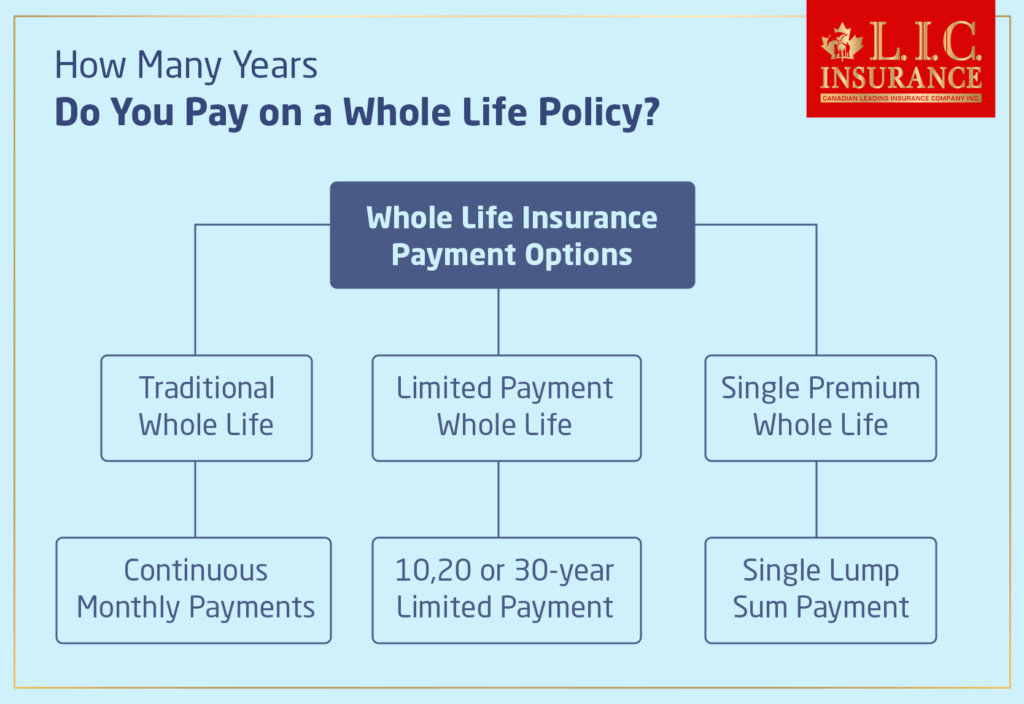
          How Long Do You Pay Premiums For Universal Life Insurance?

          Securing the financial future of your loved ones is a priority for many Canadians, and one effective way to achieve this is through Universal Life Insurance. This versatile insurance offers both a death benefit and a savings component, making it an attractive option for those seeking long-term financial protection. This blog aims to provide knowledge about the Universal Life Insurance premiums in Canada, shed light on the duration of premium payments, and offer valuable insights to those searching for the best insurance brokerage.

          How Long Do You Pay Premiums for Universal Life Insurance?

          By Pushpinder Puri, January 29, 2024, 8 Minutes

          How Long Do You Pay Premiums for Universal Life Insurance?

          Universal Life Insurance is a special kind of protection that combines death benefits with investments. In this way, people can accumulate cash value over time, which can be used for many things, like adding to their retirement income or paying for unforeseen expenditures. A key feature of Universal Life Insurance is the flexibility it provides, allowing policyholders to adjust both the death benefit and premium payments.

          Know Universal Life Insurance Benefits here

          Let’s Understand Universal Life Insurance

          Let’s Understand Universal Life Insurance

          Universal Life Insurance is a special kind of protection that combines death benefits with investments. In this way, people can accumulate cash value over time, which can be used for many things, like adding to their retirement income or paying for unforeseen expenditures. A key feature of Universal Life Insurance is the flexibility it provides, allowing policyholders to adjust both the death benefit and premium payments.

          Know Universal Life Insurance Benefits here

          Duration of Premium Payments

          Understanding the duration of premium payments is extremely essential when considering Universal Life Insurance in Canada. Unlike Term Life Insurance, where premiums are paid for a specified term, Universal Life Insurance covers the policyholder’s entire lifetime. This unique feature makes it a dynamic and enduring financial tool, allowing individuals to tailor their premium payments to suit their evolving needs and circumstances.

          Lifetime Coverage

          The overarching difference between Universal Life Insurance and its term counterpart is the length of time your coverage exists. Term Life Insurance covers you for a specific length of time, usually from 10 to 30 years. Permanent Life Insurance, on the other hand, will last as long as the user needs it to. This durability feature is particularly attractive for individuals with a long-term goal and who want to put something in place that isn’t going to be easily changed to protect their loved one’s financial future.

          Although with Universal Life Insurance, you still have the peace of mind of knowing that your death benefit will still be in place, protecting your beneficiaries, even as you grow old. And of course, the lifelong (to 121 at least) nature of this coverage is attractive to those who believe life insurance is a permanent need, not just a temporary one.

          Find out why one should get Term Life Insurance here

          Flexibility in Premium Payments

          One of the things that makes Universal Life Insurance unique is the control it gives to policyholders regarding premium payments. This flexibility is especially beneficial in light of the changing financial circumstances in people’s lives.

          The policyholder has the flexibility to adjust premiums – how much and how often to save – according to their individual financial requirements and objectives. Others may prefer keeping the premiums the same throughout life, and have a fixed and predictable outgo. It’s a compliment to give a sense of continuity and will prevent the coverage from being interrupted.

          By contrast, people with inconsistent income streams or who expect to face additional financial commitments further down the line can choose a more adaptable payment schedule. They could, for example, front-load their premium payments during their working years, when earnings are generally higher, and cut back during retirement, when they might have fewer financial responsibilities.

          That adjustability also means you can take a break from paying premiums or add extra premiums in a given year, depending on your situation. It’s a financial product that grows with you, with a level of control not typically available in other insurance offerings.

          Understanding Regional Costs and Real-Time Estimations

          When it comes to preparing for long-term financial security through insurance, location may do more to determine cost than is commonly realized. For example, individuals who are seeking out Universal Life Insurance in Calgary tend to run into different price points than those in smaller towns and rural areas. This is driven by geographic underwriting habits, variances in the availability of healthcare, and lifestyle-related policies that factor into underwriting.

          So, what is the cost of Universal Life Insurance in these areas? The answer is: It varies based on your age, health history, investment goals, and whether you choose to purchase Universal Life Insurance, which provides a cash value accumulation. Although entry-level policies for young people might begin at around $50 a month, high-value policies with strong cash value components can easily top $300 a month.

          To understand that range, more and more Canadians are now using tools such as a Universal Life Insurance Policy calculator. These tools provide customized estimates that consider the amount of coverage, the length of premium payment, and options for growth potential in cash value. These are particularly helpful for seeing how Premium Increases on Universal Life Insurance may impact your policy over time, from age-related risk increases or higher cost of insurance charges.

          When you’re thinking long term and want to focus on protecting your wealth for your lifetime and your heirs’, these are the instruments that could help demystify pricing and make sure you’re only getting into what’s right for your actual financial road map.

          Exploring Universal Life Insurance Quotes Online

          Exploring Universal Life Insurance Quotes Online

          In this modern age, the internet has changed how we get services and information, including insurance. People can now get insurance quotes online with just a few clicks, which makes the process faster and easier than ever. When it comes to securing the best Universal Life Insurance quotes online in Canada, choosing the right insurance brokerage is the most important.

          Partnering with a Reputable Insurance Brokerage:

          The internet is flooded with insurance options, but not all are created equal. It’s very important to partner with a reputable insurance brokerage that understands the little details of the Canadian market. A reliable brokerage will have a deep understanding of the world of insurance and will be equipped to guide you through the process of obtaining Universal Life Insurance quotes online.

          User-Friendly Online Platforms:

          The right insurance brokerage will have a convenient online system in place where individuals can input their specific information and be given the type of quotes that makes sense for them. These platforms are built to make the quoting process easier by providing the ability for a person to research coverage from their computer at home.

          If you are searching for Universal Life Insurance quotes online, then find a brokerage that values simplicity and clarity. The top online platforms will hold your hand through each part of the quoting process so that the information is clear for you.

          Competitive Quotes and Informed Decision-Making:

          Getting online Universal Life Insurance quotes is only half the battle. You will want to work with a broker that offers competitive quotes and that takes the time to walk you through any complexities in each policy. Trustworthy brokers will be staffed with knowledgeable professionals who can answer all your questions and guide you to the best decision about your coverage.

          When doing a comparison of Universal Life Insurance rates, use the following three factors to help you compare policies and decide which one is best for you. While price is an important consideration, it’s hardly the only thing to keep in mind when choosing a policy. Find coverage that strikes the right balance between coverage and affordability, while taking into account long-term financial goals and commitments.

          Transparency and Trust:

          And when it comes to online Universal Life Insurance quotes, that is not a quality you want in a company. An insurance brokerage should be able to present each policy in a transparent & understandable way, complete with potential limitations or exclusions. They should also be transparent about any fees or costs linked to the policy so that you know the T’s and C’s before making a commitment.

          So, getting Universal Life Insurance quotes online is the most convenient, easiest way to see what you have to choose from when it comes to coverage. First thing is to team up with a trusted insurance brokerage and land the best coverage available, with a clear, no-hassle agenda. And keep in mind, your financial well-being is too valuable to just hope for the best. Then take the time to carefully consider your options—and the peace of mind you deserve.

          Choosing the Right Insurance Brokerage

          Choosing the right insurance broker is a critically important decision for your financial future. In Canada, there are so many different options on the market that if you just review some of these factors and go from there, you can usually find yourself a brokerage that is a pretty good fit.

          Reputation Matters:

          You should start your search by checking the reputation of your insurance brokerages. A good brokerage is always determined by service, quality and satisfaction. Several online platforms, social media and review websites are great places where you can learn about the reputation of different brokerages. Check for signs of reliability. If the company has happy clients and can demonstrate a legacy of superior service, there is reason to trust them.

          Customer Reviews:

          Read the reviews of traders; doing so can give you insight into other people’s expectations and thoughts on the chosen broker. Look for reviews that touch on the Universal Life Insurance policies they handle and how easy it was to receive online quotes. If they have had successful interactions and received timely responses to questions in the past, then the experience with the broker will be more seamless.

          Transparent Communication:

          An important consideration when comparing potential brokerages is their transparency in communicating information. A reputable broker makes all aspects of their service transparent and understandable, offline and online. Find a broker who is willing to sit down and discuss complicated terms and conditions that come with your Universal Life Insurance policy. By keeping things in the open, you can be more confident and make smarter decisions about your financial future.

          Experienced Professionals:

          To fully comprehend the obstacles of Universal Life Insurance, you need the direction of a seasoned professional. A reliable broker will possess a crew of informed experts to help you with this issue. Whether it’s about coverage questions, premium payments or the online quoting process, having access to experts who are well-versed in the industry can be a huge benefit.

          To Wrap It All Up

          A Universal Life Insurance policy is a great insurance solution that combines life insurance protection with the advantages of tax-free savings. Knowing the length of the premium payment is the cornerstone to achieving the potential of this adaptable insurance policy. When it comes to finding the best Universal Life Insurance quotes online in Canada and having the peace of mind knowing that you will be taken care of, that’s where we come in.

          You need to keep in mind that your financial future is a forever investment, and down this road, the right Universal Life Insurance policy and insurance brokerage will help you travel this road with the confidence that you’ll be financially secure and protected.

          Get The Best Insurance Quote From Canadian L.I.C

          Call 1 844-542-4678 to speak to our advisors.

          Best Insurance Plans Helpline From Canadian L.I.C

          FAQs

          Universal Life Insurance provides a death benefit when you die and allows you to save money while you’re alive. Term Life Insurance Vs Universal Life Insurance. There is a contrast between term life coverage and all-inclusive disaster protection. Term Life Insurance protects you for a certain period, and that’s it, whereas Universal Life Insurance is known to be there indefinitely. The policyholder can also adjust the death payout as well as the premiums they pay as the years pass.

          Universal Life Insurance is a good investment. Whether or not Universal Life Insurance is a good investment for you will depend on your financial goals and risk appetite. Universal Life Insurance policies have a component that accrues cash value over time, referred to as either a savings or investment element. This cash can be used for many things, including supplementing your retirement income and paying for unexpected costs. It’s important to do a comprehensive review of your financial goals and talk with an investment advisor to see if buying a Universal Life Insurance policy is consistent with your total investment plan.

          Yes, Universal Life policies can and do lapse if they are not properly funded. Since it’s whole life, your premium depends on keeping a premium payment current in order to keep the policy in force. That the policy could “lapse” is correct in that it is another way of saying that if premiums are not paid, the policy terminates and coverage is lost. Policyholders should be aware of premiums due and make sure that the premium payment is received in time for the continuity of the policy.

          For the most part, Universal Life Insurance rates can go up as you get older. Age, health, and coverage amount are some of the factors that affect the cost of insurance. There is an increasing risk of death, and hence, the insurance cost increases as policyholders live longer. To account for these escalating costs, your premiums can adjust over time. Be sure to see the policy terms and premium structure when considering Universal Life Insurance to see how the premium could increase as you get older.

          Yes, a key characteristic of the Universal Life insurance policy is the buildup of cash value. A portion of the premium you pay for it gets allocated to a cash value account. Thanks to the investment portion of the insurance, this account increases over time. This cash value is different from the death benefit, and the insured is able to use it. Being able to take a loan against or withdraw from the cash value offers some flexibility and an investment element to Universal Life Insurance, which is in addition to protection.

          Universal Life Insurance premiums can differ depending on your own preferences. With a Term Life Insurance policy, the payment of premiums is for a certain period of time, while with a Universal Life Insurance policy, policyholders may continue to pay premiums as long as desired to preserve insurance protection. Some may prefer to pay a fairly level premium all the way through to life, while others may prefer to front-load the premium while they are working.

          Yes, there are several credible insurance brokerages in Canada that offer online platforms that are simple and easy to use in order to provide your details and obtain accurate Universal Life Insurance quotes. You want to work with a brokerage that knows the Canadian market and gives competitive quotes. Seek a platform that not only gives you quotes but breaks down the details for each policy to ensure you make a smart choice.

          When you get online, instantly compare quotes for Universal Life Insurance, and don’t get caught up in just the price. Examine coverage limits, premium amounts, and policy features. With your long-term financial goals and responsibilities in mind, select a policy that provides optimal coverage at an affordable price. Make sure to also check how transparent the broker is as you want to see what the terms of the policy are, the limitations on the policy, and any other charges.

          Yes, Universal Life Insurance quotes online can be safe with a reputable and established insurance brokerage. Ensure the website is using a secure encryption protocol to secure your personal data. You should always check if the broker is reliable before giving any personal or sensitive information.

          Yes, flexibility is a big part of Universal Life Insurance. Once you have quotes online, you can use your insurance brokerage to tweak your coverage as your situation changes! This might involve changing the death benefit or the premiums in a way that better suits your financials.

          When you receive your Universal Life Insurance quotes online, you will likely be asked for personal information, including age, sex, health, and the amount of coverage you want. The more specific and detailed your information is, the more accurate the quotes will be. Have ready at your fingertips answers to questions about how you live and work, and if you are managing any health ailments now.

          The above information is only meant to be informative. It comes from Canadian LIC’s own opinions, which can change at any time. This material is not meant to be financial or legal advice, and it should not be interpreted as such. If someone decides to act on the information on this page, Canadian LIC is not responsible for what happens. Every attempt is made to provide accurate and up-to-date information on Canadian LIC. Some of the terms, conditions, limitations, exclusions, termination, and other parts of the policies mentioned above may not be included, which may be important to the policy choice. For full details, please refer to the actual policy documents. If there is any disagreement, the language in the actual policy documents will be used. All rights reserved.

          Please let us know if there is anything that should be updated, removed, or corrected from this article. Send an email to Contact@canadianlic.com or Info@canadianlic.com

          What’s the Longest Term Life Insurance You Can Get?

          When it comes to securing our loved one’s financial future, the world of insurance offers a variety of options. Term Life Insurance is a popular choice, providing coverage for a specific period. But have you ever wondered: What’s the longest Term Life Insurance you can get? Let’s deeply understand this topic and remove all the confusion around it.

          What’s the Longest Term Life Insurance You Can Get?

          By Canadian LIC, January 25, 2024, 8 Minutes

          What’s the Longest Term Life Insurance You Can Get?

          When it comes to securing our loved one’s financial future, the world of insurance offers a variety of options. Term Life Insurance is a popular choice, providing coverage for a specific period. But have you ever wondered: What’s the longest Term Life Insurance you can get? Let’s deeply understand this topic and remove all the confusion around it.

          Let’s Understand Term Life Insurance

          Term Life Insurance protects you financially, offering coverage for a predetermined period, typically ranging from 10 to 50 years. It’s a very simple and cost-effective way to ensure your family is protected in case of an unexpected event. You pay a fixed premium for the chosen term, and if you pass away during that time, your beneficiaries receive a death benefit.

          Know on Term Life Insurance more here

          Exploring Long-Term Options

          Now, let’s discuss the world of Long Term Life Insurance. In addition to the standard term lengths, some insurance companies provide longer periods and the interesting choice of turning a term policy into a permanent one. With this much freedom, you can plan for the long term, protecting your finances and giving you mental peace. Let’s know more about these long-term choices:

          Extended Terms Beyond the Norm

          Many individuals are familiar with the standard term options of 10, 20, 25, 30 or 50 years. However, some insurance providers go above and beyond, offering extended terms that can span up to 40 years. This extended coverage can be particularly appealing for those seeking prolonged financial protection without frequently reevaluating their insurance needs.

          Convertibility Features

          One standout feature in some Term Life Insurance policies is the convertibility option. This unique feature allows policyholders to convert their term policy into a permanent Life Insurance policy, such as whole life or universal life, without the need for a medical exam or new underwriting. This is a game-changer for those who want to secure lifelong coverage while initially benefiting from the affordability of term insurance.

          Locking in Rates for the Long Run

          Opting for a more extended term or converting to permanent insurance isn’t just about lengthening coverage; it’s also about locking in your insurance rates. By choosing a longer-term or converting to a permanent policy, you secure your current premium for a more extended period. This can be a strategic move, especially when considering the potential increase in premiums due to age and health factors over time.

          Addressing Health Concerns

          As you age, health concerns often become more prominent. Long-term insurance protects you from health problems that might happen in the future. By securing coverage for an extended period or converting to a permanent policy, you mitigate the risk of facing higher premiums or even potential difficulty in obtaining coverage as health conditions evolve.

          Annual Renewable Term Life Insurance

          For those who desire more flexibility on an annual basis, annual renewable Term Life Insurance is worth considering. This type of policy guarantees the ability to renew coverage annually without the need to reapply. However, it’s essential to note that premiums typically increase upon renewal. While this option offers short-term flexibility, it may not be as cost-effective over an extended period compared to a standard-level Term Life Insurance policy.

          Cost-Effectiveness Over Time

          Considering the financial aspect, it’s crucial to weigh the long-term costs associated with different Life Insurance options. While extended terms and convertibility features may initially come with higher premiums, they can prove to be cost-effective over time. This is especially true when compared to the potential increase in premiums associated with renewing shorter-term policies or obtaining new coverage later in life.

          Maximum Term Length

          When it comes to Life Insurance, the maximum term length plays a crucial role in determining the scope and duration of your coverage. The industry standard often ranges from 10 to 30 years, offering policyholders a variety of options to match their specific needs. However, it’s vital to note that maximum term lengths can vary among providers, and some insurers may present customizable alternatives or unique products tailored to individual preferences.

          Diverse options in term lengths allow policyholders to match up their coverage with distinct life stages and financial goals. While a 10-year term might suit short-term needs, those seeking more prolonged protection can opt for 20, 25, 30 or even 40-year terms. Certain insurers may even offer flexibility beyond the conventional, with customizable terms catering to unique circumstances.

          Exploring different providers becomes imperative in this context, enabling you to identify the insurer whose maximum term lengths resonate with your preferences. By understanding the diverse options available, you empower yourself to make the best decision for yourself that not only meets your current needs but also anticipates and adapts to your future requirements.

          Long Term Life Insurance Benefits

          Before you start protecting your family’s financial future, you should learn about the benefits of getting a Long Term Life Insurance policy. Long Term Life Insurance benefits are easy for anyone to understand, even if they are new to insurance. Let’s take a look at the benefits in more detail.

          Extended Shield of Protection

          When you opt for a Long Term Life Insurance policy, you’re essentially extending a protective shield over your loved ones. You can think of it as a financial safeguard that lasts longer. Unlike shorter-term policies that may leave you wondering about future coverage, a long-term plan provides the assurance that your family will be financially secure for years to come.

          Seamless Transition to Permanent Insurance

          One significant advantage is the flexibility some policies offer. It’s like having a two-in-one deal – the option to start with a Term Life Insurance policy and later transition seamlessly to permanent insurance. Here’s the beauty of it: when life takes unexpected turns, and you decide you want lifelong coverage, certain policies allow you to make the switch without the hassle of new medical exams or complex paperwork.

          Long-Term vs. Short-Term Comparisons

          Now, let’s simplify the comparison between long-term and short-Term Life Insurance. Think of a short-term policy as a quick fix, like a short-term lease on a home. It might be suitable for immediate needs, but what if you want stability and predictability for longer? As a result, Long Term Life Insurance provides a sense of security similar to having a home: it’s yours and will deliver comfort and stability for a long time.

          Tailoring Coverage to Life Stages

          Consider your life journey as a series of stages – early adulthood, raising a family, retirement, and beyond. Long Term Life Insurance allows you to tailor your coverage to these stages. A 30-year term, for instance, could cover you through the busiest family-raising years and into the early stages of retirement. It’s like having insurance that grows and evolves with you, ensuring your loved ones are protected during each chapter of your life.

          Finding Your Way Through Maximum Term Lengths

          Understanding the maximum term lengths offered by different insurers is like choosing the right tool for the job. It’s about finding a provider whose terms are similar to your specific needs and preferences. While some may offer the conventional 20 or 30 years, others might provide customizable options, ensuring your coverage is tailored to your unique circumstances.

          Long-Term Affordability

          Addressing a common concern: affordability. You might be wondering, “Does long-term mean more expensive?” Not necessarily. While premiums for Long Term Life Insurance may seem higher initially, consider it an investment in future stability. The cost-effectiveness unfolds over time, especially when compared to the potential fluctuations in premiums associated with renewing short-term policies or seeking new coverage as you age.

          Your Lifelong Financial Companion

          In the grand scheme of life’s uncertainties, Long Term Life Insurance stands as a solid companion, providing a sense of security and adaptability. It’s not just about coverage; it’s about crafting a financial strategy that aligns with the twists and turns of your unique journey. So, when considering a Term Life Insurance policy, think beyond the immediate and envision a plan that accompanies you through the different stages of your life, ensuring a legacy of financial protection for those you hold dear.

          Factors Influencing Term Length

          When exploring the world of Term Life Insurance, understanding the factors that influence your term length choice is extremely important. The below-shared points will help you make an informed decision:

          Age Matters: Consider your current age when selecting a term length. If you’re in your 20s or 30s, a longer term might align with your long-term financial goals. A shorter term might be more suitable for those in their 50s or 60s.

          Financial Responsibilities: Evaluate your financial obligations. Are you supporting a growing family or nearing retirement? Long Term Life Insurance provides extended coverage during these critical phases, ensuring financial security for your loved ones.

          Life Milestones: Think about the milestones you aim to achieve. If your goal is to see your children through college or pay off your mortgage, a term that spans those specific years can be beneficial. It’s like customizing your coverage to fit your life’s unique timeline.

          Comprehensive Evaluation: Conduct a thorough evaluation of these factors. This isn’t just about picking a number of years; it’s about crafting a Term Life Insurance policy that provides the necessary coverage when it matters most. Your term length should be a reflection of your unique life circumstances.

          Planning for Critical Phases: The lengths of terms are not just random numbers. These are calculated strategic choices. Longer terms, which are often linked to Long Term Life Insurance, can cover you at different stages of your life when you need it the most.

          Get The Best Insurance Quote From Canadian L.I.C

          Call 1 844-542-4678 to speak to our advisors.

          Best Insurance Plans Helpline From Canadian L.I.C

          The Summary

          The key lies in bringing your coverage in line with your life goals in the search for the longest-Term Life Insurance. Understanding the minute details of Term Life Insurance policies, including long-term options, empowers you to make the perfect decisions for the financial security of your loved ones. So, explore the market, engage with the best insurance advisors in Canada to make the best decision to buy Term Life Insurance, and embark on a journey toward a secure and protected future.

          Faq's

          The maximum term length for Life Insurance varies among providers. While the industry standard often ranges from 10 to 50 years, some insurers offer extended terms, with possibilities reaching up to 40 years.

          Long Term Life Insurance provides coverage for an extended period, offering a sense of security over many years. In contrast, short-term policies, like leases, cater to immediate needs but lack the prolonged stability of long-term coverage.

          Some Term Life Insurance policies do have features that let you change them to permanent insurance without having to go through new medical exams or a lot of necessary paperwork.

          Opting for a longer-term or converting to permanent insurance allows you to lock in your insurance rates for an extended period. This intelligent move protects against possible premium rises caused by getting older and being sick.

          As you age, health concerns become more prominent. Long-term insurance protects by securing coverage for an extended period or allowing conversion to permanent policies, reducing the risk of facing higher premiums or difficulty obtaining coverage.

          Costs may seem higher at first for Long Term Life Insurance premiums, but they usually end up being worth it in the long run. This is especially true when you think about how premiums might change when you renew short-term plans or get new coverage later in life.

          Maximum term lengths play a crucial role in determining the scope and duration of your coverage. While industry standards range from 10 to 30 years, it’s essential to explore different providers, as some may offer customizable alternatives or unique products tailored to individual preferences.

          When choosing the duration, take into account elements like your age, your financial commitments, and significant life events. You can find a term length that fits your needs and gives you coverage during important times in your life by carefully considering all of these factors.

          There is no better way to protect your family than with Long Term Life Insurance. An instance of this would be a 30-year term that would protect you during the years you spend raising a family and right up until early retirement.

          Long Term Life Insurance is a reliable friend because it gives you both security and flexibility. Making a financial plan that fits the ups and downs of your unique journey is just as important as getting coverage. This will protect your loved ones financially after you’re gone.

          The above information is only meant to be informative. It comes from Canadian LIC’s own opinions, which can change at any time. This material is not meant to be financial or legal advice, and it should not be interpreted as such. If someone decides to act on the information on this page, Canadian LIC is not responsible for what happens. Every attempt is made to provide accurate and up-to-date information on Canadian LIC. Some of the terms, conditions, limitations, exclusions, termination, and other parts of the policies mentioned above may not be included, which may be important to the policy choice. For full details, please refer to the actual policy documents. If there is any disagreement, the language in the actual policy documents will be used. All rights reserved.

          Please let us know if there is anything that should be updated, removed, or corrected from this article. Send an email to Contact@canadianlic.com or Info@canadianlic.com
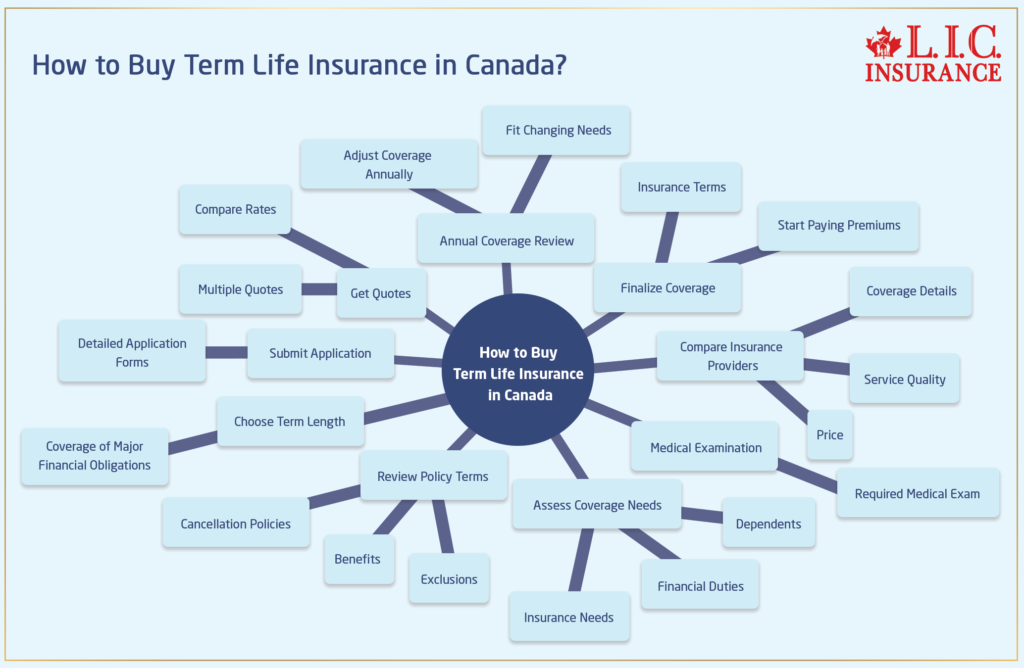
          Permanent Insurance: A Whole New Investment Class

          Recent developments in the investment markets and its volatile performance have revived an old workhorse. More and more Canadians are opting for a permanent or a whole life insurance scheme to reduce the hassle of renewals and the extra paperwork that comes with it. Investors are also looking into this policy to diversify their portfolios.

          Also, permanent insurance can act as a tax-efficient fixed income investment alternative. But how is permanent or whole life insurance is a good investment? Well, let’s have a look at the list below.

          Permanent Insurance: A whole new investment class

          By Candian LIC,  June 19, 2021, 5 Minutes

          Permanent Insurance: A whole new investment class

          Recent developments in the investment markets and its volatile performance have revived an old workhorse. More and more Canadians are opting for a permanent or a whole life insurance scheme to reduce the hassle of renewals and the extra paperwork that comes with it. Investors are also looking into this policy to diversify their portfolios.

          Also, permanent insurance can act as a tax-efficient fixed income investment alternative. But how is permanent or whole life insurance is a good investment? Well, let’s have a look at the list below.

          A few reasons why permanent insurance is a good investment

          These seem excellent reasons why anyone can consider applying for permanent life insurance, but does it make sense for you?

          Should I apply for permanent insurance?

          This would entirely vary from individual to individual. With permanent life insurance, you will have lifetime coverage, which means it will be your financial safety net till the day you die. Also, you will be using it as an investment, and the cash component will only grow over time. You can withdraw the proceeds at any time you want. You may also receive anywhere between 25% to 100% of your permanent life insurance policy’s, Death benefit before you die or if you are diagnosed with a specific condition such as stroke, heart attack, invasive cancer, or end-stage renal failure.

          These do look like only pluses, but one significant downside to permanent insurance is that you will have to pay higher premiums. There could be tax implications, if you decide to surrender a policy or pass away with an outstanding loan.

          So, before you apply for whole life or permanent life insurance, it’s advisable to weigh in the pros & cons of the policy. You should also have a clear idea of your financial situation as well as your financial goals. If you need help with that, you can always get in touch with the team at Canadian LIC. They have a team of excellent insurance brokers who can advise you on what type of policy you should opt for based on your requirements. They can also resolve any queries you may have regarding any insurance policy or scheme. Contact them; you won’t regret it.

          Simplifying Permanent Life Insurance for You

          Permanent Life Insurance has been the go-to policy for many Canadians because of its no hassle, no fuss terms and conditions. It is as plain as water; the policy offers coverage for the entirety of the policyholders’ life or as long as the premiums are paid. On top of that, there is also a savings component available in the policy, and it offers continuous growth at a guaranteed rate. If you do not have a clear idea of what a Permanent Life Insurance policy is or what type of benefits it comes with, this blog is for you. Read on to learn more about the Permanent Life Insurance policy so you can make a well-informed decision when you’re choosing your plan.

          Redefining financial security with permanent Insurance

          As the name says, it’s Permanent Life Insurance, which means you get the coverage benefits for your lifetime. Unless you’re not able to pay your premiums, your policy will never lapse. And with the additional benefit that the policy can be used as a savings vehicle, you are guaranteed some extra cash even if you don’t have primary savings account to look into.

          This savings component that we keep talking about accumulates funds from the premium that you pay. Now, you can not withdraw immediately after you’ve just purchased the policy; wait for some time for the funds to get accumulated. Once the waiting period is over, you can withdraw the funds you want and use them for anything you want. You can use them for your child’s higher education or for a long-awaited trip that you couldn’t take because of a busy schedule. The choice is entirely yours.

          The best aspect of Permanent Life Insurance is, you will never have to worry about finding yourself in a financial crisis. Because of the savings component, you will always have some funds to use in case of an emergency. In the unfortunate event that you (the policyholder) pass away, the death benefits will be immediately released for your beneficiaries to claim alongside the accumulated funds in the cash component.

          One thing you should also know is, as long as you don’t overdo your premium limits (meaning you pay an excess in premiums so your savings can increase), you can take out funds from the policy without paying any taxes. Permanent Insurance is because policy loans are not considered as taxable incomes.

          The types of Permanent Life Insurance policies

          Generally, there are two types of Permanent Life Insurance policies available in the market. One is

          If you’ve read through here, we hope that this blog has informed you enough to make a decision. However, it is advisable to contact us at Canadian L.I.C. brokers to clear any queries you may have.

          Get The Best Insurance Quote From Canadian L.I.C

          Call 1 844-542-4678 to speak to our advisors.

          Best Insurance Plans Helpline From Canadian L.I.C

          The above information is only meant to be informative. It comes from Canadian LIC’s own opinions, which can change at any time. This material is not meant to be financial or legal advice, and it should not be interpreted as such. If someone decides to act on the information on this page, Canadian LIC is not responsible for what happens. Every attempt is made to provide accurate and up-to-date information on Canadian LIC. Some of the terms, conditions, limitations, exclusions, termination, and other parts of the policies mentioned above may not be included, which may be important to the policy choice. For full details, please refer to the actual policy documents. If there is any disagreement, the language in the actual policy documents will be used. All rights reserved.

          Please let us know if there is anything that should be updated, removed, or corrected from this article. Send an email to Contact@canadianlic.com or Info@canadianlic.com

          Is Life Insurance Worth It After 70?

          The subject of Life Insurance frequently starts discussions about future plans, security, and finances. As we get older, more and more people wonder if they really need Life Insurance. Life Insurance for seniors is a big topic of conversation in Canada. Many people wonder if buying this kind of insurance after the age of 70 is worth it. We’ll talk about everything you need to know about Life Insurance for seniors in Canada in this blog. Our goal is to clear up any confusion and help you make the correct decision for yourself.

          Is Life Insurance Worth It After 70?

          By Pushpinder Puri, January 22, 2024, 9 Mins

          Is Life Insurance Worth It After 70

          The subject of Life Insurance frequently starts discussions about future plans, security, and finances. As we get older, more and more people wonder if they really need Life Insurance. Life Insurance for seniors is a big topic of conversation in Canada. Many people wonder if buying this kind of insurance after the age of 70 is worth it. We’ll talk about everything you need to know about Life Insurance for seniors in Canada in this blog. Our goal is to clear up any confusion and help you make the correct decision for yourself.

          Time to Understand Life Insurance for Seniors

          Life Insurance is basically a cushion of protection for your finances that gives a lump sum payment, called a death benefit, to the policyholder’s family members when they die. It’s intended to reduce loved ones’ financial burden at an especially difficult time.

          It’s common for people to think that Life Insurance is mostly for young and middle-aged people, but there are times when adults may benefit from having a policy that suits their needs.

          Factors to Consider: Making Sense of Life Insurance After 70

          The first thing we need to do as we learn about Life Insurance after age 70 in Canada is to understand the things that can affect our choices. Let’s break these things down in simple terms so that everyone, even those who don’t know much about insurance, can understand how important each one is.

          Financial Obligations:

          Imagine yourself in this situation: after living your entire life, you’re wondering, “Do I have any financial obligations or outstanding debts?” If the answer is yes, then Life Insurance could help you with your financial needs. Why? You can think of it as an assurance that keeps your family from having to deal with heavy debts or responsibilities.

          When you die, your loved ones will have a better idea of what to do next. A Life Insurance policy can protect them from unforeseen circumstances, help in settling debts, and take care of any unresolved issues.

          Estate Planning:

          Let’s look at the bigger picture now, which is your estate. Estate planning isn’t just for people with a lot of money; it’s a smart move that makes sure your assets are spread the way you want them to be. This is where Life Insurance shines, as it is very important in this financial planning game.

          Consider Life Insurance to be a vital component that gives your estate liquidity. It’s like having extra money saved up to pay for taxes or other costs. This will make the transfer of your assets to the beneficiaries go more smoothly. By including Life Insurance in your estate plan, you ensure that your loved ones will be financially secure after you die.

          Funeral Expenses:

          Let’s face it: whether you like it or not, nobody wants to think about their own death. Still, it is a responsible and humane thing to think about the unavoidable. The funeral is one of the most expensive things that needs to be done after someone dies. In these situations, Life Insurance can save your family a lot of money.

          Think of Life Insurance as a financial roof that protects your family from funeral costs. By getting insurance, you can make sure that your family doesn’t have to deal with unexpected financial stress during a time that is already hard for them mentally.

          Health Conditions:

          Health issues might be concerning, particularly when it comes to getting Life Insurance. Some adults may worry that their health will limit the types of coverage they can get. The truth is that people with health problems may have slightly higher rates, but there are still good options out there.

          See Life Insurance as an impartial preventative measure that does not take a patient’s health into account. Some plans will cover people even if they already have a health problem. This can give people who are worried about their health mental peace.

          Family Dependence:

          Lastly, a Life Insurance policy is a great way to make sure your family is taken care of financially if you die. This is especially true if you have children or a spouse who depends on your income. Protecting the future of the people you care about is just as important as protecting your own.

          Life Insurance is capable of safeguarding your family’s finances if you die. It makes sure that they can keep up their standard of living even if you’re not around to help. They won’t have to give up the comforts and safety you’ve worked hard to provide them with.

          Life Insurance Policies for Seniors in Canada

          Life Insurance for seniors in Canada comes in various shapes and sizes, catering to the diverse needs and preferences of individuals entering their senior years. Understanding the key differences between Term Life Insurance, Whole Life Insurance, and Guaranteed Life Insurance is crucial in making an informed decision that aligns with your specific circumstances.

          Term Life Insurance: A Budget-Friendly Option

          Let’s start with Term Life Insurance policies. It keeps you safe for a certain amount of time, like 10, 20, or 30 years. It’s like buying security for a certain amount of time. So the seniors who want simple, affordable coverage will like this type of Life Insurance policy the most.Know why to get term life insurance in depth here.

          One of the significant advantages of Term Insurance policies is their cost-effectiveness. The premiums tend to be lower compared to other types of policies, making it an accessible option for seniors on a budget. However, it’s important to note that, unlike some other policies, Term Insurance doesn’t build cash value over time. It’s very simple – you pay for the coverage during the term, and if you pass away within that period, the death benefit is paid out to your beneficiaries.

          Click here to know- Can you cash out term life insurance?

          Whole Life Insurance: Lifelong Protection with Added Benefits

          Moving to a Whole Life Insurance plan is a lifelong companion when it comes to financial protection. Unlike Term Life Insurance, Whole Life Insurance covers you for all of your life by providing lifetime coverage. It’s not just a temporary coverage; you’re making a long-term promise to keep your family safe.

          Yes, the premiums for Whole Life Insurance are higher, but here’s the trade-off – it accumulates a cash value over time. This cash value is like a savings account within your policy. It grows gradually and can be borrowed against or withdrawn when needed. So, not only are you ensuring a financial safety net for your family, but you’re also building a financial asset that can be tapped into during your lifetime.

          Whole Life Insurance offers a level of stability and permanence that appeals to many seniors. It’s a complete package that combines the benefits of protection and savings, providing a holistic approach to financial planning.

          Go here if u want to know the – Biggest risk of Whole Life Insurance

          Aspect Term Life Insurance Whole Life Insurance
          Coverage Duration Provides coverage for a specific term (e.g., 10, 20, or 30 years). Offers lifelong coverage, ensuring protection for the entire duration of the policyholder’s life.
          Commitment Temporary coverage for a specified period. Signifies a long-term commitment to financial protection, providing coverage throughout the policyholder’s lifetime.
          Premiums Generally lower compared to Whole Life Insurance. Higher premiums due to lifelong coverage and cash value accumulation.
          Cash Value Does not accumulate cash value. Accumulates a cash value over time, acting as a savings component within the policy.
          Flexibility Limited flexibility, and once the term ends, coverage ceases. Offers flexibility with the option to borrow against or withdraw from the cash value during the policyholder’s lifetime.
          Financial Planning Approach Primarily focused on temporary needs and affordability. Combines protection and savings, providing a holistic approach to financial planning.
          Suitability Suitable for individuals with temporary financial obligations. Appeals to those seeking lifelong coverage, financial stability, and a long-term financial asset.

          Guaranteed Life Insurance: Bridging Gaps for Seniors with Health Concerns

          Now, let’s turn our attention to guaranteed acceptance of life insurance, specifically for seniors facing health concerns. The beauty of Guaranteed Life Insurance is that it typically doesn’t require a medical exam. This feature makes it accessible to individuals who may find it challenging to secure coverage elsewhere due to pre-existing health conditions.

          Even though not having to go through a medical test makes the application process easier, it’s essential to be aware that premiums for Guaranteed Life Insurance are higher. It’s also possible that the coverage amounts are less than with term or Whole Life Insurance. For seniors whose health prevents them from getting regular insurance, the ease and accessibility it offers are worth the sacrifice.

          Aspect Guaranteed Life Insurance Term Life Insurance Whole Life Insurance
          Target Audience Seniors facing health concerns. Generally applicable to individuals seeking temporary coverage. Generally applicable to individuals seeking lifelong coverage.
          Medical Exam Requirement Typically does not require a medical exam. May require a medical exam as part of the underwriting process. May require a medical exam, especially for higher coverage amounts.
          Premiums Higher premiums compared to term and Whole Life Insurance. Lower premiums, making it a more affordable option. Higher premiums due to lifelong coverage and cash value accumulation.
          Coverage Duration Provides coverage for the entire lifetime of the policyholder. Covers a specific term, e.g., 10, 20, or 30 years. Provides lifelong coverage.
          Cash Value Generally does not accumulate cash value. Does not accumulate cash value. Accumulates a cash value over time, providing a financial asset.
          Accessibility More accessible for individuals with pre-existing health conditions. Accessible for those in good health but may be challenging for individuals with health issues. Accessible, but individuals with health concerns may face challenges in obtaining coverage.
          Trade-offs Higher premiums and potentially lower coverage amounts. Temporary coverage with lower premiums but no cash value. Higher premiums with the benefit of lifelong coverage and a cash value component.
          Suitability Suited for seniors with health challenges seeking accessibility. Suited for those with temporary financial needs. Suited for those seeking lifelong coverage and building a financial asset.

          Hence, choosing the right Life Insurance policy as a senior in Canada involves considering your budget, health, and long-term financial plan and goals. Term Life Insurance coverage is a practical choice for those seeking affordable coverage for a specific period. Whole Life Insurance appeals to those who value lifelong protection coupled with a cash accumulation component. Guaranteed Life Insurance bridges the gap for seniors with health concerns, offering accessibility without the need for a medical exam.

          Consulting with an experienced insurance advisor can guide you through the options, ensuring you make a decision that is suitable per your financial plan and provides the security you and your loved ones deserve. Life Insurance for seniors is about customizing coverage to fit your life – both now and in the future.

          Top Life Insurance companies for seniors in Canada

          Life Insurance Type Company Recommended Reading
          Term Sun Life Insurance Sun Life Insurance reviews
          Whole/Permanent Manulife
          Canada Life
          Manulife Life
          Insurance review
          Canada Life reviews
          Guaranteed Life Insurance Canada Protection Plan
          Desjardins Insurance
          Canada Protection Plan reviews
          Desjardins Insurance reviews

          The Bottom Line

          In determining whether buying Life Insurance plans after 70 is worth it in Canada, the decision ultimately depends on your individual circumstances and financial goals. While Life Insurance may not be necessary for everyone at this stage in life, it can provide invaluable mental satisfaction and financial security for both you and your loved ones.

          Remember, each person’s situation is unique, so it’s essential to consult with a qualified insurance advisor to explore the options available and find a policy that best fits your specific needs and goals before you decide to purchase Life Insurance. Life Insurance for seniors isn’t the same for everyone, but if you get the right information, you can make a choice that will make your later years more comfortable and safe.

          Get The Best Insurance Quote From Canadian L.I.C

          Call 1 844-542-4678 to speak to our advisors.

          Best Insurance Plans Helpline From Canadian L.I.C

          Faq's

          Life Insurance for seniors in Canada provides a different solution for everyone. It depends on your circumstances. A Life Insurance policy could be beneficial if you have dependents or outstanding debts or want to ensure your family is financially secure after you’re gone.

          The Life Insurance cost for seniors varies based on factors like age, health, and the type of policy. Generally, premiums are higher for seniors due to increased risks associated with age. Whole Life Insurance tends to be pricier than Term Insurance. It’s best to get personalized quotes from insurance providers to determine the specific insurance costs for your situation.

          Yes, there is Life Insurance coverage available for seniors over 60. Many insurance providers offer policies that meet the needs of seniors in this age group. Options include Term Insurance, Whole Life Insurance, and Guaranteed Life Insurance.

          The best Life Insurance for seniors depends on personal needs and preferences. Term Life Insurance is budget-friendly, while Whole Life Insurance provides lifelong coverage with added benefits. Guaranteed Life Insurance is an option for seniors with health concerns. The “best” choice varies, so it’s essential to consider individual circumstances.

          For seniors over 65, Whole Life Insurance is often considered a solid option. It provides lifelong coverage and builds cash value over time. However, the best choice depends on health, budget, and long-term goals.

          Yes, there is Life Insurance available for seniors over 70. While premiums may be higher, options such as Term Insurance, Whole Life Insurance, and Guaranteed Life Insurance cater to the unique needs of seniors in this age group.

          Yes, some insurance providers offer Life Insurance options for seniors over 80. It may include whole or Guaranteed Life Insurance that provides coverage and financial security for individuals in this age bracket.

          Absolutely. Life Insurance options are available for seniors over 75, accommodating their specific needs and circumstances. Insurance providers offer a range of policies, like term, whole, and Guaranteed Life Insurance.

          For seniors over 65, the best Whole Life Insurance depends on individual preferences and financial goals. Leading insurance companies often offer customizable whole-Life Insurance policies that provide lifelong coverage and accumulate cash value over time.

          When considering Whole Life Insurance for seniors over 80, exploring policies that are similar to health conditions and budget is very important. The “best” choice varies, so consulting with an insurance advisor to explore options suiting specific needs is advisable.

          Term Life Insurance is typically the cheapest Life Insurance for seniors. It provides coverage for a specific term without the added features of cash value accumulation. It’s a budget-friendly option for those looking for very simple protection.

          A good Life Insurance policy for seniors is dependent on individual needs and circumstances. Term Life Insurance is practical for budget-conscious individuals, while Whole Life Insurance offers comprehensive coverage and savings. Guaranteed Life Insurance is suitable for seniors with health concerns. The key is to find a policy that fits your unique situation and financial aspirations.

          Think of Term Life Insurance as renting coverage for a set period (10, 20, or 30 years), while Whole Life Insurance is a lifelong commitment. Term is budget-friendly but doesn’t build cash value, while whole life provides lifetime coverage with a cash value that grows over time.

          Guaranteed Life Insurance is for seniors with health concerns who may find it hard to get coverage elsewhere. It doesn’t require a medical exam, making it accessible. However, premiums are higher, and coverage amounts may be lower than other policies.

          Yes, with Whole Life Insurance. It accumulates a cash value over time, acting like a savings account. Seniors can borrow against or withdraw from this cash value for various needs, providing a financial cushion during their lifetime.

          Generally, yes. Premiums tend to be higher for seniors due to increased age-related risks. However, the type of policy and your health condition also influence the insurance costs. Guaranteed Life Insurance may have higher premiums, especially for seniors with health concerns.

          Yes, Guaranteed Life Insurance is designed for seniors and often doesn’t require a medical exam. It offers a simplified application process, making it accessible to individuals with health issues that might stop them from obtaining traditional coverage.

          Absolutely. Funeral expenses can be a significant concern for seniors and their families. Life Insurance provides a lump-sum payment to beneficiaries, helping cover funeral costs and reducing financial stress during a challenging time.

          Seniors should consider their financial obligations, estate planning, health conditions, family dependencies, and funeral expenses. Each person’s situation is unique, so choosing a policy that meets individual needs and goals is important.

          Assess your financial situation and consider your dependents, outstanding debts, and future plans. Consult with an insurance advisor to explore available options and determine if having a Life Insurance policy after 70 is as per your specific needs and goals or not.

          Yes, most Life Insurance policies for seniors make it possible to review and adjust them as their circumstances change. It’s essential to stay in touch with your insurance advisor to ensure your coverage continues to meet your changing needs.

          The above information is only meant to be informative. It comes from Canadian LIC’s own opinions, which can change at any time. This material is not meant to be financial or legal advice, and it should not be interpreted as such. If someone decides to act on the information on this page, Canadian LIC is not responsible for what happens. Every attempt is made to provide accurate and up-to-date information on Canadian LIC. Some of the terms, conditions, limitations, exclusions, termination, and other parts of the policies mentioned above may not be included, which may be important to the policy choice. For full details, please refer to the actual policy documents. If there is any disagreement, the language in the actual policy documents will be used. All rights reserved.

          Please let us know if there is anything that should be updated, removed, or corrected from this article. Send an email to Contact@canadianlic.com or Info@canadianlic.com

          What Is the Best Age to Buy Life Insurance?

          If you’re thinking about entering into the world of Life Insurance in Canada, you might have wondered, “Is there a perfect age to make the move?” Well, the truth is, there’s no perfect answer that will be applicable to everyone, but picture it like this: choosing when to get Life Insurance is a bit like going to a sale – the earlier, the better! It’s like getting a discount on protection for your loved ones when you’re young and healthy. But hold on, if you wait too long, it’s a bit like trying to buy winter jackets in the middle of summer, which would be tricky and maybe even impossible, especially if your health is already not in the best of condition. Let’s figure out when the best time to buy Life Insurance is and why you should start thinking about it right away.

          What Is the Best Age to Buy Life Insurance?

          By Canadian LIC, S January 18, 2024, 10 Mins

          What Is the Best Age to Buy Life Insurance

          If you’re thinking about entering into the world of Life Insurance in Canada, you might have wondered, “Is there a perfect age to make the move?” Well, the truth is, there’s no perfect answer that will be applicable to everyone, but picture it like this: choosing when to get Life Insurance is a bit like going to a sale – the earlier, the better! It’s like getting a discount on protection for your loved ones when you’re young and healthy. But hold on, if you wait too long, it’s a bit like trying to buy winter jackets in the middle of summer, which would be tricky and maybe even impossible, especially if your health is already not in the best of condition. Let’s figure out when the best time to buy Life Insurance is and why you should start thinking about it right away.

          Let’s Understand Life Insurance

          First, it’s important to know what Life Insurance is before talking about the best age to buy it. Life Insurance is a financial product that provides a lump sum payment, known as a death benefit, to beneficiaries upon the policyholder’s demise. This financial support system can help pay for things like funeral costs, outstanding debts, and the ongoing financial needs of people who depend on you.

          Factors Influencing the Decision

          Factors Influencing the Life Insurance Decision

          Age and Health:

          Life Insurance premiums are often more affordable when you buy them at a younger age. This is because younger individuals typically pose a lower risk to insurance providers.

          Health is a significant factor influencing both eligibility and premiums. Generally, individuals in good health can secure more favourable rates.

          Financial Responsibilities:

          The best time to buy Life Insurance may coincide with significant life events, such as marriage, the birth of a child, or the purchase of a home. These milestones often bring about increased financial responsibilities, making Life Insurance coverage even more important.

          Income Stability:

          Having a stable income is another important thing to be considered. Life Insurance makes sure that your loved ones are protected financially if the unexpected were to happen, offering peace of mind during times of uncertainty.

          The Ideal Age for Life Insurance

          The Ideal Age for Life Insurance

          Determining the ideal age to buy Life Insurance in Canada is a decision that is dependent on various factors, each playing an extremely crucial role in securing peace mentally. While no universal answer applies to everyone, many financial experts lean towards recommending Life Insurance acquisition in one’s twenties or thirties. Let’s explore the rationale behind this advice and why it’s never too late to consider Life Insurance coverage per different age groups.

          The Twenties and Thirties Advantage:

          In your twenties and thirties, life often gives you a mix of big moments and the feeling that you can do anything. Financial responsibilities may include rent or mortgage payments, student loans, and perhaps the joyous chaos of starting a family. At this stage, Life Insurance premiums are often more pocket-friendly.

          One key factor contributing to the affordability of premiums during this time is the general good health that tends to accompany youth. Insurance companies typically view younger individuals as presenting a lower risk, leading to lower premiums. Going for Life Insurance during this period ensures that you get more favourable rates, providing a cost-effective means to protect your loved ones’ financial future.

          Moreover, acquiring Life Insurance in your twenties or thirties aligns with major life events, such as your marriage or the birth of your child. These significant milestones often trigger a heightened awareness of financial responsibilities, making Life Insurance a sensible consideration. By doing so, you lay the foundation for a safe and secure place that can support and protect your family’s financial stability during unforeseen circumstances.

          It’s Never Too Late:

          The common misconception is that getting Life Insurance becomes harder as you get older. This is not true. The reality is that Life Insurance providers recognize the diverse needs of individuals at every stage of life. Therefore, it’s never too late to obtain coverage, and many providers offer policies designed to cater to different age groups.

          Whether you’re in your forties, fifties, or beyond, securing Life Insurance remains a feasible and important step toward financial security. While premiums may increase with age due to associated health risks, the protection and mental peace offered by Life Insurance are immeasurable. Providers know how each age group’s circumstances are different, and they know how to adjust policies to suit different demands.

          Going through the Process:

          Obtaining a Life Insurance quote in Canada has become more accessible than ever. Many reputable insurance companies offer online tools that simplify the process. By entering basic information such as age, health status, and coverage preferences, individuals can receive instant quotes, enabling them to make intelligent choices about their Life Insurance needs.

          For those unfamiliar with the difficulties that come with Life Insurance, seeking guidance from licensed insurance brokers can be immensely beneficial. These professionals possess the expertise to review the huge number of options, ensuring you find coverage that is perfect as per your specific needs and budget.

          So, even though the twenties and thirties present a great time to secure Life Insurance in Canada, the door to coverage remains wide open at any age. The main thing is to understand the unique factors influencing your life and financial situation. By exploring Life Insurance options and obtaining quotes tailored to your needs, you take a significant step towards providing lasting financial protection for your loved ones, regardless of your age.

          When You Should Never Buy Life Insurance?

          Life Insurance is a great way to protect your loved ones who count on your income in case you die. However, there are instances when purchasing Life Insurance might not be the most practical or necessary decision. Read the following points to know when you should hold off on buying Life Insurance:

          Zero Dependents, Zero Need:

          If you currently have no dependents and foresee a future where this situation remains unchanged, Life Insurance may not be a priority. The primary aim of Life Insurance is to protect those who rely on your financial support.

          Exception: Financially Independent Loved Ones:

          An exception to the rule exists if obtaining a Life Insurance policy brings mental peace, even for financially independent loved ones. While having no dependents may not necessitate coverage, it’s worth considering if the thought of providing extra security for a loved one is important to you and fits your budget.

          Affordability Matters:

          Life Insurance can contribute to inner peace, but it should never be a financial burden. It becomes a practical option if you can afford a policy without compromising your overall financial well-being.

          Consider Alternative Safety Nets:

          For individuals with zero dependents, exploring alternative financial protection options is advisable. Instead of investing in Life Insurance, focus on building an emergency fund. A high-yield savings account can be a practical means of slowly accumulating three to six months’ worth of income for unexpected financial challenges.

          Remember, the decision to purchase Life Insurance is highly individual. It’s essential to understand your unique circumstances and financial goals very well. While Life Insurance is a valuable financial safety choice, knowing when it may not be necessary makes it possible for you to allocate your resources effectively and make aware and intelligent financial decisions.

          Concluding Thoughts

          Purchasing Life Insurance is a very important step in the search for financial security. Even though the ideal age may vary for each individual, understanding the factors at play and the options available is the main thing. Whatever age you are, whether you’re in your twenties or fifties, the mental satisfaction that comes with Life Insurance is unmatched. So take a step towards safeguarding your family’s future today.

          Get The Best Insurance Quote From Canadian L.I.C

          Call 1 844-542-4678 to speak to our advisors.

          Best Insurance Plans Helpline From Canadian L.I.C

          Faq's

          With Life Insurance, if the insured dies, their beneficiaries will get a lump sum payment, which is called a death benefit. It protects your finances by paying for things like funeral costs, debts, and the financial needs of people who count on you. Without Life Insurance, the people you care about would not have enough money if you died suddenly.

          There is no one right answer, but many financial experts say you should get Life Insurance when you are in your twenties or thirties. People are usually in better health at this point, and rates are more affordable. But it’s never too late to get insurance, and many Life Insurance companies have Life Insurance plans that are specific to age groups.

          People are usually in good health during these years, which means that rates are lower. Also, big events in people’s lives, like getting married, having a child, or buying a house, often happen during this time, making it even more important to protect their finances. When you decide to buy Life Insurance in your twenties or thirties, you can get better rates and take care of your growing financial responsibilities.

          No, it’s never too late to obtain Life Insurance. Providers understand the diverse needs of individuals at every age and offer policies that cater to different age groups. While premiums may increase with age due to associated health risks, the protection and mental peace offered by Life Insurance are invaluable at any stage of life.

          It’s very easy to get a quote for Life Insurance in Canada. A lot of good insurance companies have online tools that let you get instant quotes by entering basic information like your age, health, and coverage choices. Working with licensed insurance brokers can also give you personalized help and help you learn about your choices.

          Several factors impact Life Insurance premiums, including age, health, lifestyle, coverage amount, and the type of policy. Younger, healthier individuals often enjoy lower premiums. Lifestyle choices, such as smoking, may increase costs. The coverage amount and policy type (term or whole life) also play a role in determining premiums.

          Absolutely, a lot of Life Insurance plans provide flexibility. When your situation changes, like when you engage in marriage, have your first baby, or go through other big events in your life, you can usually change the amount of coverage you have or look into getting extra riders. It’s wise to examine your policy and make any necessary revisions frequently.

          To find the right Life Insurance policy, you need to think about your budget, financial goals, and specific desires. Working with a qualified insurance broker can be helpful because they can give you expert advice and help you sort through the different policies to find one that fits your needs.

          Yes, many insurance providers in Canada offer online tools that allow you to input basic information and receive a Life Insurance quote instantly. These tools are user-friendly and provide a convenient way to explore coverage options.

          No, Life Insurance is valuable for anyone with financial responsibilities. It provides financial protection for dependents, covering various expenses, regardless of whether the individual is the primary breadwinner or a contributing member of the family.

          Yes, it’s possible to obtain Life Insurance with pre-existing health conditions. However, the type of coverage and premiums may vary. It’s advisable to disclose all health information accurately when applying for coverage.

          Yes, there are various types, including term life, whole life, and universal Life Insurance. The choice depends on factors like your budget, coverage needs, and preferences. Consulting with an insurance professional can help you make an informed decision.

          Some Life Insurance policies, such as whole life and universal life, have a cash value component that can grow over time. However, it’s essential to weigh the pros and cons, as these policies may have higher premiums compared to term Life Insurance.

          Yes, many Life Insurance policies allow you to adjust coverage. This can involve increasing or decreasing the coverage amount, changing the policy duration, or adding additional riders to meet evolving needs. Contacting your insurance provider can help facilitate these adjustments.

          If you miss a premium payment, there is often a grace period during which you can make the payment without any negative consequences. However, it’s crucial to understand the terms of your policy and the grace period specifics to avoid lapses in coverage.

          Yes, you can name multiple beneficiaries, and you can specify the percentage of the death benefit each will receive. This flexibility allows you to tailor your policy to the needs of your loved ones.

          While Life Insurance is often associated with providing for dependents, single individuals may still benefit from coverage. It can help cover debts and funeral expenses, preventing a financial burden for family members or beneficiaries.

          In Canada, Life Insurance payouts are generally tax-free. The beneficiary receives the death benefit without having to pay income tax on the proceeds.

          Yes, it’s possible to have multiple Life Insurance policies. This might be beneficial if your needs change over time, allowing you to tailor coverage to different aspects of your life.

          The above information is only meant to be informative. It comes from Canadian LIC’s own opinions, which can change at any time. This material is not meant to be financial or legal advice, and it should not be interpreted as such. If someone decides to act on the information on this page, Canadian LIC is not responsible for what happens. Every attempt is made to provide accurate and up-to-date information on Canadian LIC. Some of the terms, conditions, limitations, exclusions, termination, and other parts of the policies mentioned above may not be included, which may be important to the policy choice. For full details, please refer to the actual policy documents. If there is any disagreement, the language in the actual policy documents will be used. All rights reserved.

          Please let us know if there is anything that should be updated, removed, or corrected from this article. Send an email to Contact@canadianlic.com or Info@canadianlic.com
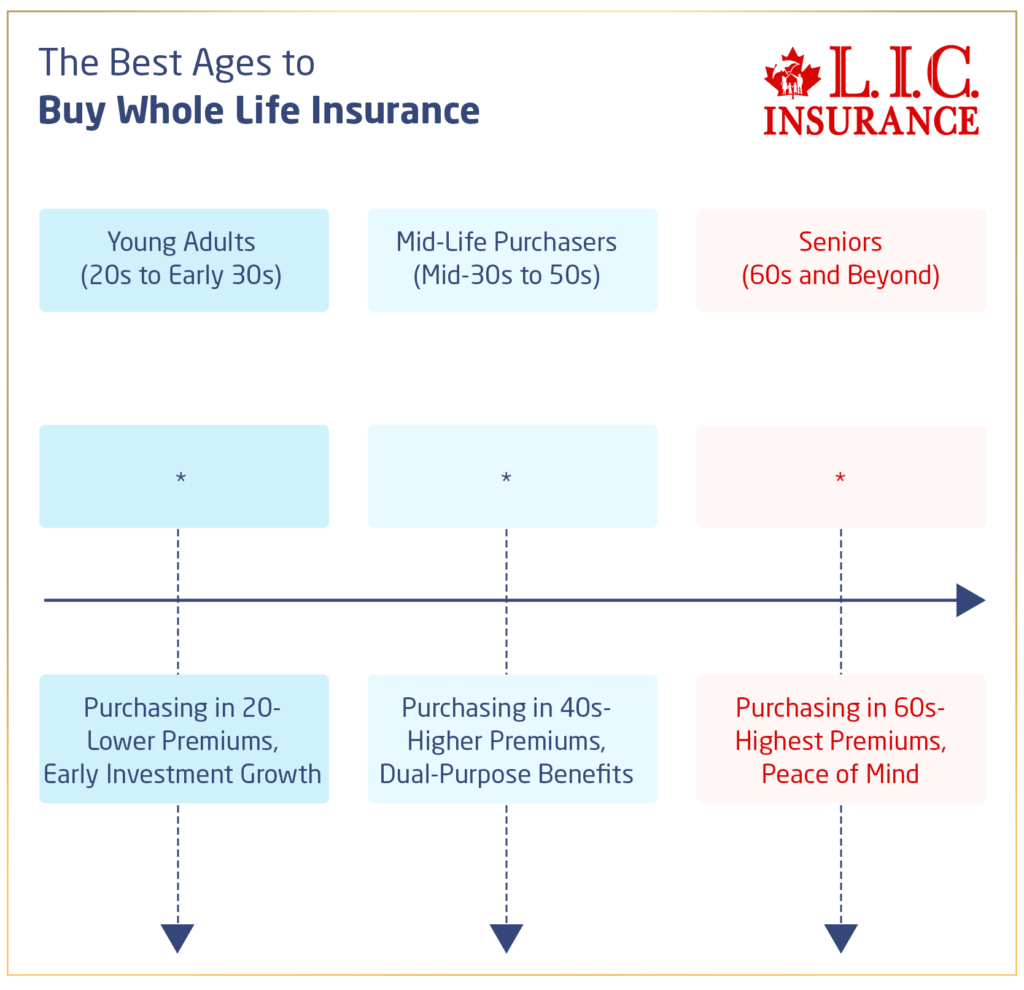
          What Is the Biggest Risk for Whole Life Insurance?

          Insurance that covers a person for their whole life and builds cash value is called Whole Life Insurance. It does, however, come with some risks that policyholders should be aware of before spending, just like any other financial product.

          What Is the Biggest Risk for Whole Life Insurance?

          By Canadian LIC, January 9, 2024, 7 Mins

          What Is the Biggest Risk for Whole Life Insurance

          Whole Life Insurance? It’s like a lifelong guardian, always watching over you and your dear ones.

          Whole life insurance covers a person for their whole life and builds cash value. Like any other financial product, it comes with some risks that policyholders should be aware of before spending.

          Quick Facts about Whole Life Insurance in Canada

          Risks Associated with Whole Life Insurance

          Suppose you are looking for a solution to get lifelong coverage along with a cash value component in an insurance product. In that case, Whole Life Insurance can be your perfect answer. Yet, it carries certain risks that potential policyholders should consider before they decide to invest in it.

          High Premiums
          One of the biggest drawbacks of Whole Life Insurance is how expensive it can be. The monthly premiums are much higher than those for Term Life Insurance. This is because Whole Life Insurance includes both a death benefit and a savings part called cash value. Before buying a policy, make sure the monthly payment fits your budget and doesn’t create financial stress.

          Dependence on Market Performance
          Some Whole Life policies grow your savings based on how well the insurance company’s investments perform. If those investments don’t do well, the cash value and any dividends you get could be lower. The good news is that many policies offer a guaranteed minimum growth rate, which helps protect your savings even when markets go down.

          Limited Flexibility
          Whole Life Insurance isn’t very flexible. You don’t have much control over how the cash value grows since that depends on the insurance company. Changing your policy, adjusting coverage, or taking out money may come with fees or penalties. It’s important to understand these limits before you commit to this kind of plan.

          Opportunity Cost
          Paying high premiums into a Whole Life Insurance policy means you’re not using that money elsewhere. In some cases, investing in stocks or mutual funds might give you better returns. So, it’s smart to compare how much you could earn from other options before deciding on a Whole Life policy.

          Hence, potential policyholders must stay well aware of all these risks to make the best decisions about Whole Life Insurance policies in Canada. Evaluating these factors according to each individual’s personal financial goals and risk tolerance levels is essential before committing to a policy.

          Click here to know the benefits of Whole Life Insurance

          Managing the Risks

          Even though you get long-term financial security with Whole Life Insurance, still understanding and managing these risks are also very significant steps for a secure investment.

          Thorough Research

          Before you decide to buy Whole Life Insurance, deeply understand even its minutest details. Read and get to know the policy’s terms, what the premiums cover, and how the cash value grows over time. It is also important to figure out whether the insurer guarantees cash value growth, dividends, and death benefits or not. You have to take into account the way the policy aligns with your long-term financial goals.

          Financial Assessment

          Staying very well aware of your financial capabilities is of utmost importance as well. Make sure about whether the premiums that are in connection with the whole life policy fit comfortably within your budget or not. Staying balanced financially is important, as missed premium payments can lead to policy lapses or reduced benefits. Go and figure out your income, expenses, and long-term financial objectives to determine if the monthly costs are sustainable for you or not.

          Seek Expert Consultation

          The best thing is to go for help. Here is where the role of an expert comes into play. A financial advisor or insurance professional can be your guiding light. If you decide to go and take these experts’ help in assessing the policy’s suitability based on your financial goals and risk tolerance, then you will be sorted to a great extent. They can provide you with deep insights into how the policy aligns with your financial objectives, help you understand the costs, and clarify any doubts you might have regarding the policy’s terms and conditions.

          Periodic Policy Reviews

          Another essential part is to keep reviewing your Whole Life Insurance policy on a regular basis. As life situations and financial circumstances keep on changing, the same way your insurance needs might also keep changing. If one keeps reviewing their policy regularly, then it will be possible for them to assess whether the policy aligns with their current financial goals or not. The best way is to keep reviewing the policy every few years or after significant life events take place, such as marriage, the birth of a child, or career changes.

          Diversification of Investments

          You can also go with diversifying your investments. Even though a Whole Life Insurance policy is a stable financial product, solely relying on it might limit your investment portfolio’s diversity. Go and explore other investment options as well, like mutual funds, stocks, or retirement accounts, to complement your insurance policy and balance out your financial portfolio.

          Understanding Surrender Values and Loans

          Make yourself very well familiar with the surrender values and policy loan options. Surrendering a policy prematurely or taking out loans against the cash value might impact the policy’s long-term benefits. Understanding the implications and costs associated with these actions is crucial before making any decisions.

          Coming to the end: Weighing Risks in Whole Life Insurance

          The idea of Whole Life Insurance is appealing because it covers you for your whole life and builds cash value over time. Still, it’s important to know the risks before buying a Whole Life Insurance policy in Canada.

          Evaluating Your Financial Objectives

          Understanding the risks involved, particularly the higher monthly cost compared to term insurance, is fundamental. Carefully assess if the premium aligns with your budget and long-term financial goals. This introspection ensures that the policy doesn’t strain your finances but rather serves as a beneficial tool for investment.

          Risk Assessment for Informed Decisions

          Comparing the benefits against the risks linked to Whole Life Insurance is crucial. The cash value growth, though enticing, could be affected by market performance or constrained flexibility. By balancing the benefits and costs, individuals can make smarter choices that harmonize with their financial aspirations and appetite for risks.

          Seeking Professional Guidance

          Deciding to consult with a financial advisor or insurance professional can provide invaluable knowledge. These professionals can help you understand the policy’s details and what the monthly costs and risks mean. Their knowledge helps you make sure that the insurance fits with your financial plan and enables you to reach your goals instead of getting in the way.

          Concluding Thoughts

          Overall, Whole Life Insurance can be an essential part of a long-term financial plan because it covers you for life, and the cash value could grow over time. However, it is very important to fully understand the policy’s monthly costs and the risks that come with it. People in Canada can get the most out of a Whole Life Insurance policy while successfully managing possible risks by making knowledgeable choices, weighing risks against financial goals, and getting professional help.

          Get The Best Insurance Quote From Canadian L.I.C

          Call 1 844-542-4678 to speak to our advisors.

          Best Insurance Plans Helpline From Canadian L.I.C

          Faq's

          Whole life insurance means a permanent life insurance policy that provides lifelong coverage as long as premiums are paid. It also builds guaranteed cash value over time, which policyholders can borrow against or use in emergencies.

          A whole life insurance rates chart shows estimated monthly or annual premiums based on age, gender, health, and coverage amount. These charts can usually be found on insurer websites or by speaking to a licensed insurance advisor for a personalized quote.

          The biggest risk for whole life insurance is the higher cost compared to term insurance. If you can’t afford to maintain the premiums long-term, you might lose coverage or reduce the policy’s value. It’s important to assess your financial stability before committing.

          Yes, one of the benefits of whole life insurance is that the premium remains level throughout your life. This predictability helps in long-term financial planning.

          To use a whole life insurance rates chart effectively, estimate your premiums by looking at your current age and desired coverage amount. Then, compare multiple providers to find a balance between cost and value.

          Whole Life Insurance provides coverage for your entire life, while term life insurance offers coverage for a specific term, typically 10, 20, or 30 years. Whole life Insurance also includes a cash value component that grows over time, unlike term life insurance.

          If you stop paying premiums, the policy may lapse, and the coverage and cash value benefits could be affected. Some policies may have a grace period during which you can make payments to prevent lapses or explore options like reducing the death benefit.

          Yes, most whole life policies allow you to take out loans against the cash value. However, outstanding loans accrue interest and could impact the policy’s cash value and death benefit if not repaid.

          Whole Life Insurance provides lifelong coverage and a savings component. While it offers financial security, its returns might not match those of other investment options. Before investing in whole life insurance, it’s essential to consider your financial goals and risk tolerance.

          Periodic reviews are advisable, especially after significant life events or every few years. Life changes, and so do financial goals. Regular reviews ensure that the policy aligns with your current needs and objectives.

          Yes, you can surrender your policy, but doing so might lead to surrender fees and taxes on any cash value withdrawal. Make sure to understand the implications before cancelling the policy.

          Whole Life Insurance can serve as a retirement supplement due to its cash value growth and tax advantages. However, it’s essential to consider other retirement investment options and consult a financial advisor for a holistic retirement plan.

          No, Whole Life Insurance premiums are not tax-deductible in most cases. However, the cash value growth is tax-deferred, and withdrawals up to the total premiums paid are usually tax-free.

          Dividends in Whole Life Insurance policies represent a portion of the insurer’s profits shared with policyholders. They’re not guaranteed and can be used to increase the policy’s cash value, buy additional coverage, or receive cash payouts.

          Some policies offer flexibility in adjusting the death benefit, typically through policy riders or options provided by the insurer. This change might involve underwriting and could impact premiums.

          Whole Life Insurance policies typically don’t have a specific maturity date like term policies. As long as premiums are paid, the coverage continues throughout your lifetime.

          Some term life insurance policies offer conversion options that allow policyholders to convert to a whole life policy without undergoing additional medical exams or proving insurability. Check your policy details for specific conversion terms.

          While Whole Life Insurance offers cash value growth, solely relying on it as an investment might limit potential returns. Diversification across various investment options is often recommended for a well-rounded financial plan.

          Using cash value might have restrictions or conditions. Policy loans, withdrawals, or surrenders can impact the cash value and death benefit. Understanding these limitations before accessing cash value is crucial.

          Many whole life policies offer riders or options to increase coverage. However, additional coverage usually requires underwriting and may affect premiums.

          Cash value grows through premiums and interest credited by the insurer. The growth rate varies among policies and might be affected by factors like market conditions and policy expenses.

          Yes, as the policy owner, you can purchase Whole Life Insurance for someone else, provided you have an insurable interest. The insured person might need to provide consent or undergo underwriting.

          Missing premiums might lead to a grace period during which you can pay, but the policy could lapse if premiums remain unpaid. Some policies offer options to cover missed payments using the cash value, but this can vary among insurers and policies.

          The above information is only meant to be informative. It comes from Canadian LIC’s own opinions, which can change at any time. This material is not meant to be financial or legal advice, and it should not be interpreted as such. If someone decides to act on the information on this page, Canadian LIC is not responsible for what happens. Every attempt is made to provide accurate and up-to-date information on Canadian LIC. Some of the terms, conditions, limitations, exclusions, termination, and other parts of the policies mentioned above may not be included, which may be important to the policy choice. For full details, please refer to the actual policy documents. If there is any disagreement, the language in the actual policy documents will be used. All rights reserved.

          Please let us know if there is anything that should be updated, removed, or corrected from this article. Send an email to Contact@canadianlic.com or Info@canadianlic.com

          What Are the Two Main Charges Deducted Monthly from a Universal Life Insurance Policy?

          Hello, and welcome to the universe of Universal Life Insurance! Knowing what goes on behind the scenes of Universal Life Insurance policies is important if you’re looking into insurance options in Canada. Universal Life Insurance is like a multipurpose tool, just like a financial Swiss army knife, offering protection and savings all in one package. The monthly Universal Life Insurance cost is an important factor that is often ignored.

          What Are the Two Main Charges Deducted Monthly from a Universal Life Insurance Policy?

          By Pushpinder Puri, January 3, 2024, 8 Minutes

          What Are the Two Main Charges Deducted Monthly from a Universal Life Insurance Policy

          Hello, and welcome to the universe of Universal Life Insurance! It’s good to know what happens behind the scenes of Universal Life Insurance policies if you are considering insurance coverage in Canada. Universal Life Insurance is akin to a Swiss army knife of finances, a multifunctional tool with protection and savings combined in one package. The monthly Universal Life Insurance price is a significant consideration that is frequently overlooked.

          When diving deep into the functionality of Universal Life Insurance, two primary charges will catch your eye: administrative fees and the cost of insurance. These charges play an essential role since they affect your Universal Life Insurance policy’s performance and your wallet.

          Various firms providing Universal Life Insurance cover these fees differently, thus the need to request quotations from multiple insurance firms. You can compare various Universal Life Insurance policies and select one that suits you best and your budget.

          We’ll assist you in comprehending Universal Life Insurance better by defining these routine deductions. Having these fees known provides you with the confidence to handle Universal Life Insurance schemes.

          If you are residing in Canada and possess a Universal Life Insurance policy, you should be aware of routine fees that could be deducted. Usually, these fees consist of two primary components: the cost of insurance and administrative charges.

          Most Canadians wonder the same thing before they commit: how much is Universal Life Insurance a month, and what are they paying for anyway? The answer isn’t one-size-fits-all—it varies depending on your age, health, and how your policy is set up. Knowing what impacts your monthly fees can prevent surprises down the road. That’s why it’s more crucial than ever to break down these charges.

          Monthly Charges in a Universal Life Insurance Policy

          Universal Life Insurance Monthly Charges

          Cost of Insurance

          What is the Cost of Insurance?

          The cost of insurance is what the insurance provider deducts to cover the risk of providing Universal Life Insurance coverage. It’s like the fee for the protection your Universal Life Insurance offers.

          How does it work?

          • This charge is calculated based on factors like your age, health, and the coverage amount.
          • As you keep growing older or if your health changes, this charge might increase.

          Understanding Quotes from Different Providers

          • Different Universal Life Insurance providers may offer varying costs for insurance.
          • It’s smart to explore quotes from multiple providers to find a suitable option.

          Administrative Fees

          What are Administrative Fees?

          These fees take care of the maintenance and management of your Universal Life Insurance policy. Think of them as the cost for the company to keep things running smoothly.

          What’s Included?

          • Administrative fees take care of tasks like paperwork, customer service, and keeping records up-to-date.
          • Providers may differ in how they structure these fees.

          Comparing Providers

          • Just like with insurance costs, different providers might have varying administrative fees.
          • Checking out quotes from different providers helps in understanding these differences.

          Beyond the Basics: How Policy Design Impacts Your Monthly Cost

          While most discussions around Universal Life Insurance stop at the cost of insurance and administrative fees, there’s another layer that directly affects how much is Universal Life Insurance per month—your policy design choices. These include how much you allocate toward the investment portion of the policy, your selected death benefit option (Level vs. Increasing), and how frequently you contribute over and above your minimum premium.

          For example, policyholders who choose to contribute higher amounts into the investment portion early on may offset the rising cost of insurance later in life. This proactive funding can ease future financial pressure and prevent unexpected policy lapses due to underfunding. Additionally, opting for an increasing death benefit structure may slightly raise monthly costs but can provide better long-term value for families concerned about inflation or growing liabilities.

          Another often-overlooked factor is the insurer’s internal cost structure—some insurers allow you to customize the investment component or frequency of administrative charges. These micro-adjustments can significantly influence how much is Universal Life Insurance per month and ultimately shape the sustainability of your policy.

          By understanding these behind-the-scenes levers, you’re not just managing charges—you’re strategically building a policy that aligns with your long-term financial goals. This is where working with a knowledgeable advisor becomes essential—they can help you explore how to design your policy efficiently, based on your age, budget, and future needs.

          Detailed Breakdown of the Cost of Insurance & Administrative Fees

          Detailed Breakdown of the Cost of Insurance & Administrative Fees

          Cost of Insurance

          The insurance premium is what the insurance company charges to bear the risk of insuring you. It’s similar to hiring a security guard to keep an eye on your belongings. They determine this fee based on your age, health, and the amount of coverage you’ve selected.

          This fee is important since it has a direct effect on your Universal Life Insurance policy’s cash value. Over the years, this fee increases as you age or in the event of changes in your health status. This is why comparing Universal Life Insurance quotes from various providers is important. All providers might have varying methods of determining this fee; hence, comparing quotes ensures that you get the most suitable one for you.

          Importance of Comparing Quotes

          Not all Universal Life Insurance companies compute the cost of insurance in the same manner. There may be some more competitive rates available under your conditions. This is where it is so critical to shop around for quotes with various companies. It’s similar to finding the best bargain when you’re purchasing something on the internet—browsing through various sites enables you to get the best price.

          When you’re comparing quotes, it’s not only about the numbers. You’re also looking at what each provider can do for you for that amount. Some may include something extra or a different payment system that is more suitable for your needs.

          Knowing how much insurance in your Universal Life Insurance costs is a little like knowing how much gasoline your vehicle requires to drive on a journey. You’d like to ensure you’re purchasing the appropriate amount for the best value, and getting quotes from different providers to compare helps to do exactly that.

          Administrative Fees

          The other that gets removed from your Universal Life Insurance each month is the administrative fee. These fees account for the work that must be conducted at the back of your Universal Life Insurance policy to keep your insurance content. They will handle the paperwork, record keeping, and other tasks that are required to operate your Universal Life Insurance policy.

          That aside, every company selling Universal Life Insurance charges these fees differently. Some charge a bit more, some charge a bit less. It’s similar to viewing various stores selling the same running shoes. They might be different prices, but they all perform the same task.

          If you wish to locate the top Universal Life Insurance, check how they deal with their administrative charges. Some may be more transparent in explaining why they price their insurance the way they do. That transparency may assist you in understanding what you are paying for.

          Also, when you’re receiving quotes for Universal Life Insurance, don’t forget to compare the way each company administers its administrative costs. There is something tiny that could end up making a big difference down the line. It’s just about getting the most for your money and yourself.

          It is essential to know these monthly premiums because they have a direct impact on the cash value of your Universal Life Insurance and the benefit you receive overall. You can select the Universal Life Insurance policy that suits your desires and budget by viewing quotes from several different insurance providers.

          Individuals in Canada selling Universal Life Insurance will discover that every insurance company will charge these fees in a unique manner. It’s best to compare Universal Life Insurance quotes from more than one company so you can observe how they separate these charges. There are some providers that will give you lower COI but higher insurance fees, and vice versa. The most efficient method of maximizing your Universal Life Insurance protection is to establish the proper balance between these charges.

          Keep in mind that Universal Life Insurance is adjustable, so you can modify your coverage and premiums until they are where you need them to be. When shopping around at various providers, don’t just consider the amount you pay per month. Consider what else they provide and what else you get out of their services. Some will provide more investment options or more helpful customer service, which will make your Universal Life Insurance valuable beyond the monthly payment.

          Importance of Being Informed

          Knowing how Universal Life Insurance companies compute monthly fees is important to policyholders. With a good understanding of these fees, you can make better decisions regarding your Universal Life Insurance and have it suited to your needs.

          When you are comparing Universal Life Insurance Policies, you need to get quotes from multiple providers. This ensures that you compare not only the premiums but also the composition of monthly charges, such as the charge for insurance and administrative charges. Each provider would have a different set of charges affecting how your policy performs. It affects the overall value your policy provides in the long term.

          You equip yourself with knowledge by requesting quotes from more than one Universal Life Insurance company. You are able to view the differences in fees and make an educated choice on what is suitable for your budget and coverage needs.

          Keep in mind that being aware of monthly charges allows you to determine the actual worth of a policy. It makes it possible for you to understand not just the premium but also the cost breakdown, allowing you to choose the best fit for your financial protection.

          Therefore, invest the time to find quotes from various Universal Life Insurance companies. It’s a move that can have a great bearing on the worth and efficiency of your policy in the future.

          Concluding Thoughts

          In conclusion, knowing the ins and outs of Universal Life Insurance policies is imperative in maximizing their benefits prior to purchasing Universal Life Insurance. By learning the two main charges—the charge for insurance and administrative fees—you have a better understanding of how your policy works.

          While looking into your alternatives, make sure to contact different Universal Life Insurance companies. These different companies will have different quotes and plans for these fees. This diversity can actually benefit you by enabling you to obtain the most suitable Universal Life Insurance policy that will suit your needs and expenditure.

          By remaining well informed and comparing quotes from several providers, you’re in a position to make an informed choice. It’s not merely taking out a policy; it’s taking out the optimum Universal Life Insurance policy—a policy that will protect your future while being conscious of your monthly rates.

          Therefore, take the initiative to compare various Universal Life Insurance quotes from other providers. Your financial future is worth the attention to detail that comes with the knowledge of these fees and finding the most appropriate Universal Life Insurance plan for yourself.

          Get The Best Insurance Quote From Canadian L.I.C

          Call 1 844-542-4678 to speak to our advisors.

          Best Insurance Plans Helpline From Canadian L.I.C

          Faq's

          The cost of insurance refers to the amount deducted monthly to cover the risk component of the policy. It includes the expenses associated with providing the death benefit.

          Providers calculate this charge based on factors like age, health, coverage amount, and the insurer’s mortality risk.

          Administrative fees cover the operational costs of managing the policy, such as paperwork, customer service, and record-keeping.

          Yes, different providers can structure the cost of insurance and administrative fees differently, leading to variations in the quotes they offer.

          The deductions for these charges impact the policy’s cash value. Understanding them is crucial as they directly influence the growth of the cash value over time.

          Getting quotes from different providers allows you to compare not only premiums but also the structure of charges. This helps in finding a policy that aligns with your needs and budget.

          Some providers might offer flexibility or customization options for charges based on the policy terms or your negotiation abilities. It’s worth discussing these aspects when exploring policies.

          The charges can remain consistent throughout the policy term or may change based on various factors. It’s advisable to clarify this with your insurance provider before finalizing a policy.

          Missing payments due to deductions for charges can impact the policy’s performance. It’s crucial to understand the policy terms regarding missed payments and their consequences.

          While charges are inherent to the policy structure, some strategies might help minimize their impact. Discussing options with your insurance provider or financial advisor can provide insights into potential approaches.

          Comparing quotes from different providers can give you an idea of what’s typical. Additionally, discussing the breakdown of charges with your insurance agent can help gauge reasonableness.

          In some cases, policyholders can switch providers through a process called policy replacement. However, it’s essential to consider potential consequences and evaluate if the change benefits your financial goals.

          Generally, these charges are separate from the death benefit. However, high charges over time can impact the policy’s cash value, potentially affecting the amount available for the death benefit.

          Maintaining good health and reviewing the policy periodically with your provider can help ensure you’re getting the best rates. Some policies may also offer opportunities to adjust coverage or payment structures.

          Request a detailed breakdown of charges from prospective insurance providers or the insurance brokers. Reviewing policy documents and asking questions about charges during consultations can provide clarity.

          Yes, policies often have a free look period, allowing cancellation within a specified timeframe after purchase. However, cancelling a policy might have financial implications, so it’s advisable to understand the terms beforehand.

          The cost of insurance usually increases as you age since mortality risk rises. It’s important to anticipate potential increases and plan for them when considering long-term financial strategies.

          Some policies may have provisions for waivers or reductions under specific conditions, such as disability or premium payment moratoriums. It’s crucial to review policy terms for such features.

          The deductions for charges typically don’t have direct tax implications. However, the policy’s cash value and death benefit might have tax considerations, so consulting an insurance broker or a tax advisor is advisable.

          Regularly reviewing your universal life policy, staying informed about any changes, and discussing options with your insurance provider or financial advisor can help maximize the benefits of your Universal Life Insurance.

          The above information is only meant to be informative. It comes from Canadian LIC’s own opinions, which can change at any time. This material is not meant to be financial or legal advice, and it should not be interpreted as such. If someone decides to act on the information on this page, Canadian LIC is not responsible for what happens. Every attempt is made to provide accurate and up-to-date information on Canadian LIC. Some of the terms, conditions, limitations, exclusions, termination, and other parts of the policies mentioned above may not be included, which may be important to the policy choice. For full details, please refer to the actual policy documents. If there is any disagreement, the language in the actual policy documents will be used. All rights reserved.

          Please let us know if there is anything that should be updated, removed, or corrected from this article. Send an email to Contact@canadianlic.com or Info@canadianlic.com
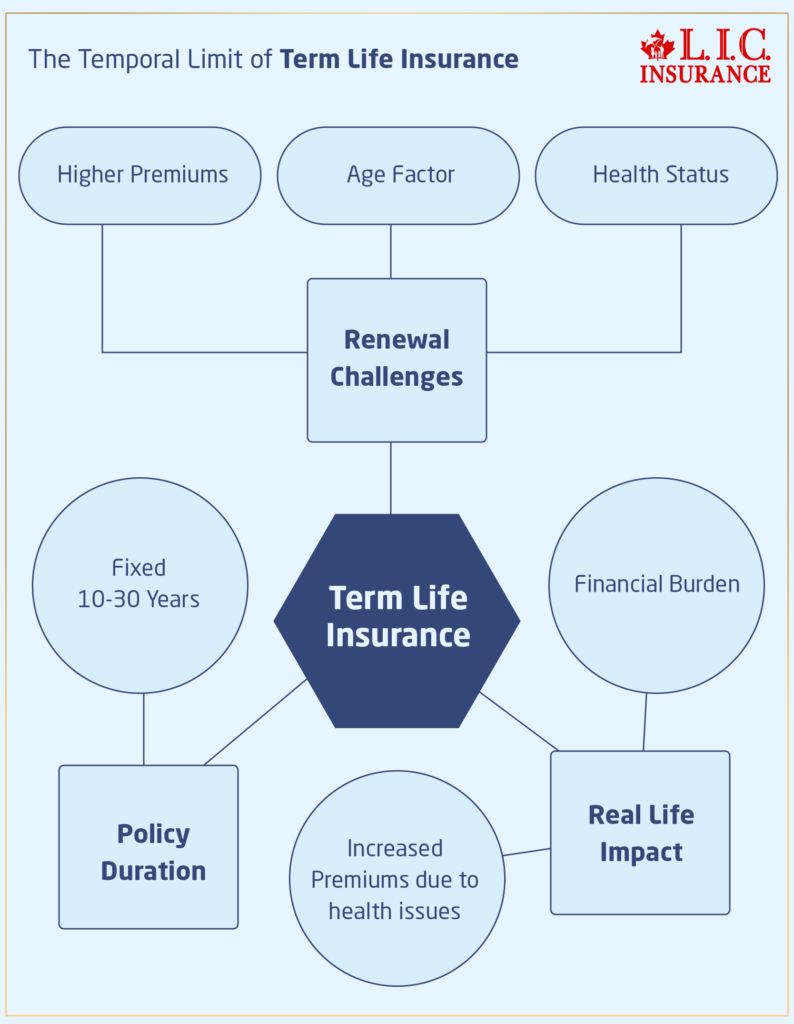
          Do I Get Money Back from Term Life Insurance?

          If you’ve ever wondered about the possibility of receiving some money back when your Term Life Insurance comes to an end, you’re not alone. The sections that follow will give you more details about how Term Life Insurance works and how likely it is that you will get your money back.

          Do I Get Money Back from Term Life Insurance?

          By Harpreet Puri, December 29, 2023, 8 Minutes

          Do I Get Money Back from Term Life Insurance?

          If you’ve ever wondered about the possibility of receiving some money back when your Term Life Insurance comes to an end, you’re not alone. The sections that follow will give you more details about how Term Life Insurance works and how likely it is that you will get your money back.

          There are several options for getting affordable Term Life Insurance that will cover a wide range of costs. People who are buying a house or starting a family are two big events in their lives that could benefit a lot from this. It provides instant protection in a way similar to how a shield does. A lot of people are interested in what will happen to the efforts that people have made up to that point with this period of time having passed. Can I get some of that money back?

          A lot of the time, the payments that were made during the term are not repaid when the term ends. Term Life Insurance is usually cheaper than permanent life insurance because most people don’t need it after a certain age. As long as you are healthy, making this choice is in your best interest because it makes it less likely that the insurance company will have money problems.

          But there are times when this rule might need to be revised. You can get your premiums back if you stop your Term Life Insurance policy after the first thirty days. You might also get some of the extra money you paid back if you paid for everything ahead of time and then cancelled your insurance policy.

          The following few lines will look at the “Return-of-Premium” commuter rider. One exciting thing about this part is that you can get all of your money back at the end of the semester. There’s a chance that something like this will change the story. There are a few things you should think about before you decide if you want to include this in your insurance policy. With just that one thing, your Term Life Insurance policies could turn into a savings account. One of several things can be done to find out if your Term Life Insurance will pay out in full.

          Understanding Term Life Insurance

          Term Life Insurance promises that your family will be taken care of if you die. This is typically due to the fact that it is less costly because it only pays for a specific period of time, such as when you get married or purchase a home. Some people like it because it costs little and gives them a lot. In most cases, though, the money you made will not be given back to you after the time period is over.

          Know in detail about Term Life Insurance here

          Can You Get a Refund from Term Life Insurance?

          In the event that you have to purchase Term Life Insurance, it is possible that you will have a difficult time retrieving the money that you have covered. Once the terms of your contract have been fulfilled, there is no guarantee that you will be able to receive your money back. In the vast majority of instances, this applies to the circumstance. There is a very low probability that you will receive anything back from a buddy when you return a toy that you borrowed from them. The vast majority of the time, this is the situation that occurs. On the other side, there are times when things materialize that are absolutely contrary to what you had anticipated!

          The 30-Day Rule

          Ok, so think about buying Term Life Insurance, but after a few days, you change your mind. There are high chances of it happening. If you cancel your policy within 30 days of buying it, the law steps in like a superhero and says, “Hey, you deserve your money back.” Yes, that’s right! It would help if you got a full refund of your payments.

          Early Payments, Early Returns

          Now, what if you’re super responsible and decide to pay some of your premiums way ahead of time? Then suddenly, you find out that your life insurance isn’t jiving with your current plans. If you cancel your policy despite making these early payments, guess what? Those pre-payments might reach back into your pocket. It’s like getting a few snacks from the vending machine and then realizing you’re not hungry anymore – you might get your money back!

          The Fine Print Matters

          However, just like the fine print on a coupon, there are details to consider. Not all insurance policies dance to the same tune. Some might have slightly different rules when it comes to refunds. So, before making decisions, it’s a good idea to check your policy or chat with your insurance professional to see if these exceptions apply to you.

          Choosing Wisely

          Remember, getting a refund from Term Life Insurance policies can be a challenging walk in the park. It’s more like a puzzle where you need to fit the right pieces together. If getting some money back from your life insurance is essential to you, explore your options carefully. It’s always wise to understand how your policy works and what options might be available if plans change.

          The ‘Return-of-Premium’ Rider

          Have you ever heard of the return-of-premium rider? It’s like a special feature or a bonus you can add to your life insurance coverage. Here’s what it does:

          Getting Your Money Back: When your Term Life Insurance policies end, this rider might give you back all the money you’ve put into your policy. Yes, all the premiums you paid might come right back to you.

          A Costly But Rewarding Choice: But here’s the twist – having this rider might mean your monthly payments become a bit higher. It’s like paying a bit more now to get more later. It’s a choice between having more money back when your term ends or paying a little less each month.

          How Does It Work?

          Let’s break it down. This rider is like a special ticket for a refund. It’s your insurance policy’s way of saying, “Hey, if nothing happens to you during this term, here’s all your money back!”

          Why It Makes Payments Higher: Now, here’s the catch – this rider comes with a price tag. By choosing this rider, your monthly payments might increase. It’s because the insurance company wants to make sure they can give you all your money back if nothing happens to you during that term.

          The Balancing Act

          Imagine it like this: You’re buying something extra to ensure your protection. But just like when you buy the fancier shoes that last longer, they might cost a little more upfront. This rider is your way of making sure you’re covered and that you get a handsome chunk of money back later if everything goes smoothly.

          Consider Your Choices

          Adding this rider might mean more money in your pocket later, but it’s about weighing your options. Do you want more money back in the future, even if it means paying a bit more now? Or are you okay with lower payments every month and potentially not getting any money back?

          Getting money back with Term Life Insurance is possible with this rider, but it’s about finding the right balance. Sometimes, paying a little more each month might give you peace mentally and a sizable return later. It all boils down to what you feel is best for your future and your family’s security.

          Catching the Catch

          One of the first things that might come to mind is, “Wow, it would be great to get all of my money back from my Term Life Insurance!” And even though it seems appealing, there is a catch.

          Let’s pretend for a moment that you were interested in using a “return-of-premium” rider, which is a feature that is not seen anywhere else. It is the same as acquiring additional funds in order to be secure. In the event that you decide to proceed with this rider, it is conceivable that you will be required to pay a higher monthly fee. Shall we take it apart, if you don’t mind?

          We are going to believe that you are in your twenties and that you are in good health. For your Term Life Insurance policies, you will be required to pay a predetermined amount each and every month. Should you decide to include the “return-of-premium” rider in your life insurance policies, you may be required to pay an additional thirty percent each month. At the conclusion of the allotted time period, this rider will honour its promise and return to you the total amount of money that you have invested in it. It’s almost like a sly technique to save money if you catch me.

          To be sure, there is yet more to come! If you want to use this rider, it is possible that you will be required to pay a one-time cost. In spite of the fact that you are going to get your money back, you will not be able to get this expense for your money back. In the same way, in order to enter a secret club, you are required to purchase a ticket. Despite the fact that you will receive some pleasant things, you will not receive a refund for the price of your ticket.

          So, it is highly exciting to consider the possibility of receiving your money back at the conclusion of the term where it was borrowed. In addition to that, this rider has the potential to bring in a little bit more money each month. One may make the analogy that it is comparable to selecting a more expensive phone plan that offers a greater number of alternatives. The monthly fee may be slightly more, but it comes with a greater number of benefits. Make sure that you give some thought to whether or not the additional payment that you are making right now is worth the possibility of getting your money back in the future.

          Looking at Other Options

          Sometimes, when you’ve had Term Life Insurance for a while, you might think about changing it to something else, like buying Whole Life Insurance. Some insurance companies offer this option as you grow older.

          Switching to Whole Life Insurance

          Whole Life Insurance is a bit different. When you have this type of insurance, a part of the money you pay every month goes into a special account. This account grows slowly over time, almost like planting seeds that grow into a tree.

          Understanding the Benefits

          The special thing about this account is that, after a while, you might be able to borrow some money from it. But remember, it’s not like taking money from a piggy bank. It’s more like borrowing from a friend – you have to pay it back. And when you do, you’ll also need to pay a little extra, which is called interest.

          Weighing the Considerations

          Switching from Term Life Insurance to Whole Life Insurance could give you access to some of the money you’ve put into it. But it’s not like getting all your money back. It’s more about having a way to borrow a bit if you need it down the road.

          Making Informed Decisions

          If you’re thinking about making changes to your insurance, it’s always a good idea to talk to someone who knows a lot about it, like an insurance expert or a financial advisor. They can help you understand what might be best for you and your family, considering your future plans and your current situation.

          You are considering your options, and understanding how Term Life Insurance and Whole Life Insurance work is important. Each choice has its pros and cons. So, before making any decisions, take your time, ask questions, and make sure you feel good about what you choose.

          Get The Best Insurance Quote From Canadian L.I.C

          Call 1 844-542-4678 to speak to our advisors.

          Best Insurance Plans Helpline From Canadian L.I.C

          Wrapping Up on Money Back Life Insurance

          Getting money back on Term Life Insurance is possible, but it comes with choices and considerations. It’s essential to understand what each option means for your monthly payments and your future. Speaking with a financial advisor or an insurance expert can help you decide what’s best for you and your family.

          Click here to find out in detail about Money Back Term Life Insurance

          FAQs

          Generally, Term Life Insurance policies don’t offer refunds on the premiums paid once the term expires. However, there are certain exceptions to this.

          Yes, if you cancel your term life policy within 30 days of purchase, you might receive a refund for the premiums paid. Also, if you’ve made early premium payments and decide to cancel the policy, those payments might be refunded.

          This is an additional benefit you can add to your Term Life Insurance policy. It ensures that you get back all the premiums you paid once the term ends. However, this rider might increase your monthly premium payments.

          Yes, if you choose this rider, you could potentially get back all the premiums you’ve paid. But remember, this might increase your monthly payments.

          Some companies allow you to convert your term life policy into Whole Life Insurance as you age, offering access to a portion of the premiums paid over time.

          Cancelling or surrendering a Whole Life Insurance Policy might allow access to the cash value accumulated over time. However, there might be tax implications and surrender fees.

          Choosing between these options depends on your financial situation and future plans. Consulting with a financial advisor or insurance professional can provide personalized insights.

          It depends on your priorities and financial goals. Adding riders or switching to Whole-Life Insurance might provide a refund but could also increase your monthly costs.

          The above information is only meant to be informative. It comes from Canadian LIC’s own opinions, which can change at any time. This material is not meant to be financial or legal advice, and it should not be interpreted as such. If someone decides to act on the information on this page, Canadian LIC is not responsible for what happens. Every attempt is made to provide accurate and up-to-date information on Canadian LIC. Some of the terms, conditions, limitations, exclusions, termination, and other parts of the policies mentioned above may not be included, which may be important to the policy choice. For full details, please refer to the actual policy documents. If there is any disagreement, the language in the actual policy documents will be used. All rights reserved.

          Please let us know if there is anything that should be updated, removed, or corrected from this article. Send an email to Contact@canadianlic.com or Info@canadianlic.com

          What Are The Benefits Of Universal Life Insurance In Canada?

          The way Canada’s financial system functions makes Universal Life Insurance a helpful tool with a lot of benefits. Throughout the duration of the policy, this type of insurance allows you to accumulate financial value in addition to providing protection. It’s essential to investigate the causes behind the rising popularity of this kind of insurance as well as the advantages it provides in Canada.

          What Are The Benefits Of Universal Life Insurance In Canada?

          By Canadian LIC,  December 27, 2023, 8 Minutes

          What Are The Benefits Of Universal Life Insurance In Canada

          Universal Life Insurance is helpful as a tool with many benefits if you understand how Canada’s financial system operates. By the time you reach the end of the cover, the policy has built a cash value which can be cashed in should you survive the policy. It’s important to understand why this insurance is becoming so popular and the benefits it provides for Canada.

          What Are the Benefits of Universal Life Insurance in Canada

          What is Universal Life Insurance?

          Universal Life Insurance Myths and Facts

          In Canada, there is a thing called Universal Life Insurance. Insurance of this kind serves two purposes: it ensures your family’s or your dependents’ financial safety net in the event of your death and helps in the accumulation of long-term savings. Or to phrase it differently, it’s as if you have a plan that leaves at least your relatives something, and also builds savings over time.

          Understanding Universal Life Insurance in Canada

          It is a material that can take many shapes. So you can always tweak things, like how much money you spend, how much service you get, no matter what is happening at any particular time in your life. You may need to take stock and rework your plan if there are changes in your life, perhaps you earn different money or you bring different money to your family. This is usually something you would be able to do with a standard life insurance policy.

          This type of insurance protects you, and it can save you money over the long term. A portion of your money will be put into a savings account, to be left to grow over time. This is the good news, right? You are not taxed on this growth until you take it out.

          One could find several pros and cons of purchasing such an insurance policy. You can adjust both what you pay and what features are in your plan. Also, save until you use, and save money that receives no tax.

          Downside: These plans could be pricier than those other, more stripped-down types of insurance. The way in which they function and how much they charge might be a bit more complicated because they need more work.

          Why Universal Life Insurance Might Work for You

          It’s nice to know that Universal Life Insurance can cover you for the rest of your life as well. You don’t ever have to be afraid you won’t be protected, as you always will be protected. It can also be especially beneficial if you want to ensure your family receives anything from yo,u or it can then help them with future financial obligations.

          Making the Most of Universal Life Insurance

          Remember the simple thing - you need to be very familiar with the idea you’re thinking of. Universal Life Insurance policies offer some significant benefits; on the other hand, they are not for everyone. Maybe the cost is way too much as well as the level of intricacy not at all what you are looking for. An insurance expert or advisor can help you decide if Universal Life Insurance policies are the best choice for both your future and the future of your family.

          Beyond the Basics: Real-World Strategic Uses of Universal Life Insurance in Canada

          For most individuals that are wondering “what is Universal Life Insurance? they’re waiting for tax-free death benefits or long-term savings potential. Although those are foundational functions, the true strategic value of a universal life insurance policy in Canada comes not from what it offers, but from how it can be applied.

          And finally, we’ll look at unique situations and advantages of life insurance in Canada not everyone knows about. This is not just a matter of flexibility or deferral of taxes. Get more advice to help your business succeed: “ 12 Steps to Make a Mentorship Work for You: Making Mentorship Work” is the most recent post from Amy Cuddy on Adam Grant’s “Work in Progress” blog — so here’s just one nugget: “Kindergarten teachers never say to their students, ‘You know Timmy, I’m sorry, but you’ll never be a good reader, you’re just not a good reader,’” explains psychologist Ellen Langer: “On the other hand, the only thing holding people back often is believing that they can’t do something.” It’s about how to turn a simple policy into a multi-purpose financial instrument — and why that trait makes it one of the most underused tools in financial planning.

          1. Business Universal Life Insurance: Protect and Build Value Simultaneously

          If you’re a business owner, the benefits of business universal life insurance extend far beyond key-person protection. In Canada, these policies can be used to:

          Retain executives with tax-advantaged compensation packages

          Fund shareholder buy-sell agreements

          Create corporate-owned investment vehicles that grow on a tax-deferred basis

          Preserve capital gains exemptions by funding future tax liabilities

          Unlike typical insurance, corporate universal life insurance structures allow businesses to pay premiums through the company, accumulate cash value tax-deferred, and use the policy’s death benefit to smooth ownership transitions or finance succession plans. A qualified universal life insurance broker can help tailor solutions that balance coverage, cost, and investment growth.

          1. Building a Tax-Free Retirement Bridge for Individuals

          For those who have maxed out their RRSPS and TFSAS, the best universal life insurance Canada has may be the one which fills the tax-free saving gap.

          The cash value of a universal life insurance policy also grows on a tax-deferred basis and can generally be taken out in the form of policy loans or withdrawals without generating immediate taxes. That, in turn, makes universal life insurance a great retirement income cushion, especially for high-income earners or self-employed individuals.

          It mostly ends up functioning as a personal pension alternative, though one that can outpace inflation if investment allocations are handled well. The thing is, few Canadians know that it can be used this way, even though it is one of the best universal life insurance tax benefits that are accessible under the current rules set by the CRA.

          1. Real-Time Adaptability to Life Events

          One of the underrated benefits of a universal life insurance policy is its dynamic adjustability. While most people understand it’s flexible, they often don’t realize how flexible:

          Experiencing income instability? Shift to minimum premium mode.

          Want to leave a larger legacy? Boost premiums during high-earning years.

          Need emergency funds? Access the growing universal life insurance investment account or borrow against it, often at favourable rates.

          This is where universal life insurance in Canada outpaces whole life and term insurance. With the right guidance, you’re not locked in—you’re equipped to pivot.

          1. Regional Considerations: Universal Life Insurance in Alberta

          Policyholders in Alberta face unique financial planning environments, including inheritance strategies, agricultural business transitions, and corporate taxation structures. The universal life insurance Alberta residents choose can act as a bridge across generations, funding succession in farming families or providing liquidity during probate.

          A tailored policy can:

          Provide equal inheritance to non-farming heirs

          Ensure surviving spouses have income continuation

          Minimize estate shrinkage via universal life insurance tax-free payouts

          These highly localized benefits rarely appear in generic content, yet are decisive in real-life planning outcomes.

          1. What Does Universal Life Insurance Cover—and What It Enables

          Yes, universal life insurance covers death benefits and a savings component. But it also enables a smarter financial lifestyle.

          Ask any seasoned advisor, “How does a universal life insurance policy work?” and they’ll point you to how it empowers people to:

          Blend life insurance with long-term investment planning

          Take control of tax positioning in later life

          Maintain liquidity while accumulating wealth

          Reallocate funds based on market opportunities or personal needs

          All while keeping the universal life insurance tax-free growth engine running.

          1. Understanding Cost and Commitment

          One of the most searched queries today is “average universal life insurance cost.” The reality? It depends on age, coverage amount, investment performance, and policy structure. But here’s what matters more: cost efficiency over time.

          Unlike term policies, which expire, universal life insurance investment builds up—and if used strategically, often ends up paying back more than it ever cost, especially when you count:

          Tax-free death benefits

          Tax-deferred investment growth

          Legacy value

          Emergency liquidity

          This perspective reframes the common universal life insurance Canada pros and cons comparison and encourages a longer-term outlook.

          Designing a Policy for Purpose

          The true benefits of universal life insurance emerge when a policy is designed around purpose, not just protection. Whether you’re managing personal wealth, building a family legacy, or navigating corporate financial planning, the right universal life insurance broker can craft a policy that reflects your unique path.

          Rather than asking “What is universal life insurance?” a better question might be: “What could it do for me, my business, and my family—10, 20, or 30 years from now?”

          The answer might surprise you.

          Benefits of Universal Life Insurance in Canada

          Customers who are looking for powerful financial security and possibilities to save money can take full advantage of the numerous benefits that are offered by Universal Life Insurance in Canada. These benefits are specifically developed to cater to the needs of insurance policyholders. Let us provide you with a more in-depth look at the benefits that these insurance policies provide:

          Benefits of Universal Life Insurance in Canada

          1. Flexible Premiums:

          If they have Universal Life Insurance plans, policyholders have the ability to adjust their premiums up to a specific point. Because of its versatility, it enables individuals to adjust their coverage whenever it is necessary to take into account changes in their financial circumstances.

          2. Cash Value Growth:

          The cash value of a universal life policy gradually increases over the course of time. This accumulation is a method for saving money, and it grows tax-deferred, which means that taxes are not required on the growth until the money is withdrawn out of the account.

          3. Tax Benefits:

          Under most circumstances, the beneficiaries of Universal Life Insurance are not required to pay taxes on the death benefit they receive. There is also the possibility of a tax gain due to the fact that the growth of the cash value is not immediately taxed.

          4. Lifetime Coverage:

          For as long as the premiums are paid, Universal Life Insurance will continue to provide coverage for the insured throughout their entire life. As a result of this, it can be utilized for estate planning, which offers protection for the financial well-being of loved ones in the future.

          5. Investment Options:

          When you purchase some Universal Life Insurance plans, you have the freedom to choose how you want to spend the money that you have been given. Policyholders have the choice of investing the cash value in a variety of different forms of investments, every one of which has the potential to encourage growth.

          6. Estate Planning Tool:

          One of the most practical choices to make when it comes to making preparations for the future is to purchase Universal Life Insurance. You will be able to use the funds that it gives you to pay your estate taxes or to leave an inheritance to your children, both of which contribute to the maintenance of your existing financial security.

          7. Loan and Withdrawal Options:

          Cash value policies permit policyholders to borrow money on the policy’s cash value or withdraw cash from the cash value. With the utilization of these options, you can possibly save money for the use of meeting an unforeseen need or increase the level of income that you have during your retirement years.

          It could be that Universal Life Insurance policies in Canada could be adaptive and beneficial, as can be shown by the benefits offered. Before settling on a purchase of an insurance policy, it is crucial to take these benefits into account based on your own personal taste and objectives for financial issues. Consulting with a financial advisor or an insurance professional can assist you in purchasing Universal Life Insurance that is personalized to your needs and objectives, thus securing your financial status in the long run. This can be achieved through the selection of a policy that is tailored to your protection requirements.

          Pros and Cons of Universal Life Insurance in Canada

          Universal Life Insurance plans offer unique advantages and considerations for individuals seeking comprehensive coverage in Canada. Understanding the pros and cons can help make a well-informed decision regarding this financial tool.

          Pros of Universal Life Insurance:

          1. Flexibility in Premiums and Coverage:

          Universal Life Insurance provides flexibility to adjust premiums and coverage according to changing financial needs. This adaptability makes it suitable for various life stages, allowing policyholders to increase or decrease coverage based on circumstances.

          2. Cash Value Growth with Tax Advantages:

          One of the significant benefits is the cash value component that grows over time. This accumulation occurs on a tax-deferred basis, meaning the money invested grows without immediate taxation, offering potential long-term savings benefits.

          3. Lifetime Coverage and Investment Options:

          Universal Life Insurance provides coverage throughout the policyholder’s life, ensuring financial protection for beneficiaries. Some policies offer investment options, allowing individuals to allocate cash value into various investment vehicles, potentially enhancing growth.

          Cons of Universal Life Insurance:

          1. Higher Premiums Compared to Term Life Insurance:

          Universal Life Insurance typically involves higher premiums compared to term life insurance. The added expense accounts for the cash value accumulation and the flexibility it offers, making it costlier.

          2. Complexity in Understanding Policy Features:

          Understanding the features and costs of Universal Life Insurance can be complex. Policyholders may need help to grasp the intricacies of the policy, including fees, investment options, and the impact of changes.

          3. Changes in Premiums Due to Market Fluctuations:

          Premiums in Universal Life Insurance may vary due to market fluctuations, impacting the cash value growth and the cost of maintaining the policy. Economic changes could influence the overall expenses of the policy.

          Considering Universal Life Insurance Plans in Canada

          Although these points highlight the benefits and drawbacks of Universal Life Insurance, individual situations should be balanced before making any conclusions. Contacting a financial planner or insurance agent can provide worthwhile feedback tailored to your individual financial objectives and requirements.

          Before settling on any policy, read the terms and conditions very carefully, analyze the cost and benefits, and weigh long-term financial goals. Such a detailed analysis helps the selected plan be in line with your financial security objectives and provide the desired level of coverage.

          Knowing the intricacies of Universal Life Insurance plans and recognizing their possible advantages and disadvantages equips individuals to make informed choices for their financial welfare in Canada.

          The End

          Universal Life Insurance in Canada provides many benefits, from premium flexibility to growth potential on the cash value. But it’s very important to make careful measurements of your financial requirements and know the policy benefits prior to selecting this kind of insurance.

          Talk to a financial planner or insurance agent to discuss whether a Universal Life Insurance policy fits into your long-term financial objectives and requirements.

          Remember, insurance needs can vary, so it’s essential to consider your individual circumstances before choosing a policy.

          By carefully considering these advantages and disadvantages, you can make a well-informed decision as to whether Universal Life Insurance is suitable for your and your family’s financial well-being in Canada.

          Get The Best Insurance Quote From Canadian L.I.C

          Call 1 844-542-4678 to speak to our advisors.

          Best Insurance Plans Helpline From Canadian L.I.C

          FAQ's

          Universal Life Insurance is a kind of permanent life insurance that brings you coverage throughout the policyholder’s life and has a savings component. It allows flexibility in premiums and offers cash value accumulation.

          Cash value accumulates over time as premiums are paid. This component grows on a tax-deferred basis, meaning it’s not taxed until withdrawal.

          Yes, the death benefit is typically tax-free for beneficiaries. Moreover, the cash value accumulation portion is tax-deferred.

          Yes, within certain limits. Universal life policies offer flexibility, allowing policyholders to adjust premiums to suit changing financial situations.

          Some policies offer investment choices where policyholders can allocate the cash value into various investment vehicles, potentially increasing growth.

          Universal Life Insurance can serve as an essential tool for estate planning. It provides liquidity to cover estate taxes or leave an inheritance for heirs.

          Yes, policyholders can access the cash value through loans or withdrawals. These options offer financial flexibility during emergencies or for supplementing retirement income.

          Generally, Universal Life Insurance premiums are higher than term life insurance because of the added cash value and investment components.

          Sometimes, yes. The combination of insurance coverage and investment elements can make understanding the policy features and costs complex. Consulting an expert can clarify these aspects.

          Assess your long-term financial goals, the need for lifelong coverage, and your willingness to manage investment options within the policy. Consulting with a financial expert can help in making an informed decision.

          Yes, some policies allow for changes in the coverage amount, although there might be certain restrictions or conditions associated with such alterations.

          If premiums are discontinued, the policy might lose its cash value or terminate based on the ability of the accumulated cash value to cover ongoing charges.

          Some insurance providers offer conversion options that allow you to convert term life insurance to a universal life policy. However, this might involve specific terms and limitations.

          The guarantees provided by Universal Life Insurance policies might vary. Some elements, like the death benefit, might have guarantees, but other aspects, such as cash value accumulation, might be subject to market conditions.

          If you surrender the policy, you may receive the cash value accumulated, subject to surrender charges or fees. However, surrendering the policy might lead to the loss of coverage and potential tax implications.

          Yes, riders or additional policy features can often be added to enhance coverage. These riders might include options for accelerated death benefits, accidental death, or waiver of premium, among others.

          Generally, loans taken against the cash value of a Universal Life Insurance policy are not taxable, as they’re considered loans and not income.

          The ideal coverage amount depends on various factors like your financial obligations, future expenses, and long-term goals. Assessing your financial needs and consulting a financial advisor can help in figuring out the appropriate coverage.

          Yes, the premiums in Universal Life Insurance can change, particularly if market conditions or policy features influence the cost structure.

          Yes, policyholders have the option to cancel or terminate their Universal Life Insurance policies. However, it’s essential to understand any penalties, fees, or consequences associated with cancellation.

          These FAQS aim to provide comprehensive information about Universal Life Insurance policies, but specific terms and conditions might vary between insurance providers. Taking the help of an insurance agent or financial advisor can offer personalized insights based on individual circumstances.

          The above information is only meant to be informative. It comes from Canadian LIC’s own opinions, which can change at any time. This material is not meant to be financial or legal advice, and it should not be interpreted as such. If someone decides to act on the information on this page, Canadian LIC is not responsible for what happens. Every attempt is made to provide accurate and up-to-date information on Canadian LIC. Some of the terms, conditions, limitations, exclusions, termination, and other parts of the policies mentioned above may not be included, which may be important to the policy choice. For full details, please refer to the actual policy documents. If there is any disagreement, the language in the actual policy documents will be used. All rights reserved.

          Please let us know if there is anything that should be updated, removed, or corrected from this article. Send an email to Contact@canadianlic.com or Info@canadianlic.com
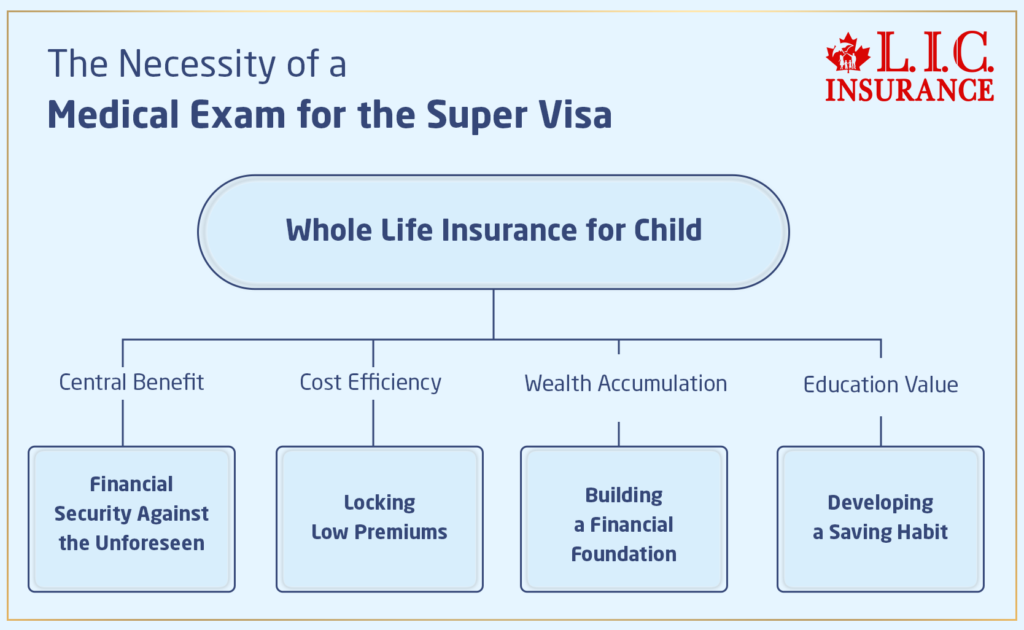
          Can You Cash Out a Term Life Insurance Policy?

          The concept of term life insurance in Canada is often surrounded by questions and uncertainties, especially regarding the financial flexibility it offers. Most people understand the primary function of term life insurance — to provide financial security for your family and loved ones in the event of your untimely passing. However, a common question arises: Can you cash out a term life insurance policy?

          Can You Cash Out a Term Life Insurance Policy?

          By Pushpinder Puri, December 6, 2023, 7 Minutes

          Can You Cash Out a Term Life Insurance Policy

          The concept of term life insurance in Canada is often surrounded by questions and uncertainties, especially regarding the financial flexibility it offers. Most people understand the primary function of term life insurance — to provide financial security for your family and loved ones in the event of your untimely passing. However, a common question arises: Can you cash out a term life insurance policy?

          In this blog, we’ll explore the difficulties of term life insurance, focusing on its structure, benefits, and limitations. We’ll also discuss why term life insurance differs from other types of policies and what options you might have if you’re looking to leverage your policy for financial gain.

          Understanding these details is crucial, especially when comparing term life insurance quotes and considering the long-term implications of your policy choice.

          Explaining Term Life Insurance

          Myth and Reality of Term Life Insurance

          Term life insurance is a special kind of life insurance policy that offers coverage for a specified term or period, typically ranging from 10 to 50 years. The primary function of term life insurance is to provide a death benefit to the beneficiaries if the policyholder passes away during the term. This type of insurance is particularly popular in Canada due to its affordability and straightforward nature.

          When you start looking for Term Life Insurance quotes, you’ll notice that compared to permanent life insurance, the premiums are usually lower. This is because term life insurance does not accumulate cash value over time. It’s purely designed to offer peace, being aware that your family and loved ones will be well taken care of financially if in case something happens to you during the term of the policy.

          Term life insurance is perfect for all those individuals who need coverage for a specific period, like in the case til their children become financially independent or their mortgage amount is paid off. It’s a budget-friendly option that still provides substantial financial protection.

          Read our Guide to Term Life Insurance here

          Can You Cash Out?

          Understanding the limitations and functionalities of term life insurance in Canada is crucial, especially when you’re evaluating your long-term financial planning and insurance needs. One of the primary aspects that often come to light is the absence of a cash value component in term life insurance. This key feature, or rather the lack of it, defines the fundamental nature of term life insurance policies and sets them apart from other types of life insurance.

          No Cash Value Component

          Unlike whole life or universal life insurance policies, term life insurance doesn’t accumulate any cash value over the life of the policy. This means that the premiums you pay are solely for the purpose of providing a death benefit to your beneficiaries if you pass away within the policy’s term. It’s important to understand this when you’re getting term life insurance quotes, as it impacts the kind of financial benefits you and your beneficiaries can expect.

          The absence of a cash value component means:

          No, Cashing Out: You cannot withdraw or borrow against your term life insurance policy.

          Pure Protection: The policy is designed exclusively to offer financial security to your beneficiaries in the event of your passing during the term.

          Term Life Insurance: A Pure Protection Product

          Term life insurance is often described as a ‘pure protection’ product. This means that its primary purpose is to offer financial protection and mental peace rather than acting as an investment or savings vehicle. When you compare term life insurance quotes, you’ll notice that the premiums are generally more affordable than those for permanent life insurance. This is because you’re not paying to build up any cash value; you’re paying solely for the death benefit protection.

          Here’s a simple comparison to illustrate this point:

          Insurance Type Cash Value Component Primary Purpose
          Term Life Insurance No Death Benefit
          Whole Life Insurance Yes Death Benefit + Savings
          Universal Life Insurance Yes Death Benefit + Savings

          Term Life Insurance Quotes: What Are You Paying For?

          When you receive term life insurance quotes, it’s essential to recognize what you’re paying for. In comparison to permanent life insurance, the premiums for term life insurance are typically lower because you’re not contributing to a cash-value fund. Your payments are calculated based on the likelihood of the insurance company needing to pay out the death benefit during your policy’s term. Factors like your age, health, lifestyle, and the length of the term you choose play a significant role in determining your premiums.

          So, term life insurance offers a straightforward, budget-friendly way for individuals in Canada to ensure their loved ones are financially protected without the additional complexity and cost of a cash value component. It’s an insurance solution that focuses solely on protection, making it an excellent choice for those who need coverage for a specific period without the necessity of an investment element.

          Alternatives to Cashing Out

          While you can’t cash out a term life insurance policy in Canada, there are several alternative strategies to consider for financial flexibility. Each of these options has its own set of conditions and benefits, which can provide different solutions depending on your personal and financial circumstances.

          Selling Your Policy

          Selling your term life insurance policy, also known as a life settlement, is a less common but viable option in Canada. This process involves transferring your policy to a third party in exchange for a lump sum. It’s a way to get some financial return from a policy that you may no longer need or can afford.

          However, it’s important to note that not all term life insurance policies are eligible for sale, and the option to sell is subject to specific conditions set by the insurer. Additionally, the amount you receive from selling your policy is typically less than the death benefit but more than the surrender value (if any). When considering this option, it’s crucial to get term life insurance quotes for new policies to compare the potential financial outcomes.

          Converting Your Policy

          Conversion of a term life insurance policy into a permanent life insurance policy is another alternative. Many insurers in Canada offer this option, allowing policyholders to switch to a policy with a cash value component without having to undergo a new medical examination.

          Converting your policy to a permanent one like Whole or Universal Life Insurance can provide long-term financial benefits, including the accumulation of cash value. However, this usually comes with higher premiums. Here’s a quick comparison to help understand the change in policy structure:

          Policy Type Term Life Insurance Permanent Life Insurance
          Coverage Duration Fixed term (e.g., 10, 20, 30 years) Lifetime coverage
          Cash Value Component No Yes
          Premiums Generally lower Higher, but builds cash value

          Adjusting Your Policy

          If your current term life insurance policy becomes unaffordable or your coverage needs change, adjusting your policy is a practical solution. This could involve reducing the death benefit, which in turn would lower your premiums. This adjustment helps make the policy more manageable within your budget and still provides a level of protection for your beneficiaries.

          When considering adjusting your policy, it’s a good idea to compare current-Term Life Insurance quotes to ensure that you’re still getting a competitive rate. Policy adjustment can be a flexible way to maintain life insurance coverage while adapting to changing financial circumstances.

          So, even though you cannot directly cash out a Term Life Insurance policy in Canada, these alternatives provide different paths to achieve financial flexibility. Whether it’s selling your policy, converting it to a permanent one, or adjusting your coverage, each option has its own set of advantages and considerations. It’s important to review these options in the context of your personal financial situation and long-term goals.

          Why You Can’t Cash Out Term Life Insurance

          The inability to cash out Term Life Insurance in Canada is fundamentally rooted in its structural design, which significantly differs from that of permanent life insurance policies. Understanding these differences is key when considering Term Life Insurance quotes and the type of coverage they provide.

          Structural Differences

          Term Life Insurance is strategically designed to offer pure death benefit protection. This means that the policy’s sole purpose is to provide a financial safety net to your beneficiaries in the event of your death during the policy term. Unlike permanent life insurance, Term Life Insurance doesn’t include an investment or savings component. This absence of a cash value component is a defining feature and directly impacts the policy’s cost and purpose.

          Here’s a breakdown of the differences:

          Feature Term Life Insurance Permanent Life Insurance
          Cash Value Component No Yes
          Premiums Lower Higher
          Coverage Duration Fixed term (e.g., 10, 20, 30 years) Lifetime
          Primary Purpose Death benefit protection Death benefit + savings/investment

          Implications of No Cash Value

          Since Term Life Insurance lacks a cash value component, the premiums paid are solely for the death benefit protection. This is why premiums for Term Life Insurance are generally lower in comparison to permanent life insurance. When you receive Term Life Insurance quotes, you’re essentially looking at the cost of pure insurance coverage without any portion of your payment being diverted into an investment or savings plan.

          In contrast, permanent life insurance policies include a cash value component that grows over time. This component serves as an investment or savings tool within the policy, contributing to the higher premiums. The cash value can be borrowed against or even cashed out under certain circumstances, providing financial flexibility that Term Life Insurance does not offer.

          Target Audience and Purpose

          Term Life Insurance is particularly well-suited for individuals who require coverage for a specific period — for example, until their mortgage is paid off or their children are financially independent. It’s an affordable way to ensure that your beneficiaries are taken care of financially in case of your unexpected death during this period. On the other hand, permanent life insurance is geared towards individuals looking for lifelong coverage with an added component of cash value growth, suitable for long-term financial planning.

          Hence, the structural design of Term Life Insurance in Canada, focusing solely on providing a death benefit without a cash value component, is the primary reason you cannot cash out these policies. When comparing Term Life Insurance quotes, it’s essential to consider this fundamental difference and how it comes in line with your financial goals and coverage needs.

          Understanding the distinctions between term and permanent life insurance ensures that you choose a policy that best fits your individual circumstances.

          Term Life Insurance Quotes in Canada

          When it comes to selecting Term Life Insurance in Canada, obtaining and comparing quotes is a crucial step. Term Life Insurance quotes not only provide you with an estimate of your premiums but also reflect the coverage you can expect. Understanding how these quotes are determined and what factors influence them is key to ensuring you get the perfect coverage at a price that fits your budget.

          Key Factors Influencing Term Life Insurance Quotes

          Coverage Amount: The amount of coverage you opt for is directly proportional to the premium you’ll pay. More coverage typically means higher premiums. When deciding on the coverage amount, consider your financial obligations, like debts (mortgages, loans), daily living expenses, and future needs of dependents (education, care).

          Policy Term: The length of the policy also plays a significant role. Term Life Insurance policies are available for various durations, such as 10, 20, or 30 years. The ideal term length usually aligns with the period your beneficiaries would be most financially vulnerable, like until your children reach adulthood or your mortgage is paid off.

          Age and Health: Your age and health at the time of application significantly impact the premium. Generally, younger and healthier individuals receive lower quotes as they are considered lower risk.

          Lifestyle and Occupation: Certain lifestyle choices (such as smoking) and high-risk occupations can lead to higher premiums.

          Here’s a simple table illustrating how these factors might impact Term Life Insurance quotes:

          FactorImpact on Term Life Insurance Quote
          Coverage AmountHigher coverage leads to higher premiums
          Policy TermLonger terms can result in higher premiums
          Age and HealthYounger and healthier individuals typically get lower premiums
          Lifestyle and OccupationRiskier lifestyles or jobs may increase premiums

          Finding the Right Balance

          When evaluating Term Life Insurance quotes, it’s necessary to find the right balance between adequate coverage and affordability. While it’s tempting to go for the lowest premium, this might not provide sufficient coverage. Conversely, the most extensive coverage might not be affordable or necessary for your situation.

          Regular Review and Adjustment

          It’s also important to remember that your insurance needs may change over time. Regularly reviewing and adjusting your Term Life Insurance policy ensures that your coverage continues to meet your evolving needs. For instance, if you’ve paid off significant debts or your dependents are now financially independent, you might opt for a lower coverage amount, which could reduce your premiums.

          So, when looking for Term Life Insurance quotes in Canada, it’s crucial to consider how various factors such as coverage amount, policy term, age, health, lifestyle, and occupation affect your premiums. The goal is to ensure that your policy provides sufficient financial protection for your beneficiaries while still being affordable for you. By carefully evaluating these elements, you can make a smart decision about your Term Life Insurance coverage, ensuring mental satisfaction for both you and your loved ones.

          Get The Best Insurance Quote From Canadian L.I.C

          Call 1 844-542-4678 to speak to our advisors.

          Best Insurance Plans Helpline From Canadian L.I.C

          To Wrap Up

          While you cannot cash out a Term Life Insurance policy in Canada, understanding the nature and limitations of your policy is essential. This information will guide you in making informed choices about your insurance needs and explore alternative options if necessary. Remember, Term Life Insurance is about providing financial security for your loved ones, and choosing the right policy involves balancing coverage, term length, and affordability. When seeking Term Life Insurance quotes, consider all these factors to find a policy that best suits your unique needs and circumstances.

          Faq's

          No, you cannot borrow against a Term Life Insurance policy as it does not have a cash value component.

          At the end of the term, the policy expires. You can choose to renew it, convert it to a permanent policy, or let it lapse.

          Term Life Insurance is best for those needing temporary, affordable coverage. It’s ideal if you have specific financial obligations for a set period.

          Compare quotes from various insurers, assess your coverage needs, and consider the premium affordability and the policy’s term length.

          Yes, the death benefit received from a Term Life Insurance policy is generally tax-free for the beneficiaries in Canada.

          Most Term Life Insurance policies in Canada offer the option to renew at the end of the term. However, premiums may increase upon renewal based on your age at that time.

          If you outlive your Term Life Insurance policy, the coverage ends, and you won’t receive a payout. You can consider renewing the policy, converting it to a permanent policy, or purchasing a new policy.

          Yes, Term Life Insurance policies may have exclusions, such as death due to participating in high-risk activities or pre-existing medical conditions. It’s important to read and understand the policy terms.

          Yes, non-Canadians and new immigrants can typically buy Term Life Insurance in Canada. However, the eligibility criteria and the application process might vary depending on the insurer.

          Generally, Term Life Insurance premiums increase with age. The younger you are when you purchase the policy, the lower the premiums will usually be.

          Yes, you can have multiple-Term Life Insurance policies in Canada. People often do this to cover different financial obligations or to increase overall coverage.

          Yes, smokers generally pay higher premiums for Term Life Insurance than non-smokers due to the increased health risks associated with smoking.

          Yes, you can usually change the beneficiary of your Term Life Insurance policy. It’s advisable to review and update your policy’s beneficiaries as needed.

          The processing time for Term Life Insurance claims can vary but is typically prompt once the insurer receives all necessary documentation and verifies the claim.

          The above information is only meant to be informative. It comes from Canadian LIC’s own opinions, which can change at any time. This material is not meant to be financial or legal advice, and it should not be interpreted as such. If someone decides to act on the information on this page, Canadian LIC is not responsible for what happens. Every attempt is made to provide accurate and up-to-date information on Canadian LIC. Some of the terms, conditions, limitations, exclusions, termination, and other parts of the policies mentioned above may not be included, which may be important to the policy choice. For full details, please refer to the actual policy documents. If there is any disagreement, the language in the actual policy documents will be used. All rights reserved.

          Please let us know if there is anything that should be updated, removed, or corrected from this article. Send an email to Contact@canadianlic.com or Info@canadianlic.com

          Is Life Insurance a Good Investment in Canada?

          When it comes to financial planning in Canada, life insurance is a topic that often raises a mix of opinions. Is it just a choice of financial protection for your family and for your loved ones? Or can one even think about taking it as a smart investment option for themselves? The aim of this article is to go deep into the intricacies of life insurance policies in Canada and explore their potential as an investment option.

          Is Life Insurance A Good Investment In Canada?

          By Harpreet Puri, November 29, 2023, 8 Minutes

          Is Life Insurance a Good Investment in Canada

          When it comes to financial planning in Canada, life insurance is a topic that often raises a mix of opinions. Is it just a choice of financial protection for your family and for your loved ones? Or can one even think about taking it as a smart investment option for themselves? The aim of this article is to go deep into the intricacies of life insurance policies in Canada and explore their potential as an investment option.

          Understanding Life Insurance

          What Exactly is Life Insurance?

          When we talk about the core, Life Insurance is actually a contract between an individual and an insurance provider. Upon receiving premium payments, the insurer promises to pay a specified sum to a chosen beneficiary at the time of the policyholder’s death. But there’s more to Life Insurance than just this basic definition.

          Types of Life Insurance Policies

          In Canada, Life Insurance comes in various forms, each with unique features. Term Life Insurance, for instance, covers a specific period, while whole life and Universal Life Insurance offer lifelong coverage and can accumulate cash value over time.

          Life Insurance as an Investment

          When exploring financial planning options, many Canadians overlook the investment potential of Life Insurance. Beyond its primary function of providing financial security for your loved ones, certain types of Life Insurance policies can play a dual role, serving both as a protective measure and a financial asset.

          Learn about the biggest Life Insurance companies in Canada here

          The Investment Aspect of Life Insurance

          Among the various Life Insurance products, Whole and Universal Life Insurance policies stand out for their investment component. These policies not only assure a death benefit but also feature a cash value account, which accumulates funds over the policyholder’s lifetime.

          How Does the Cash Value Component Work?

          A part of your payment covers the insurance cost, while the remaining contributes to the cash value of the policy when you pay premiums for a whole or Universal Life Insurance policy. The best part here is that this cash value grows over time, often at a guaranteed minimum interest rate, thus providing you with a form of savings that you can easily access anytime during your entire lifetime. In universal life policies, you might have more flexibility and control over how the cash value is invested, offering the potential for higher returns.

          Benefits of the Investment Component

          Life Insurance vs. Other Investments

          Comparing Life Insurance to traditional investment vehicles such as stocks, bonds, or mutual funds reveals some distinct differences and unique advantages.

          Unique Benefits of Life Insurance

          Considerations for Investors

          Hence, Life Insurance should be viewed not just as a safety net but also as a versatile financial tool. Its investment aspect, particularly in whole and universal life policies, offers a blend of financial security and growth potential. As with any financial decision, it’s essential to evaluate how Life Insurance fits into your overall investment plan and get advice from a financial expert to understand its implications fully.

          Benefits of Life Insurance Investment

          Making the decision to invest in Life Insurance is not that easy and just about ensuring financial protection; it’s also a smart move offering a great number of benefits. In Canada, where financial planning is considered a crucial part of life, understanding the advantages of Life Insurance as an investment can be a game-changer for so many people.

          Security and Peace of Mind

          The first and foremost benefit of Life Insurance is that it provides the assurance of financial security for all your beneficiaries. This benefit it offers is far more than just monetary value; it’s about the mental peace that comes along with the fact of being aware that your family and close loved ones will be financially protected and taken care of when you are not there to take care of them.

          Providing for Your Loved Ones

          Immediate Financial Support: Life Insurance ensures that at the time of your untimely passing, your beneficiaries receive a sum of money. This can be crucial in covering immediate expenses such as funeral costs, outstanding debts, or daily living costs.

          Long-term Financial Stability: Beyond immediate needs, the death benefit can provide long-term financial stability for your dependents, ensuring they can maintain their lifestyle, pursue educational goals, or secure their future.

          Flexibility for Beneficiaries: The death benefit offers flexibility to your beneficiaries. They have the freedom to use the funds as needed, whether for sustaining the household, investing further, or fulfilling specific needs.

          Tax Advantages in Canada

          In the Canadian financial landscape, Life Insurance policies offer significant tax benefits, making them an attractive investment option.

          Tax-Free Death Benefit

          Non-Taxable to Beneficiaries: One of the critical advantages is that the death benefit from a Life Insurance policy is generally tax-free. This means beneficiaries receive the full amount without deductions, providing them with the complete financial benefit promised by the policy.

          Tax-Deferred Growth

          Cash Value Accumulation: With permanent Life Insurance policies like Whole and Universal Life, the cash value component grows tax-deferred. This means you don’t pay taxes on the interest, dividends, or capital gains as the cash value accumulates, which can significantly enhance the growth of this investment over time.

          Estate Planning

          Life Insurance plays a pivotal role in estate planning, offering both liquidity and strategic advantages.

          Liquidity for Estate Settlement

          Paying Estate Taxes and Debts: Life Insurance can provide much-needed liquidity to settle estate taxes and debts. This holds particular significance for estates that comprise largely of illiquid assets, such as real estate or business holdings.The death benefit can be used to cover these costs without the need to sell off assets under unfavourable conditions.

          Ensuring Estate Distribution According to Wishes

          Facilitating Smooth Wealth Transfer: Life Insurance can help to find out that your estate is distributed according to your wishes. By designating beneficiaries on your policy, you can direct funds exactly where you want them, potentially bypassing the lengthy and complex probate process.

          Equalizing Inheritance: For those with multiple beneficiaries, Life Insurance can help equalize inheritance, ensuring each beneficiary receives a fair share, even if the estate’s assets are not easily divisible.

          So, the investment in Life Insurance in Canada goes beyond just covering risks; it’s a multifaceted financial tool offering security, tax efficiency, and estate planning benefits. These advantages make Life Insurance a compelling component in a comprehensive financial plan, providing peace of mind and strategic value to policyholders and their families.

          Get The Best Insurance Quote From Canadian L.I.C

          Call 1 844-542-4678 to speak to our advisors.

          Best Insurance Plans Helpline From Canadian L.I.C

          Considerations Before Investing in Life Insurance

          Investing in Life Insurance is a significant decision that requires careful consideration. It’s not just about choosing a policy; it’s about ensuring that the policy aligns with your broader financial objectives and understanding its intricacies. Let’s explore the key factors that should influence your decision-making process.

          Aligning with Financial Goals

          The decision to invest in Life Insurance must be guided by your overall financial goals. It’s essential to reflect on what you aim to achieve with this investment.

          Assessing Your Primary Aim

          Family Protection: If your main goal is to ensure financial security for your family at the time of your passing, Term Life Insurance might be a suitable option. Term Life Insurance provides coverage for a specified term and pays out a death benefit to your beneficiaries if you pass away during that term.

          Wealth Accumulation: If you’re interested in long-term wealth accumulation, a permanent Life Insurance policy like whole or universal life could be more appropriate. These policies not only provide a death benefit but also accumulate cash value over time, serving as a savings or investment vehicle.

          Balancing Needs and Goals: It’s crucial to balance your need for protection with your investment goals. Consider how Life Insurance fits into your broader financial plan, including retirement planning, estate planning, and other investment strategies.

          Understanding Policy Details

          Life Insurance policies can be complex, and a thorough understanding is crucial to ensure that you pick up a policy that meets your specific needs.

          Familiarizing Yourself with Policy Terms

          Coverage Details: Understand the specifics of what the policy covers and any exclusions or limitations that may apply.

          Policy Features and Benefits: Different policies come with various features and benefits, such as riders that offer additional protection or flexibility in premium payments.

          Surrender Charges and Policy Loans: Be aware of any surrender charges if you decide to terminate the policy early and the terms of policy loans if you plan to borrow against the policy’s cash value.

          Evaluating Costs and Premiums

          The cost of Life Insurance is a crucial factor in determining whether it’s the right investment for you. Premiums can vary significantly as per several factors.

          Factors Influencing Premiums

          Policy Type: Premiums for Term Life Insurance are generally lower than for permanent policies but offer no cash value. Permanent policies have higher premiums but include an investment component.

          Coverage Amount: The amount of coverage you choose directly impacts your premium. More coverage means higher premiums

          Age and Health: Life Insurance premiums are typically lower when you’re younger and in good health. As you age or if you have health issues, premiums can increase significantly.

          Lifestyle Factors: Lifestyle choices such as smoking or high-risk hobbies can also affect your premium rates.

          Cost-Benefit Analysis

          Long-Term Affordability: Affordability for a good amount of time is an important aspect to consider. Hence, it becomes very important to make yourself very clear with the fact that whether the premiums will be affordable just for the current moment or throughout the whole life span of the policy.

          Comparing Options: It’s advisable to compare different policies and providers to find the best balance between cost and coverage.

          Investing in Life Insurance requires a deep understanding of how it aligns with your financial goals, comprehensive knowledge of policy details, and a clear evaluation of its costs. Considering all these points will help to make sure that your investment in Life Insurance is a sound and beneficial part of your financial strategy.

          Life Insurance for Different Life Stages

          Young Adults: Starting Early

          When we talk about all the young adults, then Life Insurance can be a very cost-effective way to start their financial planning journey. Another amazing thing here is that the premiums are generally lower for the younger individuals, and if they choose to start early then they will be able to get more substantial benefits later in their lives.

          Middle-Aged Individuals: Peak Earning Years

          During peak earning years, Life Insurance can protect your family’s lifestyle and your accumulated assets. It’s also a time to review and possibly adjust your coverage as your financial situation changes.

          Seniors: Focusing on Legacy and Estate Planning

          For seniors, Life Insurance can be more about managing estate taxes and leaving a legacy than about replacing lost income.

          Comparative Analysis: Life Insurance vs. Other Investment Options

          When you are thinking about Life Insurance as an investment option, it becomes extremely essential to compare it with other financial vehicles as well. Each option of investment has different characteristics to offer. These characteristics cater to different levels of risk tolerances, horizons of investment, and financial goals. Knowing about all these nuances is the key to making an informed decision that also effortlessly aligns with your personal financial strategy.

          Life Insurance vs. Other Options

          When it comes to comparing Life Insurance with other investment options like stocks, bonds, mutual funds, or savings accounts then it is not a simple process. It is because of the reason that each of them serves different purposes and comes with its own set of risks and rewards.

          Factors for Comparison

          Risk Tolerance: Assess your comfort with the potential fluctuations in investment value.

          Investment Horizon: Consider your time frame for investing and when you’ll need access to the funds.

          Financial Goals: Determine whether your primary objective is wealth accumulation, providing for beneficiaries, or a combination of both.

          So, even if you get the unique death benefit and potential tax advantages with Life Insurance, it may come with higher fees and less liquidity when you compare it to other investment types like stocks or mutual funds, which even provide higher potential of return but with greater risk of the market. When it comes to bonds and savings accounts then they offer lower risk but also at the same time lower returns. The main choice is usually dependent on your individual financial needs, goals, and risk appetite. It is advisable to always consider consulting with an experienced insurance or financial advisor in order to easily tailor your investment strategy to your personal circumstances.

          Get The Best Insurance Quote From Canadian L.I.C

          Call 1 844-542-4678 to speak to our advisors.

          Future Trends in Life Insurance

          The Life Insurance industry, like many others, is not immune to the winds of change, especially in the realm of technology and customer expectations. In Canada, these changes are shaping the way Life Insurance is perceived, purchased, and managed. Understanding these trends is crucial for both consumers and industry professionals as they navigate the evolving landscape of Life Insurance.

          Emerging Trends in the Life Insurance Industry

          The Life Insurance sector is witnessing several emerging trends that are reshaping its future:

          Increased Digitalization: The traditional face-to-face model of buying Life Insurance is rapidly giving way to digital platforms. Online quotes, digital applications, and automated underwriting processes are becoming the norm. This shift not only makes the process more efficient but also more accessible to a broader audience.

          Personalized Policies: Customization is key in today’s market. Consumers are looking for policies that can be tailored to their specific needs and circumstances. Insurers are responding by offering more flexible products that can adapt to individual life changes, such as adjustable coverage levels and optional riders.

          Integration of Wellness Incentives: There is a growing trend towards linking Life Insurance with health and wellness programs. Insurers are offering incentives for healthy behaviours, such as discounts or rewards for regular exercise, healthy eating, or not smoking. This approach benefits both the policyholder and the insurer by promoting healthier lifestyles that can lead to longer lifespans and potentially lower insurance claims.

          Focus on Mental Health: In order to recognize the importance of mental well-being, some insurers are beginning to include mental health support as part of their Life Insurance packages. This holistic approach to health is a reflection of broader societal shifts toward acknowledging and supporting mental health.

          Impact of Technology on Life Insurance

          Technology is significantly reshaping the Life Insurance industry:

          Streamlining the Buying Process: Technological advancements have streamlined the purchasing process, making it quicker and more user-friendly. Online calculators, AI-driven advice, and instant online approvals are simplifying the way people buy Life Insurance.

          Enhanced Customer Experience: Technology is enabling insurers to offer a more personalized customer experience. From apps that track policy details to chatbots that provide instant assistance, technology is making it easier for customers to manage their policies.

          Data Analytics and Risk Assessment: The use of big data and analytics is becoming more prevalent in risk assessment. Insurers are leveraging data to gain deeper insights into customer behaviour and risk profiles, leading to more accurate pricing and risk management.

          Mobile Applications and Accessibility: The rise of mobile applications is enhancing accessibility, allowing customers to manage their policies, file claims, and access services directly from their smartphones.

          Blockchain and Security: Blockchain technology is being explored for its potential to improve security, reduce fraud, and streamline administrative processes in the Life Insurance industry.

          The future of Life Insurance in Canada is being shaped by digital innovation, personalized services, and a greater emphasis on holistic well-being. These trends are not only making Life Insurance more accessible and tailored to individual needs but are also aligning the industry with broader societal shifts toward health, wellness, and technology. As these trends keep on evolving, they will undoubtedly bring new opportunities and challenges for both insurers and consumers.

          To Wrap Up

          Life Insurance can be a very valuable component of a comprehensive financial plan in Canada. Its potential as an investment should be weighed against personal financial goals, risk tolerance, and the unique benefits it offers. As with any financial decision, it’s important to seek professional advice and consider all aspects before making a choice.

          Read Here – If you want to know about the 10 best life insurance plans for 2024 you can

          Faq's

          It’s a Life Insurance policy, like whole or universal life, that combines a death benefit with a cash value component, growing tax-deferred and serving as an investment tool.

          Yes, particularly permanent Life Insurance policies that have an investment component along with the death benefit.

          Part of the premium pays for the death benefit, while the remaining goes into a cash value account, growing over time and accessible under certain conditions.

          It offers a combination of financial security (death benefit), potential tax benefits, stability, and usefulness in estate planning.

          Life Insurance can be bought through insurance brokers, directly from companies, financial advisors, or online platforms, each offering different levels of advice and product choices.

          Yes, for young adults in Canada, Life Insurance is a wise investment. Lower premiums due to younger age and better health, combined with the potential for long-term growth in cash value, make it an attractive financial planning tool.

          Life Insurance offers a death benefit and tax benefits guaranteed, unlike traditional investments. It provides more predictable growth with less market volatility, appealing to those seeking stability.

          Key tax advantages include tax-free death benefits and tax-deferred growth on the cash value of permanent policies, making them efficient for long-term wealth accumulation and estate planning.

          Definitely, Life Insurance in estate planning offers liquidity for paying taxes and debts, allows for equal distribution of assets among beneficiaries, and facilitates efficient wealth transfer.

          Risks include higher premiums for permanent policies, potentially lower returns compared to aggressive investments, the possibility of policy lapse due to non-payment, and the complexity of terms and conditions.

          The above information is only meant to be informative. It comes from Canadian LIC’s own opinions, which can change at any time. This material is not meant to be financial or legal advice, and it should not be interpreted as such. If someone decides to act on the information on this page, Canadian LIC is not responsible for what happens. Every attempt is made to provide accurate and up-to-date information on Canadian LIC. Some of the terms, conditions, limitations, exclusions, termination, and other parts of the policies mentioned above may not be included, which may be important to the policy choice. For full details, please refer to the actual policy documents. If there is any disagreement, the language in the actual policy documents will be used. All rights reserved.

          Please let us know if there is anything that should be updated, removed, or corrected from this article. Send an email to Contact@canadianlic.com or Info@canadianlic.com

          Which is better, Short-Term or Long-Term Insurance? Making the Right Choice

          When it comes to safeguarding your future and that of your loved ones, choosing the right type of Life Insurance is crucial. In this article, we’ll explore the nuances of Term Life Insurance and Short-Term Life Insurance, helping you understand which option may be better suited for your unique circumstances.

          Which Is Better, Short-Term Or Long-Term Insurance? Making The Right Choice

          By Pushpinder Puri, November 23, 2023, 8 Minutes

          Which Is Better, Short-Term Or Long-Term Insurance? Making The Right Choice

          When it comes to safeguarding your future and that of your loved ones, choosing the right type of Life Insurance is crucial. In this article, we’ll explore the nuances of Term Life Insurance and Short-Term Life Insurance, helping you understand which option may be better suited for your unique circumstances.

          The Basics of Term Life Insurance

          Term Life Insurance is a straightforward concept: it offers coverage for a specified “term” or period. If the policyholder passes away within this period, the beneficiaries receive the death benefit. It’s a cost-effective way to provide financial security.

          Short-Term Life Insurance

          Short-Term Life Insurance, typically lasting for a few years, is designed for temporary coverage needs. It’s ideal for those who need immediate coverage but want to avoid committing to a long-term policy.

          Long-Term Life Insurance

          Long-Term Life Insurance offers extended coverage, often up to 20-30 years. This type of insurance is suitable for individuals looking to secure their financial future over a more extended period.

          Read More – Term Life Insurance here

          Comparing Costs: Short-Term vs Long-Term Insurance

          Comparing Costs: Short-Term vs Long-Term Insurance

          When choosing between short-term and long-term insurance, cost is a crucial consideration. Short-term policies are typically more affordable, offering coverage for a limited period, usually up to 10 years. These policies are cost-effective for addressing immediate, specific financial obligations, like covering a short-term debt. However, they provide less comprehensive coverage and do not offer a return on premiums if the policyholder outlives the term.

          In contrast, long-term insurance, such as whole life or universal life policies, covers the policyholder’s entire life and incorporates a savings component that accumulates cash value. This extended coverage and added financial benefit come at higher premiums. These policies are suitable for individuals looking for consistent, lifelong coverage and an investment component for long-term financial planning.

          The choice between short-term and long-term insurance should align with your financial goals and needs. Short-term insurance is ideal for temporary coverage with lower premiums, while long-term insurance offers a more comprehensive, albeit costlier, solution for sustained financial security. It’s beneficial to consult with a financial advisor to know which option best suits your financial situation and future plans.

          Coverage Duration: Which Suits You Best?

          Navigating the world of Life Insurance can be complex, but understanding its basics is essential for making informed decisions. Here, we break down what Life Insurance is, why it’s important, and the various types available to Canadians.

          Definition and Importance of Life Insurance

          Deciding between short-term and long-term insurance largely depends on your coverage needs and life circumstances. Short-term insurance, often lasting a few years, is ideal for temporary or specific financial responsibilities like covering a loan or providing a safety net during life transitions. It’s a flexible choice for those in changing life stages or with evolving financial obligations.

          Long-term insurance, on the other hand, offers lifelong coverage and is better suited for sustained family protection and long-term financial commitments, such as a mortgage or estate planning. This type of insurance provides a stable and continuous safety net for your loved ones, ensuring financial security regardless of when it’s needed.

          Your choice should reflect your current life stage and financial goals. Short-term insurance is practical for immediate, temporary needs, while long-term insurance is more appropriate for consistent, long-term protection. Evaluating your financial situation and future plans can help determine which option aligns best with your needs. Consulting a financial advisor can also be beneficial in making this decision.

          Flexibility and Adaptability in Life Insurance

          When choosing Life Insurance, it’s vital to consider how your needs might change over time. Opting for a policy that offers flexibility to adapt to evolving circumstances is essential.

          Adapting to Life’s Changes

          Life events like marriage, parenthood, or career shifts can impact your insurance needs. An adaptable policy allows for adjustments in coverage to align with these milestones. Short-Term Policies offer immediate, flexible coverage for specific periods or obligations, while Long-Term Policies, like whole or universal life, provide options to modify premium payments or access the policy’s cash value.

          Customization with Riders

          Both Short and Long-Term Policies can be customized with riders, such as disability or critical illness riders, adding layers of protection tailored to your changing needs.

          Regular Policy Review

          Regularly reviewing your Life Insurance ensures it stays in line with your current life situation and future goals. Adjustments can be made to maintain the right level of protection as your circumstances evolve.

          In summary, selecting a Life Insurance policy with the capacity for adaptation and flexibility is crucial, ensuring you remain adequately covered through various life stages.

          Get The Best Insurance Quote From Canadian L.I.C

          Call 1 844-542-4678 to speak to our advisors.

          Best Insurance Plans Helpline From Canadian L.I.C

          Risk Assessment: A Key Factor in Decision-Making

          Your risk profile, encompassing factors like age, health, lifestyle, and financial responsibilities, is crucial in choosing the right Life Insurance. High-risk individuals, such as those with potential health concerns or long-term financial commitments, often benefit more from Long-Term Policies like whole or universal Life Insurance. These provide lifelong coverage, ensuring protection regardless of future health changes or life circumstances.

          For those with a lower risk profile or specific short-term coverage needs, Short-Term Life Insurance can be more appropriate. It offers flexibility and is cost-effective for temporary financial obligations or life stages with anticipated changes.

          Balancing the level of coverage with the cost of premiums is important. Higher risk usually means higher premiums, but the comprehensive coverage and security offered by Long-Term Policies might justify the expense.

          Given the complexities of assessing risk and its impact on insurance choices, seeking advice from insurance professionals can be helpful. They can assist in aligning your insurance choice with your risk profile and financial goals, ensuring you get the most suitable coverage.

          Policy Riders: Customizing Your Insurance

          Policy riders are additional features that allow for customization of your Life Insurance policy, applicable to both short-term and long-term coverage. These riders enable you to tailor your insurance to your unique needs and circumstances.

          Key Types of Riders

          Advantages of Riders

          Evaluating and Choosing Riders

          Consider your risk factors and financial situation when selecting riders. It’s important to balance the additional protection they offer with their extra costs. Consulting with an expert insurance professional can aid in understanding which riders are most beneficial for your situation.

          In essence, policy riders offer a way to customize your Life Insurance, enhancing its relevance and value to your specific life scenarios, whether you opt for short-term or long-term coverage.

          Tax Implications: What You Need to Know

          Getting to know the tax implications of Life Insurance policies is essential for effective financial planning. Different policies have varying tax benefits and liabilities.

          Life Insurance Premiums

          Typically, Life Insurance premiums are not tax-deductible, regardless of whether the policy is short-term or long-term. Business owners may be able to deduct premiums paid for employee Life Insurance as a business expense.

          Death Benefit Taxation

          A major advantage of Life Insurance is that the death benefit is usually exempt from federal income tax. This is applicable to both short-term and Long-Term Policies, ensuring beneficiaries receive the full policy amount without income tax deductions.

          Tax Deferral on Cash Value

          In Long-Term Policies like whole life or universal life, the cash value component grows tax-deferred. Taxes aren’t paid on interest, dividends, or capital gains until the policy is surrendered, and withdrawals exceeding premiums paid may be taxable.

          Loans Against Policy

          Loans taken against the cash value of a long-term policy are generally tax-free. However, if the policy lapses or is surrendered with an outstanding loan, that amount may become taxable.

          Surrender Charges and Taxation

          Surrendering a policy early might lead to charges and potential income tax on the cash value received, especially if it exceeds the premiums paid.

          Estate Tax Considerations

          Life Insurance proceeds might be included in your taxable estate, but proper planning can mitigate potential estate taxes.

          Given the complexity of tax laws, consulting with a tax professional is advisable to navigate these nuances and maximize your policy’s financial benefits.

          In summary, while Life Insurance offers significant tax benefits, especially on death benefits and cash value growth, understanding the specifics of these advantages and potential liabilities is crucial in making the most of your Life Insurance policy.

          Get The Best Insurance Quote From Canadian L.I.C

          Call 1 844-542-4678 to speak to our advisors.

          Short-Term Life Insurance: Ideal Scenarios

          Short-Term Life Insurance is a suitable option in various scenarios where temporary coverage is needed, offering flexibility and specificity in its application.

          Covering Short-Term Debts

          Ideal for ensuring that short-term financial commitments like personal loans or car loans are covered, Short-Term Life Insurance can protect your family or estate from the burden of these debts in case of untimely death.

          During Significant Life Changes

          During major life transitions such as a career change, starting a new business, or undergoing personal changes like divorce, short-term insurance provides a financial safety net to cover obligations in these critical periods.

          Specific Life Stages or Projects

          It’s beneficial for temporary coverage during certain life stages, such as ensuring financial security for young children, or during short-term high-risk activities or projects, without committing to a long-term policy.

          As a Bridge to Long-Term Planning

          For those developing a long-term financial plan, Short-Term Life Insurance can act as an interim solution, offering immediate coverage while more permanent insurance arrangements are being considered.

          Cost-Effective for Immediate Needs

          With lower premiums compared to Long-Term Policies, Short-Term Life Insurance is a budget-friendly option for immediate, specific insurance needs.

          In essence, Short-Term Life Insurance is an effective tool for addressing immediate, specific insurance requirements, providing a focused and temporary coverage solution that can adapt to your life’s transitions and specific financial phases.

          Long-Term Life Insurance: When is it the Best Choice?

          Long-Term Life Insurance benefits individuals with extended financial obligations and those seeking a stable, long-term financial safety net.

          For Ongoing Financial Commitments

          Ideal for covering long-term financial responsibilities such as mortgages or multi-year loans, Long-Term Life Insurance ensures these debts don’t burden your family in the event of your passing.

          Long-Term Family Support

          If you have dependents reliant on your income for many years, this type of insurance can provide for their needs, like living expenses and education, securing their financial future.

          Estate Planning and Wealth Transfer

          It’s a strategic tool in estate planning, facilitating tax-efficient wealth transfer to heirs and fulfilling your legacy wishes.

          Retirement Income Security for Spouses

          For couples, Long-Term Life Insurance can ensure financial stability for the surviving spouse, which is especially important in retirement planning.

          Cash Value Benefits

          Many Long-Term Policies include a cash value component, offering a savings opportunity and financial flexibility through loans or withdrawals.

          Advantageous for Younger Individuals

          Securing a long-term policy at a younger age can lead to lower, stable premiums and ensures coverage despite future health changes.

          In essence, Long-Term Life Insurance is a comprehensive choice for those with long-term financial plans, providing enduring coverage and additional financial benefits like cash value, making it an integral part of a well-rounded financial strategy.

          Faq's

          Short-Term Life Insurance, typically known as Term Life Insurance, provides coverage for a specific period. If the policyholder passes away during this term, beneficiaries receive a death benefit. Long-term insurance, including whole life or universal life, offers lifelong coverage with additional benefits like a cash value component.

          Individuals with temporary financial obligations, such as mortgages or young children, might find Short-Term Life Insurance appropriate. It’s also a good choice for those on a limited budget needing substantial coverage.

          Long-Term Life Insurance is ideal for those seeking lifelong coverage, wanting to accumulate cash value for future financial needs, or involved in long-term estate planning.

          Many Short-Term Policies offer a conversion option, allowing you to switch to a long-term policy without a new medical examination, usually within a specific timeframe.

          Generally, the younger you are when you purchase Life Insurance, the lower your premiums. As you age, the risk to the insurer increases, leading to higher premium rates.

          The death benefit from a Life Insurance policy is usually not taxable. However, if you have a policy with a cash value component and it’s withdrawn or borrowed against, there may be tax implications.

          Insurers consider your health and lifestyle when determining premiums. Poor health or high-risk lifestyles can lead to higher premiums, whereas healthier individuals typically pay less.

          Should you surpass the duration of your Term Life Insurance Policy, the coverage ceases without any payout. You may have the option to renew, convert, or purchase a new policy.

          Long-Term Life Insurance policies with a cash value component can be used as part of retirement planning, providing a source of funds later in life.

          Regularly reassessing your Life Insurance policy is recommended, particularly following significant life events such as getting married, having a child, or experiencing notable financial changes.

          The above information is only meant to be informative. It comes from Canadian LIC’s own opinions, which can change at any time. This material is not meant to be financial or legal advice, and it should not be interpreted as such. If someone decides to act on the information on this page, Canadian LIC is not responsible for what happens. Every attempt is made to provide accurate and up-to-date information on Canadian LIC. Some of the terms, conditions, limitations, exclusions, termination, and other parts of the policies mentioned above may not be included, which may be important to the policy choice. For full details, please refer to the actual policy documents. If there is any disagreement, the language in the actual policy documents will be used. All rights reserved.

          Please let us know if there is anything that should be updated, removed, or corrected from this article. Send an email to Contact@canadianlic.com or Info@canadianlic.com

          Top 10 Reasons to Choose Canadian LIC – The Best Insurance Broker in Canada

          When it comes to securing your financial future and protecting what matters most, choosing the right insurance broker is the most important thing to do. In Canada, the insurance landscape is diverse and complex, offering various insurance products to meet different needs. Canadian LIC stands out as a trusted and reputable choice among the many insurance brokers in the country.

          Top 10 Reasons to Choose Canadian LIC – The Best Insurance Broker in Canada

          By Pushpinder Puri, November 2, 2023,7 Mins

          Top 10 Reasons to Choose Canadian LIC – The Best Insurance Broker in Canada

          When it comes to securing your financial future and protecting what matters most, choosing the right insurance broker is the most important thing to do. In Canada, the insurance landscape is diverse and complex, offering various insurance products to meet different needs. Canadian LIC stands out as a trusted and reputable choice among the many insurance brokers in the country.

          10 reasons why Canadian LIC is the best insurance broker in Canada

          10 reasons why Canadian LIC is the best insurance broker in Canada

          To Wrap Up

          An insurance broker possesses all the knowledge of the different types of insurance available in the market and provides the best advice on what might be the best insurance option for you as per your lifestyle, health, age, and available assets. Another amazing thing is that these insurance brokers will act as agents doing your paperwork and handling claims that arise.

          Get The Best Insurance Quote From Canadian L.I.C

          Call 1 844-542-4678 to speak to our advisors.

          Best Insurance Plans Helpline From Canadian L.I.C

          Faq's

          Canadian LIC offers a wide range of insurance types, including auto insurance, home insurance, life insurance, and travel insurance. Canadian LIC can help you find coverage for various aspects of your life and business.

          Canadian LIC takes the time to understand your unique circumstances, needs, and goals. Canadian LIC works closely with you to create customized insurance solutions that align with your individual or business requirements.

          Yes, Canadian LIC is committed to finding cost-effective insurance solutions. Canadian LIC leverages its extensive network of insurance providers to secure competitive rates without compromising coverage quality.

          Canadian LIC distinguishes itself through its unmatched expertise, extensive market access, transparent communication, exceptional claims assistance, and a solid commitment to client satisfaction.

          You can easily get in touch with Canadian LIC by visiting their website or contacting them through their provided phone number and email address. Canadian LIC is ready to assist you and answer your insurance-related questions.

          Absolutely. Canadian LIC is committed to transparency and clarity. Canadian LIC ensures that you fully understand the terms, conditions, and exclusions of the policies they recommend, using plain language.

          In the event of a claim, Canadian LIC will guide you through the claims process. Canadian LIC will assist you in filing the claim and work on your behalf to ensure a fair and prompt resolution.

          Absolutely. Canadian LIC places clients’ needs first and is dedicated to recommending insurance solutions that are in your best interest. Your satisfaction and financial well-being are Canadian LIC’s primary concerns.

          The above information is only meant to be informative. It comes from Canadian LIC’s own opinions, which can change at any time. This material is not meant to be financial or legal advice, and it should not be interpreted as such. If someone decides to act on the information on this page, Canadian LIC is not responsible for what happens. Every attempt is made to provide accurate and up-to-date information on Canadian LIC. Some of the terms, conditions, limitations, exclusions, termination, and other parts of the policies mentioned above may not be included, which may be important to the policy choice. For full details, please refer to the actual policy documents. If there is any disagreement, the language in the actual policy documents will be used. All rights reserved.

          Please let us know if there is anything that should be updated, removed, or corrected from this article. Send an email to Contact@canadianlic.com or Info@canadianlic.com

          What is the Average Life Expectancy in Canada?

          Life expectancy significantly indicates a nation’s overall health and well-being. It reflects the average number of years a person can expect to live based on current mortality rates. In Canada, a country known for its high quality of life, universal healthcare system, and diverse population, life expectancy has steadily increased over the years. This comprehensive guide will delve into the factors influencing life expectancy in Canada, its historical trends, and the various demographic and health-related aspects that contribute to the nation’s impressive average life expectancy.

          What is the Average Life Expectancy in Canada?

          By Pushpinder Puri, November 1, 2023, 7 Mins

          What is the Average Life Expectancy in Canada?

          Life expectancy is a very important measure of a country’s health and wellness. It is a way of measuring the average number of years of life remaining, based on current death rates. In Canada, one of the world’s most livable countries with a pharmacare program, a universal health care system, and a demographically diverse population, life expectancy has been increasing over time. This all-encompassing guide will examine all the determinants of life expectancy in Canada, the historical evolution of this indicator and all the demographic and health-related elements that are responsible for the impressive average life expectancy of the country.

          Let’s Understand Life Expectancy

          Life expectancy is a statistical measure of the average time an organism is expected to live, based on the year of its birth, its current age, and other demographic factors including gender. It has been conventionally estimated using mortality statistics, age-specific death rates, and demographic factors.

          The Historical Trend of Life Expectancy in Canada

          Life in Canada has enjoyed a steady upward trend for the past century, thanks to better health care, sanitary conditions, diets, and environments. Some of the important landmarks on the life expectancy journey in Canada were:

          Factors Influencing Life Expectancy in Canada

          Several key factors contribute to the high average life expectancy in Canada:

          Regional Variations in Life Expectancy

          While Canada boasts a high average life expectancy, there are regional variations within the country. Life expectancy can vary by province, territory, and even by specific cities or communities. 

          Some of the key factors influencing these regional variations include:

          Work is still done to address these geographic inequalities and to provide all Canadians equal opportunities to live long and healthy lives wherever they are.

          Addressing Indigenous Life Expectancy Gaps in Canada

          While Canada’s average life expectancy is high, it’s critical to acknowledge the disparities Indigenous communities continue to face. According to government reports, the life expectancy of First Nations, Métis, and Inuit populations can be up to 10 years lower than the national average. These gaps are not due to genetics but stem from systemic issues such as intergenerational trauma, limited access to quality healthcare, unsafe housing, and higher rates of chronic diseases.

          Canadian public health strategies increasingly aim to bridge this gap through culturally appropriate care, investment in community health infrastructure, and Indigenous-led health initiatives. Programs like the First Nations Health Authority in British Columbia serve as a model for self-determined healthcare delivery.

          For Canada’s life expectancy to truly reflect equity, targeted interventions that respect Indigenous sovereignty, language, and traditional knowledge are essential. As we move forward, measuring national progress must include how well we address these internal disparities—not just how long we live, but how fairly we live.

          Challenges and Future Trends

          Canada’s life expectancy is on the rise, but not without end-of-life issues:

          What’s the most common cause of death in Canada?

          The most common causes of death in Canada were generally related to chronic diseases and conditions. However, it’s important to note that the prevalence of specific causes of death can change over time due to various factors, including advances in healthcare and changes in lifestyle.

          Common causes of death in Canada at that time included:

          For this reason, Canadian LIC highly advises that Canadians purchase Critical Illness Insurance. The likelihood of developing cancer makes it unnecessary to go without a plan to safeguard your family in the event of the unexpected.

          It’s essential to consult the latest data and reports from organizations such as Statistics 

          Canada or the Canadian Institute for Health Information (CIHI) to obtain the most current information on the leading causes of death in Canada, as trends can evolve over time due to public health efforts and advancements in medical care.

          Get The Best Insurance Quote From Canadian L.I.C

          Call 1 844-542-4678 to speak to our advisors.

          Best Insurance Plans Helpline From Canadian L.I.C

          Why is Canada’s life expectancy so high?

          Canada’s strong life expectancy can be attributed to a number of things, ranging from its health care system to socio-economic conditions to lifestyle and public health interventions. Here are some of the reasons Canada enjoys a high life expectancy:

          Canada’s average life expectancy is quite high; there can also be regional differences within Canada due to socio-economic factors, access to healthcare, lifestyle, etc. Efforts to address these regional variations and to ensure that all Canadians have an opportunity to enjoy long and healthy lives continue.

          Is wealth related to life expectancy in Canada?

          In Canada, certainly wealth relates to the life expectancy picture, but this relationship is complicated and not directly or solely because of wealth. Here are some of the key factors to keep in mind:

          Still, it is important to note that the connection between wealth and longevity is not a one-size-fits-all truth. Canada’s single-payer healthcare system is designed to ensure that everyone has equal access to healthcare, irrespective of income. Moreover, Canadian public health and social policies are designed to lower health disparities and promote the health of all citizens.

          In Canada, efforts to redress inequalities in health and to increase access to health care and education are ongoing to offer all Canadians, regardless of their socio-economic status, the chance for longer, healthier lives.

          What does life expectancy in Canada have to do with life insurance?

          Life expectancy in Canada is of significant importance in terms of life insurance policies, as it assists insurers in measuring the risks and setting premiums for their clients. Now here’s how life expectancy and life insurance are connected:

          So, life expectancy is important to the insurance world because it allows insurers to estimate the financial risks they take on when they provide you with coverage. The longer a policyholder is likely to live, the less risk for the insurer, which in turn could lead to lower policy premiums.

          On the other hand, people who have some indicators for a lifespan above average  may have higher rates or other terms affixed to policies.

          So, Canada’s life expectancy at birth is an indication of a society that values the welfare of its people. Investment in health care, education, social programs, and environmental protection, along with the promotion of positive lifestyles, has resulted in a rising life expectancy. But there are obstacles to ensuring everyone has access to healthcare that is fair and meets the needs of an increasingly older population. With Canada’s ongoing transformation, the focus on health and wellness will further influence the life expectancy in the country.

          To find out more about life insurance, go to our blog page. If you’re wondering why you should best protect your family financially in the future, you can also book a call with one of our trusted insurance advisers.

          Get The Best Insurance Quote From Canadian L.I.C

          Call 1 844-542-4678 to speak to our advisors.

          FAQs

          Now we come to some frequently asked questions (FAQs) related to the average life expectancy in Canada:

          The combined life expectancy at birth in Canada for 2025 is approximately 82.9 years.

          It rose slightly (~0.2%) from about 82.72 years in 2024 to 82.88 years in 2025.

          This exceeds the global average (~73.5 years) by nearly 9 years.

          Canadian males average around 80.7 years, while females average about 85.0 years.

          Canada’s life expectancy is among the highest in the world and is on par with other developed countries with advanced healthcare systems.

          Canada’s high life expectancy is influenced by factors such as universal healthcare, healthier lifestyles, access to advanced medical technology, and a strong economy.

          Yes, there are regional variations in life expectancy within Canada. Life expectancy can vary by province, territory, and even by specific cities or communities. Socioeconomic factors, access to healthcare, and lifestyle choices can contribute to these variations.

          Canada’s life expectancy has steadily increased over the past century. In the early 1900s, it was around 50 years, but it has since risen due to improvements in healthcare, sanitation, nutrition, and living conditions.

          Canada’s publicly funded healthcare system ensures that citizens and residents have access to necessary medical services without high healthcare costs. Regular medical check-ups, early disease detection, and timely treatment contribute to longer life expectancies.

          Challenges include addressing the needs of an aging population, addressing mental health issues, ensuring equitable access to healthcare services, and managing the rise of chronic diseases.

          Efforts are ongoing to address regional disparities through initiatives to improve socioeconomic conditions, increase healthcare access in underserved areas, and promote healthier lifestyles.

          Canada’s multicultural society promotes social cohesion and inclusivity, which can positively impact mental and emotional health and contribute to longer life expectancies.

          While it’s difficult to predict with certainty, Canada’s commitment to healthcare, education, and well-being suggests a continued focus on maintaining and potentially increasing life expectancy in the future.

          There was growing recognition that the number of Canadians who reach the age of 100, centenarians, was rising while new developments in health care and living conditions in general had contributed to that growth. The actual number of hundred-year-olds differs from year to year, but the latest and most accurate numbers can be found on Statistics Canada, the national statistical agency of Canada.

          Statistics Canada routinely publishes demographic data that includes the number of centenarians in its census reports and demographic studies. If you’re looking for the most current and accurate statistics on the centenarian population in Canada, I would suggest looking directly to Statistics Canada, either through their website or in their demography/aging reports and publications.

          Statistics Canada typically releases demographic information, including the number of centenarians, in its census reports and demographic studies. To obtain the latest and most precise figures regarding the population of centenarians in Canada, I recommend visiting the official website of Statistics Canada or referring to their publications and reports on demographics and aging.

          The above information is only meant to be informative. It comes from Canadian LIC’s own opinions, which can change at any time. This material is not meant to be financial or legal advice, and it should not be interpreted as such. If someone decides to act on the information on this page, Canadian LIC is not responsible for what happens. Every attempt is made to provide accurate and up-to-date information on Canadian LIC. Some of the terms, conditions, limitations, exclusions, termination, and other parts of the policies mentioned above may not be included, which may be important to the policy choice. For full details, please refer to the actual policy documents. If there is any disagreement, the language in the actual policy documents will be used. All rights reserved.

          Please let us know if there is anything that should be updated, removed, or corrected from this article. Send an email to Contact@canadianlic.com or Info@canadianlic.com
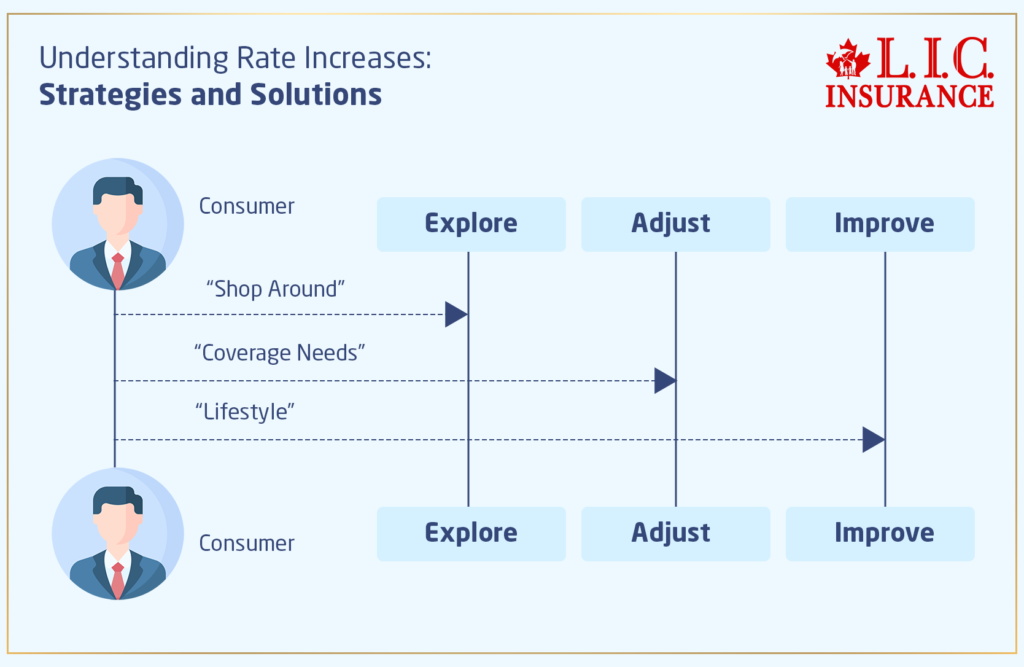
          What are the Biggest Life Insurance Companies in Canada?

          Life insurance plays a crucial role in providing financial security and peace of mind for individuals and families in Canada. Choosing the right life insurance provider is a significant decision, as it involves safeguarding your loved ones’.

          What are the Biggest Life Insurance Companies in Canada?

          By Harpreet Puri,  October 27, 6 Mins

          What are the Biggest Life Insurance Companies in Canada?

          Life insurance plays a crucial role in providing financial security and peace of mind for individuals and families in Canada. Choosing the right life insurance provider is a significant decision, as it involves safeguarding your loved ones’ future. In this comprehensive guide, we will explore the biggest life insurance companies in Canada as of 2023. These companies have a strong presence in the Canadian insurance market and offer a range of life insurance products to meet the diverse needs of policyholders.

          The Importance of Life Insurance

          Reasons of Why Life Insurance is Importance

          Before delving into the list of major life insurance companies, it’s essential to understand the significance of life insurance:

          The Biggest Life Insurance Companies in Canada – 2024

          Now, let’s explore the largest life insurance companies in Canada based on their market share, reputation, and the range of insurance products they offer:

          Manulife Financial Corporation

          Manulife Financial is one of Canada’s largest and most well-known life insurance companies. Founded in 1887, it has a rich history of providing insurance and financial services. Manulife offers a wide range of life insurance products, including term life, whole life, universal life, and critical illness insurance.

          Sun Life Financial Inc.

          Sun Life Financial is another major player in the Canadian insurance industry. Established in 1865, it has a strong presence both in Canada and internationally. Sun Life provides various life insurance options, retirement planning services, and investment solutions.

          Industrial Alliance Insurance and Financial Services Inc. (iA Financial Group)

          iA Financial Group is a leading Canadian insurer with a wide range of insurance and financial products. It offers life insurance, disability insurance, and annuities, catering to individuals, businesses, and groups.

          BMO Life Insurance Company

          BMO Life Assurance Company is a subsidiary of the Bank of Montreal (BMO) and is known for providing life insurance solutions, including term life, whole life, and universal life insurance policies.

          Desjardins Financial Security Life Insurance Company

          Part of the Desjardins Group, this company offers various life and health insurance products, including term life, permanent life, and critical illness insurance, serving both individuals and groups.

          Canada Life Insurance Company

          Canada Life, previously known as The Canada Life Insurance Company, is a well-established life insurance provider in Canada. It offers a wide array of insurance and wealth management 

          Empire Life Insurance Company

          Empire Life has been serving Canadians for over 90 years and provides a range of life insurance and investment products. Their offerings include term life, whole life, and universal life insurance.

          RBC Insurance

          RBC Insurance is a subsidiary of the Royal Bank of Canada (RBC) and offers a wide range of insurance products, including life insurance, critical illness insurance, and disability insurance.

          Factors to Consider When Choosing a Life Insurance Company

          Selecting the right life insurance company is a crucial decision. Here are some factors to consider when making your choice:

          Why should you choose a bigger insurance company?

          Choosing a bigger insurance company in Canada can offer several advantages, which may make it a preferable option for many individuals. Here are some reasons why you might consider selecting a larger insurance company:

          Financial Stability and Security:

          Bigger insurance companies often have more substantial financial resources and assets. This financial stability is crucial because it ensures that the company can meet its financial obligations, including paying out policyholder claims. This stability provides peace of mind to policyholders, knowing that their benefits are secure.

          Variety of Products:

          arger insurance companies typically offer a wider range of insurance products and coverage options. This variety allows you to choose policies that align more closely with your specific needs and financial goals. Whether you’re looking for life insurance, health insurance, investment products, or retirement planning, bigger insurers often have you covered.

          Experience and Expertise:

          Established larger insurance companies often have a long history of serving customers. This experience can translate into a wealth of knowledge and expertise in the insurance industry, helping you make informed decisions and navigate complex insurance matters.

          Accessibility and Convenience:

          Bigger insurers often have a more extensive network of branches, agents, and customer service representatives. This widespread presence can make it easier for you to access services, ask questions, or seek assistance when needed. Moreover, they may offer online platforms and mobile apps for added convenience.

          Innovative Solutions:

          Large insurance companies tend to invest in research and development to offer innovative solutions and products. This can include advanced underwriting processes, digital tools, and technologies that enhance the overall customer experience.

          Global Reach:

          Some larger insurance companies have a global presence, which can be advantageous if you have international insurance needs or if you plan to move or travel abroad. These companies may offer seamless coverage transitions when crossing borders.

          Strong Customer Support:

          Many bigger insurers prioritize customer service and have dedicated customer support teams. This can result in faster response times, efficient claims processing, and better support in case you need assistance.

          Reputation and Trust:

          Bigger insurance companies often have well-established reputations and a history of earning trust among policyholders. Their credibility can provide you with confidence that your insurance provider is reliable and will honor its commitments.

          Financial Strength Ratings:

          Large insurers are more likely to receive higher financial strength ratings from reputable rating agencies. These ratings indicate the company’s ability to meet its financial obligations and pay out claims, offering an additional layer of security.

          Stability in the Market:

          Larger insurance companies are better equipped to weather economic downturns and market fluctuations. This stability can translate into consistent premium rates and policy terms, providing predictability for policyholders.

          While bigger insurance companies offer numerous advantages, it’s essential to remember that the choice of an insurance provider should align with your specific needs and circumstances. Smaller or specialized insurers may also offer competitive products and excellent customer service. Therefore, when selecting an insurance company in Canada, it’s crucial to assess your individual requirements and compare offerings from various providers to find the best fit for your situation.

          Why should you choose a smaller insurance company?

          Choosing a smaller insurance company in Canada can have its advantages depending on your specific needs and preferences. While larger insurers offer extensive resources and coverage options, smaller insurers may provide unique benefits that align with certain individuals or situations. Here are some reasons why you might consider selecting a smaller insurance company:

          Personalized Service:

          Smaller insurance companies often prioritize personalized service and customer relationships. With fewer clients to manage, they can offer more one-on-one attention and tailor insurance solutions to your specific needs.

          Local Focus:

          Smaller insurers may have a strong local presence and focus on serving the needs of the community or region they operate in. This local knowledge can be valuable in understanding unique risks and offering specialized coverage.

          Niche Expertise:

          Smaller insurers may specialize in niche markets or specific types of insurance. If you have specialized insurance needs that larger companies may not cater to as comprehensively, a smaller insurer with expertise in your area of interest can be a better choice.

          Flexibility in Underwriting:

          Smaller insurers may have more flexibility in underwriting policies, which can benefit individuals with unique circumstances or medical histories. They may be more willing to consider non-standard risks.

          Competitive Premiums:

          Smaller insurance companies may offer competitive premium rates, especially for certain types of coverage. This can result in cost savings for policyholders.

          Quick Decision-Making:

          Smaller insurers typically have streamlined decision-making processes, which can lead to faster policy issuance and claims processing. This agility can be advantageous when you need prompt service.

          Community Involvement:

          Smaller insurers often have a strong commitment to their communities and may be involved in local charities, sponsorships, or events. Supporting a local company can be appealing to those who value community engagement.

          Access to Senior Management:

          In smaller insurance companies, you may have direct access to senior management and decision-makers. This accessibility can be beneficial if you have questions or concerns about your policy.

          Lower Overheads:

          Smaller insurers typically have lower overhead costs than larger corporations. This can translate into cost-effective solutions and potentially lower premiums for policyholders.

          Tailored Coverage:

          Smaller insurers may be more willing to customize coverage to meet your specific needs. This can result in a policy that closely aligns with your unique circumstances and preferences.

          Supporting Local Business:

          Choosing a smaller, locally-owned insurance company can be a way to support local businesses and contribute to the growth of the local economy.

          While smaller insurance companies offer these advantages, it’s essential to conduct thorough research and due diligence when selecting one. Consider factors such as the company’s financial stability, reputation, customer service record, and the scope of coverage offered. Additionally, assess your individual insurance needs and compare offerings from both smaller and larger insurers to find the best fit for your situation in Canada.

          Get The Best Insurance Quote From Canadian L.I.C

          Call 1 844-542-4678 to speak to our advisors.

          Best Insurance Plans Helpline From Canadian L.I.C

          Coming to The End

          Choosing the right life insurance company is a significant decision that requires careful consideration of your financial goals and needs. The largest life insurance companies in Canada, such as Manulife, Sun Life etc, offer a wide range of options to cater to various individual and family situations. By assessing your circumstances and comparing policies, you can make an informed choice to secure your financial future and provide peace of mind for your loved ones.

          Faq's

          A life insurance company is a financial institution that provides insurance products designed to protect individuals and their families financially in the event of the policyholder’s death. These products include term life insurance, whole life insurance, universal life insurance, and others.

          Choosing a reputable life insurance company is essential because it ensures that your policy will be honored and your beneficiaries will receive the intended benefits when needed. Reputable companies have a strong financial foundation, good customer service, and a history of fulfilling their obligations.

          You can assess the financial strength of a life insurance company by checking its financial ratings from reputable agencies like A.M. Best, Moody’s, or Standard & Poor’s. These ratings reflect the company’s ability to meet its financial obligations.

          The biggest life insurance companies in Canada typically offer a range of products, including term life insurance, whole life insurance, universal life insurance, critical illness insurance, and disability insurance. They may also provide retirement and investment products.

          Choosing the right life insurance policy depends on your individual circumstances, financial goals, and budget. Consider factors such as the amount of coverage you need, the length of coverage, and any specific riders or additional benefits you may require. It’s advisable to consult with a licensed insurance advisor.. Canadian LIC will help you to make an informed decision.

          Yes, many life insurance companies allow policyholders to customize their policies with riders (additional benefits). Common riders include critical illness riders, disability income riders, and accidental death benefit riders. These riders can enhance the coverage to better meet your needs.

          The need for a medical exam depends on the type and amount of coverage you apply for, as well as your age and health history. Some policies may require a medical examination, while others offer simplified underwriting processes without the need for an exam.

          Several factors can influence the cost of life insurance premiums, including your age, health, smoking status, the type and amount of coverage, the length of the policy, and your lifestyle and occupation.

          To file a life insurance claim, you typically need to contact the insurance company’s claims department and provide the necessary documentation, such as the policyholder’s death certificate and any required forms. The company’s customer service or claims department can guide you through the process.

          Depending on the policy type and the terms and conditions, you may have the option to make changes to your life insurance policy, such as adjusting coverage amounts, adding or removing riders, or changing beneficiaries. It’s essential to consult with your insurance company or agent to understand the options available.

          These FAQs provide valuable insights into the world of life insurance in Canada, helping individuals make informed decisions when selecting a life insurance policy and understanding how these policies work with the biggest insurance companies in the country.

          The above information is only meant to be informative. It comes from Canadian LIC’s own opinions, which can change at any time. This material is not meant to be financial or legal advice, and it should not be interpreted as such. If someone decides to act on the information on this page, Canadian LIC is not responsible for what happens. Every attempt is made to provide accurate and up-to-date information on Canadian LIC. Some of the terms, conditions, limitations, exclusions, termination, and other parts of the policies mentioned above may not be included, which may be important to the policy choice. For full details, please refer to the actual policy documents. If there is any disagreement, the language in the actual policy documents will be used. All rights reserved.

          Please let us know if there is anything that should be updated, removed, or corrected from this article. Send an email to Contact@canadianlic.com or Info@canadianlic.com

          What is the Difference between Life Insurance and Critical Illness Insurance?

          Critical Illness Insurance is a vital component of financial planning in Canada, providing individuals and families with crucial protection against the financial hardships that often accompany a serious illness diagnosis. This insurance product offers financial security by providing a lump-sum payout upon the diagnosis of a covered critical illness or medical condition. In Canada, where access to healthcare is mainly universal, Critical Illness Insurance fills the gap by addressing the financial aspects of dealing with a severe health crisis.

          What is the Difference between Life Insurance and Critical Illness Insurance?

          By Pushpinder Puri, October 20, 2023, 8 Minutes

          What is the Difference between Life Insurance and Critical Illness Insurance?

          Many Canadians researching what is Critical Illness Insurance often overlook how it fits into a larger financial safety net. Understanding what is Critical Heath Insurance in combination with life coverage helps you plan beyond the basics. Critical Illness Insurance is a vital component of financial planning in Canada, providing individuals and families with crucial protection against the financial hardships that often accompany a serious illness diagnosis. This insurance product offers financial security by providing a lump-sum payout upon the diagnosis of a covered critical illness or medical condition. In Canada, where access to healthcare is mainly universal, Critical Illness Insurance fills the gap by addressing the financial aspects of dealing with a severe health crisis.

          Key Features of Critical Illness Insurance in Canada

          Key Features of Critical Illness Insurance in Canada

          Which is why Critical Illness Insurance is a key component of Canadians’ financial security when illness strikes. Indeed, it provides peace of mind in the form of financial security at a moment when it’s most needed, as policyholders and their families would otherwise be left to worry about the financial stress accompanying such a difficult period. Like all insurance policies, you need to read that fine print, and if you’re not sure what it means (cause who really reads anything when it comes to insurance?), please contact a professional and get really good information before you make any decisions regarding Critical Illness Insurance in Canada. Check the Canadian LIC for the perfect answers according to your condition.

          Read More – What is Critical Illness Insurance here

          Difference between Life Insurance and Critical Illness Insurance

          Life Insurance and Critical Illness Insurance are two distinct types of insurance products available in Canada, each serving a different purpose. The table given below highlights the key differences between Critical Illness Insurance and Life Insurance in Canada, including their purposes, triggering events, use of funds, premiums, taxation, and other important aspects.

          Aspect Critical Illness Insurance Life Insurance
          Purpose Provides a lump-sum payout upon the diagnosis of a covered critical illness or medical condition, providing financial support during recovery. Provides a payout to beneficiaries upon the policyholder’s death, offering financial protection to loved ones.
          Triggering Event Payout triggered by the diagnosis of a covered critical illness during the policy term. Payout is triggered by the policyholder’s death, as long as the policy is in force and premiums are up to date.
          Use of Funds The lump-sum payout can be used at the policyholder’s discretion, whether for medical expenses, debt repayment, or daily living expenses during illness. Beneficiaries use the payout to cover immediate expenses, debts, and ongoing living expenses after the policyholder’s death.
          Duration Policies can be term-based or shorter-term, aligning with potential high-risk years for critical illnesses. Term-based or permanent policies can last a lifetime, providing long-term protection.
          Premiums Premiums are generally higher due to the lower probability of a critical illness diagnosis during the policy term. Premiums are typically lower because the likelihood of a death benefit payout is higher.
          Beneficiaries The policyholder receives the payout upon the diagnosis of a critical illness. Beneficiaries receive the payout upon the policyholder’s death.
          Customization Riders can be added to enhance coverage, such as disability riders or return of premium riders. Riders and endorsements are available to customize coverage, such as adding critical illness or accidental death riders.
          Taxation Payouts are typically tax-free, providing financial relief during a critical illness. Payouts are generally tax-free for beneficiaries in Canada.
          Pre-Existing Conditions Coverage for pre-existing conditions varies by policy and insurer. Some may be excluded from coverage. Policies may be issued without regard to pre-existing conditions, but coverage and premiums can be affected.
          Waiting Period Most policies have no waiting period, and coverage becomes effective immediately upon approval. Coverage typically begins immediately upon policy approval or at the start of the chosen term.
          Additional Benefits May offer additional benefits, such as rehabilitation benefits or coverage for specific conditions unique to the policy. May include riders for additional coverage, such as accidental death and dismemberment or living benefits.
          Survival of Policyholder Provides financial support to the policyholder while alive and dealing with a critical illness diagnosis. Provides financial protection to beneficiaries after the policyholder’s death.
          Common Covered Events Covered conditions may include cancer, heart attack, stroke, organ transplant, and others. Typically covers a broad range of causes of death, including illness, accidents, and natural causes.

          Purpose:

          Triggering Events:

          Use of Funds:

          Duration:

          Premiums:

          It’s essential to weigh your financial needs and priorities when trying to determine which insurance you should buy. Life Insurance and then Critical Illness Insurance if that makes more sense for you. Some Canadians decide to purchase both Life Insurance and Critical Illness Insurance and have the best of both forms of coverage for themselves and their families here in Canada. By speaking with a licensed insurance professional, such as a Canadian LIC, you can be provided with the options available to you once you’ve completed each step.

          Read More – Critical Illness Insurance here

          What does Critical Illness Insurance cover in Canada?

          Most Canadian Critical Illness Insurance policies have a specific list of critical illnesses and medical conditions they cover. The specific coverage amounts depend on the insurance company and policy, so it’s important to read the policy terms and definitions carefully. But here are common critical illnesses & diseases that are part of the Critical Illness Insurance policy in Canada:

          It’s worth noting that not all insurers or policies will cover the same list of illnesses and health conditions. Secondly, policies can have different definitions and parameters that determine the severity of a included illness and thus the amount of the payout.

          Canadians should read and know the Critical Illness Insurance policy’s terms and definitions before they buy it. Call Canadian LIC- a licensed insurance advisor can help you choose a policy based on your particular health and financial circumstances.

          What does Critical Illness Insurance not cover in Canada?

          Canadian Critical Illness Insurance policies will have certain exclusions and limitations as well. These restrictions may differ by insurance company and the exact policy you select. Although the specific exclusions will vary, there are specific situations and instances that Critical Illness Insurance generally won’t cover:

          You need to understand if there are any exclusions or limitations which could surprise you at the time of a claim. If you have questions and want a quote, or if you wish to discuss the coverage in further detail, please don’t hesitate to contact Canadian LIC to determine your best fit!

          Why Pairing Life Insurance with Critical Illness Coverage Offers Smarter Financial Protection

          In Canada, families increasingly ask not just what is Critical Heath Insurance, but whether combining it with traditional Life Insurance is worthwhile. Many assume these are stand-alone products, but the growing trend of Life Insurance with critical illness riders offers a more holistic solution for modern financial planning.

          When someone is diagnosed with a major illness, expenses don’t pause—mortgages, childcare, and utility bills still arrive. While Life Insurance supports your family after death, Critical Illness Insurance offers support during life’s most difficult moments, such as recovering from a stroke or undergoing cancer treatment.

          Unlike what many competitors address, one overlooked benefit of bundling these coverages is accelerated underwriting. Some insurers in Canada streamline approvals when you apply for both simultaneously, reducing paperwork and offering better bundled premium rates.

          Additionally, many Canadians don’t realize that some policies allow you to convert standalone Life Insurance into Life Insurance with critical illness coverage later, without a new medical exam, if your financial needs evolve.

          So, when clients ask what is Critical Illness Insurance is or what Critical Heath Insurance, the answer should go beyond definitions. It’s about designing layered coverage that aligns with real-life risks—now and decades from now. This strategy ensures financial protection both during a crisis and after life ends.

          Get The Best Insurance Quote From Canadian L.I.C

          Call 1 844-542-4678 to speak to our advisors.

          Best Insurance Plans Helpline From Canadian L.I.C

          Faq's

          Life Insurance is a product that will go to your beneficiaries when you die and give you a payout. In Canada, if you take out a Life Insurance Policy, you make regular premium payments and, in exchange, the beneficiaries you’ve chosen receive a single lump sum payment (the death benefit) when you die.

          Critical Illness Insurance is a contract that pays the policyholder (you) a lump sum if you are diagnosed with an illness that is covered under the terms of the contract. That’s not the case with Life Insurance, which pays your beneficiaries when you die.

          Critical Illness Insurance of Canada – Types of critical illnesses. The commonly defined critical illnesses in Canada with critical illness insurance could be cancer, heart attack, stroke, organ transplant, and other defined illnesses. Covered illnesses may vary from insurer to insurer, so it’s important to get to know the policy inside out.

          Yes, lots of people have both Life Insurance and Critical Illness Cover for double protection! Life Insurance takes care of your family after your death, whereas critical illness insurance provides aid if you survive a critical illness.

          That’s why Life Insurance premiums are typically much less expensive than Critical Illness Insurance in Canada, as Life Insurance has a higher probability of claim (since everyone dies). Critical Illness Insurance is more expensive because the chance of a critical illness happening is lower during the life of the policy.

          Certain insurance companies in Canada have critical illness riders that can be attached to a Life Insurance Policy for an additional fee. You can have both of these types of coverage in one policy, making your insurance needs easier.

          The right amount of coverage for you is based on your unique circumstances, including your financial obligations and goals, and your budget. It is a good idea to speak with a Canadian LIC such as Promax Insurance, which is an insurance expert who can work with you to determine what you need and how much coverage you should be.

          Generally speaking, Life Insurance proceeds are not taxable in Canada. But tax implications for Critical Illness Insurance payouts are different and can depend on multiple scenarios, most of them on how the policy is set up. It is best to speak to a tax accountant in order to be fully aware of the tax consequences.

          Yes, it’s possible to get approved for life or Critical Illness Insurance in Canada with a pre-existing health condition, but acceptance and terms of coverage may differ from provider to provider. It’s critical to disclose everything when applying for insurance, and some policies may have increased premiums or exclusions for pre-existing conditions.

          Be ready to pick the provider and policy vehicle with the help of Canadian LIC, a licensed insurance advisor who can take you through a financial needs evaluation and provide you with choices so you get just the right policy that fits your financial goals and environment.

          As always, you should read and understand the terms, conditions and exclusions of your policy before buying any insurance product in Canada.

          The above information is only meant to be informative. It comes from Canadian LIC’s own opinions, which can change at any time. This material is not meant to be financial or legal advice, and it should not be interpreted as such. If someone decides to act on the information on this page, Canadian LIC is not responsible for what happens. Every attempt is made to provide accurate and up-to-date information on Canadian LIC. Some of the terms, conditions, limitations, exclusions, termination, and other parts of the policies mentioned above may not be included, which may be important to the policy choice. For full details, please refer to the actual policy documents. If there is any disagreement, the language in the actual policy documents will be used. All rights reserved.

          Please let us know if there is anything that should be updated, removed, or corrected from this article. Send an email to Contact@canadianlic.com or Info@canadianlic.com

          Exploring the Opportunities: Rock Solid Reasons to Work in an Insurance Company in Canada

          Canada, with its robust and diverse economy, offers numerous career opportunities across various industries. Among these, the insurance sector stands out as a rewarding and stable field to work in. This blog will explore the compelling reasons for considering a career in Canada’s insurance industry.

          Exploring the Opportunities: Rock Solid Reasons to Work in an Insurance Company in Canada

          By Canadian LIC, October 11, 2023, 10 Minutes

          Rock Solid Reasons to Work in an Insurance Company in Canada

          Canada, with its robust and diverse economy, offers numerous career opportunities across various industries. Among these, the insurance sector stands out as a rewarding and stable field to work in. This blog will explore the compelling reasons for considering a career in Canada’s insurance industry.

          Working in an Insurance Company in Canada

          A successful and satisfying career path is available in Canada by working for an insurance firm. Canada’s insurance sector is renowned for its stability, employment security, and competitive pay. It offers a variety of professional options that may accommodate a variety of backgrounds and skill sets, making it an inclusive and vibrant sector.

          By offering monetary security and peace of mind, professionals in the Canadian insurance industry have the ability to have a significant impact on people and businesses. The industry’s dedication to professionalism and ethics improves its standing and promotes a trusting and accountable culture.

          With many businesses investing in staff development through training and certifications, continuous learning and professional development are strongly encouraged. Work-life balance is valued, and flexible scheduling and extensive vacation policies are offered.

          By controlling risks and fostering community resilience, the insurance sector also significantly contributes to Canada’s economic stability. It uses technology to keep on the cutting edge of innovation and offers professionals interesting opportunities to work on cutting-edge projects.

          So, a career in the insurance industry in Canada offers security, diversity, and the possibility to positively influence people and communities. It is also financially rewarding and personally enjoyable.

          Reasons to Work in an Insurance Company in Canada

          Let’s get to know about the reasons one by one:

          Job Stability and Security: One of the most significant advantages of working in the insurance industry in Canada is the job stability it offers. Insurance is a fundamental aspect of modern life, and the demand for insurance products and services remains constant regardless of economic fluctuations. This means that insurance companies typically provide stable employment even during economic downturns, making it an attractive choice for those seeking job security.

          Diverse Career Opportunities

          The insurance industry is enormous and has many facets, providing a variety of job choices. Whether you have a background in finance, law, marketing, customer service, or technology, there are roles within insurance companies that match your skills and interests. Some common career paths in the insurance sector include:

          Working at Canadian LIC

          Canadian LIC is currently the topmost insurance broker in Canada. We have a great opportunity for exceptional people like you to advance with us as we grow swiftly. When you join the Canadian LIC team, what can you expect?

          To Wrap Up

          A career in an insurance company in Canada offers a combination of stability, diverse career opportunities, competitive compensation, and the chance to impact individuals and businesses positively. Whether you’re just starting your career or considering a change, the insurance industry in Canada provides a supportive and dynamic environment for professional growth and fulfillment. Consider exploring the numerous roles and opportunities within this essential sector and begin a rewarding career journey in the world of insurance.

          Get The Best Insurance Quote From Canadian L.I.C

          Call 1 844-542-4678 to speak to our advisors.

          Best Insurance Plans Helpline From Canadian L.I.C

          Faq's

          A career in the insurance industry in Canada offers job stability, diverse career opportunities, competitive compensation, continuous learning, and the chance to make a positive impact on people’s lives.

          The insurance industry in Canada offers a wide range of roles, including underwriters, claims adjusters, insurance agents or brokers, actuaries, risk analysts, IT specialists, legal counsel, and customer service representatives.

          While job stability is a notable feature of the insurance industry, it is subject to market conditions and company-specific factors. However, insurance is considered a resilient sector, and layoffs are less common during economic downturns compared to some other industries.

          The Canadian insurance industry is known for offering competitive compensation packages, including base salaries and performance-based bonuses. Compensation can vary depending on the specific role, experience, and company.

          The insurance sector offers chances for further education and career advancement. A lot of companies make investments in the education and training of their staff members. Keeping up with industry changes is made easier for workers thanks to these investments.

          By controlling risks for both individuals and businesses, the insurance sector in Canada significantly contributes to economic stability. Assisting in the recovery from unforeseen emergencies like accidents and natural disasters also enhances community resilience.

          No, the insurance industry welcomes professionals from diverse educational backgrounds. Whether you have a background in finance, law, technology, or other fields, there are roles within insurance companies that can match your expertise.

          Many insurance companies in Canada prioritize work-life balance and offer flexible work arrangements, including options for remote work and flexible hours. This varies by company and role.

          By going to conferences, seminars, and industry events, you may network inside the insurance sector. Developing connections with coworkers, clients, and industry experts can be helpful for job advancement and keeping up with changes in the sector.

          Yes, the knowledge and skills acquired in the Canadian insurance sector are adaptable and widely regarded. This means that whether you wish to work overseas or engage with international clients and colleagues, a career in insurance might open doors to international prospects.

          The insurance sector is becoming more and more dependent on technology. Processes are streamlined, client interactions are improved, and risk assessment is improved. Industry experts have the chance to work on cutting-edge technology initiatives.

          These frequently asked questions (FAQs) offer helpful information on working in the Canadian insurance industry, but it’s crucial to carry out further research and make connections with experts in the field to obtain an in-depth understanding of the sector and career opportunities.

          The above information is only meant to be informative. It comes from Canadian LIC’s own opinions, which can change at any time. This material is not meant to be financial or legal advice, and it should not be interpreted as such. If someone decides to act on the information on this page, Canadian LIC is not responsible for what happens. Every attempt is made to provide accurate and up-to-date information on Canadian LIC. Some of the terms, conditions, limitations, exclusions, termination, and other parts of the policies mentioned above may not be included, which may be important to the policy choice. For full details, please refer to the actual policy documents. If there is any disagreement, the language in the actual policy documents will be used. All rights reserved.

          Please let us know if there is anything that should be updated, removed, or corrected from this article. Send an email to Contact@canadianlic.com or Info@canadianlic.com
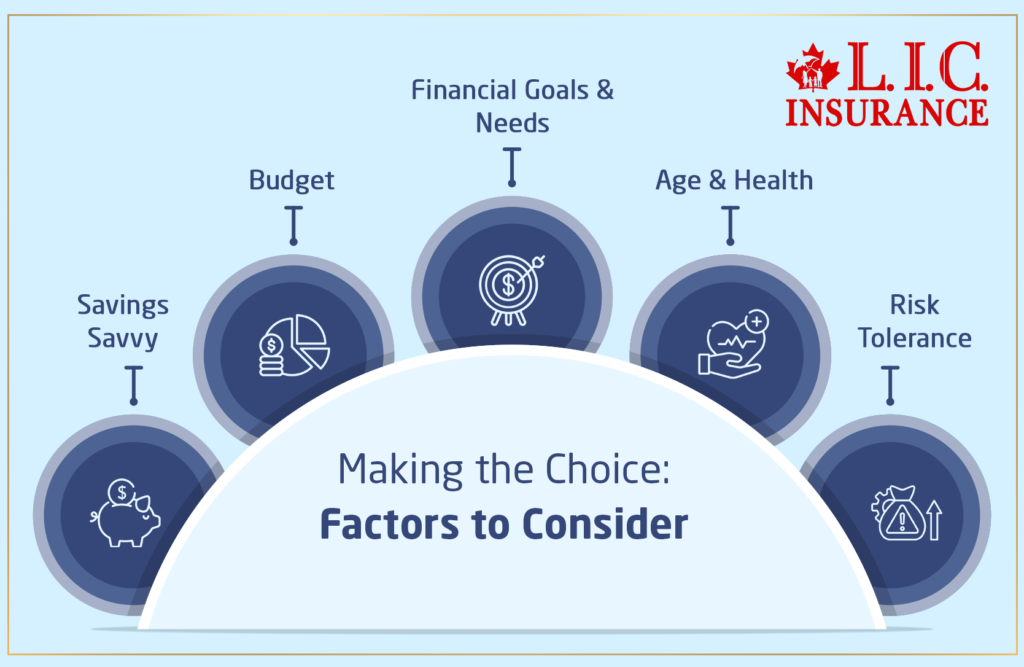
          How To Pick The Right Insurance Broker?

          Getting insurance on your own can be very risky and challenging compared to buying a car or a home. There are so many things to consider, and that’s why you should consider hiring a professional insurance broker. They can help you choose the right policy and coverage for that policy. However, the question here would be, how can you choose the best insurance broker in Canada? Several factors play a crucial role in choosing an insurance broker

          How To Pick The Right Insurance Broker?

          By Canadian LIC, September 14, 2023, 8 Minutes

          How To Pick The Right Insurance Broker

          Getting insurance on your own can be very risky and challenging compared to buying a car or a home. There are so many things to consider, and that’s why you should consider hiring a professional insurance broker. They can help you choose the right policy and coverage for that policy. However, the question here would be, how can you choose the best insurance broker in Canada? Several factors play a crucial role in choosing an insurance broker, and we will discuss them, so you can have a better idea of Why you should Choose an Insurance Broker to Purchase an Insurance Plan. If you are looking for the best insurance broker in Toronto, you can contact Canadian LIC and get in touch with our team. We will be glad to help you out with all your insurance needs.

          Learn more on – Why you should Choose an Insurance Broker to Purchase an Insurance Plan

          Who is an Insurance Broker?

          A professional insurance broker helps you purchase a policy that meets your insurance needs. They take a practical step-by-step approach starting with

          You should also know that insurance brokers can help in customizing the policy contract for you as well. If you want to add a clause or change the terms and conditions of the agreement, your insurance broker ensures that the changes are mentioned in the paperwork. If you have any queries, you can get in touch with Canadian LIC in Toronto today, and we will be happy to resolve all of them.

          What does an Insurance Broker do?

          An insurance broker possesses all the knowledge of the different types of insurance available in the market and provides the best advice on what might be the best insurance option for you as per your lifestyle, health, age, and available assets. Another amazing thing is that these insurance brokers will act as agents doing your paperwork and handling claims that arise.

          Related Posts

          Can we trust an Insurance Broker?

          Insurance brokers usually get commissions from the insurance companies for the many types of insurance they sell if they are able to sell it successfully. These insurance agents work with a number of insurance providers, so there are very few chances of them having a monetary bias for any one particular product. Hence they are unbiased and impartial parties and provide you with a policy that would be in your budget as per your requirements from so many different insurance companies in their knowledge.

          Do Insurance Brokers Understand the Products They Sell?

          You will definitely be able to make a much better decision if you buy insurance through an insurance broker rather than directly from any insurance company. An insurance broker’s job is to have all the best knowledge about the best insurances available in the market from the best insurance companies and hence will advise you for one which is perfect for your budget. These insurance brokers in Canada are very well aware of the application requirements, coverage terms, and pricing.

          Whatever insurance you are looking for, be it critical illness insurance, disability insurance, life insurance, etc., you can easily buy through an insurance broker in Ontario after comparing them with each other. Mostly all the insurance brokers cover all types of insurance, but you might find a few who specialize in specific ones. So if you want an expert opinion on a particular insurance, you can go to these types of insurance brokers in Canada.

          The Benefits of Working with an Insurance Broker in Toronto

          Alongside helping you choose the ideal insurance policy for you and your family, working with expert insurance brokers has its advantages. Here’s how you will benefit from hiring an insurance broker in Toronto before choosing a policy:

          Get The Best Insurance Quote From Canadian L.I.C

          Call 1 844-542-4678 to speak to our advisors.

          Best Insurance Plans Helpline From Canadian L.I.C

          Some Tips On Choosing The Right Insurance Broker​

          Although there is no established formula for finding the right broker for your insurance needs, what you should look for is someone who has a minimum set of attributes to shift through several policies and identify the right option for you. Here are some tips that can help you hire an insurance broker:

          Process of Application

          During the Application process, certain documents will be needed from you, such as:

          There are certain insurance policies that might even require you to go for a Health Exam before the issue of the policy, but it has become really rare now. 

          Whatever situations you might be facing for the type of insurance you are dealing with, you will have complete guidance and support from the insurance broker in Toronto you are working with. A few things to consider before making your decision to buy your policy are as follows:

          If in case you have missed anything or want to add to your plan, your broker should be able to do that for you effortlessly. Once you have made up your mind, the insurance broker will complete the application process and will proceed with the payment process for you. If you are required to make a claim, the broker might also support you after the coverage gets life.

          To learn more about the application process, you can read – Getting an Insurance Policy.

          What is the cost of buying Insurance from the Best Insurance Broker in Canada?

          An insurance broker is paid by insurance companies and not by clients. They cannot charge a fee; if they do, then it might be a scam. 

          You only have to pay the fee for the insurance policy you buy but not any fee to the broker. The prices of different insurance policies vary to a great extent as per their type and coverage.

          In fact, if you buy insurance from an insurance broker in Canada, it might be cheaper than buying directly from the insurance company. This happens because the insurance broker provides you with various discounts and also negotiates the price of the plan. You can even take the benefits of rebates by bundling different policies together.

          Thus to put it in simple terms, you might experience a vast difference in the cost of insurance when you buy it through a broker but not in any case, you will have to pay fees to the broker. You will only have to pay the price of the insurance policy you are buying after you have made the decision to buy it.

          Get The Best Insurance Quote From Canadian L.I.C

          Call 1 844-542-4678 to speak to our advisors.

          Other Insurance Buying Options​

          You can even buy your insurance directly through the insurance company or work with an agent if you are not interested in buying through a broker. But if you do so, then you will lose the biggest benefit of comparing different insurances available in the market. If you decide to work with an agent, it is best advised to do your proper research so that you are able to grab the best deal for your plan. 

          Final Thoughts

          Hiring an insurance broker can be difficult, but if you choose our team at Canadian LIC in Toronto, you will be hiring a team of professionals who can help you get a tailored insurance policy at affordable premium rates. Please schedule a consultation today; we look forward to meeting you. We are based in Toronto.

          The above information is only meant to be informative. It comes from Canadian LIC’s own opinions, which can change at any time. This material is not meant to be financial or legal advice, and it should not be interpreted as such. If someone decides to act on the information on this page, Canadian LIC is not responsible for what happens. Every attempt is made to provide accurate and up-to-date information on Canadian LIC. Some of the terms, conditions, limitations, exclusions, termination, and other parts of the policies mentioned above may not be included, which may be important to the policy choice. For full details, please refer to the actual policy documents. If there is any disagreement, the language in the actual policy documents will be used. All rights reserved.

          Please let us know if there is anything that should be updated, removed, or corrected from this article. Send an email to Contact@canadianlic.com or Info@canadianlic.com

          Why You Should Use An Insurance Broker To Purchase An Insurance Plan?

          As complicated as an insurance policy is, it is too important not to ignore it. It can cause stress and confusion for most individuals when they try to compare several insurance policies and choose the proper coverage. When the time comes to file an insurance claim, the stress automatically creeps back in, asking what if you do not have the required financial support to recover from your loss? An insurance broker takes on many roles. They can use their experience, knowledge, and insight to guide you through the whole insurance process.

          Why Should You Use An Insurance Broker To Purchase An Insurance Plan?

          By Canadian LIC, August 23, 2023, 8 Minutes

          Why Should You Use An Insurance Broker To Purchase An Insurance Plan

          As complicated as an insurance policy is, it is too important not to ignore it. It can cause stress and confusion for most individuals when they try to compare several insurance policies and choose the proper coverage. When the time comes to file an insurance claim, the stress automatically creeps back in, asking what if you do not have the required financial support to recover from your loss? An insurance broker takes on many roles. They can use their experience, knowledge, and insight to guide you through the whole insurance process.

          Below mentioned are the reasons why you should use a broker when it comes to purchasing an insurance policy:

          Insurance Advisor: Always there for you

          As experienced insurance brokers in Mississauga, we understand your budget and needs clearly and offer professional support, and that is why so many clients choose to work with us. Our persistence in looking after the well-being of our clients sets us apart from other insurance brokerages. Being licensed professionals, we aim to help clients find the right insurance plan to suit their budget and specific requirements. Whether it is Travel Insurance or Health Insurance you can count on us to provide expert advice that is free and unbiased.

          We work for you and only you, and not the insurance company. This means you will have more choices, better rates, better Insurance plans, and, most importantly, a broker that’s on your side even when you want to make an insurance claim.

          You can definitely expect more from our Insurance brokers in Mississauga at Canadian LIC because:

          Protecting your assets and loved ones

          Our insurance brokers in Mississauga have a great deal of expert knowledge that can cover areas that may not be considered insurable. You will also not need to worry about paying a lot as they will ensure you are paying a fair amount for insurance protection and, most importantly, getting an excellent service. If you do not have the patience and time to shop around yourself and find the right coverage you need, you can rely on an insurance broker to find the right plan in the challenging and competitive market. We do not just stop once we have sold you the policy; we monitor the policy terms and notice the market conditions for any fluctuations. If you need to make an insurance claim, we will assist you in the process of the claim and assist you in communicating with insurance companies. We also make sure your needs are presented to the insurance companies to get the most appropriate product at a fair price. Our insurance brokers in Mississauga can offer valuable advice and guidance on how you need to report a claim to insurers. You must have the right insurance coverage as it can provide you with peace of mind. It can be tricky to navigate an insurance plan when buying insurance. With the help of Canadian LIC, you can get solid advice that you can trust.

          The importance of excellent and honest insurance advice

          To ensure that you and your loved ones are safe and secure against various risks, you must choose a plan and be sure that it covers all your risk requirements. Seeking the advice of an insurance broker is one way of mitigating this risk.

          We clearly understand your insurance requirements

          Our insurance brokers in Mississauga take the time to get to know their clients better by understanding their individual insurance requirements and identifying the best insurance products to suit their needs. As mentioned earlier, it can be time-consuming to find the right plan, and certain insurance companies do not cater to special insurance requirements. We strive to make sure we find the right insurance protection plan that leaves both parties happy and satisfied. As clients, we can sometimes get lost in the insurance jargon present in the policy documents. With the help of an insurance broker, they will simplify it, ensuring you understand the plan and know what you are purchasing and, most importantly, not making a mistake. All the insurance plans that we try to sell are from top Canadian Insurance Companies whom we know well and trust.

          Offering insurance advice that you can trust

          Canadian LIC is a reputable insurance brokerage that offers comprehensive insurance solutions to clients all over Mississauga and the surrounding areas. With years of experience in the business, we work with all of the leading insurance companies in Mississauga. Our insurance brokers will negotiate the best rates and terms on your behalf for a wide range of insurance, such as Travel InsuranceCritical Illness InsuranceLife InsuranceLife Insurance with Investment etc. We provide coverage for even some of the most complex Corporation Insurance – Key Person, Etc. We also understand how vital it is to handle claims efficiently and effectively.

          Get The Best Insurance Quote From Canadian L.I.C

          Call 1 844-542-4678 to speak to our advisors.

          Best Insurance Plans Helpline From Canadian L.I.C

          Helping you make a well-informed decision

          Benefits of Using an Insurance Broker

          When it comes to looking after your well-being, we highly recommend that you place your trust in our insurance brokers in Mississauga. It is down to the simple fact that we have access to the right Insurance companies and, secondly, our expertise.

          To learn more on insurance broker benefits go to -’ Benefits of Using an Insurance Broker

          Some Pros and cons of Insurance Brokers

          Here we bring you some advantages and disadvantages of using insurance brokers in Canada to give you an even clear picture that will help you make a better decision if you still have doubts about whether you should go with one or not.

          Insurance Broker Pros

          Insurance Broker Cons

          When you purchase insurance straight from an insurance broker, you will experience certain advantages, making your insurance buying journey super smooth. You will never be able to experience these advantages when buying directly through an insurance company.

          If you want to know how to pick the right insurance broker for yourself you can read- How to pick the right Insurance Broker?

          What is the cost of buying insurance from an insurance broker?

          The cost of buying insurance from an insurance broker in Canada can vary depending on a number of factors, including the type of insurance coverage, the insurance company, the broker’s commission structure, and the particular policy you’re looking for.

          Insurance brokers in Canada earn through the commissions paid by their insurance companies. When you buy an insurance policy through an insurance broker, the commission is usually added to your premium. This means that the cost of using a broker’s services is typically included in the overall premium for the insurance policy, and there is no need to pay an extra fee directly to the broker.

          Don’t forget that different types of insurance (e.g.home, life, etc.) have different premium structures and commission rates. Also, commission rates for different insurance companies offered to brokers are different, which can affect the final cost of the policy.

          It is essential to compare quotes from multiple insurance brokers and companies to get the best coverage and price as per your specific requirements. Insurance brokers can help you navigate the options available, provide expert advice, and assist you in finding the most suitable policy according to your requirements.

          It’s best to reach out to a licensed insurance broker in Canada to get an accurate cost for insurance coverage and request a quote tailored to your specific needs and circumstances.

          Get The Best Insurance Quote From Canadian L.I.C

          Call 1 844-542-4678 to speak to our advisors.

          Some Other Ways of Buying Insurance in Canada

          If buying insurance through an insurance broker isn’t something that interests you, then you can purchase the insurance directly through the insurance company, or you can even choose to work with an insurance agent. But the only problem is you might miss the biggest benefits of buying through an insurance broker in Canada, which is the chance to compare different available options in the market and pick the best from them for yourself.

          In case you are thinking of working with an insurance agent, then it is best advised to do your proper research to make sure you grab a perfect Insurance coverage for yourself.

          Coming to the end

          Whatever age you may be at right now, insurance can be an integral part of your financial well-being. If you are still unsure which can be a good plan for you and your family’s protection, it is high time that you start doing proper research and get a good one for yourself.

          If whatever knowledge you gathered from here has interested you, then you might have been very sure about the benefits you will enjoy when you buy your insurance through a broker. If you take care of the above-shared steps, then you will be able to have a perfect insurance policy for yourself very soon.

          Faq's

          You can access various insurance products from different insurance companies that best suit your specific needs with the help of an insurance broker. They are the link between the insurance seeker and the provider to impartially advise you on the best option as per your situation.

          They answer and resolve all your insurance queries and take care of the application process. They earn through the commission from the insurance company and, in very rare cases, might ask for any fee for the services they provide.

          When a particular insurance company hires a person to sell their insurance products, then that person is an insurance agent. Whereas on the other hand, a broker is a licensed individual between the insurance seller and the seeker. Insurance brokers offer a great variety of choices as they bring insurance products from a marketplace from different organizations.

          But the best part is that both of them possess the best knowledge in their fields. Both of them are licensed and earn commissions on the products they sell. The commission to insurance agents is paid to them by their employer. Whenever they accomplish their sales targets by selling more, then they are entitled to gain some additional benefits as well. Whereas the insurance brokers get a commission from the different insurance companies whose insurance products they are able to sell.

          It would be great to get an insurance broker for yourself for assistance especially in the case you are new to the world of insurance. Your insurance knowledge will help you decide whether you should go for one or not.

          But some people are very well aware of what they need and are well versed in insurance knowledge. These people can purchase directly through the insurance agent or insurance company.

          Yes, there may be differences in the cost whether you buy through an insurance broker, agent, or company. But there are more chances of getting discounts when you purchase through brokers.

          Also, you will be able to save a few bucks when buying through a broker as they will also bring some alternative options and will help to negotiate with the insurance company directly on your policy. Since there is not any cost involved in buying insurance through a broker, it would be a wiser option to go with them.

          Of course, insurance brokers earn only through commission and can’t charge any personal fee. The commission can range from company to company and product to product.

          If you still have any more questions left, you can easily schedule an appointment with Canadian LIC today!

          First of all, you should finish up your schooling and then pass an exam of licensing if you want to become an insurance broker in Canada. However, the training and requirements for licensing are different in different provinces in Canada.

          If you want to gain more knowledge on federal and provincial regulations, then you can visit the Insurance Brokers Association of Canada. This website will help you greatly if you are thinking of becoming an insurance broker. Contact Canadian LIC to get answers regarding Registering into HLLQP.

          The above information is only meant to be informative. It comes from Canadian LIC’s own opinions, which can change at any time. This material is not meant to be financial or legal advice, and it should not be interpreted as such. If someone decides to act on the information on this page, Canadian LIC is not responsible for what happens. Every attempt is made to provide accurate and up-to-date information on Canadian LIC. Some of the terms, conditions, limitations, exclusions, termination, and other parts of the policies mentioned above may not be included, which may be important to the policy choice. For full details, please refer to the actual policy documents. If there is any disagreement, the language in the actual policy documents will be used. All rights reserved.

          Please let us know if there is anything that should be updated, removed, or corrected from this article. Send an email to Contact@canadianlic.com or Info@canadianlic.com

          Hiring An Insurance Broker In Brampton- A Comprehensive Guide

          Since 2020, with the start of the Covid-19 pandemic and now with countries at war and the talks of a possible world war, it’s practical to say that we live in financially volatile times. Especially the last couple of years has shown us what an economic crisis looks like.

          Hiring An Insurance Broker In Brampton- A Comprehensive Guide

          By Canadian LIC, April 11, 2022, 8 Minutes

          Hiring An Insurance Broker In Brampton- A Comprehensive Guide

          Since 2020, with the start of the Covid-19 pandemic and now with countries at war and the talks of a possible world war, it’s practical to say that we live in financially volatile times. Especially the last couple of years has shown us what an economic crisis looks like. In these challenging times, it’s always a good idea to have a financial safety net around you and your family in-case if you already don’t have one, ideally in the form of an insurance policy. However, when it comes to insurance policies, there are so many products available in the market that it might become very confusing for you. This is where the role of an insurance broker comes into play. Not only can they help you find the right insurance policy that meets your financial needs, but they also take care of all related legwork and paperwork while you can take care of more serious matters. Consider this blog as a guide on how you can find a professional insurance broker in Brampton.

          Understanding what an insurance broker does

          Before you go looking out for an insurance broker, you should know what an insurance broker does. An insurance broker’s main job is to find the perfect policy for their clients (you) at the best price possible. Once you hire a broker, they will sit with you and take note of your financial needs. This would be a question and answer round that might include some documents that you would need to present, such as property valuation reports and appraisals. With the necessary information in hand, they will comb through several insurance policies from different companies and present you with some options that might be suitable for you.

          Brokers can also share information and provide support, even after the insurance purchase is complete. On behalf of their customers, they can help in coordinating premium payments, request policy changes and make recommendations when the renewal time comes. Some brokers also offer assistance with claims submission and reimbursement, though the actual claim still has to be made directly with the insurance provider. They will do all the hard work while you can relax.

          Things to consider when looking for an insurance broker in Brampton

          When you’re planning to hire an insurance broker, it’s a good idea to do a fair bit of research first. You can explore the market, ask for references and also read the testimonials part to get better insights (get to know what their previous clients think about their service).

          Here are some fundamental pointers that you should keep in mind when you’re searching for an insurance broker:

          Insurance brokers can negotiate the premium for you as well.

          What you should know is, that the insurance broker that you’re about to hire may have worked with numerous insurance companies for a long time. This means that they would have a friendly rapport with them, giving them the benefits of securing affordable monthly premium rates for your insurance. If you go into the insurance market on your own, you may not secure the premium rate that you are looking for. With a broker, you can have complete peace of mind. They can compare several policies for you, set a reasonable premium rate and also make sure that all your requirements are covered.

          Need advice on your finances? Your insurance broker in Brampton can help.

          Insurance brokers always remain impartial. They will educate you about the policy that you want to apply for and show the loopholes as well. With them, you will have access to more insurance companies, and they can share all the knowledge that they have for you to make a well-informed decision. They will give you honest advice based on your needs and budget, but at the end of the day, you will have the final decision.

          Do I need to pay the broker?

          That is a good question, and in most cases, the answer is no. Insurance brokers in Brampton earn a commission on the policies that they sell. Once the policy is purchased, the insurance company that provides it will pay the broker a commission for bringing them business. This commission is based on the premium amount, and it can be as high as 20%, depending on the type of insurance that was purchased.

          However, you should know that some brokers do charge a brokerage fee, which will have to be paid by you. It’s not a common practice, and in many jurisdictions, they aren’t even allowed. Insurance brokers are regulated provincially, so consider checking with your province’s regulatory body if you’re curious about the rules where you live.

          Additional services

          Alongside offering help, several insurance policies such as:

          You can hire an Insurance broker in Brampton for drawing out buy-sell agreements, help with estate planning policies and much more. You can contact them and ask for a free quote and if you like it, then schedule an appointment to start initial discussions.

          Get The Best Insurance Quote From Canadian L.I.C

          Call 1 844-542-4678 to speak to our advisors.

          Best Insurance Plans Helpline From Canadian L.I.C

          Conclusion

          Know this; your insurance broker will always have your best interests in mind. They will work for you and not the insurance company and can offer a variety of insurance products at a low price. Hire an insurance broker and reap the benefits. We hope you know you have a good idea about how you can hire a professional insurance broker in Brampton. For more exciting reads like this, keep an eye on this space.

          The above information is only meant to be informative. It comes from Canadian LIC’s own opinions, which can change at any time. This material is not meant to be financial or legal advice, and it should not be interpreted as such. If someone decides to act on the information on this page, Canadian LIC is not responsible for what happens. Every attempt is made to provide accurate and up-to-date information on Canadian LIC. Some of the terms, conditions, limitations, exclusions, termination, and other parts of the policies mentioned above may not be included, which may be important to the policy choice. For full details, please refer to the actual policy documents. If there is any disagreement, the language in the actual policy documents will be used. All rights reserved.

          Please let us know if there is anything that should be updated, removed, or corrected from this article. Send an email to Contact@canadianlic.com or Info@canadianlic.com

          Benefits Of Using An Insurance Broker

          An insurance broker will solely look after your interests and sell you different types of policies at the best rates that suit your budget and specific needs.

          Below-mentioned is some of the benefits of an insurance broker in Cambridge:

          Benefits Of Using An Insurance Broker

          By Canadian LIC, March 10, 2022, 8 Minutes

          Benefits Of Using An Insurance Broker

          An insurance broker will solely look after your interests and sell you different types of policies at the best rates that suit your budget and specific needs.

          Below-mentioned is some of the benefits of an insurance broker in Cambridge:

          One of insurance brokers’ primary areas of focus is protecting you from financial risk. Our insurance brokers in Cambridge have years of experience helping you get the best insurance plan that suits your lifestyle.

          Canadian LIC insurance brokers have built a solid relationship with various Insurance Companies across Cambridge to get you the best rates on insurance policies. While Keeping your budget and requirements in mind, Canadian LIC will offer you a range of policies to choose from and make a well-informed decision. The multiple options give you the freedom to choose the coverage plan and select the protection you want. Unlike an insurance agent who works for one Company, you will not get that from Canadian LIC insurance brokers in Cambridge.

          Suppose you are looking for Travel Insurance, Critical Illness health insurance, business insurance, or any other kind of insurance plan. In that case, you can rely on Canadian LIC insurance brokers in Cambridge to help with any type of insurance requirement you may have. Working with a Canadian LIC insurance broker ensures peace of mind, and you can also end up saving money as they look after your best interests.

          When it comes to any insurance plan, an insurance broker has expert Knowledge in this domain. Searching for the best and most affordable insurance plan can be time-consuming and expensive. Canadian LIC insurance brokers in Cambridge will help you get the protection you want and need. We will also try to get every discount available to you, ensuring substantial savings. Our goal is to help you save time and money.

          When you choose to work with a Canadian LIC insurance broker, you can rest assured; the service will be quick, efficient, and straightforward. Canadian LIC insurance brokers in Cambridge will explain the coverage in detail, making sure you clearly understand all the insurance jargon. Additionally, we also help clients navigate through complicated insurance experiences with ease.

          Canadian LIC Insurance brokers provide a service the way you want it. Via Zoom, phone, email, or in-person, we understand that our clients lead busy lives, and you may be required to resort to some form of technology to serve their needs.

          Most insurance brokers nowadays do not offer a personal service to their clients, and it can be frustrating. We must keep in mind that the client’s needs and time must be valued. At Canadian LIC, our insurance brokers in Cambridge are not only experienced but also professional and friendly and will respect your interests, ensuring you get the best service possible. Each time a client gets in touch with us with a query or a claim, we ensure to resolve their needs in the best possible manner.

          Canadian LIC insurance brokers have years of experience in the insurance market and know exactly how to meet your insurance needs. We represent several insurance firms that have a solid reputation and give them a fair opportunity & Knowledge to our clients to purchase their insurance plans. Every Company provides different strategies at different prices. Our job as insurance brokers is to assess the quotes and offer advice if we think this policy meets clients’ budgets and needs. Keep in mind that a low-cost plan can cost you much more than a slightly higher insurance plan. You can have peace of mind knowing that Canadian LIC insurance brokers are advisors and not salespeople. Your  & Your family’s financial protection is our aim. We will not convince or force you to buy an insurance policy that does not meet your budget and needs.

          When it comes to insurance, you require the help of an insurance broker. Canadian LIC insurance brokers in Cambridge are licensed and experienced professionals who have taken all the required professional courses to grow and develop their skills. At Canadian LIC, insurance advisors must attend weekly seminars and meetings to keep them up with the insurance market. Our insurance brokers know a whole deal about insurance and are here to help.

          Because we represent various insurance companies, we do not have a loyalty to sell insurance products of only One Company. Remember, we do not work for an insurance company; we are independent brokers, and our commitment lies with our customers.

          It can be a hassle when making an insurance claim. As clients, You want to know when the issue will be resolved. Canadian LIC insurance brokers in Cambridge know the claims process all too well and will assist you in navigating through the complicated process of claims resolution. Canadian LIC work on your behalf, including communicating with the insurance company to help get things resolved as quickly as possible. We are always happy to help.

          In a few instances, when you purchase an insurance plan, you don’t usually hear from the Company again until it’s time to renew the policy. Canadian LIC insurance brokers in Cambridge do not operate like that. Our commitment towards providing our clients with ongoing care is second-to-none. You can rely on us to offer assistance whenever you require it.

          Get The Best Insurance Quote From Canadian L.I.C

          Call 1 844-542-4678 to speak to our advisors.

          Best Insurance Plans Helpline From Canadian L.I.C

          The above information is only meant to be informative. It comes from Canadian LIC’s own opinions, which can change at any time. This material is not meant to be financial or legal advice, and it should not be interpreted as such. If someone decides to act on the information on this page, Canadian LIC is not responsible for what happens. Every attempt is made to provide accurate and up-to-date information on Canadian LIC. Some of the terms, conditions, limitations, exclusions, termination, and other parts of the policies mentioned above may not be included, which may be important to the policy choice. For full details, please refer to the actual policy documents. If there is any disagreement, the language in the actual policy documents will be used. All rights reserved.

          Please let us know if there is anything that should be updated, removed, or corrected from this article. Send an email to Contact@canadianlic.com or Info@canadianlic.com

          Why You Should Use An Insurance Broker?

          Insurance brokers are licensed professionals who help individuals with their insurance needs, including identifying the right policy based on their specific needs and budget.

          Why You Should Use An Insurance Broker?

          By Canadian LIC, February 14, 2022, 8 Minutes

          Why You Should Use An Insurance Broker

          Insurance brokers are licensed professionals who help individuals with their insurance needs, including identifying the right policy based on their specific needs and budget.

          What is an Insurance Broker, and what do they do?

          Characteristics of a Good Insurance

          A professional who is an expert in the field of insurance and provides professional advice and continuous service as per the needs of its customers whenever required is an insurance broker. If you are new to the world of insurance and don’t know what to do, then an insurance broker can make everything quite simple and smooth.

          They research and provide the best possible insurance solutions as per individual needs. You get access to insurance which offers the best value and peace of mind with the knowledge of an insurance broker. An insurance broker looks after all your insurance needs, thus saving you your time, money and all the worry. They will suggest you a variety of products within your budget after assessing your exposure to risk.

          You can gather more information on insurance brokers through the government website as well.

          Who should go with an Insurance Broker?

          The below-mentioned types of buyers get the most benefits from using an insurance broker to buy insurance:

          Top 11 Benefits of Insurance Brokers in Canada

          Below mentioned are the reasons you should use an insurance broker in Brampton:

          Can we trust an Insurance Broker?

          Insurance brokers usually get commissions from the insurance companies for the many types of insurance they sell if they are able to sell it successfully. These insurance agents work with a number of insurance providers, so there are very few chances of them having a monetary bias for any one particular product. Hence they are unbiased and impartial parties and provide you with a policy that would be in your budget as per your requirements from so many different insurance companies in their knowledge.

          Do Insurance Brokers Understand the Products They Sell?

          You will definitely be able to make a much better decision if you buy insurance through an insurance broker rather than directly from any insurance company. An insurance broker’s job is to have all the best knowledge about the best insurances available in the market from the best insurance companies and hence will advise you for one which is perfect for your budget. These insurance brokers in Canada are very well aware of the application requirements, coverage terms, and pricing.

          Whatever insurance you are looking for, be it critical illness insurance, disability insurance, life insurance, etc., you can easily buy through an insurance broker in Ontario after comparing them with each other. Mostly all the insurance brokers cover all types of insurance, but you might find a few who specialize in specific ones. So if you want an expert opinion on a particular insurance, you can go to these types of insurance brokers in Canada.

          The Benefits of Working with an Insurance Broker in Toronto

          Alongside helping you choose the ideal insurance policy for you and your family, working with expert insurance brokers has its advantages. Here’s how you will benefit from hiring an insurance broker in Toronto before choosing a policy:

          Get The Best Insurance Quote From Canadian L.I.C

          Call 1 844-542-4678 to speak to our advisors.

          Best Insurance Plans Helpline From Canadian L.I.C

          Some Tips On Choosing The Right Insurance Broker​

          Although there is no established formula for finding the right broker for your insurance needs, what you should look for is someone who has a minimum set of attributes to shift through several policies and identify the right option for you. Here are some tips that can help you hire an insurance broker:

          Process of Application

          During the Application process, certain documents will be needed from you, such as:

          There are certain insurance policies that might even require you to go for a Health Exam before the issue of the policy, but it has become really rare now. 

          Whatever situations you might be facing for the type of insurance you are dealing with, you will have complete guidance and support from the insurance broker in Toronto you are working with. A few things to consider before making your decision to buy your policy are as follows:

          If in case you have missed anything or want to add to your plan, your broker should be able to do that for you effortlessly. Once you have made up your mind, the insurance broker will complete the application process and will proceed with the payment process for you. If you are required to make a claim, the broker might also support you after the coverage gets life.

          To learn more about the application process, you can read – Getting an Insurance Policy.

          What is the cost of buying Insurance from the Best Insurance Broker in Canada?

          An insurance broker is paid by insurance companies and not by clients. They cannot charge a fee; if they do, then it might be a scam. 

          You only have to pay the fee for the insurance policy you buy but not any fee to the broker. The prices of different insurance policies vary to a great extent as per their type and coverage.

          In fact, if you buy insurance from an insurance broker in Canada, it might be cheaper than buying directly from the insurance company. This happens because the insurance broker provides you with various discounts and also negotiates the price of the plan. You can even take the benefits of rebates by bundling different policies together.

          Thus to put it in simple terms, you might experience a vast difference in the cost of insurance when you buy it through a broker but not in any case, you will have to pay fees to the broker. You will only have to pay the price of the insurance policy you are buying after you have made the decision to buy it.

          Get The Best Insurance Quote From Canadian L.I.C

          Call 1 844-542-4678 to speak to our advisors.

          Other Insurance Buying Options​

          You can even buy your insurance directly through the insurance company or work with an agent if you are not interested in buying through a broker. But if you do so, then you will lose the biggest benefit of comparing different insurances available in the market. If you decide to work with an agent, it is best advised to do your proper research so that you are able to grab the best deal for your plan. 

          Final Thoughts

          Hiring an insurance broker can be difficult, but if you choose our team at Canadian LIC in Toronto, you will be hiring a team of professionals who can help you get a tailored insurance policy at affordable premium rates. Please schedule a consultation today; we look forward to meeting you. We are based in Toronto.

          The above information is only meant to be informative. It comes from Canadian LIC’s own opinions, which can change at any time. This material is not meant to be financial or legal advice, and it should not be interpreted as such. If someone decides to act on the information on this page, Canadian LIC is not responsible for what happens. Every attempt is made to provide accurate and up-to-date information on Canadian LIC. Some of the terms, conditions, limitations, exclusions, termination, and other parts of the policies mentioned above may not be included, which may be important to the policy choice. For full details, please refer to the actual policy documents. If there is any disagreement, the language in the actual policy documents will be used. All rights reserved.

          Please let us know if there is anything that should be updated, removed, or corrected from this article. Send an email to Contact@canadianlic.com or Info@canadianlic.com
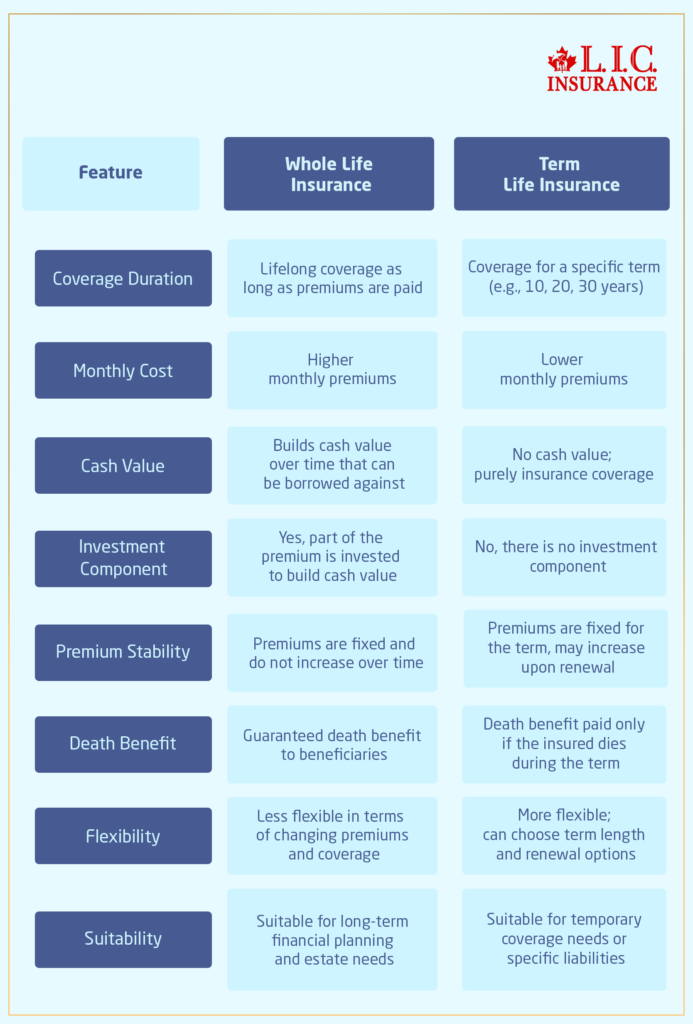
          Your Comprehensive Guide For Money Back Life Insurance

          When you listen to the term money-back, the chances are that you are immediately interested in the matter. There’s no reason why you shouldn’t be, after all, you’re getting back the funds that you have invested in a matter, which means that your investment was fruitful. However, with most insurances, this might not be the case. As you pay your premiums, you do not get them back if you have outlasted the term of the insurance without making a claim. However, you would be glad to know that you can get this amount back if you have chosen Whole-Life Insurance or Universal Life Insurance. Wondering how? Well, read on to find out.

          Your Comprehensive Guide For Money Back Life Insurance

          By Candian LIC,  July 30, 2021, 2 Minutes

          Your Comprehensive Guide For Money Back Life Insurance

          When you listen to the term money-back, the chances are that you are immediately interested in the matter. There’s no reason why you shouldn’t be, after all, you’re getting back the funds that you have invested in a matter, which means that your investment was fruitful. However, with most insurances, this might not be the case. As you pay your premiums, you do not get them back if you have outlasted the term of the insurance without making a claim. However, you would be glad to know that you can get this amount back if you have chosen Whole-Life Insurance or Universal Life Insurance. Wondering how? Well, read on to find out.

          Simplifying Money-Back Life Insurance for you

          When you’re applying for Universal or Whole Life Insurance, you know that the insurance term is so long that it can compare it to your whole life in terms of years. These terms can be anywhere between 90-110 years. You would also know that these policies have a cash-value component that increases over time as you pay your monthly premiums as a part of the premium is contributed to the cash component. However, the remaining percentage of the premium is treated as it is, making you think that you would never get it back.

          You would be pleased to know that you would be getting the premium amount back with these policies if you plan smart when applying for the insurance. While the insurance company is drawing out the contract, customize it and add a money-back clause. Putting this money-back clause would enable you to get back the premium amount at the end of the maturity period. In the unfortunate event of you passing away, your beneficiaries will get the premium amount. The percentage varies depending on the paperwork, and you can discuss this matter with your financial advisor.

          Several advantages of Money-Back Life Insurance

          If you do add a Money-Back or an ROI clause to your insurance contract, there are several advantages that you will benefit from. Have a look at the list below to know what they are:

          Coming back to the money-back clause, you may have to pay a high premium due to this. However, when you weigh in the benefits, you can see for yourself that in the long run, the policy can be a moneymaker; the choice would be up to to you, whether to opt for this or not.

          Get The Best Insurance Quote From Canadian L.I.C

          Call 1 844-542-4678 to speak to our advisors.

          Best Insurance Plans Helpline From Canadian L.I.C

          The above information is only meant to be informative. It comes from Canadian LIC’s own opinions, which can change at any time. This material is not meant to be financial or legal advice, and it should not be interpreted as such. If someone decides to act on the information on this page, Canadian LIC is not responsible for what happens. Every attempt is made to provide accurate and up-to-date information on Canadian LIC. Some of the terms, conditions, limitations, exclusions, termination, and other parts of the policies mentioned above may not be included, which may be important to the policy choice. For full details, please refer to the actual policy documents. If there is any disagreement, the language in the actual policy documents will be used. All rights reserved.

          Please let us know if there is anything that should be updated, removed, or corrected from this article. Send an email to Contact@canadianlic.com or Info@canadianlic.com

          Guide to Term Life Insurance

          Term Life Insurance is an affordable insurance policy that protects a fixed amount and period. The period could be for 10, 20, 30 years or more. This coverage makes sure your future is well-taken care of, no matter the circumstances. At Canadian L.I.C., we offer a wide range of Term Life Insurance policies for you to choose from. Give our team a call today to find out more information. We offer our services to individuals across Brampton and the surrounding areas.

          Guide to Term Life Insurance

          By Candian LIC, July 24, 2021, 5 Minutes

          Guide to Term Life Insurance

          Term Life Insurance is an affordable insurance policy that protects a fixed amount and period. The period could be for 10, 20, 30 years or more. This coverage makes sure your future is well taken care of, no matter the circumstances. At Canadian LIC, we offer a wide range of Term Life Insurance policies for you to choose from. Give our team a call today to find out more information. We offer our services to individuals across Brampton and the surrounding areas.

          Quick and simple process

          Term life insurance is the least expensive and most straightforward policy you can find. To become a policy owner, you do not need to provide any proof of medical health; you need to answer a few questions depending on the coverage you choose. The term of the policy starts from 5 years up to 40 years. The policy will expire after the insured has turned 85 years old. In the event that you outlive your insurance, you have the option to renew your policy. Your premiums will vary depending on your age and lifestyle but are guaranteed to stay the same for the term you have selected. If you sadly pass away within the term period, the amount would be paid to the beneficiaries you mentioned in the insurance policy. For further details, contact Canadian LIC today.

          Why Is Term Life Insurance critical?

          Term Life Insurance provides a security blanket for those families that depend solely on one person for financial support. In the event of your demise, they receive a lump-sum, tax-free amount to help them cover your funeral expenses, as well as to utilize the money as they see fit. It could be paying for your children’s education, maintaining their living standards, and much more. Give us a call today at 416 543 9000. We are available 24/7.

          Affordable insurance coverage

          This type of insurance coverage is suitable for people who need insurance protection for a limited period or a tight budget. It is an excellent option for business owners as this kind of insurance can cover employees for a certain period – for several years or until they retire. Term Life Insurance is an affordable insurance policy option if you are a young adult or a newly married couple.

          Need help with the policies? Give us a call today!

          Choosing the right Term Life Insurance policy to suit your needs can be stressful and complicated. At Canadian LIC, our team of expert insurance advisors will assist you every step of the way, ensuring you make the right decision. You can rest assured that we will educate you on all the options available and only proceed once you are satisfied with the policy. Do not hesitate to speak to our team to schedule an appointment, or call us at 416 543 9000 for further inquiries. We serve customers throughout the Brampton area.

          Term Insurance: What You Should Know

          When it comes to Life insurance, it doesn’t always have to be a life-long commitment. There are several policies that you can choose from, and term insurance is an ideal option. It offers affordable coverage for your significant expenses, so your dear ones are financially protected when it matters.

          As a Life Insurance product, it guarantees a death benefit payout to the stated beneficiary in the contract within a specific period, generally 5-40 years. When you purchase this policy, your coverage amount and premiums will be locked in for the entire term of the policy’s tenure. Additional benefits include the payout being completely tax-free. If you want to know more about Term Insurance, read on.

          How does Term Insurance work?

          The first step is always to do your market research and find a company that can help you make the right decision and meet your insurance requirements. You can get in touch with Canadian LIC, and we will be more than happy to help.

          Get The Best Insurance Quote From Canadian L.I.C

          Call 1 844-542-4678 to speak to our advisors.

          Best Insurance Plans Helpline From Canadian L.I.C

          Some factors that may affect the Insurance cost

          Compared to Whole Life Insurance, Term Life Insurance is more affordable. However, certain factors can affect the expenses of the policy, and these would include:

          Why would you need Term Insurance?

          Term Life Insurance can act as a financial safety net for your family. In the situation of your untimely death, the payoff can cover your mortgage balance, pay the education costs of your children, and much more. You can find out more about the advantages of Term Insurance by getting in touch with the team at Canadian LIC; they are experts in the field.

          They can also help you with several other insurance policies, such as Critical Insurance and Disability Insurance; give them a Call.

          Reasons You Must Invest In A Term Life Insurance Policy

          Buying insurance? Here are the five reasons for you to choose term life insurance plans!

          Adulthood is almost synonymous with having to make a bunch of purchases, such as a life insurance policy. With the wide variety of choices available, it can get hard to decide which plan would work for you.

          Term life insurance may not cross the minds of those willing to make longer commitments for their family, but it allows you to stay in charge of your finances and make changes at a later date.

          5 Reasons A Term Life Insurance Policy Is A Good Investment

          Get The Best Insurance Quote From Canadian L.I.C

          Call 1 844-542-4678 to speak to our advisors.

          Final Thoughts

          Term life insurance is a policy that is not too complex in terms of how it functions. It protects your family’s financial needs in case something happens to you. In your absence, their lifestyle is not compromised as they will receive the lump-sum amount as death benefits. It does not bring in an investment angle or a money-back benefit, making it really simple to understand.

          The workings of policy are not simple; they are equally simple to obtain and keep. The right insurance broker can help you determine the right plan quickly.

          Term life insurance plans in Canada allow you to search for plans that are more affordable. This is because they last only for a pre-determined term and can be closed easily. These plans come with better rates and are often considered an affordable choice compared to other insurance plans.

          The coverage, however the plan sounds simple, is sizeable. Like any other insurance policy plan in Canada, the final sum depends on your financial capability and your broker’s way of dealing with things.

          As a plan that is considered to be affordable, it also provides premium benefits. The premiums are usually very affordable and can be covered even by someone who has just got their first job out of college. And it is always advisable to start a term life insurance plan as soon as you can, in early adulthood.

          A term life insurance policy is a good investment for most of us as it is easy on the pocket and can provide our loved ones with sizeable coverage as well. Get in touch with a term life insurance provider in Canada. Contact Canadian LIC today.

          Get The Best Insurance Quote From Canadian L.I.C
          Call +1 844-542-4678 to speak to our advisors.
          Get Quote Now

          FAQs

          Term Life Insurance policies typically range from 5 to 40 years, depending on the coverage you choose.

          Generally, no medical proof is required, but you may need to answer some health-related questions based on the policy.

          Yes, you can renew your Term Life Insurance policy once it expires or convert it to a permanent life insurance policy.

          Premiums are influenced by factors such as age, health, lifestyle, and occupation.

          Yes, the lump-sum payout from Term Life Insurance can be used for various expenses, including education costs for your children.

          A Level Term Life Insurance Policy offers fixed premiums and a guaranteed death benefit throughout the entire term of the policy.

          The above information is only meant to be informative. It comes from Canadian LIC’s own opinions, which can change at any time. This material is not meant to be financial or legal advice, and it should not be interpreted as such. If someone decides to act on the information on this page, Canadian LIC is not responsible for what happens. Every attempt is made to provide accurate and up-to-date information on Canadian LIC. Some of the terms, conditions, limitations, exclusions, termination, and other parts of the policies mentioned above may not be included, which may be important to the policy choice. For full details, please refer to the actual policy documents. If there is any disagreement, the language in the actual policy documents will be used. All rights reserved.

          Please let us know if there is anything that should be updated, removed, or corrected from this article. Send an email to Contact@canadianlic.com or Info@canadianlic.com

          Why Get Term Life Insurance?

          Sometimes insurance policies can seem out of reach if you are struggling with funds. Take a look at Term Life Insurance for an insurance policy that suits your budget and lifestyle.

          Why Get Term Life Insurance

          By Candian LIC, May 17, 2021, 8 Minutes

          Why Get Term Life Insurance

          Sometimes insurance policies can seem out of reach if you are struggling with funds. Take a look at Term Life Insurance for an insurance policy that suits your budget and lifestyle.

          What is Term Life Insurance?

          Known to be easy to understand and affordable, Term insurance is a plan that keeps your insurance costs the same for a set amount of time (known as the term.) You can renew it at the end of one term to start a new term. If you pass away while your policy is still in effect, the payment will go, tax-free, to your beneficiaries. You can convert this coverage to permanent insurance if you want to, without worrying about health, lifestyle, or occupation changes.

          Benefits of Term Life Insurance

          Things To Know Before Buying Term Life Insurance

          Term life insurance is a policy that pays a death benefit to beneficiaries if the policyholder passes away within a certain period of time or before a certain age is reached. For example, your coverage can be for a fixed time period, or until you reach the age of 85.

          Term Insurance is an easy-to-understand and affordable way to keep your family’s financial situation secure if anything ever happens to you. When you buy a Term Life Insurance policy, you need to decide on three things. You need to decide on the company you prefer, your preferred length of term, and the amount of coverage. You will be covered for the term by paying the premium.

          Your Family Can Use The Funds For:

          Some things you should know before buying Term Life Insurance

          Amount of Coverage: Reviewing your financial goals and figuring out the amount of coverage you need, will help guide you to the right policy. Although working with an Insurance Advisor is recommended, you can add up debts, tuition, and mortgage, subtract what you would pay, and the difference would be the estimated needed coverage.

          Length of Term: You can choose a fixed term, allowing you to easily budget, and save more of, your money. You can choose anywhere from 10 to 50 years of coverage or you can pick a term of coverage as per your need which will cover you for the selected term

          Look Around: You will need to search for the right insurance for you. As with most life insurance policies, your health and other factors play a big role in coverage. Rates will also vary from company to company. An insurance agent can help you find what you need.

          Being Healthy: Although most insurance applications take weeks, and you have to fill out documents, have an exam, and give information if you are healthy, the process can move along quicker. If you don’t have any health conditions, you may be able to have an agent use online applications to approve you quicker than usual. Even if you do have to wait several weeks, you can still get temporary coverage.

          Term Life Insurance is usually more affordable than other plans because it only covers a set term and doesn’t build up cash value. For those who may be struggling financially, Term Life Insurance can give you insurance security without stressing your bank account.

          Why You Must Invest In Term Life Insurance

          If you are looking for affordable life insurance, perhaps you should consider Term Life Insurance. It is set up to keep your family financially stable if you pass away. Paying for such a policy is worth the peace of mind it will bring to you and your family.

          What is Term Life Insurance?

          Term Life Insurance is a very simple plan designed to give death benefits if the policyholder passes away during the plan’s term. This type of plan is a great choice for those who want to secure stability for the family after the policy holder’s death. Term Life Insurance usually has high coverage with affordable premiums. The coverage is set for a certain length of time, usually 10 to 50 years, and once the policyholder passes, the beneficiaries will have a payout from the policy.

          Get The Best Insurance Quote From Canadian L.I.C

          Call 1 844-542-4678 to speak to our advisors.

          Best Insurance Plans Helpline From Canadian L.I.C

          How does It Work?

          The insurance company will pay your beneficiaries the amount you agreed on if you pass away during the policy’s term. You agree to pay a monthly premium to the insurance company for the duration of the term.

          Reasons to Consider Term Life Insurance

          With Term Life Insurance, you can rest easy knowing your family will be financially secure if anything should ever happen to you. Ask about this type of insurance policy today.

          Get The Best Insurance Quote From Canadian L.I.C

          Call 1 844-542-4678 to speak to our advisors.

          The above information is only meant to be informative. It comes from Canadian LIC’s own opinions, which can change at any time. This material is not meant to be financial or legal advice, and it should not be interpreted as such. If someone decides to act on the information on this page, Canadian LIC is not responsible for what happens. Every attempt is made to provide accurate and up-to-date information on Canadian LIC. Some of the terms, conditions, limitations, exclusions, termination, and other parts of the policies mentioned above may not be included, which may be important to the policy choice. For full details, please refer to the actual policy documents. If there is any disagreement, the language in the actual policy documents will be used. All rights reserved.

          Please let us know if there is anything that should be updated, removed, or corrected from this article. Send an email to Contact@canadianlic.com or Info@canadianlic.com

          The Benefits of Whole Life Insurance

          Whole Life Insurance is exactly what it sounds like, a Permanent Insurance policy for your entire life. You and your beneficiaries will be in a permanent financial safety net till the day you pass away, or the term ends. It comes with a fixed premium, which means you won’t have to worry about variable rates now and then. Also, when it isn’t likely that you would opt to renew for another term. You see, for this type of plan, the term ends after 90 or 100 years. However, these shouldn’t be the only reason why you should opt for Whole Life Insurance. That’s why, to give you a clear understanding of what are the additional benefits that come with this policy, we have made a list below. Have a look.

          The Benefits of Whole Life Insurance

          By Candian LIC, June 16, 2021, 4 Minutes

          The Benefits of Whole Life Insurance

          Whole Life Insurance is exactly what it sounds like, a Permanent Insurance policy for your entire life. You and your beneficiaries will be in a permanent financial safety net till the day you pass away, or the term ends. It comes with a fixed premium, which means you won’t have to worry about variable rates now and then. Also, when it isn’t likely that you would opt to renew for another term. You see, for this type of plan, the term ends after 90 or 100 years. However, these shouldn’t be the only reason why you should opt for Whole Life Insurance. That’s why, to give you a clear understanding of what are the additional benefits that come with this policy, we have made a list below. Have a look.

          The Cash Value:

          Similar to permanent life insurance policies, whole life insurance also comes with a cash component which only accumulates over time. It is guaranteed to grow at a particular rate and can be used as an investment vehicle. Additionally, this component is also tax-sheltered throughout its lifetime.

          You can withdraw the cash component at any time and can use it in:

          However, you will have to keep in mind that it will deduct the loan amount from the death benefits if you borrow against the cash value and then pass away.

          Let’s talk dividends:

          If you’ve opted for a dividend-paying whole life insurance policy, there is a chance of a dividend cash-out in case the insurer performs better than expected. As a policyholder, you will be able to participate in the company’s profits after they have paid all death benefits and other business expenses.

          No medical exams:

          Generally, medical exams are not a component of life insurance policies, but they are always in the underwriting. However, choosing a guaranteed acceptance whole life insurance means you will have the option to skip detailed health questions and the medical exam.

          Complete life coverage:

          To reiterate, with whole life insurance, you get a policy for the entirety of your life. You can add your family member or any dear one as your beneficiary, and as long as you can pay the premium, you will reap the policy’s benefits.

          These are to name a few; however, if you’re still not convinced about whether you should apply for this policy, contact Harpreet Puri. She’s an experienced insurance broker and can help you with your queries.

          When Is Whole Life Insurance a Good Investment Strategy?

          Under whole life insurance first

          Well, before we get into the nitty-gritty of the matter, you have to understand what whole life insurance is. Often also referred to as permanent life insurance, this type of insurance is exactly what it says. The policy offers insurance coverage till you the day you die given that you keep on paying the monthly premiums.

          A major feature of a whole life insurance plan is, there is a cash component value to it. If after some years you are not able to pay the premium amounts, the premiums that you have paid would be used to pay the monthly premium amount. This saves you from the headache of losing your insurance coverage.

          Coming to the benefits, whole life insurance has a whole list of them. Some are mentioned below:

          You can find out more about whole life insurance by getting in touch with Canadian LIC.

          When does whole life insurance make sense?

          Applying for whole life insurance sometimes can be an expensive option as you will have to pay the premiums throughout your life. However, in some instances, whole life insurance can be beneficial.

          In the mentioned scenarios, whole life insurance may look like a good option but we advise you to get in touch with financial advisors for a better decision based on your requirements. Contact Canadian LIC and schedule an appointment today.

          Get The Best Insurance Quote From Canadian L.I.C

          Call 1 844-542-4678 to speak to our advisors.

          Best Insurance Plans Helpline From Canadian L.I.C

          The above information is only meant to be informative. It comes from Canadian LIC’s own opinions, which can change at any time. This material is not meant to be financial or legal advice, and it should not be interpreted as such. If someone decides to act on the information on this page, Canadian LIC is not responsible for what happens. Every attempt is made to provide accurate and up-to-date information on Canadian LIC. Some of the terms, conditions, limitations, exclusions, termination, and other parts of the policies mentioned above may not be included, which may be important to the policy choice. For full details, please refer to the actual policy documents. If there is any disagreement, the language in the actual policy documents will be used. All rights reserved.

          Please let us know if there is anything that should be updated, removed, or corrected from this article. Send an email to Contact@canadianlic.com or Info@canadianlic.com
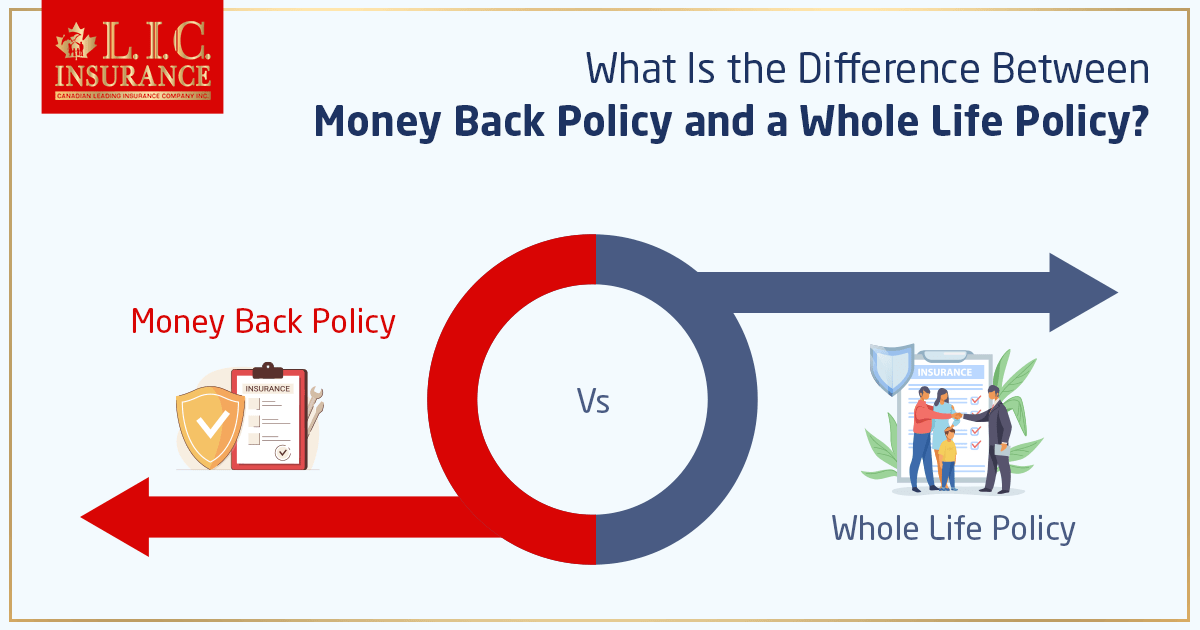
          What Is Life Insurance and How Does It Work?

          Long-term goals: Throughout your life, you may have some dreams or goals that may be a bit difficult for you to achieve based on your financial condition. You will be pleased to know that some insurance policies are tied to certain investments which can help you achieve your goals

          What is life insurance and how does it work

          By Candian LIC, October 27, 2020, 4 Minutes

          Everything You Need to Know About Mortgage Insurance

          Long-term goals: Throughout your life, you may have some dreams or goals that may be a bit difficult for you to achieve based on your financial condition. You will be pleased to know that some insurance policies are tied to certain investments which can help you achieve your goals

          Clearing your debts: Certain life insurance policies can help you in clearing our different types of debts such as auto loans, home loans and more. Don’t leave your family in a financial crisis, choose a life insurance policy today.
          Secure the future of your loved ones even when you are gone: This is one of the major reasons why you should get life insurance. In the event when you pass away, what happens to your family? How will they sustain financially? Life insurance can take care of this matter and see to it that your family has financial stability.

          Business investments: Life insurance policies are not only for you and your family. It can also protect your business from a financial crisis as well. There are two options available; term insurance, which can for a period of 10, 20, 30 years and full life insurance. For further details call us.

          Save on taxes: You can also save on taxes by getting life insurance. The premium that you pay is eligible for tax benefits
          Money back clause: You can add a money-back clause (ROI) in your life insurance agreement which means, you with getting a complete refund of the whole amount at the end of your tenure.

          Who Needs Life Insurance

          How often have you thought about getting life insurance? What were your reasons for passing on the opportunity? If you are wondering if life insurance is for you, now might be the right time. For many, life has brought so many changes in the past year. Maybe now you have a home or family of your own and are beginning a new stage in your life.

          What is life insurance?

          The simplest definition of life insurance is: life insurance is a type of financial coverage that is paid to a beneficiary upon the death of the policy holder (you.) There are various kinds of policies, and it is a good idea to speak to an insurance broker at Canadian LIC to see which one is right for you, your situation and budget. Three simple things you should consider when looking for life insurance are: Dependants, Income, and Financial Responsibilities.

          Why should I get life insurance? Are there any benefits to having a life insurance policy?

          Here are four simple reasons you should get life insurance.

          During this time, everyone has different financial needs, and worries. To find a policy that suits you the best now, is important. With so many policies, there is something for everyone, even those who think they can’t afford this type of insurance. Remember, no one thinks about getting life insurance when things are going well, and they are healthy and young. That, however, is actually the best time to take control and get insurance. Even the smallest, life insurance policy brings peace of mind. You will be comforted knowing you have taken care of your loved ones, no matter what happens in the future.

          Get The Best Insurance Quote From Canadian L.I.C

          Call 1 844-542-4678 to speak to our advisors.

          Reasons to buy life insurance

          Often, you hear someone say how important having life insurance is. Perhaps now you have a home or family of your own and you are beginning a new stage in your life. You may be wondering if life insurance is for you.

          What exactly is life insurance?

          One way of describing it is: life insurance is financial coverage to be paid to a beneficiary upon the death of the policyholder. There are countless types of policies, and it is a good idea to do your homework to see which one is right for you and your situation. Three things to consider when searching for life insurance are income, dependents, and financial obligations.

          Now you may ask, “Why should I get life insurance? Are there any benefits to such a policy?” Below are four reasons you should buy life insurance.

          Everyone has different financial needs, and it is important to find a policy that suits you the best. There are policies for everyone, even those who think they can’t afford life insurance. No one really thinks of getting life insurance when they are young and full of health, but that is the best time to take charge and get some. Life insurance brings peace of mind, even with the smallest policy. It will comfort you knowing your loved ones are taken care of, no matter what, in the future.

          How does it work?

          To understand how a life insurance plan would work for you, we will have to first understand what are the kinds of life insurance plans available.

          1. Term Life Insurance:

          A term life insurance provides coverage only if the person passes away within a specified period of time. With this policy, the end of the term insurance can be set depending on a time duration or as an age limit.

          It involves a consistent requirement of premiums and will be considered void if even one is missed. Term Life Insurance also works only if the event happens within the specified time period. If not, the beneficiaries do not receive any payouts.

          2. Whole Life Insurance

          The second type of coverage works without an age limit or a time period specification. The beneficiaries will be eligible to receive payments as long as you have ensured that the payments are being made at the right time for it.

          Another thing whole life insurance has is the cash value. If you were to sell your whole life insurance, you would be able to get money instead of it. It builds up over time according to your premium payment.

          3. Universal Life Insurance

          Universal life insurance combines the benefit of an investment account with an insurance policy. The value of the policy may wax or wane depending on the kind of investments you have made.

          This type of insurance also holds cash value and it can be used as collateral for a loan.

          The insurance market has a variety of plans that help you curate one which suits your family the best. Taking help from an insurance broker from Canadian LIC Inc and can help you find the right one at the right price with more ease and comfort. They are experienced individuals who know the market like the back of their hand.

          Get in touch with an expert and get your peace of mind. Connect with Canadian LIC for your life insurance today.

          Life Insurance for Children

          Life insurance is for everyone, even children. Although we don’t seem to talk about children needing life insurance, it is a way of protecting an act of love. Even if your children are still dependant on you, there are reasons why such a policy is a good idea. So, let’s see how important children’s life insurance is, and see if it is a great idea for your family.

          As with all life insurance policies, life insurance policies for children are contracts with insurance companies. However, children’s policies are more focused on providing financial protection for the life of the child, but still include protection if the child pre-deceases you. This kind of insurance guarantees long term financial security to a dependant’s child. If your child has a hobby involving risky, such as scuba diving, motocross, or horseback riding, perhaps you should think about getting insurance.

          The Benefits of Children’s life insurance:

          There are several different types of Children’s Life Insurance. One is to have the child be a “rider.” The child “rides” on your policy and is called a term rider. This dependant is added to the parent’s policy. Term riders usually have less coverage, but because of that, are less expensive. Another type of life insurance for children is permanent or Whole Life insurance.  Whole life insurance has lifelong coverage, and is an independent policy that does not have an expiry date. This policy is solely the children.

          Getting life insurance for a child is a big and personal decision to be made, and it’s a decision that requires some discussion and research. To choose the best available option for your family, ask your insurance broker at Canadian LIC to advise you. Let your decision be comfortable knowing you have the best information available to protect your family.

          Get The Best Insurance Quote From Canadian L.I.C

          Call 1 844-542-4678 to speak to our advisors.

          Best Insurance Plans Helpline From Canadian L.I.C

          Tips to save on your life Insurance

          Deciding on life insurance is a big decision. You may feel that you can’t afford to have a good policy, but don’t worry, there are ways to save money while getting the best policy for you and your loved ones. Here are some ideas to help save money on your life insurance.

          There is a policy out there for everyone, and these five simple points will guide you on saving money with your life insurance.

          The above information is only meant to be informative. It comes from Canadian LIC’s own opinions, which can change at any time. This material is not meant to be financial or legal advice, and it should not be interpreted as such. If someone decides to act on the information on this page, Canadian LIC is not responsible for what happens. Every attempt is made to provide accurate and up-to-date information on Canadian LIC. Some of the terms, conditions, limitations, exclusions, termination, and other parts of the policies mentioned above may not be included, which may be important to the policy choice. For full details, please refer to the actual policy documents. If there is any disagreement, the language in the actual policy documents will be used. All rights reserved.

          Please let us know if there is anything that should be updated, removed, or corrected from this article. Send an email to Contact@canadianlic.com or Info@canadianlic.com

          Life Insurance Policy Form