- Connect with our licensed Canadian insurance advisors
- Schedule a Call

Basics
Reviews
Common Inquiries
- Does Critical Illness Insurance Cover Diabetes?
- Can You Claim Twice for Critical Illness Coverage?
- Does Critical Illness Insurance Cover Broken Bones?
- Can I Cancel My Critical Illness Insurance?
- What Cancers Are Not Covered by Critical Illness Insurance?
- Does Critical Illness Insurance Cover Heart Failure?
- Does Critical Illness Insurance Cover Death?
Canada Immigration Policy 2026: What Changed From 2025
SUMMARY
Canada’s immigration policy introduces major reforms, including reduced permanent resident targets (395,000), a 5% cap on temporary residents, removal of job offer points in Express Entry, crackdowns on fraud, limited border permit applications, and tech-driven processing. It boosts Francophone and rural immigration, reforms second-generation citizenship laws, and pauses new parent/grandparent sponsorships. These changes aim for integrity, balance, and strategic growth.
You will get to know the most important updates pertaining to Canada’s 2024 immigration policy. The various updates include the caps applied on international student admissions into the country, stricter rules on financial requirements, changing work permits for spouses as well as students, and further details as to the updates in the Citizenship Act that allow individuals adversely affected by the first generation of the cut-off rule to receive citizenship. The blog addresses improved rules for the Start-up Visa Program, the suspended Self-Employed Persons Program, and a new PR-on-arrival program for caregivers. It also covers innovative work permits for tech professionals, humanitarian policies for conflict zones, and the reopening of the Quebec Immigrant Investor Program. Improved pathways for Francophone immigration, as well as new travel requirements for Mexican nationals, are mentioned. These changes bring both opportunities and challenges and careful planning and informed decision-making will be required to navigate the changing landscape of immigration in Canada in 2024.
- 11 min read
- September 13th, 2024

By Pushpinder Puri
CEO & Founder
- 11 min read
- January 23rd, 2026
Introduction
As we enter 2026, Canada is retooling its immigration architecture, keeping sustainability, integrity, demographics and labour market in mind. The announcements by Immigration, Refugees and Citizenship Canada (IRCC) are big news and a game-changer for the way in which Canada provides immigrants access to its borders and how it deals with permanent and temporary populations. In this article, we dive deeper into the new immigration policy that Canada has in store for 2026 and what you, as potential immigrants, employers, and international students, must know about.
1. Lower Immigration Targets for Permanent Residents
For the first time, compared to earlier projections, Canada has reduced the number of its permanent resident (PR) admissions. A target of 395,000 new PRs in 2025 is established in the Immigration Levels Plan for 2025–2027, lower than previous estimates. This represents a downward adjustment from earlier targets, consistent with Canada’s aim of keeping immigration growth aligned with infrastructure and housing capacity.
Key highlights include:
- Approximately 59%–62% of PRs will be admitted through economic channels, with a focus on health care, STEM, and skilled trades
- Over 40% of new PRs will come from temporary residents already in Canada
- Family reunification accounts for approximately 22%–24% of admissions
- Refugees and protected persons account for around 15%, while humanitarian and other categories represent roughly 1%–3% collectively
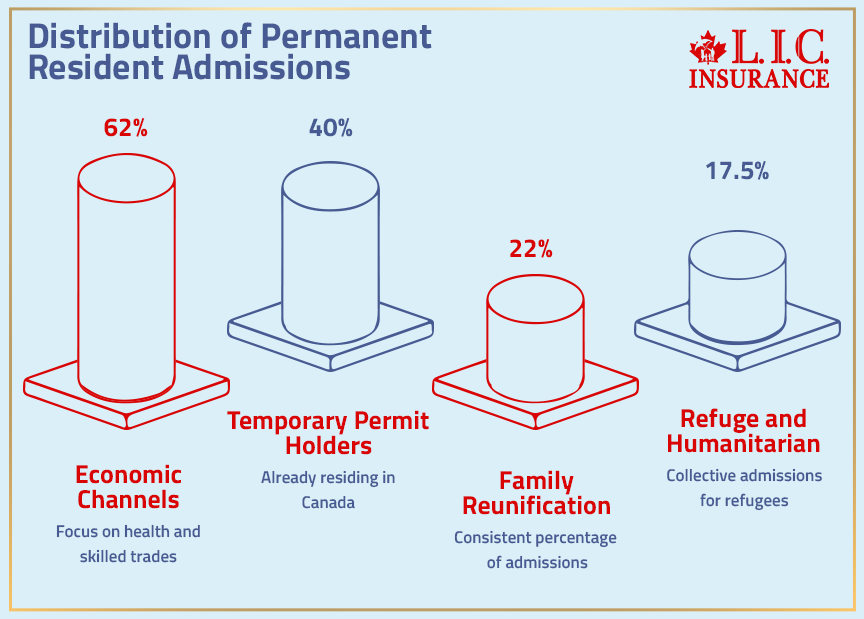
This plan demonstrates Canada’s commitment to help meet the needs of high-need sectors while also reuniting families and honouring the work of refugees.
2. New Cap on Temporary Residents
A major shift in 2025 was Canada’s goal to reduce the proportion of non-permanent residents (NPRs) to 5% of the total population by the end of 2026, rather than applying a strict 5% cap on annual intake. This includes international students and temporary foreign workers.
Target numbers for new temporary resident arrivals:
- 2025: 673,650
- 2026: 516,600
- 2027: 543,600
Canada’s goal is to rebalance the ratio of temporary vs. permanent residents. This move includes stricter rules, such as:
- New intake caps for study permits
- Higher cost-of-living requirements
- Tighter eligibility for work permits for spouses and PGWP holders
These steps aim to curb systemic pressures in housing and public services caused by the recent surge in temporary residents.
How Canada's 2026 Immigration Reset Is Shaping Population Growth And Longevity
Canada’s high life expectancy does not exist in isolation—it is closely tied to who comes to the country, how long they stay, and how well they integrate into the workforce and healthcare system. In 2026, Canada introduced a broad recalibration of its immigration system that directly affects population growth, labour supply, access to healthcare, and long-term demographic sustainability.
Under the Immigration, Refugees and Citizenship Canada 2026–2028 Immigration Levels Plan, the federal government shifted its focus toward stabilizing permanent resident admissions while deliberately reducing the growth of the temporary resident population. The stated goal is to bring Canada’s temporary population below 5% of the total population by the end of 2027, helping ease pressure on housing, healthcare, and social infrastructure—factors that directly influence quality of life and long-term health outcomes.
For 2026, Canada set a target of 385,000 new temporary resident arrivals, followed by 370,000 in both 2027 and 2028. These arrivals include international students and temporary foreign workers under both the International Mobility Program and the Temporary Foreign Worker Program. At the same time, overall permanent resident admissions are set to stabilize at 380,000 annually from 2026 through 2028, with a strong emphasis on economic immigration and provincial nomination programs.
Several policy changes that took effect on January 1, 2026 further reinforce this shift:
- Graduate-level international students (master’s and doctoral programs) are no longer counted under provincial study permit caps, eliminating the requirement for a Provincial or Territorial Attestation Letter. This change prioritizes highly skilled, research-focused newcomers who are more likely to transition into long-term contributors to Canada’s economy and healthcare system.
- Canada’s Start-Up Visa program stopped accepting new applications, as the federal government transitions toward a more targeted entrepreneur pilot. This pause reflects a move away from broad intake toward more controlled, outcome-driven immigration streams.
- Ontario introduced major labour-mobility reforms, allowing professionals certified in other provinces to begin working in Ontario within 10 business days, for up to six months, while completing provincial licensing. This directly supports healthcare, engineering, and skilled-trade sectors critical to maintaining service access for an aging population.
- Ontario also banned “Canadian work experience” as a requirement in job postings, removing a long-criticized barrier for newcomers and accelerating labour market integration—an important determinant of income stability, mental health, and long-term well-being.
Alberta tightened eligibility for its Rural Renewal Stream, requiring valid work permits, in-province residence for lower-skilled roles, capped community endorsements, and shorter endorsement validity. These changes aim to ensure that rural immigration supports sustainable community growth rather than short-term labour gaps.
Together, these federal and provincial measures reflect a deliberate effort to balance population growth with system capacity—ensuring that immigration continues to support economic vitality without eroding access to housing, healthcare, and social services. Over time, this recalibration is expected to play a meaningful role in protecting the very conditions that underpin Canada’s strong life expectancy and overall quality of life.
3. No More Job Offer Points in Express Entry
In a major anti-fraud reform, IRCC officially removed job offer points from the Express Entry Comprehensive Ranking System (CRS) on March 25, 2025. This measure will:
- Deter the misuse and fraudulent sale of Labour Market Impact Assessments (LMIAs)
- Create a more equitable playing field for all applicants
- Focus selection more on individual merit (education, language, experience)
This does not affect candidates who already received Invitations to Apply (ITAs) or had applications in process prior to the change.
4. Immigration Fraud Crackdown
Canada is also proposing changes to the Immigration and Refugee Protection Act, giving IRCC more authority to:
- Cancel or suspend fraudulent immigration documents
- Reject or halt applications during mass fraud investigations
- Penalize bad actors, including consultants or employers exploiting immigrants
This crackdown is aimed at preserving the integrity of the immigration system and protecting vulnerable applicants.
5. Stricter Rules Against Flagpoling
Flagpoling — exiting and re-entering Canada to process permits at the border — was largely eliminated effective December 23, 2024 (11:59 p.m. ET). Under the new rules:
- Most work and study permits must be submitted online
- Only very limited exceptions remain eligible for border processing
This is expected to reduce pressure on border services and ensure consistent processing through official online channels.
6. Boosting Francophone Immigration
Canada continues to expand Francophone immigration outside Quebec with the following targets under the 2025–2027 plan:
- 2025: 8.5%
- 2026: 9.5%
- 2027: 10%
Initiatives include:
- Francophone Community Immigration Pilot launching in 2025
- Expansion of the Francophone Mobility Program
- Express Entry draws focused on French language proficiency
Future level plans may adjust these percentages, but linguistic diversity remains a core objective.
7. New Caregivers and Rural Immigration Pilots
Two major pilot programs are being introduced:
Enhanced Caregiver Pilots:
- Replace the Home Child Care Provider and Home Support Worker pilots that closed in 2024
- Require a qualifying full-time job offer in a home-care occupation
- Provide a streamlined pathway to permanent residence after meeting program requirements
Rural Community Immigration Pilot:
- The follow-up to the successful Rural and Northern Immigration Pilot
- Designed to attract workers to small towns facing labour shortages
Other provincial pilots, such as Manitoba’s West-Central Immigration Initiative, will also support regional employer needs.
8. Changes to Second-Generation Citizenship Laws
As of December 15, 2025, changes to the Citizenship Act addressed the second-generation cut-off for citizenship by descent.
Key updates:
- Canadian children born abroad to parents born outside Canada may now qualify for citizenship
- A “substantial connection” test applies, requiring the Canadian parent to have lived in Canada for at least 1,095 days before the child’s birth or adoption
This reform expands citizenship access while maintaining meaningful ties to Canada.
9. Continued Pause in New Parent and Grandparent Sponsorships
The Parent and Grandparent Sponsorship Program reopened in 2025 with the following structure:
- Invitations were issued starting July 28, 2025
- Selection was drawn from the 2020 interest-to-sponsor pool
- Approximately 17,860 invitations were sent
- The intake aimed to receive 10,000 complete applications
- The submission window closed October 9, 2025
No new interest-to-sponsor forms were opened beyond this process.
10. Tech-Driven Immigration System
Canada continues expanding digital tools to modernize immigration processing, including:
- Increased online application management and digital correspondence
- Broader use of compliance tools such as the CBSA ReportIn app, which allows monitored individuals to confirm identity and location using facial verification and geolocation
These systems improve efficiency while reducing in-person reporting requirements.
11. Federal Court Pilot Projects for Judicial Review
To deal with increasing refusals, the Federal Court of Canada will extend pilot projects that fast-track judicial reviews of failed applications.
This action lines up with the 2024 introduction of the Study Permit Judicial Review Pilot, which brought review times down from 14-18 months to 5 months.
Here, too, are the other programs we could see for:
- Refusals of application for the temporary resident visa
- Work permit refusals
- Applications for Permanent Residence (without the right of appeal to the IRB)
This accommodates a quicker route to justice for applicants confronting unjustified refusals.
Conclusion: What the Policy Means for You
The Canadian immigration news is all about walking the line: not hurting the economy, but at the same time alleviating systemic pressures, risk for fraud, and demographic deficits. With lower immigration goals, stricter temporary resident rules, new pilot programs, and AI-based processing, the year 2026 looks tough yet promising for newcomers.
Whether you are an experienced worker, caregiver, international student, or family member wanting to reunite with a loved one, it is important to be aware of these changes. Credit: Shutterstock Canada remains committed to immigration as a key driver of its future, but the ways in which we’ll get there, increasingly, are becoming more strategic, selective, and digitally managed.
Stay tuned and consult a professional immigration adviser to see which path aligns with your own aspirations under Canada’s shifting model.
FAQs
The main change is a reduction in both permanent and temporary resident targets. Canada aims to admit 395,000 permanent residents in 2025, and significantly reduce the overall proportion of non-permanent residents to 5% of Canada’s population by the end of 2026, under a multi-year plan.
Canada is adjusting immigration levels to balance economic needs with housing, infrastructure, and public services. The government is also addressing fraud concerns and managing the growing temporary resident population.
No. As of March 25, 2025, Express Entry candidates no longer receive extra points for job offers. This change aims to reduce fraud related to fake LMIA job offers and refocus the system on qualifications and merit.
Canada capped new temporary resident arrivals at 673,650 in 2025. This includes international students and temporary foreign workers, excluding tourists and short-term visitors.
Yes. Canada launched enhanced caregiver pilot programs and a new Rural Community Immigration Pilot to attract workers to small towns facing labour shortages.
However, some caregiver permanent-residence intake streams were paused or adjusted in 2026 due to very high application volumes.
Canada is targeting 8.5% of all permanent residents outside Quebec to be French-speaking in 2025. New programs include the Francophone Community Immigration Pilot and targeted Express Entry draws for French speakers.
As of December 15, 2025, Bill C-3 removed the rule that limited citizenship to the first generation born abroad. A “substantial connection test” now applies, requiring parents to have lived in Canada for 1,095 days before the child’s birth or adoption.
Sources and Further Reading
Below are direct links to authoritative sources and further reading referenced in the blog about Canada’s 2025 immigration policy:
Official Government and Policy Documents
- Immigration, Refugees and Citizenship Canada (IRCC): Supplementary Information for the 2025–2027 Immigration Levels Plan
- Bill C-71: Amending the Citizenship Act (Parliamentary Budget Officer)
News and Analysis
- ICEF Monitor: Canada’s new government strikes a more conservative note on immigration
These links provide in-depth coverage, official updates, and expert analysis for anyone seeking to understand or follow the latest developments in Canadian immigration policy for 2025.
Key Takeaways
- Canada’s 2025 Immigration Levels Plan reduces permanent resident admissions to 395,000, focusing on economic streams like health care and skilled trades.
- A new cap limits temporary residents to 5% of the population, with stricter rules for international students and foreign workers.
- Express Entry job offer points will be removed in spring 2025 to address fraud and ensure fairer selection based on merit.
- IRCC gains new powers to cancel fraudulent applications and penalize those who exploit the immigration system.
- Flagpoling for work and study permits is now restricted; most permits must be applied for online.
- Francophone immigration targets increase, supported by new pilot programs and category-based Express Entry draws for French speakers.
- New pilot programs include enhanced caregiver pathways offering PR on arrival and a Rural Community Immigration Pilot.
- Second-generation citizenship rules are changing through Bill C-71, ending the first-generation cut-off with a new substantial connection test.
- The Parents and Grandparents Program remains limited to 2024 applications, with no new intake announced for 2025.
- AI and tech tools like the ReportIn app and a centralized applicant portal are being expanded for faster, more transparent processing.
- The Federal Court is streamlining judicial reviews with faster timelines for refused visa and permit applications.
- The Federal Court is streamlining judicial reviews with faster timelines for refused visa and permit applications.
Your Feedback Is Very Important To Us
We’d love to hear from you! Your responses will help us understand the challenges people face when searching for accurate information about Canada’s new immigration policy for 2025. Please take a moment to fill out this short questionnaire.
✅ Thank you for your time!
Your feedback will help us create better, clearer content and resources to support your immigration journey.
IN THIS ARTICLE
- Canada Immigration Policy 2026: What Changed From 2025
- Lower Immigration Targets for Permanent Residents
- New Cap on Temporary Residents
- No More Job Offer Points in Express Entry
- Immigration Fraud Crackdown
- Stricter Rules Against Flagpoling
- Boosting Francophone Immigration
- New Caregivers and Rural Immigration Pilots
- Changes to Second-Generation Citizenship Laws
- Continued Pause in New Parent and Grandparent Sponsorships
- Tech-Driven Immigration System
- Federal Court Pilot Projects for Judicial Review
- Conclusion: What the Policy Means for You
Sign-in to CanadianLIC
Verify OTP