- Connect with our licensed Canadian insurance advisors
- Shedule a Call


BASICS
- Is Infinite Banking A Smart Financial Strategy?
- Understanding the Infinite Banking Concept
- Why Infinite Banking Appeals to Canadians Seeking Financial Freedom
- How Infinite Banking Strategy Helps Build Financial Independence
- Challenges and Misconceptions About Infinite Banking
- Who Should Consider Infinite Banking for Financial Freedom?
- How to Start Your Infinite Banking Journey
- Key Advantages of the Infinite Banking Strategy
- A Day-to-Day Struggle: Why More Canadians Are Exploring Infinite Banking
- Potential Drawbacks You Should Know
- The Future of Infinite Banking in Canada
- Is Infinite Banking a Smart Financial Strategy?
COMMON INQUIRIES
- Can I Have Both Short-Term and Long-Term Disability Insurance?
- Should Both Husband and Wife Get Term Life Insurance?
- Can I Change Beneficiaries on My Canadian Term Life Policy?
- What Does Term Life Insurance Cover and Not Cover?
- Does Term Insurance Cover Death?
- What are the advantages of Short-Term Life Insurance?
- Which Is Better, Whole Life Or Term Life Insurance?
- Do Term Life Insurance Rates Go Up?
- Is Term Insurance Better Than a Money Back Policy?
- What’s the Longest Term Life Insurance You Can Get?
- Which is better, Short-Term or Long-Term Insurance? Making the Right Choice
IN THIS ARTICLE
- What is the minimum income for Term Insurance?
- How Does Income Affect Your Term Life Insurance Policy?
- Can You Buy Term Life Insurance Online with a Low Income?
- How Can You Lower Your Term Life Insurance Cost?
- How Much Term Life Insurance Do You Need?
- Can Your Term Life Insurance Policy Be Adjusted Over Time?
- Why Term Life Insurance Is Ideal for Lower-Income Canadians
- Final Thoughts
- More on Term Life Insurance
Short-Term vs. Long-Term Disability Insurance in Canada: Key Differences You Should Know in 2026

By Harpreet Puri
CEO & Founder
- 12 min read
- March 25th, 2026
SUMMARY
Understand the differences between a Short Term Disability Insurance policy and a Long Term Disability Insurance Plan in Canada for 2026. It covers how benefit periods, elimination times, and Disability Insurance Coverage vary, factors affecting Disability Insurance costs, and why combining both plans ensures complete income protection. It also highlights options for Disability Insurance for self-employed Canadians and tips for managing claims effectively.
Introduction
For the majority of Canadians, disability is something that only happens to other people. But national numbers paint a different picture. More than one-quarter (somewhere around eight million) of Canadians aged 15 years and over report living with at least a single disability that restricts daily life. And for employed Canadians, that could be months or even years without any kind of income. When injury or illness prevents you from working, bills still need to be paid, the mortgage needs to be covered, and groceries have to be bought, as well as your other family obligations. Disability Insurance is your lifeline to keep an income disaster from becoming a financial catastrophe.
We’ve learned from firsthand experience how thoughtful Disability Insurance Planning creates a foundation of financial security for families and self-employed professionals. But knowing Short Term Disability Insurance and Long Term Disability Insurance — and how they interact — is key to ensuring you receive protection that’s the right match for you. Let’s break it all down.
What Disability Insurance Actually Does
Disability Insurance — also known as Disability Income Insurance — covers you with a portion of your income in the event that illness or injury prevents you from working for a living. It offers financial support in the form of direct payments, typically replacing 60 to 70 percent of your pre-disability income, depending on the insurance company and the specific terms of your policy.
The idea is pretty straightforward: to help ensure your financial stability when you are unable to earn a living. While every plan is different, there are two main nuggets at the heart of most Disability Insurance policies: a benefit period (how long you will receive money) and an elimination period (how long between when you apply for benefits and when they kick in). Knowing how these periods compare across Short Term Disability Insurance and Long Term Disability Insurance is crucial.
Defining Short-Term and Long-Term Disability Insurance
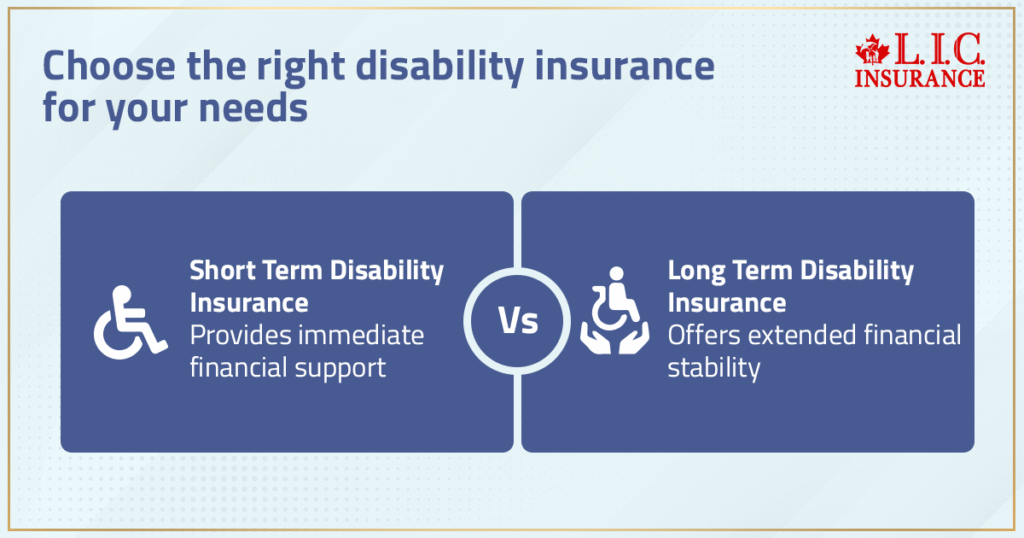
Short-Term Disability ( STD ) Insurance Policy
- Covers temporary illnesses or injuries that prevent work for a limited time—typically three to six months.
- The benefits begin soon after the elimination period, often just a few days or a couple of weeks.
- Payouts may cover up to 70 percent of pre-disability income, providing immediate relief during recovery.
- Common reasons for Short-Term disability claims include pregnancy, minor surgeries, and short recovery periods after accidents.
Long-Term Disability ( LTD ) Insurance Plan
- Designed for extended periods—years or even until retirement age.
- The elimination period is longer—usually 90 days or more.
- Replaces 40–70 percent of your regular earnings for an extended period when disability persists.
- Addresses severe illnesses, mental-health conditions, or major injuries that prevent returning to work for years.
These distinctions define how the two coverage types work in tandem. When Short-Term disability benefits end, Long-Term disability benefits often begin, ensuring you’re not left stranded.
Comparing Benefit Periods and Coverage Levels
Benefit Periods
Disability Insurance Coverage is available from three to six months with a short-term policy. Under a Long Term Disability Insurance, benefits may be paid for five years, ten years, or twenty years, or up to age 65. That’s why it all boils down to time horizon — STD protects near-term recovery while LTD takes care of you for extended disability.
Coverage Levels
Short-term plans typically have a higher percentage of coverage since they are only for a shorter duration. Long Term Coverage tends to pay a lower percentage but for up to decades. When you design protection, think about that income replacement amount that will actually keep your household afloat.
Elimination Period
That period is called the elimination or waiting period, which is a time before your policy begins paying benefits. Short-Term Protection turns on in a matter of weeks, while long-term goals take months. Determining the proper elimination period can affect not only cost but also how soon you’ll receive benefits.
Why Most Canadians Need Both
Relying on just one form of coverage is risky. A Short Term Disability Policy protects you immediately after illness or injury, covering the gap before Long Term Disability benefits begin. Without LTD coverage, once STD ends, you may face financial hardship. Conversely, an LTD plan without STD leaves you unprotected during the waiting months before the long-term disability claim pays out.
Together, they create seamless protection:
- STD provides coverage for the initial weeks or months.
- LTD maintains income replacement if the disability persists.
Think of it like teamwork: one steps in right away, the other stays for the long haul. Both protect your financial support system when your normal income stops.
Disability Insurance Costs and How They’re Calculated
Premiums depend on several factors:
- Occupation and Job Duties – Higher-risk jobs cost more because injury likelihood rises.
- Elimination Period – The shorter the waiting period, the higher the premium.
- Benefit Period – Longer coverage equals higher cost.
- Coverage Amount – The more of your income you insure, the higher your Disability Premium.
- Medical Evidence – Pre-existing conditions or insufficient medical evidence can increase premiums.
- Own Occupation vs. Any Occupation – An “own-occupation” definition costs more because benefits may be payable even if you are capable of working in another role outside your profession.
Most insurance companies and brokers offer a Disability Insurance cost calculator to model how these variables affect price. We use multi-carrier comparisons to show how adjusting your waiting period or benefit duration can lower cost while maintaining strong Disability Coverage.
Self-Employed Canadians: Mind the Coverage Gap
For self-employed individuals, there’s no employer’s group plan or paid sick leave. Without coverage, even a brief injury can threaten your business and personal income. Yet roughly three-quarters of self-employed Canadians lack any Disability Insurance Coverage at all.
Here’s why Disability Insurance for self-employed professionals is non-negotiable:
- It ensures income replacement if illness prevents you from running operations.
- It helps cover business debts and living expenses.
- You can tailor elimination periods to cash-flow patterns.
- Premium deductibility depends on policy design, benefit taxation, and business structure, and should be reviewed with a qualified tax advisor.
- As brokers, we see too many entrepreneurs rely solely on employment insurance sickness benefits, which are capped and time-limited, making them insufficient for long-term income protection.
- Premiums may qualify as deductible expenses depending on your business structure.
As brokers, we see too many entrepreneurs rely solely on employment insurance sickness benefits, which cap payments and last only 26 weeks. Private Disability Insurance policies provide far stronger, longer-lasting protection.
What Group Insurance Plans Cover—and What They Don’t
If you’re employed full-time, you may already have coverage through your Employer’s Group Insurance Plan. That’s a solid foundation, but it rarely replaces your full income.
Common limitations include:
- Coverage capped at 50–60 percent of income.
- Benefits end at age 65.
- Loss of coverage when you leave the employer.
- Narrow “any occupation” definitions that restrict eligibility.
Individual Disability Insurance is a Group Policy that can be supplemented to guarantee continuity in case you change jobs or enter into business. There are also individual policies that may have flexible partial disability benefits and shorter elimination.
Filing a Disability Claim Successfully
The power of a policy is just as mighty as its power to be claimed. The factors that usually gauge approval are as follows:
- Extensive Medical Records: your full medical history, laboratory tests, and doctor records, which demonstrate your health conditions.
- Description of Job Duties: how the job duties fit in the definition of the own occupation.
- Regular Timeline: one should hand over forms during the stipulated time frame and observe the waiting time.
- Evidence of Functional Limitation: How does the condition prevent you from doing your work activities?
Lots of disability claims are denied due to inadequate medical documentation, evidence, or missing paperwork. It would be easier to work with an experienced disability lawyer- particularly when you have to appeal.
We also take clients through claim reviews, and this is so that no delays take place due to improper submission of medical evidence.
Common Pitfalls to Avoid
- Relying Only on Short-Term Coverage – Once STD benefits end, you may have no income if recovery takes longer.
- Underestimating the Elimination Period – Too short means high premiums; too long can cause debt during the gap.
- Assuming Group Coverage Is Enough – Employer plans often lack portability and comprehensive protection.
- Confusing Own Occupation and Any Occupation – The wrong definition can mean no benefits.
- Ignoring Mental Health Conditions – LTD benefits for mental health may require extra proof or periodic reviews.
- Not Reviewing Policy Renewals – Failing to update coverage as income grows leaves gaps later.
Determining How Much Coverage You Need
Begin by estimating what you earned before you became disabled and write down some of the most important monthly expenditures – mortgage, rent, utilities, groceries, transportation, and childcare. Include the possible medical expenses or therapy costs in the process of recovery. The idea is to live comfortably without spending savings.
Then consider:
- How long could you cover expenses without income?
- Do you have emergency savings for the elimination period?
- What’s the impact if a disability extends for years?
- How does the policy coordinate with Canada Pension Plan disability benefits or other programs?
Run those figures through a Disability Insurance cost calculator or request a Disability Insurance quote online through a licensed broker. Adjust the benefit period, elimination period, and coverage amount until the premium fits comfortably in your budget.
Understanding Income Taxes and Benefit Payments
Another frequently misunderstood area is taxation.
- If your employer pays your premiums, the disability benefits you receive are taxable.
- If you pay premiums personally, the benefits are usually tax-free income.
Proper tax planning with your advisor ensures you don’t face surprises while receiving LTD benefits.
When a Disability Persists Beyond Expectations
Long-term disabilities can reshape life plans. Extended periods without income can force early retirement or significant lifestyle changes. To prevent that, choose a Long Term Disability Insurance Plan period aligned with your career timeline—ideally to retirement age. That ensures a steady disability income even if recovery takes years.
The 2026 Outlook for Disability Insurance in Canada
Canada’s demographic shift—aging workers, higher chronic illness rates, and rising mental-health claims—has insurers re-evaluating pricing and eligibility. Here’s what brokers and clients should expect:
- Growing Demand for Long-Term Coverage: More Canadians seek LTD insurance as employers scale back group plans.
- Premium Adjustments: With more claims per capita, some insurance companies are tightening underwriting rules.
- Flexible Plans for Gig and Remote Workers: The rise of self-employment means more individual Disability Insurance options with custom waiting periods.
- Focus on Mental Health Conditions: Policies now include broader definitions of mental illness and stress-related disabilities.
- Technological Improvements: Online applications and digital medical evidence submission streamline claim handling.
Key Differences at a Glance
| Feature | Short-Term Disability | Long-Term Disability |
|---|---|---|
| Benefit Period | 3–6 months | 5 years to retirement age |
| Elimination Period | A few days to 2 weeks | 90 days or more |
| Income Replacement | 60–75 percent | 40–70 percent |
| Coverage Scope | Temporary illness or injury | Extended or permanent disability |
| Premium Cost | Lower overall | Higher due to longer benefit |
Practical Example
Think of a professional earning $6,000 per month. She’s unable to work for eight months after an accident. Her short-term disability pays 70 percent of her income — $4,200 per month — for the first six months. After those STD benefits expire, her long-term disability plan steps in and continues payments at 60 percent for two more months until she returns to health. If both plans don’t coordinate, she would have a two-month gap in her income.
The Role of a Disability Lawyer and Broker Support
Sometimes claims require legal help. A disability lawyer can advise if a claim is unfairly denied or delayed. We recommend clients document every communication, maintain consistent medical updates, and seek a free consultation before appealing a denial. Our brokers coordinate with legal and medical experts to simplify that process.
Final Perspective
You can’t predict life, but you can plan for it. Your ability to earn is your most valuable asset — and a robust Disability Insurance policy safeguards it. Both employed professionals who are offered coverage by their employer, as well as self-employed workers looking for Disability Insurance policies, have access to a hybrid short-term/long-term split of the two markets. Don’t wait for an injury or illness to demonstrate the value of that safety net. Receive guidance, compare quotes, and tailor your coverage for 2026 and beyond.
Get The Best Insurance Quote From Canadian L.I.C
Call +1 416-543-9000 to speak to our advisors.
Get Quote Now
FAQs
A successfully executed Disability Insurance Plan offers more than cash – it keeps your lifestyle stable. It protects your savings, preserves loan payments, and aids in a recovery without depleting investments. Many of our clients use it to ensure financial stability as they concentrate on healing.
Freelancers and the self-employed typically do not qualify for employment insurance or workplace sickness benefits. A personal disability income insurance policy fills that gap by replacing a portion of your income when you are sick or injured and unable to work. It’s a form of financial protection and business continuity all in one policy.
Medical evidence is the lifeblood of a long-term disability claim. It verifies the diagnosis, the progress of the treatment, and your work restrictions. Clear and consistent medical evidence can prevent claim disputes and help you be “approved faster” for long-term disability benefits pursuant to your insurance company’s review process.
The cost of Disability Insurance varies depending on the level of risk in your profession, the days of elimination period, and the duration of benefit. The premium is usually higher if you have a high-risk occupation or a shorter waiting period. Visitors can compare short-term vs. long-term coverage before contacting us for a Disability Insurance quote online, with tools like our Disability Insurance cost calculator available then.
Yes. A disability lawyer addresses all legal and medical requirements in your claim, especially when an insurer raises eligibility issues. They compile comprehensive medical evidence, conform it to policy language, and guide you through your benefit access process with a minimum of stress and no long appeals.
The definition of mental disorder has been expanded in contemporary Disability Insurance Policies. Short-term and long-term plans both acknowledge depression, anxiety, and burnout as legitimate claims with proper professional medical documentation in place, so that, financially, there is parity while you recover.
Canada Pension Plan disability benefits are a government baseline of sorts, to provide just enough to get by; private Disability Insurance tailors to higher and faster. The two complement each other for many Canadians, with the CPP providing minimum support and private coverage offering more comprehensive financial protection.
Long-term disability payments are generally payable until 65 years of age or the policy’s retirement age, as stipulated in the policy. Some long-duration policies provide even more coverage, should a disability continue to disrupt income needs at that stage of the worker’s career.
If there is not sufficient medical evidence, the insurance company will delay or deny payment. By submitting detailed doctor reports, treatment notes, and functional-capacity assessments early in the process, you can build your file while shortening the claim timeline on both Short Term Disability Insurance and Long Term Disability Insurance.
We review several Disability Insurance options from the industry’s best providers, looking at coverage amounts, periods, and elimination periods. Our experts assist customers in striking a balance between affordability and protection until each online Disability Insurance quote mirrors their income aspirations and risk tolerance.
Sources and Further Reading
- Understanding Disability Insurance Coverage in Canada
https://www.canadianlic.com/disability-insurance-coverage-in-canada - How to Continue Your Critical Illness Insurance After Leaving Your Job in Canada
https://www.canadianlic.com/continue-critical-illness-insurance-after-leaving-job-canada - Is It Time to Improve Long-Term Disability Insurance for Older Workers in Canada?
https://www.canadianlic.com/improve-long-term-disability-insurance-for-older-workers-canada - How to Fight Back Against Denied Disability Benefits and Win Your Appeal
https://www.canadianlic.com/fight-denied-disability-benefits-appeal - Best Disability Insurance Policies in Canada for 2026
https://www.canadianlic.com/best-disability-insurance-policies-in-canada - Critical Illness Riders vs. Critical Illness Insurance — Which One Should You Choose?
https://www.canadianlic.com/critical-illness-riders-vs-critical-illness-insurance - How to Protect Your Income and Family with a Long-Term Disability Insurance Plan in Canada
https://www.canadianlic.com/long-term-disability-insurance-plan-in-canada - Short-Term Disability Insurance Policy Options for Self-Employed Canadians
https://www.canadianlic.com/short-term-disability-insurance-for-self-employed-canadians
Key Takeaways
- Both plans matter: A Short Term Disability Insurance Policy provides quick income replacement for a few months, while a Long Term Disability Insurance Plan protects your income for years or even until retirement.
- Timing is key: Short-Term benefits begin after a brief elimination period, while long-term disability benefits usually start after 90 days or more.
- Coverage differs: Short-Term Policies replace a higher percentage of income for a shorter period, while long-term policies cover a lower percentage over an extended period.
- Cost depends on structure: Factors such as occupation, waiting period, benefit period, and health influence your Disability Insurance cost.
- Self-employed individuals need extra planning: Without employer coverage, Disability Insurance for self-employed Canadians becomes critical to maintain business and personal income stability.
- Documentation drives approval: Strong medical evidence and accurate job details improve approval chances for both short-term and long-term disability claims.
- Combination provides full protection: Using both policies ensures seamless income protection if a disability persists beyond initial recovery.
- Tax and policy awareness matter: Understanding how premiums and benefits interact with tax rules and the Canada Pension Plan helps you design a financially efficient insurance strategy.
- Professional advice helps: A trusted advisor can compare multiple Disability Insurance Plans and provide a tailored Disability Insurance quote online suited to your income goals and coverage needs.
Feedback Questionnaire:
We value your opinion and experience. Please take a minute to share your thoughts so we can help Canadians better understand and choose the right Short Term and Long Term Disability Insurance Plans for their needs.
Thank you for sharing your insights! Your feedback helps us guide more Canadians toward the right balance between short-term and Term Disability Insurance Coverage for lasting financial security.
IN THIS ARTICLE
- Short-Term vs. Long-Term Disability Insurance in Canada: Key Differences You Should Know in 2026
- What Disability Insurance Actually Does
- Defining Short-Term and Long-Term Disability Insurance
- Comparing Benefit Periods and Coverage Levels
- Why Most Canadians Need Both
- Disability Insurance Costs and How They’re Calculated
- Self-Employed Canadians: Mind the Coverage Gap
- What Group Insurance Plans Cover—and What They Don’t
- Filing a Disability Claim Successfully
- Common Pitfalls to Avoid
- Determining How Much Coverage You Need
- Understanding Income Taxes and Benefit Payments
- When a Disability Persists Beyond Expectations
- The 2026 Outlook for Disability Insurance in Canada
- Practical Example
- The Role of a Disability Lawyer and Broker Support
- Final Perspective
Sign-in to CanadianLIC
Verify OTP