Canadianlic

Is Life Insurance Worth It After 70?

The subject of Life Insurance frequently starts discussions about future plans, security, and finances. As we get older, more and more people wonder if they really need Life Insurance. Life Insurance for seniors is a big topic of conversation in Canada. Many people wonder if buying this kind of insurance after the age of 70 is worth it. We’ll talk about everything you need to know about Life Insurance for seniors in Canada in this blog. Our goal is to clear up any confusion and help you make the correct decision for yourself.

Is Life Insurance Worth It After 70?

By Pushpinder Puri, January 22, 2024, 9 Mins

Is Life Insurance Worth It After 70

The subject of Life Insurance frequently starts discussions about future plans, security, and finances. As we get older, more and more people wonder if they really need Life Insurance. Life Insurance for seniors is a big topic of conversation in Canada. Many people wonder if buying this kind of insurance after the age of 70 is worth it. We’ll talk about everything you need to know about Life Insurance for seniors in Canada in this blog. Our goal is to clear up any confusion and help you make the correct decision for yourself.

Time to Understand Life Insurance for Seniors

Life Insurance is basically a cushion of protection for your finances that gives a lump sum payment, called a death benefit, to the policyholder’s family members when they die. It’s intended to reduce loved ones’ financial burden at an especially difficult time.

It’s common for people to think that Life Insurance is mostly for young and middle-aged people, but there are times when adults may benefit from having a policy that suits their needs.

Factors to Consider: Making Sense of Life Insurance After 70

The first thing we need to do as we learn about Life Insurance after age 70 in Canada is to understand the things that can affect our choices. Let’s break these things down in simple terms so that everyone, even those who don’t know much about insurance, can understand how important each one is.

Financial Obligations:

Imagine yourself in this situation: after living your entire life, you’re wondering, “Do I have any financial obligations or outstanding debts?” If the answer is yes, then Life Insurance could help you with your financial needs. Why? You can think of it as an assurance that keeps your family from having to deal with heavy debts or responsibilities.

When you die, your loved ones will have a better idea of what to do next. A Life Insurance policy can protect them from unforeseen circumstances, help in settling debts, and take care of any unresolved issues.

Estate Planning:

Let’s look at the bigger picture now, which is your estate. Estate planning isn’t just for people with a lot of money; it’s a smart move that makes sure your assets are spread the way you want them to be. This is where Life Insurance shines, as it is very important in this financial planning game.

Consider Life Insurance to be a vital component that gives your estate liquidity. It’s like having extra money saved up to pay for taxes or other costs. This will make the transfer of your assets to the beneficiaries go more smoothly. By including Life Insurance in your estate plan, you ensure that your loved ones will be financially secure after you die.

Funeral Expenses:

Let’s face it: whether you like it or not, nobody wants to think about their own death. Still, it is a responsible and humane thing to think about the unavoidable. The funeral is one of the most expensive things that needs to be done after someone dies. In these situations, Life Insurance can save your family a lot of money.

Think of Life Insurance as a financial roof that protects your family from funeral costs. By getting insurance, you can make sure that your family doesn’t have to deal with unexpected financial stress during a time that is already hard for them mentally.

Health Conditions:

Health issues might be concerning, particularly when it comes to getting Life Insurance. Some adults may worry that their health will limit the types of coverage they can get. The truth is that people with health problems may have slightly higher rates, but there are still good options out there.

See Life Insurance as an impartial preventative measure that does not take a patient’s health into account. Some plans will cover people even if they already have a health problem. This can give people who are worried about their health mental peace.

Family Dependence:

Lastly, a Life Insurance policy is a great way to make sure your family is taken care of financially if you die. This is especially true if you have children or a spouse who depends on your income. Protecting the future of the people you care about is just as important as protecting your own.

Life Insurance is capable of safeguarding your family’s finances if you die. It makes sure that they can keep up their standard of living even if you’re not around to help. They won’t have to give up the comforts and safety you’ve worked hard to provide them with.

Life Insurance Policies for Seniors in Canada

Life Insurance for seniors in Canada comes in various shapes and sizes, catering to the diverse needs and preferences of individuals entering their senior years. Understanding the key differences between Term Life Insurance, Whole Life Insurance, and Guaranteed Life Insurance is crucial in making an informed decision that aligns with your specific circumstances.

Term Life Insurance: A Budget-Friendly Option

Let’s start with Term Life Insurance policies. It keeps you safe for a certain amount of time, like 10, 20, or 30 years. It’s like buying security for a certain amount of time. So the seniors who want simple, affordable coverage will like this type of Life Insurance policy the most.Know why to get term life insurance in depth here.

One of the significant advantages of Term Insurance policies is their cost-effectiveness. The premiums tend to be lower compared to other types of policies, making it an accessible option for seniors on a budget. However, it’s important to note that, unlike some other policies, Term Insurance doesn’t build cash value over time. It’s very simple – you pay for the coverage during the term, and if you pass away within that period, the death benefit is paid out to your beneficiaries.

Click here to know- Can you cash out term life insurance?

Whole Life Insurance: Lifelong Protection with Added Benefits

Moving to a Whole Life Insurance plan is a lifelong companion when it comes to financial protection. Unlike Term Life Insurance, Whole Life Insurance covers you for all of your life by providing lifetime coverage. It’s not just a temporary coverage; you’re making a long-term promise to keep your family safe.

Yes, the premiums for Whole Life Insurance are higher, but here’s the trade-off – it accumulates a cash value over time. This cash value is like a savings account within your policy. It grows gradually and can be borrowed against or withdrawn when needed. So, not only are you ensuring a financial safety net for your family, but you’re also building a financial asset that can be tapped into during your lifetime.

Whole Life Insurance offers a level of stability and permanence that appeals to many seniors. It’s a complete package that combines the benefits of protection and savings, providing a holistic approach to financial planning.

Go here if u want to know the – Biggest risk of Whole Life Insurance

Aspect Term Life Insurance Whole Life Insurance
Coverage Duration Provides coverage for a specific term (e.g., 10, 20, or 30 years). Offers lifelong coverage, ensuring protection for the entire duration of the policyholder’s life.
Commitment Temporary coverage for a specified period. Signifies a long-term commitment to financial protection, providing coverage throughout the policyholder’s lifetime.
Premiums Generally lower compared to Whole Life Insurance. Higher premiums due to lifelong coverage and cash value accumulation.
Cash Value Does not accumulate cash value. Accumulates a cash value over time, acting as a savings component within the policy.
Flexibility Limited flexibility, and once the term ends, coverage ceases. Offers flexibility with the option to borrow against or withdraw from the cash value during the policyholder’s lifetime.
Financial Planning Approach Primarily focused on temporary needs and affordability. Combines protection and savings, providing a holistic approach to financial planning.
Suitability Suitable for individuals with temporary financial obligations. Appeals to those seeking lifelong coverage, financial stability, and a long-term financial asset.

Guaranteed Life Insurance: Bridging Gaps for Seniors with Health Concerns

Now, let’s turn our attention to guaranteed acceptance of life insurance, specifically for seniors facing health concerns. The beauty of Guaranteed Life Insurance is that it typically doesn’t require a medical exam. This feature makes it accessible to individuals who may find it challenging to secure coverage elsewhere due to pre-existing health conditions.

Even though not having to go through a medical test makes the application process easier, it’s essential to be aware that premiums for Guaranteed Life Insurance are higher. It’s also possible that the coverage amounts are less than with term or Whole Life Insurance. For seniors whose health prevents them from getting regular insurance, the ease and accessibility it offers are worth the sacrifice.

Aspect Guaranteed Life Insurance Term Life Insurance Whole Life Insurance
Target Audience Seniors facing health concerns. Generally applicable to individuals seeking temporary coverage. Generally applicable to individuals seeking lifelong coverage.
Medical Exam Requirement Typically does not require a medical exam. May require a medical exam as part of the underwriting process. May require a medical exam, especially for higher coverage amounts.
Premiums Higher premiums compared to term and Whole Life Insurance. Lower premiums, making it a more affordable option. Higher premiums due to lifelong coverage and cash value accumulation.
Coverage Duration Provides coverage for the entire lifetime of the policyholder. Covers a specific term, e.g., 10, 20, or 30 years. Provides lifelong coverage.
Cash Value Generally does not accumulate cash value. Does not accumulate cash value. Accumulates a cash value over time, providing a financial asset.
Accessibility More accessible for individuals with pre-existing health conditions. Accessible for those in good health but may be challenging for individuals with health issues. Accessible, but individuals with health concerns may face challenges in obtaining coverage.
Trade-offs Higher premiums and potentially lower coverage amounts. Temporary coverage with lower premiums but no cash value. Higher premiums with the benefit of lifelong coverage and a cash value component.
Suitability Suited for seniors with health challenges seeking accessibility. Suited for those with temporary financial needs. Suited for those seeking lifelong coverage and building a financial asset.

Hence, choosing the right Life Insurance policy as a senior in Canada involves considering your budget, health, and long-term financial plan and goals. Term Life Insurance coverage is a practical choice for those seeking affordable coverage for a specific period. Whole Life Insurance appeals to those who value lifelong protection coupled with a cash accumulation component. Guaranteed Life Insurance bridges the gap for seniors with health concerns, offering accessibility without the need for a medical exam.

Consulting with an experienced insurance advisor can guide you through the options, ensuring you make a decision that is suitable per your financial plan and provides the security you and your loved ones deserve. Life Insurance for seniors is about customizing coverage to fit your life – both now and in the future.

Top Life Insurance companies for seniors in Canada

Life Insurance Type Company Recommended Reading
Term Sun Life Insurance Sun Life Insurance reviews
Whole/Permanent Manulife
Canada Life
Manulife Life
Insurance review
Canada Life reviews
Guaranteed Life Insurance Canada Protection Plan
Desjardins Insurance
Canada Protection Plan reviews
Desjardins Insurance reviews

The Bottom Line

In determining whether buying Life Insurance plans after 70 is worth it in Canada, the decision ultimately depends on your individual circumstances and financial goals. While Life Insurance may not be necessary for everyone at this stage in life, it can provide invaluable mental satisfaction and financial security for both you and your loved ones.

Remember, each person’s situation is unique, so it’s essential to consult with a qualified insurance advisor to explore the options available and find a policy that best fits your specific needs and goals before you decide to purchase Life Insurance. Life Insurance for seniors isn’t the same for everyone, but if you get the right information, you can make a choice that will make your later years more comfortable and safe.

Get The Best Insurance Quote From Canadian L.I.C

Call 1 844-542-4678 to speak to our advisors.

Canadianlic best insurance quote

Faq's

Life Insurance for seniors in Canada provides a different solution for everyone. It depends on your circumstances. A Life Insurance policy could be beneficial if you have dependents or outstanding debts or want to ensure your family is financially secure after you’re gone.

The Life Insurance cost for seniors varies based on factors like age, health, and the type of policy. Generally, premiums are higher for seniors due to increased risks associated with age. Whole Life Insurance tends to be pricier than Term Insurance. It’s best to get personalized quotes from insurance providers to determine the specific insurance costs for your situation.

Yes, there is Life Insurance coverage available for seniors over 60. Many insurance providers offer policies that meet the needs of seniors in this age group. Options include Term Insurance, Whole Life Insurance, and Guaranteed Life Insurance.

The best Life Insurance for seniors depends on personal needs and preferences. Term Life Insurance is budget-friendly, while Whole Life Insurance provides lifelong coverage with added benefits. Guaranteed Life Insurance is an option for seniors with health concerns. The “best” choice varies, so it’s essential to consider individual circumstances.

For seniors over 65, Whole Life Insurance is often considered a solid option. It provides lifelong coverage and builds cash value over time. However, the best choice depends on health, budget, and long-term goals.

Yes, there is Life Insurance available for seniors over 70. While premiums may be higher, options such as Term Insurance, Whole Life Insurance, and Guaranteed Life Insurance cater to the unique needs of seniors in this age group.

Yes, some insurance providers offer Life Insurance options for seniors over 80. It may include whole or Guaranteed Life Insurance that provides coverage and financial security for individuals in this age bracket.

Absolutely. Life Insurance options are available for seniors over 75, accommodating their specific needs and circumstances. Insurance providers offer a range of policies, like term, whole, and Guaranteed Life Insurance.

For seniors over 65, the best Whole Life Insurance depends on individual preferences and financial goals. Leading insurance companies often offer customizable whole-Life Insurance policies that provide lifelong coverage and accumulate cash value over time.

When considering Whole Life Insurance for seniors over 80, exploring policies that are similar to health conditions and budget is very important. The “best” choice varies, so consulting with an insurance advisor to explore options suiting specific needs is advisable.

Term Life Insurance is typically the cheapest Life Insurance for seniors. It provides coverage for a specific term without the added features of cash value accumulation. It’s a budget-friendly option for those looking for very simple protection.

A good Life Insurance policy for seniors is dependent on individual needs and circumstances. Term Life Insurance is practical for budget-conscious individuals, while Whole Life Insurance offers comprehensive coverage and savings. Guaranteed Life Insurance is suitable for seniors with health concerns. The key is to find a policy that fits your unique situation and financial aspirations.

Think of Term Life Insurance as renting coverage for a set period (10, 20, or 30 years), while Whole Life Insurance is a lifelong commitment. Term is budget-friendly but doesn’t build cash value, while whole life provides lifetime coverage with a cash value that grows over time.

Guaranteed Life Insurance is for seniors with health concerns who may find it hard to get coverage elsewhere. It doesn’t require a medical exam, making it accessible. However, premiums are higher, and coverage amounts may be lower than other policies.

Yes, with Whole Life Insurance. It accumulates a cash value over time, acting like a savings account. Seniors can borrow against or withdraw from this cash value for various needs, providing a financial cushion during their lifetime.

Generally, yes. Premiums tend to be higher for seniors due to increased age-related risks. However, the type of policy and your health condition also influence the insurance costs. Guaranteed Life Insurance may have higher premiums, especially for seniors with health concerns.

Yes, Guaranteed Life Insurance is designed for seniors and often doesn’t require a medical exam. It offers a simplified application process, making it accessible to individuals with health issues that might stop them from obtaining traditional coverage.

Absolutely. Funeral expenses can be a significant concern for seniors and their families. Life Insurance provides a lump-sum payment to beneficiaries, helping cover funeral costs and reducing financial stress during a challenging time.

Seniors should consider their financial obligations, estate planning, health conditions, family dependencies, and funeral expenses. Each person’s situation is unique, so choosing a policy that meets individual needs and goals is important.

Assess your financial situation and consider your dependents, outstanding debts, and future plans. Consult with an insurance advisor to explore available options and determine if having a Life Insurance policy after 70 is as per your specific needs and goals or not.

Yes, most Life Insurance policies for seniors make it possible to review and adjust them as their circumstances change. It’s essential to stay in touch with your insurance advisor to ensure your coverage continues to meet your changing needs.

The above information is only meant to be informative. It comes from Canadian LIC’s own opinions, which can change at any time. This material is not meant to be financial or legal advice, and it should not be interpreted as such. If someone decides to act on the information on this page, Canadian LIC is not responsible for what happens. Every attempt is made to provide accurate and up-to-date information on Canadian LIC. Some of the terms, conditions, limitations, exclusions, termination, and other parts of the policies mentioned above may not be included, which may be important to the policy choice. For full details, please refer to the actual policy documents. If there is any disagreement, the language in the actual policy documents will be used. All rights reserved.

Please let us know if there is anything that should be updated, removed, or corrected from this article. Send an email to Contact@canadianlic.com or Info@canadianlic.com

What Is the Best Age to Buy Life Insurance?

If you’re thinking about entering into the world of Life Insurance in Canada, you might have wondered, “Is there a perfect age to make the move?” Well, the truth is, there’s no perfect answer that will be applicable to everyone, but picture it like this: choosing when to get Life Insurance is a bit like going to a sale – the earlier, the better! It’s like getting a discount on protection for your loved ones when you’re young and healthy. But hold on, if you wait too long, it’s a bit like trying to buy winter jackets in the middle of summer, which would be tricky and maybe even impossible, especially if your health is already not in the best of condition. Let’s figure out when the best time to buy Life Insurance is and why you should start thinking about it right away.

What Is the Best Age to Buy Life Insurance?

By Canadian LIC, S January 18, 2024, 10 Mins

What Is the Best Age to Buy Life Insurance

If you’re thinking about entering into the world of Life Insurance in Canada, you might have wondered, “Is there a perfect age to make the move?” Well, the truth is, there’s no perfect answer that will be applicable to everyone, but picture it like this: choosing when to get Life Insurance is a bit like going to a sale – the earlier, the better! It’s like getting a discount on protection for your loved ones when you’re young and healthy. But hold on, if you wait too long, it’s a bit like trying to buy winter jackets in the middle of summer, which would be tricky and maybe even impossible, especially if your health is already not in the best of condition. Let’s figure out when the best time to buy Life Insurance is and why you should start thinking about it right away.

Let’s Understand Life Insurance

First, it’s important to know what Life Insurance is before talking about the best age to buy it. Life Insurance is a financial product that provides a lump sum payment, known as a death benefit, to beneficiaries upon the policyholder’s demise. This financial support system can help pay for things like funeral costs, outstanding debts, and the ongoing financial needs of people who depend on you.

Factors Influencing the Decision

Factors Influencing the Life Insurance Decision

Age and Health:

Life Insurance premiums are often more affordable when you buy them at a younger age. This is because younger individuals typically pose a lower risk to insurance providers.

Health is a significant factor influencing both eligibility and premiums. Generally, individuals in good health can secure more favourable rates.

Financial Responsibilities:

The best time to buy Life Insurance may coincide with significant life events, such as marriage, the birth of a child, or the purchase of a home. These milestones often bring about increased financial responsibilities, making Life Insurance coverage even more important.

Income Stability:

Having a stable income is another important thing to be considered. Life Insurance makes sure that your loved ones are protected financially if the unexpected were to happen, offering peace of mind during times of uncertainty.

The Ideal Age for Life Insurance

The Ideal Age for Life Insurance

Determining the ideal age to buy Life Insurance in Canada is a decision that is dependent on various factors, each playing an extremely crucial role in securing peace mentally. While no universal answer applies to everyone, many financial experts lean towards recommending Life Insurance acquisition in one’s twenties or thirties. Let’s explore the rationale behind this advice and why it’s never too late to consider Life Insurance coverage per different age groups.

The Twenties and Thirties Advantage:

In your twenties and thirties, life often gives you a mix of big moments and the feeling that you can do anything. Financial responsibilities may include rent or mortgage payments, student loans, and perhaps the joyous chaos of starting a family. At this stage, Life Insurance premiums are often more pocket-friendly.

One key factor contributing to the affordability of premiums during this time is the general good health that tends to accompany youth. Insurance companies typically view younger individuals as presenting a lower risk, leading to lower premiums. Going for Life Insurance during this period ensures that you get more favourable rates, providing a cost-effective means to protect your loved ones’ financial future.

Moreover, acquiring Life Insurance in your twenties or thirties aligns with major life events, such as your marriage or the birth of your child. These significant milestones often trigger a heightened awareness of financial responsibilities, making Life Insurance a sensible consideration. By doing so, you lay the foundation for a safe and secure place that can support and protect your family’s financial stability during unforeseen circumstances.

It’s Never Too Late:

The common misconception is that getting Life Insurance becomes harder as you get older. This is not true. The reality is that Life Insurance providers recognize the diverse needs of individuals at every stage of life. Therefore, it’s never too late to obtain coverage, and many providers offer policies designed to cater to different age groups.

Whether you’re in your forties, fifties, or beyond, securing Life Insurance remains a feasible and important step toward financial security. While premiums may increase with age due to associated health risks, the protection and mental peace offered by Life Insurance are immeasurable. Providers know how each age group’s circumstances are different, and they know how to adjust policies to suit different demands.

Going through the Process:

Obtaining a Life Insurance quote in Canada has become more accessible than ever. Many reputable insurance companies offer online tools that simplify the process. By entering basic information such as age, health status, and coverage preferences, individuals can receive instant quotes, enabling them to make intelligent choices about their Life Insurance needs.

For those unfamiliar with the difficulties that come with Life Insurance, seeking guidance from licensed insurance brokers can be immensely beneficial. These professionals possess the expertise to review the huge number of options, ensuring you find coverage that is perfect as per your specific needs and budget.

So, even though the twenties and thirties present a great time to secure Life Insurance in Canada, the door to coverage remains wide open at any age. The main thing is to understand the unique factors influencing your life and financial situation. By exploring Life Insurance options and obtaining quotes tailored to your needs, you take a significant step towards providing lasting financial protection for your loved ones, regardless of your age.

When You Should Never Buy Life Insurance?

Life Insurance is a great way to protect your loved ones who count on your income in case you die. However, there are instances when purchasing Life Insurance might not be the most practical or necessary decision. Read the following points to know when you should hold off on buying Life Insurance:

Zero Dependents, Zero Need:

If you currently have no dependents and foresee a future where this situation remains unchanged, Life Insurance may not be a priority. The primary aim of Life Insurance is to protect those who rely on your financial support.

Exception: Financially Independent Loved Ones:

An exception to the rule exists if obtaining a Life Insurance policy brings mental peace, even for financially independent loved ones. While having no dependents may not necessitate coverage, it’s worth considering if the thought of providing extra security for a loved one is important to you and fits your budget.

Affordability Matters:

Life Insurance can contribute to inner peace, but it should never be a financial burden. It becomes a practical option if you can afford a policy without compromising your overall financial well-being.

Consider Alternative Safety Nets:

For individuals with zero dependents, exploring alternative financial protection options is advisable. Instead of investing in Life Insurance, focus on building an emergency fund. A high-yield savings account can be a practical means of slowly accumulating three to six months’ worth of income for unexpected financial challenges.

Remember, the decision to purchase Life Insurance is highly individual. It’s essential to understand your unique circumstances and financial goals very well. While Life Insurance is a valuable financial safety choice, knowing when it may not be necessary makes it possible for you to allocate your resources effectively and make aware and intelligent financial decisions.

Concluding Thoughts

Purchasing Life Insurance is a very important step in the search for financial security. Even though the ideal age may vary for each individual, understanding the factors at play and the options available is the main thing. Whatever age you are, whether you’re in your twenties or fifties, the mental satisfaction that comes with Life Insurance is unmatched. So take a step towards safeguarding your family’s future today.

Get The Best Insurance Quote From Canadian L.I.C

Call 1 844-542-4678 to speak to our advisors.

Canadianlic best insurance quote

Faq's

With Life Insurance, if the insured dies, their beneficiaries will get a lump sum payment, which is called a death benefit. It protects your finances by paying for things like funeral costs, debts, and the financial needs of people who count on you. Without Life Insurance, the people you care about would not have enough money if you died suddenly.

There is no one right answer, but many financial experts say you should get Life Insurance when you are in your twenties or thirties. People are usually in better health at this point, and rates are more affordable. But it’s never too late to get insurance, and many Life Insurance companies have Life Insurance plans that are specific to age groups.

People are usually in good health during these years, which means that rates are lower. Also, big events in people’s lives, like getting married, having a child, or buying a house, often happen during this time, making it even more important to protect their finances. When you decide to buy Life Insurance in your twenties or thirties, you can get better rates and take care of your growing financial responsibilities.

No, it’s never too late to obtain Life Insurance. Providers understand the diverse needs of individuals at every age and offer policies that cater to different age groups. While premiums may increase with age due to associated health risks, the protection and mental peace offered by Life Insurance are invaluable at any stage of life.

It’s very easy to get a quote for Life Insurance in Canada. A lot of good insurance companies have online tools that let you get instant quotes by entering basic information like your age, health, and coverage choices. Working with licensed insurance brokers can also give you personalized help and help you learn about your choices.

Several factors impact Life Insurance premiums, including age, health, lifestyle, coverage amount, and the type of policy. Younger, healthier individuals often enjoy lower premiums. Lifestyle choices, such as smoking, may increase costs. The coverage amount and policy type (term or whole life) also play a role in determining premiums.

Absolutely, a lot of Life Insurance plans provide flexibility. When your situation changes, like when you engage in marriage, have your first baby, or go through other big events in your life, you can usually change the amount of coverage you have or look into getting extra riders. It’s wise to examine your policy and make any necessary revisions frequently.

To find the right Life Insurance policy, you need to think about your budget, financial goals, and specific desires. Working with a qualified insurance broker can be helpful because they can give you expert advice and help you sort through the different policies to find one that fits your needs.

Yes, many insurance providers in Canada offer online tools that allow you to input basic information and receive a Life Insurance quote instantly. These tools are user-friendly and provide a convenient way to explore coverage options.

No, Life Insurance is valuable for anyone with financial responsibilities. It provides financial protection for dependents, covering various expenses, regardless of whether the individual is the primary breadwinner or a contributing member of the family.

Yes, it’s possible to obtain Life Insurance with pre-existing health conditions. However, the type of coverage and premiums may vary. It’s advisable to disclose all health information accurately when applying for coverage.

Yes, there are various types, including term life, whole life, and universal Life Insurance. The choice depends on factors like your budget, coverage needs, and preferences. Consulting with an insurance professional can help you make an informed decision.

Some Life Insurance policies, such as whole life and universal life, have a cash value component that can grow over time. However, it’s essential to weigh the pros and cons, as these policies may have higher premiums compared to term Life Insurance.

Yes, many Life Insurance policies allow you to adjust coverage. This can involve increasing or decreasing the coverage amount, changing the policy duration, or adding additional riders to meet evolving needs. Contacting your insurance provider can help facilitate these adjustments.

If you miss a premium payment, there is often a grace period during which you can make the payment without any negative consequences. However, it’s crucial to understand the terms of your policy and the grace period specifics to avoid lapses in coverage.

Yes, you can name multiple beneficiaries, and you can specify the percentage of the death benefit each will receive. This flexibility allows you to tailor your policy to the needs of your loved ones.

While Life Insurance is often associated with providing for dependents, single individuals may still benefit from coverage. It can help cover debts and funeral expenses, preventing a financial burden for family members or beneficiaries.

In Canada, Life Insurance payouts are generally tax-free. The beneficiary receives the death benefit without having to pay income tax on the proceeds.

Yes, it’s possible to have multiple Life Insurance policies. This might be beneficial if your needs change over time, allowing you to tailor coverage to different aspects of your life.

The above information is only meant to be informative. It comes from Canadian LIC’s own opinions, which can change at any time. This material is not meant to be financial or legal advice, and it should not be interpreted as such. If someone decides to act on the information on this page, Canadian LIC is not responsible for what happens. Every attempt is made to provide accurate and up-to-date information on Canadian LIC. Some of the terms, conditions, limitations, exclusions, termination, and other parts of the policies mentioned above may not be included, which may be important to the policy choice. For full details, please refer to the actual policy documents. If there is any disagreement, the language in the actual policy documents will be used. All rights reserved.

Please let us know if there is anything that should be updated, removed, or corrected from this article. Send an email to Contact@canadianlic.com or Info@canadianlic.com

What Is the Biggest Risk for Whole Life Insurance?

Insurance that covers a person for their whole life and builds cash value is called Whole Life Insurance. It does, however, come with some risks that policyholders should be aware of before spending, just like any other financial product.

What Is the Biggest Risk for Whole Life Insurance?

By Canadian LIC, January 9, 2024, 7 Mins

What Is the Biggest Risk for Whole Life Insurance

Whole Life Insurance? It’s like a lifelong guardian, always watching over you and your dear ones.

Whole life insurance covers a person for their whole life and builds cash value. Like any other financial product, it comes with some risks that policyholders should be aware of before spending.

Quick Facts about Whole Life Insurance in Canada

Risks Associated with Whole Life Insurance

Suppose you are looking for a solution to get lifelong coverage along with a cash value component in an insurance product. In that case, Whole Life Insurance can be your perfect answer. Yet, it carries certain risks that potential policyholders should consider before they decide to invest in it.

High Premiums
One of the biggest drawbacks of Whole Life Insurance is how expensive it can be. The monthly premiums are much higher than those for Term Life Insurance. This is because Whole Life Insurance includes both a death benefit and a savings part called cash value. Before buying a policy, make sure the monthly payment fits your budget and doesn’t create financial stress.

Dependence on Market Performance
Some Whole Life policies grow your savings based on how well the insurance company’s investments perform. If those investments don’t do well, the cash value and any dividends you get could be lower. The good news is that many policies offer a guaranteed minimum growth rate, which helps protect your savings even when markets go down.

Limited Flexibility
Whole Life Insurance isn’t very flexible. You don’t have much control over how the cash value grows since that depends on the insurance company. Changing your policy, adjusting coverage, or taking out money may come with fees or penalties. It’s important to understand these limits before you commit to this kind of plan.

Opportunity Cost
Paying high premiums into a Whole Life Insurance policy means you’re not using that money elsewhere. In some cases, investing in stocks or mutual funds might give you better returns. So, it’s smart to compare how much you could earn from other options before deciding on a Whole Life policy.

Hence, potential policyholders must stay well aware of all these risks to make the best decisions about Whole Life Insurance policies in Canada. Evaluating these factors according to each individual’s personal financial goals and risk tolerance levels is essential before committing to a policy.

Click here to know the benefits of Whole Life Insurance

Managing the Risks

Even though you get long-term financial security with Whole Life Insurance, still understanding and managing these risks are also very significant steps for a secure investment.

Thorough Research

Before you decide to buy Whole Life Insurance, deeply understand even its minutest details. Read and get to know the policy’s terms, what the premiums cover, and how the cash value grows over time. It is also important to figure out whether the insurer guarantees cash value growth, dividends, and death benefits or not. You have to take into account the way the policy aligns with your long-term financial goals.

Financial Assessment

Staying very well aware of your financial capabilities is of utmost importance as well. Make sure about whether the premiums that are in connection with the whole life policy fit comfortably within your budget or not. Staying balanced financially is important, as missed premium payments can lead to policy lapses or reduced benefits. Go and figure out your income, expenses, and long-term financial objectives to determine if the monthly costs are sustainable for you or not.

Seek Expert Consultation

The best thing is to go for help. Here is where the role of an expert comes into play. A financial advisor or insurance professional can be your guiding light. If you decide to go and take these experts’ help in assessing the policy’s suitability based on your financial goals and risk tolerance, then you will be sorted to a great extent. They can provide you with deep insights into how the policy aligns with your financial objectives, help you understand the costs, and clarify any doubts you might have regarding the policy’s terms and conditions.

Periodic Policy Reviews

Another essential part is to keep reviewing your Whole Life Insurance policy on a regular basis. As life situations and financial circumstances keep on changing, the same way your insurance needs might also keep changing. If one keeps reviewing their policy regularly, then it will be possible for them to assess whether the policy aligns with their current financial goals or not. The best way is to keep reviewing the policy every few years or after significant life events take place, such as marriage, the birth of a child, or career changes.

Diversification of Investments

You can also go with diversifying your investments. Even though a Whole Life Insurance policy is a stable financial product, solely relying on it might limit your investment portfolio’s diversity. Go and explore other investment options as well, like mutual funds, stocks, or retirement accounts, to complement your insurance policy and balance out your financial portfolio.

Understanding Surrender Values and Loans

Make yourself very well familiar with the surrender values and policy loan options. Surrendering a policy prematurely or taking out loans against the cash value might impact the policy’s long-term benefits. Understanding the implications and costs associated with these actions is crucial before making any decisions.

Coming to the end: Weighing Risks in Whole Life Insurance

The idea of Whole Life Insurance is appealing because it covers you for your whole life and builds cash value over time. Still, it’s important to know the risks before buying a Whole Life Insurance policy in Canada.

Evaluating Your Financial Objectives

Understanding the risks involved, particularly the higher monthly cost compared to term insurance, is fundamental. Carefully assess if the premium aligns with your budget and long-term financial goals. This introspection ensures that the policy doesn’t strain your finances but rather serves as a beneficial tool for investment.

Risk Assessment for Informed Decisions

Comparing the benefits against the risks linked to Whole Life Insurance is crucial. The cash value growth, though enticing, could be affected by market performance or constrained flexibility. By balancing the benefits and costs, individuals can make smarter choices that harmonize with their financial aspirations and appetite for risks.

Seeking Professional Guidance

Deciding to consult with a financial advisor or insurance professional can provide invaluable knowledge. These professionals can help you understand the policy’s details and what the monthly costs and risks mean. Their knowledge helps you make sure that the insurance fits with your financial plan and enables you to reach your goals instead of getting in the way.

Concluding Thoughts

Overall, Whole Life Insurance can be an essential part of a long-term financial plan because it covers you for life, and the cash value could grow over time. However, it is very important to fully understand the policy’s monthly costs and the risks that come with it. People in Canada can get the most out of a Whole Life Insurance policy while successfully managing possible risks by making knowledgeable choices, weighing risks against financial goals, and getting professional help.

Get The Best Insurance Quote From Canadian L.I.C

Call 1 844-542-4678 to speak to our advisors.

Canadianlic best insurance quote

Faq's

Whole life insurance means a permanent life insurance policy that provides lifelong coverage as long as premiums are paid. It also builds guaranteed cash value over time, which policyholders can borrow against or use in emergencies.

A whole life insurance rates chart shows estimated monthly or annual premiums based on age, gender, health, and coverage amount. These charts can usually be found on insurer websites or by speaking to a licensed insurance advisor for a personalized quote.

The biggest risk for whole life insurance is the higher cost compared to term insurance. If you can’t afford to maintain the premiums long-term, you might lose coverage or reduce the policy’s value. It’s important to assess your financial stability before committing.

Yes, one of the benefits of whole life insurance is that the premium remains level throughout your life. This predictability helps in long-term financial planning.

To use a whole life insurance rates chart effectively, estimate your premiums by looking at your current age and desired coverage amount. Then, compare multiple providers to find a balance between cost and value.

Whole Life Insurance provides coverage for your entire life, while term life insurance offers coverage for a specific term, typically 10, 20, or 30 years. Whole life Insurance also includes a cash value component that grows over time, unlike term life insurance.

If you stop paying premiums, the policy may lapse, and the coverage and cash value benefits could be affected. Some policies may have a grace period during which you can make payments to prevent lapses or explore options like reducing the death benefit.

Yes, most whole life policies allow you to take out loans against the cash value. However, outstanding loans accrue interest and could impact the policy’s cash value and death benefit if not repaid.

Whole Life Insurance provides lifelong coverage and a savings component. While it offers financial security, its returns might not match those of other investment options. Before investing in whole life insurance, it’s essential to consider your financial goals and risk tolerance.

Periodic reviews are advisable, especially after significant life events or every few years. Life changes, and so do financial goals. Regular reviews ensure that the policy aligns with your current needs and objectives.

Yes, you can surrender your policy, but doing so might lead to surrender fees and taxes on any cash value withdrawal. Make sure to understand the implications before cancelling the policy.

Whole Life Insurance can serve as a retirement supplement due to its cash value growth and tax advantages. However, it’s essential to consider other retirement investment options and consult a financial advisor for a holistic retirement plan.

No, Whole Life Insurance premiums are not tax-deductible in most cases. However, the cash value growth is tax-deferred, and withdrawals up to the total premiums paid are usually tax-free.

Dividends in Whole Life Insurance policies represent a portion of the insurer’s profits shared with policyholders. They’re not guaranteed and can be used to increase the policy’s cash value, buy additional coverage, or receive cash payouts.

Some policies offer flexibility in adjusting the death benefit, typically through policy riders or options provided by the insurer. This change might involve underwriting and could impact premiums.

Whole Life Insurance policies typically don’t have a specific maturity date like term policies. As long as premiums are paid, the coverage continues throughout your lifetime.

Some term life insurance policies offer conversion options that allow policyholders to convert to a whole life policy without undergoing additional medical exams or proving insurability. Check your policy details for specific conversion terms.

While Whole Life Insurance offers cash value growth, solely relying on it as an investment might limit potential returns. Diversification across various investment options is often recommended for a well-rounded financial plan.

Using cash value might have restrictions or conditions. Policy loans, withdrawals, or surrenders can impact the cash value and death benefit. Understanding these limitations before accessing cash value is crucial.

Many whole life policies offer riders or options to increase coverage. However, additional coverage usually requires underwriting and may affect premiums.

Cash value grows through premiums and interest credited by the insurer. The growth rate varies among policies and might be affected by factors like market conditions and policy expenses.

Yes, as the policy owner, you can purchase Whole Life Insurance for someone else, provided you have an insurable interest. The insured person might need to provide consent or undergo underwriting.

Missing premiums might lead to a grace period during which you can pay, but the policy could lapse if premiums remain unpaid. Some policies offer options to cover missed payments using the cash value, but this can vary among insurers and policies.

The above information is only meant to be informative. It comes from Canadian LIC’s own opinions, which can change at any time. This material is not meant to be financial or legal advice, and it should not be interpreted as such. If someone decides to act on the information on this page, Canadian LIC is not responsible for what happens. Every attempt is made to provide accurate and up-to-date information on Canadian LIC. Some of the terms, conditions, limitations, exclusions, termination, and other parts of the policies mentioned above may not be included, which may be important to the policy choice. For full details, please refer to the actual policy documents. If there is any disagreement, the language in the actual policy documents will be used. All rights reserved.

Please let us know if there is anything that should be updated, removed, or corrected from this article. Send an email to Contact@canadianlic.com or Info@canadianlic.com

What Are the Two Main Charges Deducted Monthly from a Universal Life Insurance Policy?

Hello, and welcome to the universe of Universal Life Insurance! Knowing what goes on behind the scenes of Universal Life Insurance policies is important if you’re looking into insurance options in Canada. Universal Life Insurance is like a multipurpose tool, just like a financial Swiss army knife, offering protection and savings all in one package. The monthly Universal Life Insurance cost is an important factor that is often ignored.

What Are the Two Main Charges Deducted Monthly from a Universal Life Insurance Policy?

By Pushpinder Puri, January 3, 2024, 8 Minutes

What Are the Two Main Charges Deducted Monthly from a Universal Life Insurance Policy

Hello, and welcome to the universe of Universal Life Insurance! It’s good to know what happens behind the scenes of Universal Life Insurance policies if you are considering insurance coverage in Canada. Universal Life Insurance is akin to a Swiss army knife of finances, a multifunctional tool with protection and savings combined in one package. The monthly Universal Life Insurance price is a significant consideration that is frequently overlooked.

When diving deep into the functionality of Universal Life Insurance, two primary charges will catch your eye: administrative fees and the cost of insurance. These charges play an essential role since they affect your Universal Life Insurance policy’s performance and your wallet.

Various firms providing Universal Life Insurance cover these fees differently, thus the need to request quotations from multiple insurance firms. You can compare various Universal Life Insurance policies and select one that suits you best and your budget.

We’ll assist you in comprehending Universal Life Insurance better by defining these routine deductions. Having these fees known provides you with the confidence to handle Universal Life Insurance schemes.

If you are residing in Canada and possess a Universal Life Insurance policy, you should be aware of routine fees that could be deducted. Usually, these fees consist of two primary components: the cost of insurance and administrative charges.

Most Canadians wonder the same thing before they commit: how much is Universal Life Insurance a month, and what are they paying for anyway? The answer isn’t one-size-fits-all—it varies depending on your age, health, and how your policy is set up. Knowing what impacts your monthly fees can prevent surprises down the road. That’s why it’s more crucial than ever to break down these charges.

Monthly Charges in a Universal Life Insurance Policy

Universal Life Insurance Monthly Charges

Cost of Insurance

What is the Cost of Insurance?

The cost of insurance is what the insurance provider deducts to cover the risk of providing Universal Life Insurance coverage. It’s like the fee for the protection your Universal Life Insurance offers.

How does it work?

  • This charge is calculated based on factors like your age, health, and the coverage amount.
  • As you keep growing older or if your health changes, this charge might increase.

Understanding Quotes from Different Providers

  • Different Universal Life Insurance providers may offer varying costs for insurance.
  • It’s smart to explore quotes from multiple providers to find a suitable option.

Administrative Fees

What are Administrative Fees?

These fees take care of the maintenance and management of your Universal Life Insurance policy. Think of them as the cost for the company to keep things running smoothly.

What’s Included?

  • Administrative fees take care of tasks like paperwork, customer service, and keeping records up-to-date.
  • Providers may differ in how they structure these fees.

Comparing Providers

  • Just like with insurance costs, different providers might have varying administrative fees.
  • Checking out quotes from different providers helps in understanding these differences.

Beyond the Basics: How Policy Design Impacts Your Monthly Cost

While most discussions around Universal Life Insurance stop at the cost of insurance and administrative fees, there’s another layer that directly affects how much is Universal Life Insurance per month—your policy design choices. These include how much you allocate toward the investment portion of the policy, your selected death benefit option (Level vs. Increasing), and how frequently you contribute over and above your minimum premium.

For example, policyholders who choose to contribute higher amounts into the investment portion early on may offset the rising cost of insurance later in life. This proactive funding can ease future financial pressure and prevent unexpected policy lapses due to underfunding. Additionally, opting for an increasing death benefit structure may slightly raise monthly costs but can provide better long-term value for families concerned about inflation or growing liabilities.

Another often-overlooked factor is the insurer’s internal cost structure—some insurers allow you to customize the investment component or frequency of administrative charges. These micro-adjustments can significantly influence how much is Universal Life Insurance per month and ultimately shape the sustainability of your policy.

By understanding these behind-the-scenes levers, you’re not just managing charges—you’re strategically building a policy that aligns with your long-term financial goals. This is where working with a knowledgeable advisor becomes essential—they can help you explore how to design your policy efficiently, based on your age, budget, and future needs.

Detailed Breakdown of the Cost of Insurance & Administrative Fees

Detailed Breakdown of the Cost of Insurance & Administrative Fees

Cost of Insurance

The insurance premium is what the insurance company charges to bear the risk of insuring you. It’s similar to hiring a security guard to keep an eye on your belongings. They determine this fee based on your age, health, and the amount of coverage you’ve selected.

This fee is important since it has a direct effect on your Universal Life Insurance policy’s cash value. Over the years, this fee increases as you age or in the event of changes in your health status. This is why comparing Universal Life Insurance quotes from various providers is important. All providers might have varying methods of determining this fee; hence, comparing quotes ensures that you get the most suitable one for you.

Importance of Comparing Quotes

Not all Universal Life Insurance companies compute the cost of insurance in the same manner. There may be some more competitive rates available under your conditions. This is where it is so critical to shop around for quotes with various companies. It’s similar to finding the best bargain when you’re purchasing something on the internet—browsing through various sites enables you to get the best price.

When you’re comparing quotes, it’s not only about the numbers. You’re also looking at what each provider can do for you for that amount. Some may include something extra or a different payment system that is more suitable for your needs.

Knowing how much insurance in your Universal Life Insurance costs is a little like knowing how much gasoline your vehicle requires to drive on a journey. You’d like to ensure you’re purchasing the appropriate amount for the best value, and getting quotes from different providers to compare helps to do exactly that.

Administrative Fees

The other that gets removed from your Universal Life Insurance each month is the administrative fee. These fees account for the work that must be conducted at the back of your Universal Life Insurance policy to keep your insurance content. They will handle the paperwork, record keeping, and other tasks that are required to operate your Universal Life Insurance policy.

That aside, every company selling Universal Life Insurance charges these fees differently. Some charge a bit more, some charge a bit less. It’s similar to viewing various stores selling the same running shoes. They might be different prices, but they all perform the same task.

If you wish to locate the top Universal Life Insurance, check how they deal with their administrative charges. Some may be more transparent in explaining why they price their insurance the way they do. That transparency may assist you in understanding what you are paying for.

Also, when you’re receiving quotes for Universal Life Insurance, don’t forget to compare the way each company administers its administrative costs. There is something tiny that could end up making a big difference down the line. It’s just about getting the most for your money and yourself.

It is essential to know these monthly premiums because they have a direct impact on the cash value of your Universal Life Insurance and the benefit you receive overall. You can select the Universal Life Insurance policy that suits your desires and budget by viewing quotes from several different insurance providers.

Individuals in Canada selling Universal Life Insurance will discover that every insurance company will charge these fees in a unique manner. It’s best to compare Universal Life Insurance quotes from more than one company so you can observe how they separate these charges. There are some providers that will give you lower COI but higher insurance fees, and vice versa. The most efficient method of maximizing your Universal Life Insurance protection is to establish the proper balance between these charges.

Keep in mind that Universal Life Insurance is adjustable, so you can modify your coverage and premiums until they are where you need them to be. When shopping around at various providers, don’t just consider the amount you pay per month. Consider what else they provide and what else you get out of their services. Some will provide more investment options or more helpful customer service, which will make your Universal Life Insurance valuable beyond the monthly payment.

Importance of Being Informed

Knowing how Universal Life Insurance companies compute monthly fees is important to policyholders. With a good understanding of these fees, you can make better decisions regarding your Universal Life Insurance and have it suited to your needs.

When you are comparing Universal Life Insurance Policies, you need to get quotes from multiple providers. This ensures that you compare not only the premiums but also the composition of monthly charges, such as the charge for insurance and administrative charges. Each provider would have a different set of charges affecting how your policy performs. It affects the overall value your policy provides in the long term.

You equip yourself with knowledge by requesting quotes from more than one Universal Life Insurance company. You are able to view the differences in fees and make an educated choice on what is suitable for your budget and coverage needs.

Keep in mind that being aware of monthly charges allows you to determine the actual worth of a policy. It makes it possible for you to understand not just the premium but also the cost breakdown, allowing you to choose the best fit for your financial protection.

Therefore, invest the time to find quotes from various Universal Life Insurance companies. It’s a move that can have a great bearing on the worth and efficiency of your policy in the future.

Concluding Thoughts

In conclusion, knowing the ins and outs of Universal Life Insurance policies is imperative in maximizing their benefits prior to purchasing Universal Life Insurance. By learning the two main charges—the charge for insurance and administrative fees—you have a better understanding of how your policy works.

While looking into your alternatives, make sure to contact different Universal Life Insurance companies. These different companies will have different quotes and plans for these fees. This diversity can actually benefit you by enabling you to obtain the most suitable Universal Life Insurance policy that will suit your needs and expenditure.

By remaining well informed and comparing quotes from several providers, you’re in a position to make an informed choice. It’s not merely taking out a policy; it’s taking out the optimum Universal Life Insurance policy—a policy that will protect your future while being conscious of your monthly rates.

Therefore, take the initiative to compare various Universal Life Insurance quotes from other providers. Your financial future is worth the attention to detail that comes with the knowledge of these fees and finding the most appropriate Universal Life Insurance plan for yourself.

Get The Best Insurance Quote From Canadian L.I.C

Call 1 844-542-4678 to speak to our advisors.

Canadianlic best insurance quote

Faq's

The cost of insurance refers to the amount deducted monthly to cover the risk component of the policy. It includes the expenses associated with providing the death benefit.

Providers calculate this charge based on factors like age, health, coverage amount, and the insurer’s mortality risk.

Administrative fees cover the operational costs of managing the policy, such as paperwork, customer service, and record-keeping.

Yes, different providers can structure the cost of insurance and administrative fees differently, leading to variations in the quotes they offer.

The deductions for these charges impact the policy’s cash value. Understanding them is crucial as they directly influence the growth of the cash value over time.

Getting quotes from different providers allows you to compare not only premiums but also the structure of charges. This helps in finding a policy that aligns with your needs and budget.

Some providers might offer flexibility or customization options for charges based on the policy terms or your negotiation abilities. It’s worth discussing these aspects when exploring policies.

The charges can remain consistent throughout the policy term or may change based on various factors. It’s advisable to clarify this with your insurance provider before finalizing a policy.

Missing payments due to deductions for charges can impact the policy’s performance. It’s crucial to understand the policy terms regarding missed payments and their consequences.

While charges are inherent to the policy structure, some strategies might help minimize their impact. Discussing options with your insurance provider or financial advisor can provide insights into potential approaches.

Comparing quotes from different providers can give you an idea of what’s typical. Additionally, discussing the breakdown of charges with your insurance agent can help gauge reasonableness.

In some cases, policyholders can switch providers through a process called policy replacement. However, it’s essential to consider potential consequences and evaluate if the change benefits your financial goals.

Generally, these charges are separate from the death benefit. However, high charges over time can impact the policy’s cash value, potentially affecting the amount available for the death benefit.

Maintaining good health and reviewing the policy periodically with your provider can help ensure you’re getting the best rates. Some policies may also offer opportunities to adjust coverage or payment structures.

Request a detailed breakdown of charges from prospective insurance providers or the insurance brokers. Reviewing policy documents and asking questions about charges during consultations can provide clarity.

Yes, policies often have a free look period, allowing cancellation within a specified timeframe after purchase. However, cancelling a policy might have financial implications, so it’s advisable to understand the terms beforehand.

The cost of insurance usually increases as you age since mortality risk rises. It’s important to anticipate potential increases and plan for them when considering long-term financial strategies.

Some policies may have provisions for waivers or reductions under specific conditions, such as disability or premium payment moratoriums. It’s crucial to review policy terms for such features.

The deductions for charges typically don’t have direct tax implications. However, the policy’s cash value and death benefit might have tax considerations, so consulting an insurance broker or a tax advisor is advisable.

Regularly reviewing your universal life policy, staying informed about any changes, and discussing options with your insurance provider or financial advisor can help maximize the benefits of your Universal Life Insurance.

The above information is only meant to be informative. It comes from Canadian LIC’s own opinions, which can change at any time. This material is not meant to be financial or legal advice, and it should not be interpreted as such. If someone decides to act on the information on this page, Canadian LIC is not responsible for what happens. Every attempt is made to provide accurate and up-to-date information on Canadian LIC. Some of the terms, conditions, limitations, exclusions, termination, and other parts of the policies mentioned above may not be included, which may be important to the policy choice. For full details, please refer to the actual policy documents. If there is any disagreement, the language in the actual policy documents will be used. All rights reserved.

Please let us know if there is anything that should be updated, removed, or corrected from this article. Send an email to Contact@canadianlic.com or Info@canadianlic.com

Do I Get Money Back from Term Life Insurance?

If you’ve ever wondered about the possibility of receiving some money back when your Term Life Insurance comes to an end, you’re not alone. The sections that follow will give you more details about how Term Life Insurance works and how likely it is that you will get your money back.

Do I Get Money Back from Term Life Insurance?

By Harpreet Puri, December 29, 2023, 8 Minutes

Do I Get Money Back from Term Life Insurance?

If you’ve ever wondered about the possibility of receiving some money back when your Term Life Insurance comes to an end, you’re not alone. The sections that follow will give you more details about how Term Life Insurance works and how likely it is that you will get your money back.

There are several options for getting affordable Term Life Insurance that will cover a wide range of costs. People who are buying a house or starting a family are two big events in their lives that could benefit a lot from this. It provides instant protection in a way similar to how a shield does. A lot of people are interested in what will happen to the efforts that people have made up to that point with this period of time having passed. Can I get some of that money back?

A lot of the time, the payments that were made during the term are not repaid when the term ends. Term Life Insurance is usually cheaper than permanent life insurance because most people don’t need it after a certain age. As long as you are healthy, making this choice is in your best interest because it makes it less likely that the insurance company will have money problems.

But there are times when this rule might need to be revised. You can get your premiums back if you stop your Term Life Insurance policy after the first thirty days. You might also get some of the extra money you paid back if you paid for everything ahead of time and then cancelled your insurance policy.

The following few lines will look at the “Return-of-Premium” commuter rider. One exciting thing about this part is that you can get all of your money back at the end of the semester. There’s a chance that something like this will change the story. There are a few things you should think about before you decide if you want to include this in your insurance policy. With just that one thing, your Term Life Insurance policies could turn into a savings account. One of several things can be done to find out if your Term Life Insurance will pay out in full.

Understanding Term Life Insurance

Term Life Insurance promises that your family will be taken care of if you die. This is typically due to the fact that it is less costly because it only pays for a specific period of time, such as when you get married or purchase a home. Some people like it because it costs little and gives them a lot. In most cases, though, the money you made will not be given back to you after the time period is over.

Know in detail about Term Life Insurance here

Can You Get a Refund from Term Life Insurance?

In the event that you have to purchase Term Life Insurance, it is possible that you will have a difficult time retrieving the money that you have covered. Once the terms of your contract have been fulfilled, there is no guarantee that you will be able to receive your money back. In the vast majority of instances, this applies to the circumstance. There is a very low probability that you will receive anything back from a buddy when you return a toy that you borrowed from them. The vast majority of the time, this is the situation that occurs. On the other side, there are times when things materialize that are absolutely contrary to what you had anticipated!

The 30-Day Rule

Ok, so think about buying Term Life Insurance, but after a few days, you change your mind. There are high chances of it happening. If you cancel your policy within 30 days of buying it, the law steps in like a superhero and says, “Hey, you deserve your money back.” Yes, that’s right! It would help if you got a full refund of your payments.

Early Payments, Early Returns

Now, what if you’re super responsible and decide to pay some of your premiums way ahead of time? Then suddenly, you find out that your life insurance isn’t jiving with your current plans. If you cancel your policy despite making these early payments, guess what? Those pre-payments might reach back into your pocket. It’s like getting a few snacks from the vending machine and then realizing you’re not hungry anymore – you might get your money back!

The Fine Print Matters

However, just like the fine print on a coupon, there are details to consider. Not all insurance policies dance to the same tune. Some might have slightly different rules when it comes to refunds. So, before making decisions, it’s a good idea to check your policy or chat with your insurance professional to see if these exceptions apply to you.

Choosing Wisely

Remember, getting a refund from Term Life Insurance policies can be a challenging walk in the park. It’s more like a puzzle where you need to fit the right pieces together. If getting some money back from your life insurance is essential to you, explore your options carefully. It’s always wise to understand how your policy works and what options might be available if plans change.

The ‘Return-of-Premium’ Rider

Have you ever heard of the return-of-premium rider? It’s like a special feature or a bonus you can add to your life insurance coverage. Here’s what it does:

Getting Your Money Back: When your Term Life Insurance policies end, this rider might give you back all the money you’ve put into your policy. Yes, all the premiums you paid might come right back to you.

A Costly But Rewarding Choice: But here’s the twist – having this rider might mean your monthly payments become a bit higher. It’s like paying a bit more now to get more later. It’s a choice between having more money back when your term ends or paying a little less each month.

How Does It Work?

Let’s break it down. This rider is like a special ticket for a refund. It’s your insurance policy’s way of saying, “Hey, if nothing happens to you during this term, here’s all your money back!”

Why It Makes Payments Higher: Now, here’s the catch – this rider comes with a price tag. By choosing this rider, your monthly payments might increase. It’s because the insurance company wants to make sure they can give you all your money back if nothing happens to you during that term.

The Balancing Act

Imagine it like this: You’re buying something extra to ensure your protection. But just like when you buy the fancier shoes that last longer, they might cost a little more upfront. This rider is your way of making sure you’re covered and that you get a handsome chunk of money back later if everything goes smoothly.

Consider Your Choices

Adding this rider might mean more money in your pocket later, but it’s about weighing your options. Do you want more money back in the future, even if it means paying a bit more now? Or are you okay with lower payments every month and potentially not getting any money back?

Getting money back with Term Life Insurance is possible with this rider, but it’s about finding the right balance. Sometimes, paying a little more each month might give you peace mentally and a sizable return later. It all boils down to what you feel is best for your future and your family’s security.

Catching the Catch

One of the first things that might come to mind is, “Wow, it would be great to get all of my money back from my Term Life Insurance!” And even though it seems appealing, there is a catch.

Let’s pretend for a moment that you were interested in using a “return-of-premium” rider, which is a feature that is not seen anywhere else. It is the same as acquiring additional funds in order to be secure. In the event that you decide to proceed with this rider, it is conceivable that you will be required to pay a higher monthly fee. Shall we take it apart, if you don’t mind?

We are going to believe that you are in your twenties and that you are in good health. For your Term Life Insurance policies, you will be required to pay a predetermined amount each and every month. Should you decide to include the “return-of-premium” rider in your life insurance policies, you may be required to pay an additional thirty percent each month. At the conclusion of the allotted time period, this rider will honour its promise and return to you the total amount of money that you have invested in it. It’s almost like a sly technique to save money if you catch me.

To be sure, there is yet more to come! If you want to use this rider, it is possible that you will be required to pay a one-time cost. In spite of the fact that you are going to get your money back, you will not be able to get this expense for your money back. In the same way, in order to enter a secret club, you are required to purchase a ticket. Despite the fact that you will receive some pleasant things, you will not receive a refund for the price of your ticket.

So, it is highly exciting to consider the possibility of receiving your money back at the conclusion of the term where it was borrowed. In addition to that, this rider has the potential to bring in a little bit more money each month. One may make the analogy that it is comparable to selecting a more expensive phone plan that offers a greater number of alternatives. The monthly fee may be slightly more, but it comes with a greater number of benefits. Make sure that you give some thought to whether or not the additional payment that you are making right now is worth the possibility of getting your money back in the future.

Looking at Other Options

Sometimes, when you’ve had Term Life Insurance for a while, you might think about changing it to something else, like buying Whole Life Insurance. Some insurance companies offer this option as you grow older.

Switching to Whole Life Insurance

Whole Life Insurance is a bit different. When you have this type of insurance, a part of the money you pay every month goes into a special account. This account grows slowly over time, almost like planting seeds that grow into a tree.

Understanding the Benefits

The special thing about this account is that, after a while, you might be able to borrow some money from it. But remember, it’s not like taking money from a piggy bank. It’s more like borrowing from a friend – you have to pay it back. And when you do, you’ll also need to pay a little extra, which is called interest.

Weighing the Considerations

Switching from Term Life Insurance to Whole Life Insurance could give you access to some of the money you’ve put into it. But it’s not like getting all your money back. It’s more about having a way to borrow a bit if you need it down the road.

Making Informed Decisions

If you’re thinking about making changes to your insurance, it’s always a good idea to talk to someone who knows a lot about it, like an insurance expert or a financial advisor. They can help you understand what might be best for you and your family, considering your future plans and your current situation.

You are considering your options, and understanding how Term Life Insurance and Whole Life Insurance work is important. Each choice has its pros and cons. So, before making any decisions, take your time, ask questions, and make sure you feel good about what you choose.

Get The Best Insurance Quote From Canadian L.I.C

Call 1 844-542-4678 to speak to our advisors.

Canadianlic best insurance quote

Wrapping Up on Money Back Life Insurance

Getting money back on Term Life Insurance is possible, but it comes with choices and considerations. It’s essential to understand what each option means for your monthly payments and your future. Speaking with a financial advisor or an insurance expert can help you decide what’s best for you and your family.

Click here to find out in detail about Money Back Term Life Insurance

FAQs

Generally, Term Life Insurance policies don’t offer refunds on the premiums paid once the term expires. However, there are certain exceptions to this.

Yes, if you cancel your term life policy within 30 days of purchase, you might receive a refund for the premiums paid. Also, if you’ve made early premium payments and decide to cancel the policy, those payments might be refunded.

This is an additional benefit you can add to your Term Life Insurance policy. It ensures that you get back all the premiums you paid once the term ends. However, this rider might increase your monthly premium payments.

Yes, if you choose this rider, you could potentially get back all the premiums you’ve paid. But remember, this might increase your monthly payments.

Some companies allow you to convert your term life policy into Whole Life Insurance as you age, offering access to a portion of the premiums paid over time.

Cancelling or surrendering a Whole Life Insurance Policy might allow access to the cash value accumulated over time. However, there might be tax implications and surrender fees.

Choosing between these options depends on your financial situation and future plans. Consulting with a financial advisor or insurance professional can provide personalized insights.

It depends on your priorities and financial goals. Adding riders or switching to Whole-Life Insurance might provide a refund but could also increase your monthly costs.

The above information is only meant to be informative. It comes from Canadian LIC’s own opinions, which can change at any time. This material is not meant to be financial or legal advice, and it should not be interpreted as such. If someone decides to act on the information on this page, Canadian LIC is not responsible for what happens. Every attempt is made to provide accurate and up-to-date information on Canadian LIC. Some of the terms, conditions, limitations, exclusions, termination, and other parts of the policies mentioned above may not be included, which may be important to the policy choice. For full details, please refer to the actual policy documents. If there is any disagreement, the language in the actual policy documents will be used. All rights reserved.

Please let us know if there is anything that should be updated, removed, or corrected from this article. Send an email to Contact@canadianlic.com or Info@canadianlic.com

What Are The Benefits Of Universal Life Insurance In Canada?

The way Canada’s financial system functions makes Universal Life Insurance a helpful tool with a lot of benefits. Throughout the duration of the policy, this type of insurance allows you to accumulate financial value in addition to providing protection. It’s essential to investigate the causes behind the rising popularity of this kind of insurance as well as the advantages it provides in Canada.

What Are The Benefits Of Universal Life Insurance In Canada?

By Canadian LIC,  December 27, 2023, 8 Minutes

What Are The Benefits Of Universal Life Insurance In Canada

Universal Life Insurance is helpful as a tool with many benefits if you understand how Canada’s financial system operates. By the time you reach the end of the cover, the policy has built a cash value which can be cashed in should you survive the policy. It’s important to understand why this insurance is becoming so popular and the benefits it provides for Canada.

What Are the Benefits of Universal Life Insurance in Canada

What is Universal Life Insurance?

Universal Life Insurance Myths and Facts

In Canada, there is a thing called Universal Life Insurance. Insurance of this kind serves two purposes: it ensures your family’s or your dependents’ financial safety net in the event of your death and helps in the accumulation of long-term savings. Or to phrase it differently, it’s as if you have a plan that leaves at least your relatives something, and also builds savings over time.

Understanding Universal Life Insurance in Canada

It is a material that can take many shapes. So you can always tweak things, like how much money you spend, how much service you get, no matter what is happening at any particular time in your life. You may need to take stock and rework your plan if there are changes in your life, perhaps you earn different money or you bring different money to your family. This is usually something you would be able to do with a standard life insurance policy.

This type of insurance protects you, and it can save you money over the long term. A portion of your money will be put into a savings account, to be left to grow over time. This is the good news, right? You are not taxed on this growth until you take it out.

One could find several pros and cons of purchasing such an insurance policy. You can adjust both what you pay and what features are in your plan. Also, save until you use, and save money that receives no tax.

Downside: These plans could be pricier than those other, more stripped-down types of insurance. The way in which they function and how much they charge might be a bit more complicated because they need more work.

Why Universal Life Insurance Might Work for You

It’s nice to know that Universal Life Insurance can cover you for the rest of your life as well. You don’t ever have to be afraid you won’t be protected, as you always will be protected. It can also be especially beneficial if you want to ensure your family receives anything from yo,u or it can then help them with future financial obligations.

Making the Most of Universal Life Insurance

Remember the simple thing - you need to be very familiar with the idea you’re thinking of. Universal Life Insurance policies offer some significant benefits; on the other hand, they are not for everyone. Maybe the cost is way too much as well as the level of intricacy not at all what you are looking for. An insurance expert or advisor can help you decide if Universal Life Insurance policies are the best choice for both your future and the future of your family.

Beyond the Basics: Real-World Strategic Uses of Universal Life Insurance in Canada

For most individuals that are wondering “what is Universal Life Insurance? they’re waiting for tax-free death benefits or long-term savings potential. Although those are foundational functions, the true strategic value of a universal life insurance policy in Canada comes not from what it offers, but from how it can be applied.

And finally, we’ll look at unique situations and advantages of life insurance in Canada not everyone knows about. This is not just a matter of flexibility or deferral of taxes. Get more advice to help your business succeed: “ 12 Steps to Make a Mentorship Work for You: Making Mentorship Work” is the most recent post from Amy Cuddy on Adam Grant’s “Work in Progress” blog — so here’s just one nugget: “Kindergarten teachers never say to their students, ‘You know Timmy, I’m sorry, but you’ll never be a good reader, you’re just not a good reader,’” explains psychologist Ellen Langer: “On the other hand, the only thing holding people back often is believing that they can’t do something.” It’s about how to turn a simple policy into a multi-purpose financial instrument — and why that trait makes it one of the most underused tools in financial planning.

  1. Business Universal Life Insurance: Protect and Build Value Simultaneously

If you’re a business owner, the benefits of business universal life insurance extend far beyond key-person protection. In Canada, these policies can be used to:

Retain executives with tax-advantaged compensation packages

Fund shareholder buy-sell agreements

Create corporate-owned investment vehicles that grow on a tax-deferred basis

Preserve capital gains exemptions by funding future tax liabilities

Unlike typical insurance, corporate universal life insurance structures allow businesses to pay premiums through the company, accumulate cash value tax-deferred, and use the policy’s death benefit to smooth ownership transitions or finance succession plans. A qualified universal life insurance broker can help tailor solutions that balance coverage, cost, and investment growth.

  1. Building a Tax-Free Retirement Bridge for Individuals

For those who have maxed out their RRSPS and TFSAS, the best universal life insurance Canada has may be the one which fills the tax-free saving gap.

The cash value of a universal life insurance policy also grows on a tax-deferred basis and can generally be taken out in the form of policy loans or withdrawals without generating immediate taxes. That, in turn, makes universal life insurance a great retirement income cushion, especially for high-income earners or self-employed individuals.

It mostly ends up functioning as a personal pension alternative, though one that can outpace inflation if investment allocations are handled well. The thing is, few Canadians know that it can be used this way, even though it is one of the best universal life insurance tax benefits that are accessible under the current rules set by the CRA.

  1. Real-Time Adaptability to Life Events

One of the underrated benefits of a universal life insurance policy is its dynamic adjustability. While most people understand it’s flexible, they often don’t realize how flexible:

Experiencing income instability? Shift to minimum premium mode.

Want to leave a larger legacy? Boost premiums during high-earning years.

Need emergency funds? Access the growing universal life insurance investment account or borrow against it, often at favourable rates.

This is where universal life insurance in Canada outpaces whole life and term insurance. With the right guidance, you’re not locked in—you’re equipped to pivot.

  1. Regional Considerations: Universal Life Insurance in Alberta

Policyholders in Alberta face unique financial planning environments, including inheritance strategies, agricultural business transitions, and corporate taxation structures. The universal life insurance Alberta residents choose can act as a bridge across generations, funding succession in farming families or providing liquidity during probate.

A tailored policy can:

Provide equal inheritance to non-farming heirs

Ensure surviving spouses have income continuation

Minimize estate shrinkage via universal life insurance tax-free payouts

These highly localized benefits rarely appear in generic content, yet are decisive in real-life planning outcomes.

  1. What Does Universal Life Insurance Cover—and What It Enables

Yes, universal life insurance covers death benefits and a savings component. But it also enables a smarter financial lifestyle.

Ask any seasoned advisor, “How does a universal life insurance policy work?” and they’ll point you to how it empowers people to:

Blend life insurance with long-term investment planning

Take control of tax positioning in later life

Maintain liquidity while accumulating wealth

Reallocate funds based on market opportunities or personal needs

All while keeping the universal life insurance tax-free growth engine running.

  1. Understanding Cost and Commitment

One of the most searched queries today is “average universal life insurance cost.” The reality? It depends on age, coverage amount, investment performance, and policy structure. But here’s what matters more: cost efficiency over time.

Unlike term policies, which expire, universal life insurance investment builds up—and if used strategically, often ends up paying back more than it ever cost, especially when you count:

Tax-free death benefits

Tax-deferred investment growth

Legacy value

Emergency liquidity

This perspective reframes the common universal life insurance Canada pros and cons comparison and encourages a longer-term outlook.

Designing a Policy for Purpose

The true benefits of universal life insurance emerge when a policy is designed around purpose, not just protection. Whether you’re managing personal wealth, building a family legacy, or navigating corporate financial planning, the right universal life insurance broker can craft a policy that reflects your unique path.

Rather than asking “What is universal life insurance?” a better question might be: “What could it do for me, my business, and my family—10, 20, or 30 years from now?”

The answer might surprise you.

Benefits of Universal Life Insurance in Canada

Customers who are looking for powerful financial security and possibilities to save money can take full advantage of the numerous benefits that are offered by Universal Life Insurance in Canada. These benefits are specifically developed to cater to the needs of insurance policyholders. Let us provide you with a more in-depth look at the benefits that these insurance policies provide:

Benefits of Universal Life Insurance in Canada

1. Flexible Premiums:

If they have Universal Life Insurance plans, policyholders have the ability to adjust their premiums up to a specific point. Because of its versatility, it enables individuals to adjust their coverage whenever it is necessary to take into account changes in their financial circumstances.

2. Cash Value Growth:

The cash value of a universal life policy gradually increases over the course of time. This accumulation is a method for saving money, and it grows tax-deferred, which means that taxes are not required on the growth until the money is withdrawn out of the account.

3. Tax Benefits:

Under most circumstances, the beneficiaries of Universal Life Insurance are not required to pay taxes on the death benefit they receive. There is also the possibility of a tax gain due to the fact that the growth of the cash value is not immediately taxed.

4. Lifetime Coverage:

For as long as the premiums are paid, Universal Life Insurance will continue to provide coverage for the insured throughout their entire life. As a result of this, it can be utilized for estate planning, which offers protection for the financial well-being of loved ones in the future.

5. Investment Options:

When you purchase some Universal Life Insurance plans, you have the freedom to choose how you want to spend the money that you have been given. Policyholders have the choice of investing the cash value in a variety of different forms of investments, every one of which has the potential to encourage growth.

6. Estate Planning Tool:

One of the most practical choices to make when it comes to making preparations for the future is to purchase Universal Life Insurance. You will be able to use the funds that it gives you to pay your estate taxes or to leave an inheritance to your children, both of which contribute to the maintenance of your existing financial security.

7. Loan and Withdrawal Options:

Cash value policies permit policyholders to borrow money on the policy’s cash value or withdraw cash from the cash value. With the utilization of these options, you can possibly save money for the use of meeting an unforeseen need or increase the level of income that you have during your retirement years.

It could be that Universal Life Insurance policies in Canada could be adaptive and beneficial, as can be shown by the benefits offered. Before settling on a purchase of an insurance policy, it is crucial to take these benefits into account based on your own personal taste and objectives for financial issues. Consulting with a financial advisor or an insurance professional can assist you in purchasing Universal Life Insurance that is personalized to your needs and objectives, thus securing your financial status in the long run. This can be achieved through the selection of a policy that is tailored to your protection requirements.

Pros and Cons of Universal Life Insurance in Canada

Universal Life Insurance plans offer unique advantages and considerations for individuals seeking comprehensive coverage in Canada. Understanding the pros and cons can help make a well-informed decision regarding this financial tool.

Pros of Universal Life Insurance:

1. Flexibility in Premiums and Coverage:

Universal Life Insurance provides flexibility to adjust premiums and coverage according to changing financial needs. This adaptability makes it suitable for various life stages, allowing policyholders to increase or decrease coverage based on circumstances.

2. Cash Value Growth with Tax Advantages:

One of the significant benefits is the cash value component that grows over time. This accumulation occurs on a tax-deferred basis, meaning the money invested grows without immediate taxation, offering potential long-term savings benefits.

3. Lifetime Coverage and Investment Options:

Universal Life Insurance provides coverage throughout the policyholder’s life, ensuring financial protection for beneficiaries. Some policies offer investment options, allowing individuals to allocate cash value into various investment vehicles, potentially enhancing growth.

Cons of Universal Life Insurance:

1. Higher Premiums Compared to Term Life Insurance:

Universal Life Insurance typically involves higher premiums compared to term life insurance. The added expense accounts for the cash value accumulation and the flexibility it offers, making it costlier.

2. Complexity in Understanding Policy Features:

Understanding the features and costs of Universal Life Insurance can be complex. Policyholders may need help to grasp the intricacies of the policy, including fees, investment options, and the impact of changes.

3. Changes in Premiums Due to Market Fluctuations:

Premiums in Universal Life Insurance may vary due to market fluctuations, impacting the cash value growth and the cost of maintaining the policy. Economic changes could influence the overall expenses of the policy.

Considering Universal Life Insurance Plans in Canada

Although these points highlight the benefits and drawbacks of Universal Life Insurance, individual situations should be balanced before making any conclusions. Contacting a financial planner or insurance agent can provide worthwhile feedback tailored to your individual financial objectives and requirements.

Before settling on any policy, read the terms and conditions very carefully, analyze the cost and benefits, and weigh long-term financial goals. Such a detailed analysis helps the selected plan be in line with your financial security objectives and provide the desired level of coverage.

Knowing the intricacies of Universal Life Insurance plans and recognizing their possible advantages and disadvantages equips individuals to make informed choices for their financial welfare in Canada.

The End

Universal Life Insurance in Canada provides many benefits, from premium flexibility to growth potential on the cash value. But it’s very important to make careful measurements of your financial requirements and know the policy benefits prior to selecting this kind of insurance.

Talk to a financial planner or insurance agent to discuss whether a Universal Life Insurance policy fits into your long-term financial objectives and requirements.

Remember, insurance needs can vary, so it’s essential to consider your individual circumstances before choosing a policy.

By carefully considering these advantages and disadvantages, you can make a well-informed decision as to whether Universal Life Insurance is suitable for your and your family’s financial well-being in Canada.

Get The Best Insurance Quote From Canadian L.I.C

Call 1 844-542-4678 to speak to our advisors.

Canadianlic best insurance quote

FAQ's

Universal Life Insurance is a kind of permanent life insurance that brings you coverage throughout the policyholder’s life and has a savings component. It allows flexibility in premiums and offers cash value accumulation.

Cash value accumulates over time as premiums are paid. This component grows on a tax-deferred basis, meaning it’s not taxed until withdrawal.

Yes, the death benefit is typically tax-free for beneficiaries. Moreover, the cash value accumulation portion is tax-deferred.

Yes, within certain limits. Universal life policies offer flexibility, allowing policyholders to adjust premiums to suit changing financial situations.

Some policies offer investment choices where policyholders can allocate the cash value into various investment vehicles, potentially increasing growth.

Universal Life Insurance can serve as an essential tool for estate planning. It provides liquidity to cover estate taxes or leave an inheritance for heirs.

Yes, policyholders can access the cash value through loans or withdrawals. These options offer financial flexibility during emergencies or for supplementing retirement income.

Generally, Universal Life Insurance premiums are higher than term life insurance because of the added cash value and investment components.

Sometimes, yes. The combination of insurance coverage and investment elements can make understanding the policy features and costs complex. Consulting an expert can clarify these aspects.

Assess your long-term financial goals, the need for lifelong coverage, and your willingness to manage investment options within the policy. Consulting with a financial expert can help in making an informed decision.

Yes, some policies allow for changes in the coverage amount, although there might be certain restrictions or conditions associated with such alterations.

If premiums are discontinued, the policy might lose its cash value or terminate based on the ability of the accumulated cash value to cover ongoing charges.

Some insurance providers offer conversion options that allow you to convert term life insurance to a universal life policy. However, this might involve specific terms and limitations.

The guarantees provided by Universal Life Insurance policies might vary. Some elements, like the death benefit, might have guarantees, but other aspects, such as cash value accumulation, might be subject to market conditions.

If you surrender the policy, you may receive the cash value accumulated, subject to surrender charges or fees. However, surrendering the policy might lead to the loss of coverage and potential tax implications.

Yes, riders or additional policy features can often be added to enhance coverage. These riders might include options for accelerated death benefits, accidental death, or waiver of premium, among others.

Generally, loans taken against the cash value of a Universal Life Insurance policy are not taxable, as they’re considered loans and not income.

The ideal coverage amount depends on various factors like your financial obligations, future expenses, and long-term goals. Assessing your financial needs and consulting a financial advisor can help in figuring out the appropriate coverage.

Yes, the premiums in Universal Life Insurance can change, particularly if market conditions or policy features influence the cost structure.

Yes, policyholders have the option to cancel or terminate their Universal Life Insurance policies. However, it’s essential to understand any penalties, fees, or consequences associated with cancellation.

These FAQS aim to provide comprehensive information about Universal Life Insurance policies, but specific terms and conditions might vary between insurance providers. Taking the help of an insurance agent or financial advisor can offer personalized insights based on individual circumstances.

The above information is only meant to be informative. It comes from Canadian LIC’s own opinions, which can change at any time. This material is not meant to be financial or legal advice, and it should not be interpreted as such. If someone decides to act on the information on this page, Canadian LIC is not responsible for what happens. Every attempt is made to provide accurate and up-to-date information on Canadian LIC. Some of the terms, conditions, limitations, exclusions, termination, and other parts of the policies mentioned above may not be included, which may be important to the policy choice. For full details, please refer to the actual policy documents. If there is any disagreement, the language in the actual policy documents will be used. All rights reserved.

Please let us know if there is anything that should be updated, removed, or corrected from this article. Send an email to Contact@canadianlic.com or Info@canadianlic.com
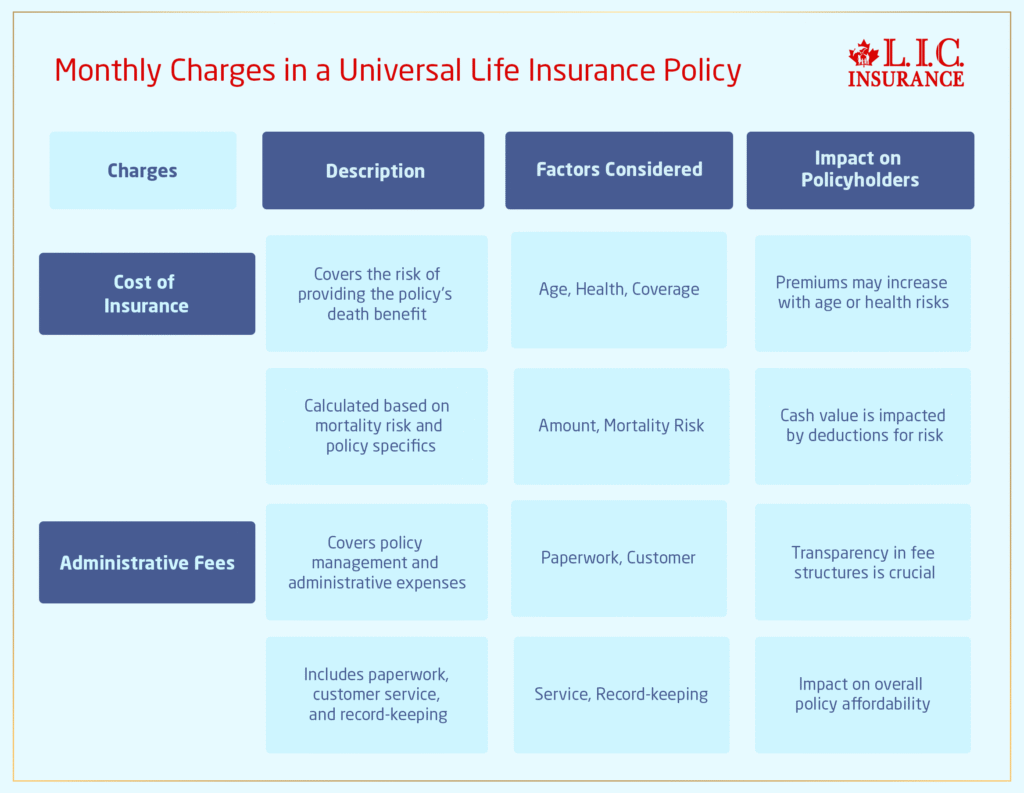
How is a Million Dollar Life Insurance Policy Paid Out?

Life Insurance is given a lot of importance when it comes to financial protection, especially when considering policies like Million Dollar Life Insurance. It’s essential to comprehend how such policies pay out to ensure clarity and security for beneficiaries.

How is a Million Dollar Life Insurance Policy Paid Out?

By Harpreet Puri, December 20, 2023, 7 Minutes

How is a Million Dollar Life Insurance Policy Paid Out

Life Insurance is given a lot of importance when it comes to financial protection, especially when considering policies like a Million Dollar Life Insurance Policy. A Million Dollar Insurance Policy is not just about leaving behind a large sum—it’s about securing your family’s future with clarity and confidence. Many Canadians choose this level of coverage to ensure their loved ones are not financially burdened after their passing. Understanding how a Million Dollar Life Insurance Policy is paid out helps beneficiaries prepare better and avoid delays during emotionally difficult times. Whether it’s for replacing income, paying off large debts, or supporting long-term goals, this kind of insurance policy plays a crucial role in comprehensive financial planning.

How Does It Work?

A Million Dollar Life Insurance Policy stands as a pivotal financial protection designed to provide substantial coverage to beneficiaries upon the insured person’s passing. This policy is structured to offer a lump-sum payment, often referred to as the death benefit, amounting to one million dollars. This significant payout aims to serve as a very important financial safety guard for the insured person’s loved ones in the event of an unexpected demise.

Coverage Aim and Implications:

The gravity of a Million Dollar Insurance Policy is that it should cover all financial liabilities of the family members and provide for the needs of the dependents. This large amount of coverage has a definite purpose; it’s designed to give a financial buffer to anyone who is financially dependent on the insured after the insured person dies.

The figure behind this coverage, generally a million dollars, is based on a list of financial needs and commitments that are going to surface following the death of the insured.

Beneficiary Support and Financial Security:

When the insured person passes away, the recipients they’ve chosen—normally family or dependents—are eligible to receive this significant death benefit. This money will be used for a variety of purposes, including paying for short-term expenses such as funeral costs, unpaid debts, and mortgage payments, to providing long-term financial support.

It may provide continuous support to the beneficiaries, enabling them to continue their lifestyle or achieve future objectives without any stress about money.

Role in Comprehensive Financial Planning:

A Million Dollar Insurance Coverage is typically an important component of an overall financial plan for a person. It’s the foundation for safeguarding the financial future of those who matter to you, and much more: It is a tool for helping to protect their financial future. This sound coverage brings peace of mind in troubled times, as it helps recipients cope with the repercussions of a death without the burden of costly expenses.

Find out more about Million Dollar Life Insurance Policy

How Timing and Financial Planning Influence the Impact of a Million Dollar Insurance Policy

A lesser-known yet crucial factor in optimizing the benefits of a Million Dollar Insurance Policy lies in the timing of its purchase and the coordination with broader financial planning strategies. Many individuals view life insurance as a standalone product, but those with high-net-worth goals often integrate it into a comprehensive estate and legacy planning framework. This strategic approach is not widely discussed, yet it can significantly influence how impactful the policy becomes for beneficiaries.

Purchasing a Million Dollar Insurance Policy at a younger age not only results in lower premiums but can also open opportunities to align the policy’s payout timeline with major life milestones of the beneficiaries, such as university expenses, home purchases, or even retirement support. Coordinating this policy with trusts or structured inheritances can allow families to manage tax exposure, fund intergenerational wealth transfers, or protect business continuity.

This proactive planning ensures the death benefit doesn’t merely serve as reactive support after loss, but as a tool for long-term empowerment. Unlike general coverage, this kind of foresight turns the policy into a generational asset.

When combined with trusted financial advice and legal structures, a million-dollar benefit does more than provide—it transforms futures.

The Payout Process of Million Dollar Life Insurance Coverage

The Payout Process of Million Dollar Life Insurance Coverage

Let’s understand it with the following points:

Initiating the Claim:

In case of the death of the insured, the nominees have to get in touch with the insurance company to aid the claim process without delay. This crucial step entails contacting the insurer, giving them the news of the passing of the insured person, and to get the ball rolling on the formal claim process for the Million Dollar Insurance Coverage.

Document Submission:

When an heir calls on the insurer, they’re walked through the paperwork that will need to be filed. This generally requires that certain forms are filed with necessary paperwork, including the death certificate, proving the life insured has passed on. Furthermore, ready access to policy details makes it easy to file claims on the Million Dollar Life Insurance Policy.

Claims Evaluation:

The insurance company reviews the submitted claim once the essential documents are received. This evaluation phase serves as a critical checkpoint, where the insurer assesses if the claim adheres to the policy’s conditions. Simultaneously, they confirm that premiums for the Million Dollar Insurance Coverage are up to date.

Validation and Payout:

If the insurer successfully validates the claim, it will not hesitate to pay the handsome death benefit in accordance with the terms of the policy. This fateful scene is the culmination of the claims process, as the beneficiaries collect their planned-for million-dollar payday.

Tax-Free Nature

Canadian Tax Regulations:

Benefits of a Million Dollar Insurance Policy for Both Canadian and U.S Residents. In Canada, the tax status of the proceeds of Life Insurance, including a fat check of Life Insurance proceeds from a Million Dollar Insurance Policy, is very advantageous to the beneficiaries. The tax-free nature of the benefit can be particularly appealing since many other types of income, and benefits themselves, are subject to different taxes, and even if the death benefit of a Life Insurance Policy provides a million dollars, the death proceeds from the policy are almost always tax-free for beneficiaries.

Financial Relief for Beneficiaries:

This tax relief is especially significant at the emotional time of a person’s death. Because the Million Dollar Insurance Coverage is tax-free, the full benefit amount goes to survivors, offering significant financial assistance while avoiding taxes on the benefit received.

Utilizing the Full Benefit:

The tax-free nature of the Million Dollar Insurance Policy payout empowers beneficiaries to utilize the entire lump sum as intended. This allows them to address various financial needs comprehensively, ranging from immediate expenses such as funeral costs or outstanding debts to securing long-term financial stability for themselves and their families.

Impact on Financial Planning:

This tax-free status is extremely significant in financial planning. Recipients need only to allocate the received million-dollar benefit and can do so with the confidence that the money will not erode from taxes, giving them greater financial autonomy to make sound financial choices as needed in the short term and long term.

The tax advantage of Life Insurance in Canada, especially a large Million Dollar Insurance Policy, is an important advantage for a beneficiary. This exemption provides financial relief during a difficult time, since it allows beneficiaries to receive the entire death benefit without being subject to taxes.

Utilizing the Payout

Beneficiaries have the freedom to use the million-dollar benefit they receive according to their needs. Common uses include:

Addressing Immediate Needs:

With the nice big million-dollar benefit from the insurance, beneficiaries have options to invest those proceeds based on what their financial needs are at that time. Generally speaking, they cover the cost of any immediate needs that come up when the policyholder dies:

  • Funeral Expenses: The payout can be used to pay for the funeral, and ensure the funeral is not a financial burden on the family while their emotions are tested.
  • Debts: If preferred, the beneficiaries are able to use some of the annuity payment to cover financial debts and have a clean break.

Mortgage Repayments: The received benefit can also be applied to paying down a mortgage, keeping up with mortgage repayments, and protecting the family home.

Ensuring Long-Term Financial Stability:

But beyond these immediate costs, the Million Dollar Insurance Coverage may be a chance of a lifetime for your loved ones to ensure their financial security for years to come:

  • Investing for security of tomorrow: Some beneficiaries may prefer to save a part of the benefit received to safeguard the family’s future. This might include setting up investment portfolios or savings accounts to add to your regular income.
  • Education and Missionary: Many choose to apply a budget towards children’s or grandchildren’s education. It gives recipients the ability to view the future by investing in education with less tension of a monetary burden.

Income Replacement: There are many scenarios in which income loss affects the family as opposed to the insured, but the cash provided will allow the loss of the benefit to be replaced, meaning the family’s stability remains intact.

Strategic Financial Decision-Making:

Since the Million Dollar Insurance Policy payment can be used for a number of purposes, the knowledge of this dynamic variety of functions alerts the beneficiaries and guides them to make the right decisions. The percentage of the benefit set aside between the immediate and the long-term needs should allow the beneficiary to maximize the benefit for their particular needs today and tomorrow.

Payment of a Million Dollar Insurance Policy is flexible to enable beneficiaries to maneuver the financial pressures. Whether to cover existing debts or make a smart investment for the future, the value of the benefit amount cannot be overlooked as a crucial aid to help achieve long-term financial security and secure financial stability and future comfort of the beneficiaries.

Considerations

These considerations need to be kept in mind:

Understanding Policy Details:

Beneficiaries of a Million Dollar Insurance Policy must familiarize themselves with the policy’s intricate details to ensure a smooth claims process and proper utilization of the benefits:

  • Terms of Coverage: You need to be very clear about the terms of coverage. Know: Beneficiaries should understand which critical illnesses or conditions are provided for by the policy, and the details of the death benefit.
  • Nominee Declarations: A nominee is the assigned beneficiary, and this list can help guarantee that the possible Million Dollar Life Insurance Policy reaches the right people. Correct beneficiary designations are essential for the proceeds to go to the appropriate people.
  • Contact Information: Save the insurance company’s contact information, since you may need to use it in case a claim occurs, and that can help you get your claim processed and paid out faster.

Regular Review of Beneficiary Designations:

Regular review and, if necessary, revision of your beneficiaries is important to ensure your designations reflect changes in life events:

  • Life changes: Significant life events, including marriages, divorces, births, and deaths within the family, may require a change to beneficiary designations. Such timely updates in the policy ensure no confusion at the time of the distribution of benefits.

Precision and Purpose: One should review beneficiary designations to ensure that both accuracy and agreement with his or her wishes are reflected. Updates keep the accuracy and relevance of the game in tune with the evolving family dynamic.

Importance of Clear Communication:

Open communication among family members is extremely crucial. The insured person should communicate the policy’s existence, details, and intended beneficiaries to avoid confusion or disputes among family members during a challenging time.

Ensuring Smooth Execution:

It is a proactive process to know the policy details and review the beneficiary designations on a regular basis. The Million Dollar Insurance Coverage is guaranteed to be directed where it’s needed most, without interference, allowing the financial protection options to remain intact.

Having knowledge about the policy’s fine print and the importance of keeping your beneficiary updated still can count as a necessary part to manage a Million Dollar Insurance Policy. Being informed and keeping information up-to-date allows beneficiaries to easily navigate through the process, to even receive a significant benefit, giving much-needed financial assistance at a difficult time.

Earning a Million Dollar Life Insurance Policy plan represents a powerful monetary version, and it offers great protection from the illness or death of the insured person. Having a good grasp of the payout and tax-free nature of the benefits associated with these great products will definitely give some peace of mind and allow those who are to receive them to make wiser decisions on how much they deserve, even before they buy a Million Dollar Life Insurance Policy.

For additional information on Million Dollar Insurance Coverage or an explanation about how these polices work, insurance professionals can provide customized advice depending on a person’s specific situation.

Get The Best Insurance Quote From Canadian L.I.C

Call 1 844-542-4678 to speak to our advisors.

Canadianlic best insurance quote

Faq's

A Million Dollar Life Insurance Policy typically gives out a lump-sum payment to beneficiaries upon the death of the insured person. The coverage terms usually include specified critical illnesses or conditions outlined in the policy.

Familiarize yourself with the Million Dollar Life Insurance Policy’s beneficiary designations. Review and update these designations on a regular basis to reflect any life changes, ensuring the benefit reaches the right recipients.

Contact the insurance company promptly to update beneficiary details. Provide accurate and updated information to ensure the intended recipients receive the Million Dollar Life Insurance Policy.

Necessary documents may include the death certificate, policy details, and beneficiary information. Ensure these documents are readily available for a smooth claims process.

Yes, beneficiaries have the flexibility to use the received benefit according to their needs. It can cover immediate expenses like funeral costs and outstanding debts or be invested for long-term financial security.

It’s advisable to review the Million Dollar Life Insurance Coverage details and beneficiary designations in a periodic manner or after significant life events to ensure accuracy and alignment with current intentions.

In Canada, Life Insurance proceeds, including a million-dollar benefit, are generally tax-free for beneficiaries. This tax exemption offers significant financial relief during a difficult time.

Contact the insurance company directly for any inquiries regarding the policy, claims process, or any concerns related to managing the Million Dollar Life Insurance Coverage.

Yes, it’s beneficial to communicate the Million Dollar Life Insurance Policy’s existence, details, and intended beneficiaries to family members to avoid confusion or disputes regarding the benefit distribution.

Understanding the Million Dollar Life Insurance Policy details, maintaining accurate beneficiary designations, and keeping necessary documents readily available facilitate a seamless claims process, ensuring the benefit reaches the intended recipients efficiently.

Beneficiaries need to contact the insurance company to initiate the claims process. This typically involves submitting necessary documents such as the death certificate and policy details.

Communication is key. Inform beneficiaries about the policy’s specifics, coverage terms, and beneficiary designations, and provide contact information for the insurance company.

Yes, it’s possible to designate multiple beneficiaries. Ensure that the shares or percentages allocated to each beneficiary are clearly outlined in the policy.

Seeking guidance from financial advisors or legal professionals can offer valuable insights, especially when considering updates to beneficiary designations or navigating the claims process.

A lapsed Million Dollar Life Insurance Policy or non-payment of premiums may impact the benefits. It’s crucial to ensure timely premium payments to maintain coverage and avoid potential lapses.

Generally, beneficiaries have the freedom to use the received benefit according to their needs. However, understanding any specific limitations outlined in the Million Dollar Life Insurance Policy is advisable.

Yes, designating a trust as a beneficiary is possible. Consult legal professionals to understand the implications and ensure proper documentation for trust designations.

Exclusions specified in the Million Dollar Life Insurance Policy might affect the claims process. Understanding policy exclusions and their implications is crucial for a realistic expectation of the coverage.

Some policies may offer conversion options. Contact the insurance company to inquire about potential conversion opportunities, depending on the policy terms.

In case of disputes, seek resolution through communication with the insurance company or legal guidance if necessary to ensure fair and accurate benefit distribution.

The above information is only meant to be informative. It comes from Canadian LIC’s own opinions, which can change at any time. This material is not meant to be financial or legal advice, and it should not be interpreted as such. If someone decides to act on the information on this page, Canadian LIC is not responsible for what happens. Every attempt is made to provide accurate and up-to-date information on Canadian LIC. Some of the terms, conditions, limitations, exclusions, termination, and other parts of the policies mentioned above may not be included, which may be important to the policy choice. For full details, please refer to the actual policy documents. If there is any disagreement, the language in the actual policy documents will be used. All rights reserved.

Please let us know if there is anything that should be updated, removed, or corrected from this article. Send an email to Contact@canadianlic.com or Info@canadianlic.com
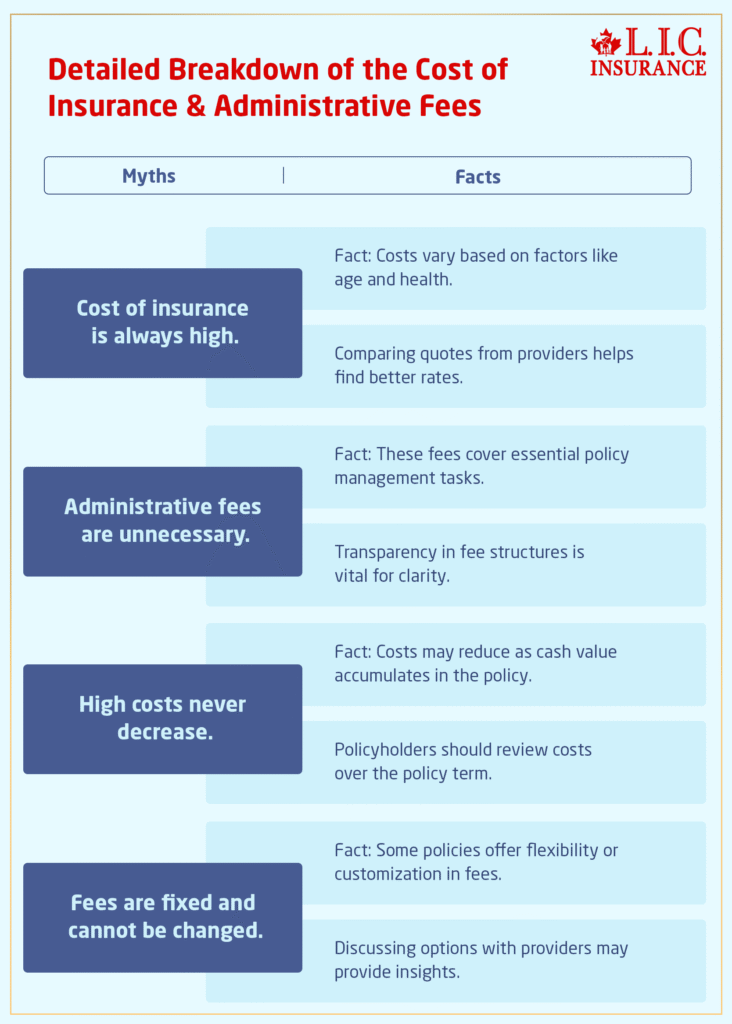
Can You Cash Out a Term Life Insurance Policy?

The concept of term life insurance in Canada is often surrounded by questions and uncertainties, especially regarding the financial flexibility it offers. Most people understand the primary function of term life insurance — to provide financial security for your family and loved ones in the event of your untimely passing. However, a common question arises: Can you cash out a term life insurance policy?

Can You Cash Out a Term Life Insurance Policy?

By Pushpinder Puri, December 6, 2023, 7 Minutes

Can You Cash Out a Term Life Insurance Policy

The concept of term life insurance in Canada is often surrounded by questions and uncertainties, especially regarding the financial flexibility it offers. Most people understand the primary function of term life insurance — to provide financial security for your family and loved ones in the event of your untimely passing. However, a common question arises: Can you cash out a term life insurance policy?

In this blog, we’ll explore the difficulties of term life insurance, focusing on its structure, benefits, and limitations. We’ll also discuss why term life insurance differs from other types of policies and what options you might have if you’re looking to leverage your policy for financial gain.

Understanding these details is crucial, especially when comparing term life insurance quotes and considering the long-term implications of your policy choice.

Explaining Term Life Insurance

Myth and Reality of Term Life Insurance

Term life insurance is a special kind of life insurance policy that offers coverage for a specified term or period, typically ranging from 10 to 50 years. The primary function of term life insurance is to provide a death benefit to the beneficiaries if the policyholder passes away during the term. This type of insurance is particularly popular in Canada due to its affordability and straightforward nature.

When you start looking for Term Life Insurance quotes, you’ll notice that compared to permanent life insurance, the premiums are usually lower. This is because term life insurance does not accumulate cash value over time. It’s purely designed to offer peace, being aware that your family and loved ones will be well taken care of financially if in case something happens to you during the term of the policy.

Term life insurance is perfect for all those individuals who need coverage for a specific period, like in the case til their children become financially independent or their mortgage amount is paid off. It’s a budget-friendly option that still provides substantial financial protection.

Read our Guide to Term Life Insurance here

Can You Cash Out?

Understanding the limitations and functionalities of term life insurance in Canada is crucial, especially when you’re evaluating your long-term financial planning and insurance needs. One of the primary aspects that often come to light is the absence of a cash value component in term life insurance. This key feature, or rather the lack of it, defines the fundamental nature of term life insurance policies and sets them apart from other types of life insurance.

No Cash Value Component

Unlike whole life or universal life insurance policies, term life insurance doesn’t accumulate any cash value over the life of the policy. This means that the premiums you pay are solely for the purpose of providing a death benefit to your beneficiaries if you pass away within the policy’s term. It’s important to understand this when you’re getting term life insurance quotes, as it impacts the kind of financial benefits you and your beneficiaries can expect.

The absence of a cash value component means:

No, Cashing Out: You cannot withdraw or borrow against your term life insurance policy.

Pure Protection: The policy is designed exclusively to offer financial security to your beneficiaries in the event of your passing during the term.

Term Life Insurance: A Pure Protection Product

Term life insurance is often described as a ‘pure protection’ product. This means that its primary purpose is to offer financial protection and mental peace rather than acting as an investment or savings vehicle. When you compare term life insurance quotes, you’ll notice that the premiums are generally more affordable than those for permanent life insurance. This is because you’re not paying to build up any cash value; you’re paying solely for the death benefit protection.

Here’s a simple comparison to illustrate this point:

Insurance Type Cash Value Component Primary Purpose
Term Life Insurance No Death Benefit
Whole Life Insurance Yes Death Benefit + Savings
Universal Life Insurance Yes Death Benefit + Savings

Term Life Insurance Quotes: What Are You Paying For?

When you receive term life insurance quotes, it’s essential to recognize what you’re paying for. In comparison to permanent life insurance, the premiums for term life insurance are typically lower because you’re not contributing to a cash-value fund. Your payments are calculated based on the likelihood of the insurance company needing to pay out the death benefit during your policy’s term. Factors like your age, health, lifestyle, and the length of the term you choose play a significant role in determining your premiums.

So, term life insurance offers a straightforward, budget-friendly way for individuals in Canada to ensure their loved ones are financially protected without the additional complexity and cost of a cash value component. It’s an insurance solution that focuses solely on protection, making it an excellent choice for those who need coverage for a specific period without the necessity of an investment element.

Alternatives to Cashing Out

While you can’t cash out a term life insurance policy in Canada, there are several alternative strategies to consider for financial flexibility. Each of these options has its own set of conditions and benefits, which can provide different solutions depending on your personal and financial circumstances.

Selling Your Policy

Selling your term life insurance policy, also known as a life settlement, is a less common but viable option in Canada. This process involves transferring your policy to a third party in exchange for a lump sum. It’s a way to get some financial return from a policy that you may no longer need or can afford.

However, it’s important to note that not all term life insurance policies are eligible for sale, and the option to sell is subject to specific conditions set by the insurer. Additionally, the amount you receive from selling your policy is typically less than the death benefit but more than the surrender value (if any). When considering this option, it’s crucial to get term life insurance quotes for new policies to compare the potential financial outcomes.

Converting Your Policy

Conversion of a term life insurance policy into a permanent life insurance policy is another alternative. Many insurers in Canada offer this option, allowing policyholders to switch to a policy with a cash value component without having to undergo a new medical examination.

Converting your policy to a permanent one like Whole or Universal Life Insurance can provide long-term financial benefits, including the accumulation of cash value. However, this usually comes with higher premiums. Here’s a quick comparison to help understand the change in policy structure:

Policy Type Term Life Insurance Permanent Life Insurance
Coverage Duration Fixed term (e.g., 10, 20, 30 years) Lifetime coverage
Cash Value Component No Yes
Premiums Generally lower Higher, but builds cash value

Adjusting Your Policy

If your current term life insurance policy becomes unaffordable or your coverage needs change, adjusting your policy is a practical solution. This could involve reducing the death benefit, which in turn would lower your premiums. This adjustment helps make the policy more manageable within your budget and still provides a level of protection for your beneficiaries.

When considering adjusting your policy, it’s a good idea to compare current-Term Life Insurance quotes to ensure that you’re still getting a competitive rate. Policy adjustment can be a flexible way to maintain life insurance coverage while adapting to changing financial circumstances.

So, even though you cannot directly cash out a Term Life Insurance policy in Canada, these alternatives provide different paths to achieve financial flexibility. Whether it’s selling your policy, converting it to a permanent one, or adjusting your coverage, each option has its own set of advantages and considerations. It’s important to review these options in the context of your personal financial situation and long-term goals.

Why You Can’t Cash Out Term Life Insurance

The inability to cash out Term Life Insurance in Canada is fundamentally rooted in its structural design, which significantly differs from that of permanent life insurance policies. Understanding these differences is key when considering Term Life Insurance quotes and the type of coverage they provide.

Structural Differences

Term Life Insurance is strategically designed to offer pure death benefit protection. This means that the policy’s sole purpose is to provide a financial safety net to your beneficiaries in the event of your death during the policy term. Unlike permanent life insurance, Term Life Insurance doesn’t include an investment or savings component. This absence of a cash value component is a defining feature and directly impacts the policy’s cost and purpose.

Here’s a breakdown of the differences:

Feature Term Life Insurance Permanent Life Insurance
Cash Value Component No Yes
Premiums Lower Higher
Coverage Duration Fixed term (e.g., 10, 20, 30 years) Lifetime
Primary Purpose Death benefit protection Death benefit + savings/investment

Implications of No Cash Value

Since Term Life Insurance lacks a cash value component, the premiums paid are solely for the death benefit protection. This is why premiums for Term Life Insurance are generally lower in comparison to permanent life insurance. When you receive Term Life Insurance quotes, you’re essentially looking at the cost of pure insurance coverage without any portion of your payment being diverted into an investment or savings plan.

In contrast, permanent life insurance policies include a cash value component that grows over time. This component serves as an investment or savings tool within the policy, contributing to the higher premiums. The cash value can be borrowed against or even cashed out under certain circumstances, providing financial flexibility that Term Life Insurance does not offer.

Target Audience and Purpose

Term Life Insurance is particularly well-suited for individuals who require coverage for a specific period — for example, until their mortgage is paid off or their children are financially independent. It’s an affordable way to ensure that your beneficiaries are taken care of financially in case of your unexpected death during this period. On the other hand, permanent life insurance is geared towards individuals looking for lifelong coverage with an added component of cash value growth, suitable for long-term financial planning.

Hence, the structural design of Term Life Insurance in Canada, focusing solely on providing a death benefit without a cash value component, is the primary reason you cannot cash out these policies. When comparing Term Life Insurance quotes, it’s essential to consider this fundamental difference and how it comes in line with your financial goals and coverage needs.

Understanding the distinctions between term and permanent life insurance ensures that you choose a policy that best fits your individual circumstances.

Term Life Insurance Quotes in Canada

When it comes to selecting Term Life Insurance in Canada, obtaining and comparing quotes is a crucial step. Term Life Insurance quotes not only provide you with an estimate of your premiums but also reflect the coverage you can expect. Understanding how these quotes are determined and what factors influence them is key to ensuring you get the perfect coverage at a price that fits your budget.

Key Factors Influencing Term Life Insurance Quotes

Coverage Amount: The amount of coverage you opt for is directly proportional to the premium you’ll pay. More coverage typically means higher premiums. When deciding on the coverage amount, consider your financial obligations, like debts (mortgages, loans), daily living expenses, and future needs of dependents (education, care).

Policy Term: The length of the policy also plays a significant role. Term Life Insurance policies are available for various durations, such as 10, 20, or 30 years. The ideal term length usually aligns with the period your beneficiaries would be most financially vulnerable, like until your children reach adulthood or your mortgage is paid off.

Age and Health: Your age and health at the time of application significantly impact the premium. Generally, younger and healthier individuals receive lower quotes as they are considered lower risk.

Lifestyle and Occupation: Certain lifestyle choices (such as smoking) and high-risk occupations can lead to higher premiums.

Here’s a simple table illustrating how these factors might impact Term Life Insurance quotes:

FactorImpact on Term Life Insurance Quote
Coverage AmountHigher coverage leads to higher premiums
Policy TermLonger terms can result in higher premiums
Age and HealthYounger and healthier individuals typically get lower premiums
Lifestyle and OccupationRiskier lifestyles or jobs may increase premiums

Finding the Right Balance

When evaluating Term Life Insurance quotes, it’s necessary to find the right balance between adequate coverage and affordability. While it’s tempting to go for the lowest premium, this might not provide sufficient coverage. Conversely, the most extensive coverage might not be affordable or necessary for your situation.

Regular Review and Adjustment

It’s also important to remember that your insurance needs may change over time. Regularly reviewing and adjusting your Term Life Insurance policy ensures that your coverage continues to meet your evolving needs. For instance, if you’ve paid off significant debts or your dependents are now financially independent, you might opt for a lower coverage amount, which could reduce your premiums.

So, when looking for Term Life Insurance quotes in Canada, it’s crucial to consider how various factors such as coverage amount, policy term, age, health, lifestyle, and occupation affect your premiums. The goal is to ensure that your policy provides sufficient financial protection for your beneficiaries while still being affordable for you. By carefully evaluating these elements, you can make a smart decision about your Term Life Insurance coverage, ensuring mental satisfaction for both you and your loved ones.

Get The Best Insurance Quote From Canadian L.I.C

Call 1 844-542-4678 to speak to our advisors.

Canadianlic best insurance quote

To Wrap Up

While you cannot cash out a Term Life Insurance policy in Canada, understanding the nature and limitations of your policy is essential. This information will guide you in making informed choices about your insurance needs and explore alternative options if necessary. Remember, Term Life Insurance is about providing financial security for your loved ones, and choosing the right policy involves balancing coverage, term length, and affordability. When seeking Term Life Insurance quotes, consider all these factors to find a policy that best suits your unique needs and circumstances.

Faq's

No, you cannot borrow against a Term Life Insurance policy as it does not have a cash value component.

At the end of the term, the policy expires. You can choose to renew it, convert it to a permanent policy, or let it lapse.

Term Life Insurance is best for those needing temporary, affordable coverage. It’s ideal if you have specific financial obligations for a set period.

Compare quotes from various insurers, assess your coverage needs, and consider the premium affordability and the policy’s term length.

Yes, the death benefit received from a Term Life Insurance policy is generally tax-free for the beneficiaries in Canada.

Most Term Life Insurance policies in Canada offer the option to renew at the end of the term. However, premiums may increase upon renewal based on your age at that time.

If you outlive your Term Life Insurance policy, the coverage ends, and you won’t receive a payout. You can consider renewing the policy, converting it to a permanent policy, or purchasing a new policy.

Yes, Term Life Insurance policies may have exclusions, such as death due to participating in high-risk activities or pre-existing medical conditions. It’s important to read and understand the policy terms.

Yes, non-Canadians and new immigrants can typically buy Term Life Insurance in Canada. However, the eligibility criteria and the application process might vary depending on the insurer.

Generally, Term Life Insurance premiums increase with age. The younger you are when you purchase the policy, the lower the premiums will usually be.

Yes, you can have multiple-Term Life Insurance policies in Canada. People often do this to cover different financial obligations or to increase overall coverage.

Yes, smokers generally pay higher premiums for Term Life Insurance than non-smokers due to the increased health risks associated with smoking.

Yes, you can usually change the beneficiary of your Term Life Insurance policy. It’s advisable to review and update your policy’s beneficiaries as needed.

The processing time for Term Life Insurance claims can vary but is typically prompt once the insurer receives all necessary documentation and verifies the claim.

The above information is only meant to be informative. It comes from Canadian LIC’s own opinions, which can change at any time. This material is not meant to be financial or legal advice, and it should not be interpreted as such. If someone decides to act on the information on this page, Canadian LIC is not responsible for what happens. Every attempt is made to provide accurate and up-to-date information on Canadian LIC. Some of the terms, conditions, limitations, exclusions, termination, and other parts of the policies mentioned above may not be included, which may be important to the policy choice. For full details, please refer to the actual policy documents. If there is any disagreement, the language in the actual policy documents will be used. All rights reserved.

Please let us know if there is anything that should be updated, removed, or corrected from this article. Send an email to Contact@canadianlic.com or Info@canadianlic.com

Is Life Insurance a Good Investment in Canada?

When it comes to financial planning in Canada, life insurance is a topic that often raises a mix of opinions. Is it just a choice of financial protection for your family and for your loved ones? Or can one even think about taking it as a smart investment option for themselves? The aim of this article is to go deep into the intricacies of life insurance policies in Canada and explore their potential as an investment option.

Is Life Insurance A Good Investment In Canada?

By Harpreet Puri, November 29, 2023, 8 Minutes

Is Life Insurance a Good Investment in Canada

When it comes to financial planning in Canada, life insurance is a topic that often raises a mix of opinions. Is it just a choice of financial protection for your family and for your loved ones? Or can one even think about taking it as a smart investment option for themselves? The aim of this article is to go deep into the intricacies of life insurance policies in Canada and explore their potential as an investment option.

Understanding Life Insurance

What Exactly is Life Insurance?

When we talk about the core, Life Insurance is actually a contract between an individual and an insurance provider. Upon receiving premium payments, the insurer promises to pay a specified sum to a chosen beneficiary at the time of the policyholder’s death. But there’s more to Life Insurance than just this basic definition.

Types of Life Insurance Policies

In Canada, Life Insurance comes in various forms, each with unique features. Term Life Insurance, for instance, covers a specific period, while whole life and Universal Life Insurance offer lifelong coverage and can accumulate cash value over time.

Life Insurance as an Investment

When exploring financial planning options, many Canadians overlook the investment potential of Life Insurance. Beyond its primary function of providing financial security for your loved ones, certain types of Life Insurance policies can play a dual role, serving both as a protective measure and a financial asset.

Learn about the biggest Life Insurance companies in Canada here

The Investment Aspect of Life Insurance

Among the various Life Insurance products, Whole and Universal Life Insurance policies stand out for their investment component. These policies not only assure a death benefit but also feature a cash value account, which accumulates funds over the policyholder’s lifetime.

How Does the Cash Value Component Work?

A part of your payment covers the insurance cost, while the remaining contributes to the cash value of the policy when you pay premiums for a whole or Universal Life Insurance policy. The best part here is that this cash value grows over time, often at a guaranteed minimum interest rate, thus providing you with a form of savings that you can easily access anytime during your entire lifetime. In universal life policies, you might have more flexibility and control over how the cash value is invested, offering the potential for higher returns.

Benefits of the Investment Component

Life Insurance vs. Other Investments

Comparing Life Insurance to traditional investment vehicles such as stocks, bonds, or mutual funds reveals some distinct differences and unique advantages.

Unique Benefits of Life Insurance

Considerations for Investors

Hence, Life Insurance should be viewed not just as a safety net but also as a versatile financial tool. Its investment aspect, particularly in whole and universal life policies, offers a blend of financial security and growth potential. As with any financial decision, it’s essential to evaluate how Life Insurance fits into your overall investment plan and get advice from a financial expert to understand its implications fully.

Benefits of Life Insurance Investment

Making the decision to invest in Life Insurance is not that easy and just about ensuring financial protection; it’s also a smart move offering a great number of benefits. In Canada, where financial planning is considered a crucial part of life, understanding the advantages of Life Insurance as an investment can be a game-changer for so many people.

Security and Peace of Mind

The first and foremost benefit of Life Insurance is that it provides the assurance of financial security for all your beneficiaries. This benefit it offers is far more than just monetary value; it’s about the mental peace that comes along with the fact of being aware that your family and close loved ones will be financially protected and taken care of when you are not there to take care of them.

Providing for Your Loved Ones

Immediate Financial Support: Life Insurance ensures that at the time of your untimely passing, your beneficiaries receive a sum of money. This can be crucial in covering immediate expenses such as funeral costs, outstanding debts, or daily living costs.

Long-term Financial Stability: Beyond immediate needs, the death benefit can provide long-term financial stability for your dependents, ensuring they can maintain their lifestyle, pursue educational goals, or secure their future.

Flexibility for Beneficiaries: The death benefit offers flexibility to your beneficiaries. They have the freedom to use the funds as needed, whether for sustaining the household, investing further, or fulfilling specific needs.

Tax Advantages in Canada

In the Canadian financial landscape, Life Insurance policies offer significant tax benefits, making them an attractive investment option.

Tax-Free Death Benefit

Non-Taxable to Beneficiaries: One of the critical advantages is that the death benefit from a Life Insurance policy is generally tax-free. This means beneficiaries receive the full amount without deductions, providing them with the complete financial benefit promised by the policy.

Tax-Deferred Growth

Cash Value Accumulation: With permanent Life Insurance policies like Whole and Universal Life, the cash value component grows tax-deferred. This means you don’t pay taxes on the interest, dividends, or capital gains as the cash value accumulates, which can significantly enhance the growth of this investment over time.

Estate Planning

Life Insurance plays a pivotal role in estate planning, offering both liquidity and strategic advantages.

Liquidity for Estate Settlement

Paying Estate Taxes and Debts: Life Insurance can provide much-needed liquidity to settle estate taxes and debts. This holds particular significance for estates that comprise largely of illiquid assets, such as real estate or business holdings.The death benefit can be used to cover these costs without the need to sell off assets under unfavourable conditions.

Ensuring Estate Distribution According to Wishes

Facilitating Smooth Wealth Transfer: Life Insurance can help to find out that your estate is distributed according to your wishes. By designating beneficiaries on your policy, you can direct funds exactly where you want them, potentially bypassing the lengthy and complex probate process.

Equalizing Inheritance: For those with multiple beneficiaries, Life Insurance can help equalize inheritance, ensuring each beneficiary receives a fair share, even if the estate’s assets are not easily divisible.

So, the investment in Life Insurance in Canada goes beyond just covering risks; it’s a multifaceted financial tool offering security, tax efficiency, and estate planning benefits. These advantages make Life Insurance a compelling component in a comprehensive financial plan, providing peace of mind and strategic value to policyholders and their families.

Get The Best Insurance Quote From Canadian L.I.C

Call 1 844-542-4678 to speak to our advisors.

Canadianlic best insurance quote

Considerations Before Investing in Life Insurance

Investing in Life Insurance is a significant decision that requires careful consideration. It’s not just about choosing a policy; it’s about ensuring that the policy aligns with your broader financial objectives and understanding its intricacies. Let’s explore the key factors that should influence your decision-making process.

Aligning with Financial Goals

The decision to invest in Life Insurance must be guided by your overall financial goals. It’s essential to reflect on what you aim to achieve with this investment.

Assessing Your Primary Aim

Family Protection: If your main goal is to ensure financial security for your family at the time of your passing, Term Life Insurance might be a suitable option. Term Life Insurance provides coverage for a specified term and pays out a death benefit to your beneficiaries if you pass away during that term.

Wealth Accumulation: If you’re interested in long-term wealth accumulation, a permanent Life Insurance policy like whole or universal life could be more appropriate. These policies not only provide a death benefit but also accumulate cash value over time, serving as a savings or investment vehicle.

Balancing Needs and Goals: It’s crucial to balance your need for protection with your investment goals. Consider how Life Insurance fits into your broader financial plan, including retirement planning, estate planning, and other investment strategies.

Understanding Policy Details

Life Insurance policies can be complex, and a thorough understanding is crucial to ensure that you pick up a policy that meets your specific needs.

Familiarizing Yourself with Policy Terms

Coverage Details: Understand the specifics of what the policy covers and any exclusions or limitations that may apply.

Policy Features and Benefits: Different policies come with various features and benefits, such as riders that offer additional protection or flexibility in premium payments.

Surrender Charges and Policy Loans: Be aware of any surrender charges if you decide to terminate the policy early and the terms of policy loans if you plan to borrow against the policy’s cash value.

Evaluating Costs and Premiums

The cost of Life Insurance is a crucial factor in determining whether it’s the right investment for you. Premiums can vary significantly as per several factors.

Factors Influencing Premiums

Policy Type: Premiums for Term Life Insurance are generally lower than for permanent policies but offer no cash value. Permanent policies have higher premiums but include an investment component.

Coverage Amount: The amount of coverage you choose directly impacts your premium. More coverage means higher premiums

Age and Health: Life Insurance premiums are typically lower when you’re younger and in good health. As you age or if you have health issues, premiums can increase significantly.

Lifestyle Factors: Lifestyle choices such as smoking or high-risk hobbies can also affect your premium rates.

Cost-Benefit Analysis

Long-Term Affordability: Affordability for a good amount of time is an important aspect to consider. Hence, it becomes very important to make yourself very clear with the fact that whether the premiums will be affordable just for the current moment or throughout the whole life span of the policy.

Comparing Options: It’s advisable to compare different policies and providers to find the best balance between cost and coverage.

Investing in Life Insurance requires a deep understanding of how it aligns with your financial goals, comprehensive knowledge of policy details, and a clear evaluation of its costs. Considering all these points will help to make sure that your investment in Life Insurance is a sound and beneficial part of your financial strategy.

Life Insurance for Different Life Stages

Young Adults: Starting Early

When we talk about all the young adults, then Life Insurance can be a very cost-effective way to start their financial planning journey. Another amazing thing here is that the premiums are generally lower for the younger individuals, and if they choose to start early then they will be able to get more substantial benefits later in their lives.

Middle-Aged Individuals: Peak Earning Years

During peak earning years, Life Insurance can protect your family’s lifestyle and your accumulated assets. It’s also a time to review and possibly adjust your coverage as your financial situation changes.

Seniors: Focusing on Legacy and Estate Planning

For seniors, Life Insurance can be more about managing estate taxes and leaving a legacy than about replacing lost income.

Comparative Analysis: Life Insurance vs. Other Investment Options

When you are thinking about Life Insurance as an investment option, it becomes extremely essential to compare it with other financial vehicles as well. Each option of investment has different characteristics to offer. These characteristics cater to different levels of risk tolerances, horizons of investment, and financial goals. Knowing about all these nuances is the key to making an informed decision that also effortlessly aligns with your personal financial strategy.

Life Insurance vs. Other Options

When it comes to comparing Life Insurance with other investment options like stocks, bonds, mutual funds, or savings accounts then it is not a simple process. It is because of the reason that each of them serves different purposes and comes with its own set of risks and rewards.

Factors for Comparison

Risk Tolerance: Assess your comfort with the potential fluctuations in investment value.

Investment Horizon: Consider your time frame for investing and when you’ll need access to the funds.

Financial Goals: Determine whether your primary objective is wealth accumulation, providing for beneficiaries, or a combination of both.

So, even if you get the unique death benefit and potential tax advantages with Life Insurance, it may come with higher fees and less liquidity when you compare it to other investment types like stocks or mutual funds, which even provide higher potential of return but with greater risk of the market. When it comes to bonds and savings accounts then they offer lower risk but also at the same time lower returns. The main choice is usually dependent on your individual financial needs, goals, and risk appetite. It is advisable to always consider consulting with an experienced insurance or financial advisor in order to easily tailor your investment strategy to your personal circumstances.

Get The Best Insurance Quote From Canadian L.I.C

Call 1 844-542-4678 to speak to our advisors.

Future Trends in Life Insurance

The Life Insurance industry, like many others, is not immune to the winds of change, especially in the realm of technology and customer expectations. In Canada, these changes are shaping the way Life Insurance is perceived, purchased, and managed. Understanding these trends is crucial for both consumers and industry professionals as they navigate the evolving landscape of Life Insurance.

Emerging Trends in the Life Insurance Industry

The Life Insurance sector is witnessing several emerging trends that are reshaping its future:

Increased Digitalization: The traditional face-to-face model of buying Life Insurance is rapidly giving way to digital platforms. Online quotes, digital applications, and automated underwriting processes are becoming the norm. This shift not only makes the process more efficient but also more accessible to a broader audience.

Personalized Policies: Customization is key in today’s market. Consumers are looking for policies that can be tailored to their specific needs and circumstances. Insurers are responding by offering more flexible products that can adapt to individual life changes, such as adjustable coverage levels and optional riders.

Integration of Wellness Incentives: There is a growing trend towards linking Life Insurance with health and wellness programs. Insurers are offering incentives for healthy behaviours, such as discounts or rewards for regular exercise, healthy eating, or not smoking. This approach benefits both the policyholder and the insurer by promoting healthier lifestyles that can lead to longer lifespans and potentially lower insurance claims.

Focus on Mental Health: In order to recognize the importance of mental well-being, some insurers are beginning to include mental health support as part of their Life Insurance packages. This holistic approach to health is a reflection of broader societal shifts toward acknowledging and supporting mental health.

Impact of Technology on Life Insurance

Technology is significantly reshaping the Life Insurance industry:

Streamlining the Buying Process: Technological advancements have streamlined the purchasing process, making it quicker and more user-friendly. Online calculators, AI-driven advice, and instant online approvals are simplifying the way people buy Life Insurance.

Enhanced Customer Experience: Technology is enabling insurers to offer a more personalized customer experience. From apps that track policy details to chatbots that provide instant assistance, technology is making it easier for customers to manage their policies.

Data Analytics and Risk Assessment: The use of big data and analytics is becoming more prevalent in risk assessment. Insurers are leveraging data to gain deeper insights into customer behaviour and risk profiles, leading to more accurate pricing and risk management.

Mobile Applications and Accessibility: The rise of mobile applications is enhancing accessibility, allowing customers to manage their policies, file claims, and access services directly from their smartphones.

Blockchain and Security: Blockchain technology is being explored for its potential to improve security, reduce fraud, and streamline administrative processes in the Life Insurance industry.

The future of Life Insurance in Canada is being shaped by digital innovation, personalized services, and a greater emphasis on holistic well-being. These trends are not only making Life Insurance more accessible and tailored to individual needs but are also aligning the industry with broader societal shifts toward health, wellness, and technology. As these trends keep on evolving, they will undoubtedly bring new opportunities and challenges for both insurers and consumers.

To Wrap Up

Life Insurance can be a very valuable component of a comprehensive financial plan in Canada. Its potential as an investment should be weighed against personal financial goals, risk tolerance, and the unique benefits it offers. As with any financial decision, it’s important to seek professional advice and consider all aspects before making a choice.

Read Here – If you want to know about the 10 best life insurance plans for 2024 you can

Faq's

It’s a Life Insurance policy, like whole or universal life, that combines a death benefit with a cash value component, growing tax-deferred and serving as an investment tool.

Yes, particularly permanent Life Insurance policies that have an investment component along with the death benefit.

Part of the premium pays for the death benefit, while the remaining goes into a cash value account, growing over time and accessible under certain conditions.

It offers a combination of financial security (death benefit), potential tax benefits, stability, and usefulness in estate planning.

Life Insurance can be bought through insurance brokers, directly from companies, financial advisors, or online platforms, each offering different levels of advice and product choices.

Yes, for young adults in Canada, Life Insurance is a wise investment. Lower premiums due to younger age and better health, combined with the potential for long-term growth in cash value, make it an attractive financial planning tool.

Life Insurance offers a death benefit and tax benefits guaranteed, unlike traditional investments. It provides more predictable growth with less market volatility, appealing to those seeking stability.

Key tax advantages include tax-free death benefits and tax-deferred growth on the cash value of permanent policies, making them efficient for long-term wealth accumulation and estate planning.

Definitely, Life Insurance in estate planning offers liquidity for paying taxes and debts, allows for equal distribution of assets among beneficiaries, and facilitates efficient wealth transfer.

Risks include higher premiums for permanent policies, potentially lower returns compared to aggressive investments, the possibility of policy lapse due to non-payment, and the complexity of terms and conditions.

The above information is only meant to be informative. It comes from Canadian LIC’s own opinions, which can change at any time. This material is not meant to be financial or legal advice, and it should not be interpreted as such. If someone decides to act on the information on this page, Canadian LIC is not responsible for what happens. Every attempt is made to provide accurate and up-to-date information on Canadian LIC. Some of the terms, conditions, limitations, exclusions, termination, and other parts of the policies mentioned above may not be included, which may be important to the policy choice. For full details, please refer to the actual policy documents. If there is any disagreement, the language in the actual policy documents will be used. All rights reserved.

Please let us know if there is anything that should be updated, removed, or corrected from this article. Send an email to Contact@canadianlic.com or Info@canadianlic.com

Which is better, Short-Term or Long-Term Insurance? Making the Right Choice

When it comes to safeguarding your future and that of your loved ones, choosing the right type of Life Insurance is crucial. In this article, we’ll explore the nuances of Term Life Insurance and Short-Term Life Insurance, helping you understand which option may be better suited for your unique circumstances.

Which Is Better, Short-Term Or Long-Term Insurance? Making The Right Choice

By Pushpinder Puri, November 23, 2023, 8 Minutes

Which Is Better, Short-Term Or Long-Term Insurance? Making The Right Choice

When it comes to safeguarding your future and that of your loved ones, choosing the right type of Life Insurance is crucial. In this article, we’ll explore the nuances of Term Life Insurance and Short-Term Life Insurance, helping you understand which option may be better suited for your unique circumstances.

The Basics of Term Life Insurance

Term Life Insurance is a straightforward concept: it offers coverage for a specified “term” or period. If the policyholder passes away within this period, the beneficiaries receive the death benefit. It’s a cost-effective way to provide financial security.

Short-Term Life Insurance

Short-Term Life Insurance, typically lasting for a few years, is designed for temporary coverage needs. It’s ideal for those who need immediate coverage but want to avoid committing to a long-term policy.

Long-Term Life Insurance

Long-Term Life Insurance offers extended coverage, often up to 20-30 years. This type of insurance is suitable for individuals looking to secure their financial future over a more extended period.

Read More – Term Life Insurance here

Comparing Costs: Short-Term vs Long-Term Insurance

Comparing Costs: Short-Term vs Long-Term Insurance

When choosing between short-term and long-term insurance, cost is a crucial consideration. Short-term policies are typically more affordable, offering coverage for a limited period, usually up to 10 years. These policies are cost-effective for addressing immediate, specific financial obligations, like covering a short-term debt. However, they provide less comprehensive coverage and do not offer a return on premiums if the policyholder outlives the term.

In contrast, long-term insurance, such as whole life or universal life policies, covers the policyholder’s entire life and incorporates a savings component that accumulates cash value. This extended coverage and added financial benefit come at higher premiums. These policies are suitable for individuals looking for consistent, lifelong coverage and an investment component for long-term financial planning.

The choice between short-term and long-term insurance should align with your financial goals and needs. Short-term insurance is ideal for temporary coverage with lower premiums, while long-term insurance offers a more comprehensive, albeit costlier, solution for sustained financial security. It’s beneficial to consult with a financial advisor to know which option best suits your financial situation and future plans.

Coverage Duration: Which Suits You Best?

Navigating the world of Life Insurance can be complex, but understanding its basics is essential for making informed decisions. Here, we break down what Life Insurance is, why it’s important, and the various types available to Canadians.

Definition and Importance of Life Insurance

Deciding between short-term and long-term insurance largely depends on your coverage needs and life circumstances. Short-term insurance, often lasting a few years, is ideal for temporary or specific financial responsibilities like covering a loan or providing a safety net during life transitions. It’s a flexible choice for those in changing life stages or with evolving financial obligations.

Long-term insurance, on the other hand, offers lifelong coverage and is better suited for sustained family protection and long-term financial commitments, such as a mortgage or estate planning. This type of insurance provides a stable and continuous safety net for your loved ones, ensuring financial security regardless of when it’s needed.

Your choice should reflect your current life stage and financial goals. Short-term insurance is practical for immediate, temporary needs, while long-term insurance is more appropriate for consistent, long-term protection. Evaluating your financial situation and future plans can help determine which option aligns best with your needs. Consulting a financial advisor can also be beneficial in making this decision.

Flexibility and Adaptability in Life Insurance

When choosing Life Insurance, it’s vital to consider how your needs might change over time. Opting for a policy that offers flexibility to adapt to evolving circumstances is essential.

Adapting to Life’s Changes

Life events like marriage, parenthood, or career shifts can impact your insurance needs. An adaptable policy allows for adjustments in coverage to align with these milestones. Short-Term Policies offer immediate, flexible coverage for specific periods or obligations, while Long-Term Policies, like whole or universal life, provide options to modify premium payments or access the policy’s cash value.

Customization with Riders

Both Short and Long-Term Policies can be customized with riders, such as disability or critical illness riders, adding layers of protection tailored to your changing needs.

Regular Policy Review

Regularly reviewing your Life Insurance ensures it stays in line with your current life situation and future goals. Adjustments can be made to maintain the right level of protection as your circumstances evolve.

In summary, selecting a Life Insurance policy with the capacity for adaptation and flexibility is crucial, ensuring you remain adequately covered through various life stages.

Get The Best Insurance Quote From Canadian L.I.C

Call 1 844-542-4678 to speak to our advisors.

Canadianlic best insurance quote

Risk Assessment: A Key Factor in Decision-Making

Your risk profile, encompassing factors like age, health, lifestyle, and financial responsibilities, is crucial in choosing the right Life Insurance. High-risk individuals, such as those with potential health concerns or long-term financial commitments, often benefit more from Long-Term Policies like whole or universal Life Insurance. These provide lifelong coverage, ensuring protection regardless of future health changes or life circumstances.

For those with a lower risk profile or specific short-term coverage needs, Short-Term Life Insurance can be more appropriate. It offers flexibility and is cost-effective for temporary financial obligations or life stages with anticipated changes.

Balancing the level of coverage with the cost of premiums is important. Higher risk usually means higher premiums, but the comprehensive coverage and security offered by Long-Term Policies might justify the expense.

Given the complexities of assessing risk and its impact on insurance choices, seeking advice from insurance professionals can be helpful. They can assist in aligning your insurance choice with your risk profile and financial goals, ensuring you get the most suitable coverage.

Policy Riders: Customizing Your Insurance

Policy riders are additional features that allow for customization of your Life Insurance policy, applicable to both short-term and long-term coverage. These riders enable you to tailor your insurance to your unique needs and circumstances.

Key Types of Riders

Advantages of Riders

Evaluating and Choosing Riders

Consider your risk factors and financial situation when selecting riders. It’s important to balance the additional protection they offer with their extra costs. Consulting with an expert insurance professional can aid in understanding which riders are most beneficial for your situation.

In essence, policy riders offer a way to customize your Life Insurance, enhancing its relevance and value to your specific life scenarios, whether you opt for short-term or long-term coverage.

Tax Implications: What You Need to Know

Getting to know the tax implications of Life Insurance policies is essential for effective financial planning. Different policies have varying tax benefits and liabilities.

Life Insurance Premiums

Typically, Life Insurance premiums are not tax-deductible, regardless of whether the policy is short-term or long-term. Business owners may be able to deduct premiums paid for employee Life Insurance as a business expense.

Death Benefit Taxation

A major advantage of Life Insurance is that the death benefit is usually exempt from federal income tax. This is applicable to both short-term and Long-Term Policies, ensuring beneficiaries receive the full policy amount without income tax deductions.

Tax Deferral on Cash Value

In Long-Term Policies like whole life or universal life, the cash value component grows tax-deferred. Taxes aren’t paid on interest, dividends, or capital gains until the policy is surrendered, and withdrawals exceeding premiums paid may be taxable.

Loans Against Policy

Loans taken against the cash value of a long-term policy are generally tax-free. However, if the policy lapses or is surrendered with an outstanding loan, that amount may become taxable.

Surrender Charges and Taxation

Surrendering a policy early might lead to charges and potential income tax on the cash value received, especially if it exceeds the premiums paid.

Estate Tax Considerations

Life Insurance proceeds might be included in your taxable estate, but proper planning can mitigate potential estate taxes.

Given the complexity of tax laws, consulting with a tax professional is advisable to navigate these nuances and maximize your policy’s financial benefits.

In summary, while Life Insurance offers significant tax benefits, especially on death benefits and cash value growth, understanding the specifics of these advantages and potential liabilities is crucial in making the most of your Life Insurance policy.

Get The Best Insurance Quote From Canadian L.I.C

Call 1 844-542-4678 to speak to our advisors.

Short-Term Life Insurance: Ideal Scenarios

Short-Term Life Insurance is a suitable option in various scenarios where temporary coverage is needed, offering flexibility and specificity in its application.

Covering Short-Term Debts

Ideal for ensuring that short-term financial commitments like personal loans or car loans are covered, Short-Term Life Insurance can protect your family or estate from the burden of these debts in case of untimely death.

During Significant Life Changes

During major life transitions such as a career change, starting a new business, or undergoing personal changes like divorce, short-term insurance provides a financial safety net to cover obligations in these critical periods.

Specific Life Stages or Projects

It’s beneficial for temporary coverage during certain life stages, such as ensuring financial security for young children, or during short-term high-risk activities or projects, without committing to a long-term policy.

As a Bridge to Long-Term Planning

For those developing a long-term financial plan, Short-Term Life Insurance can act as an interim solution, offering immediate coverage while more permanent insurance arrangements are being considered.

Cost-Effective for Immediate Needs

With lower premiums compared to Long-Term Policies, Short-Term Life Insurance is a budget-friendly option for immediate, specific insurance needs.

In essence, Short-Term Life Insurance is an effective tool for addressing immediate, specific insurance requirements, providing a focused and temporary coverage solution that can adapt to your life’s transitions and specific financial phases.

Long-Term Life Insurance: When is it the Best Choice?

Long-Term Life Insurance benefits individuals with extended financial obligations and those seeking a stable, long-term financial safety net.

For Ongoing Financial Commitments

Ideal for covering long-term financial responsibilities such as mortgages or multi-year loans, Long-Term Life Insurance ensures these debts don’t burden your family in the event of your passing.

Long-Term Family Support

If you have dependents reliant on your income for many years, this type of insurance can provide for their needs, like living expenses and education, securing their financial future.

Estate Planning and Wealth Transfer

It’s a strategic tool in estate planning, facilitating tax-efficient wealth transfer to heirs and fulfilling your legacy wishes.

Retirement Income Security for Spouses

For couples, Long-Term Life Insurance can ensure financial stability for the surviving spouse, which is especially important in retirement planning.

Cash Value Benefits

Many Long-Term Policies include a cash value component, offering a savings opportunity and financial flexibility through loans or withdrawals.

Advantageous for Younger Individuals

Securing a long-term policy at a younger age can lead to lower, stable premiums and ensures coverage despite future health changes.

In essence, Long-Term Life Insurance is a comprehensive choice for those with long-term financial plans, providing enduring coverage and additional financial benefits like cash value, making it an integral part of a well-rounded financial strategy.

Faq's

Short-Term Life Insurance, typically known as Term Life Insurance, provides coverage for a specific period. If the policyholder passes away during this term, beneficiaries receive a death benefit. Long-term insurance, including whole life or universal life, offers lifelong coverage with additional benefits like a cash value component.

Individuals with temporary financial obligations, such as mortgages or young children, might find Short-Term Life Insurance appropriate. It’s also a good choice for those on a limited budget needing substantial coverage.

Long-Term Life Insurance is ideal for those seeking lifelong coverage, wanting to accumulate cash value for future financial needs, or involved in long-term estate planning.

Many Short-Term Policies offer a conversion option, allowing you to switch to a long-term policy without a new medical examination, usually within a specific timeframe.

Generally, the younger you are when you purchase Life Insurance, the lower your premiums. As you age, the risk to the insurer increases, leading to higher premium rates.

The death benefit from a Life Insurance policy is usually not taxable. However, if you have a policy with a cash value component and it’s withdrawn or borrowed against, there may be tax implications.

Insurers consider your health and lifestyle when determining premiums. Poor health or high-risk lifestyles can lead to higher premiums, whereas healthier individuals typically pay less.

Should you surpass the duration of your Term Life Insurance Policy, the coverage ceases without any payout. You may have the option to renew, convert, or purchase a new policy.

Long-Term Life Insurance policies with a cash value component can be used as part of retirement planning, providing a source of funds later in life.

Regularly reassessing your Life Insurance policy is recommended, particularly following significant life events such as getting married, having a child, or experiencing notable financial changes.

The above information is only meant to be informative. It comes from Canadian LIC’s own opinions, which can change at any time. This material is not meant to be financial or legal advice, and it should not be interpreted as such. If someone decides to act on the information on this page, Canadian LIC is not responsible for what happens. Every attempt is made to provide accurate and up-to-date information on Canadian LIC. Some of the terms, conditions, limitations, exclusions, termination, and other parts of the policies mentioned above may not be included, which may be important to the policy choice. For full details, please refer to the actual policy documents. If there is any disagreement, the language in the actual policy documents will be used. All rights reserved.

Please let us know if there is anything that should be updated, removed, or corrected from this article. Send an email to Contact@canadianlic.com or Info@canadianlic.com

Is it Possible to have a Million Dollar Life Insurance Policy?

In the realm of life insurance, a million-dollar policy stands out as a significant financial safeguard. This level of policy is not just a number; it’s a comprehensive plan designed to offer extensive protection and support to the policyholder’s beneficiaries in the event of their untimely demise. When we talk about a Million-Dollar Life

Is it Possible to have a Million Dollar Life Insurance Policy?

By Harpreet Puri, November 15, 2023, 8 Minutes

Is it Possible to have a Million Dollar Life Insurance Policy

In the realm of life insurance, a million-dollar policy stands out as a significant financial safeguard. This level of policy is not just a number; it’s a comprehensive plan designed to offer extensive protection and support to the policyholder’s beneficiaries in the event of their untimely demise. When we talk about a Million-Dollar Life Insurance Policy in Canada, we’re referring to the policy’s death benefit – which is basically the amount paid out to beneficiaries upon the policyholder’s death.

A Million-Dollar Life Insurance Policy is often associated with high-net-worth individuals, but it’s not exclusively for the wealthy. In reality, it can be a practical choice for many middle-class families as well, especially those with substantial financial obligations or long-term financial goals.

This policy is suitable for people who have sizable debts, such as mortgages or business loans and want to ensure these are not a burden to their family in the case of their passing. It’s also ideal for those aiming to provide substantial income replacement, ensuring that their family can maintain their standard of living for several years following their death.

Furthermore, for those involved in estate planning, a million-dollar policy can serve as a strategic tool to manage potential estate taxes or leave a substantial legacy. It’s about ensuring that your financial responsibilities and aspirations for your family are taken care of, even in your absence. Obtaining such a policy requires careful consideration of your current financial status, future goals, and the needs of your dependents.

What is a Million Dollar Life Insurance Policy?

Aspect Description
Definition A Million Dollar Life Insurance Policy in Canada is a type of life insurance that offers a death benefit of one million dollars to the beneficiaries upon the policyholder’s death.
Purpose This policy is designed to provide significant financial security and support to the beneficiaries, helping cover large financial obligations, replace income, or achieve specific future goals.
Suitability Ideal for individuals with high income, substantial debts, long-term financial goals for dependents, business owners, or those involved in estate planning.
Types of Policies Can be either Term Life Insurance (coverage for a specific period) or permanent life insurance (Whole Life or Universal Life, offering lifelong coverage and possibly an investment component).
Cost Factors Premiums depend on the policyholder’s age, health, lifestyle, type of insurance, and additional features or riders. Younger and healthier individuals typically pay lower premiums.
Eligibility Criteria Insurers consider income levels, health status, age, lifestyle, and the overall financial justification for the coverage amount.
Underwriting Process Often involves a comprehensive evaluation including a medical exam, lifestyle assessment, and financial analysis.
Benefits Provides substantial financial coverage for beneficiaries, can cover major debts, fund future goals, and aid in estate planning.
Tax Implications Generally, the death benefit from a life insurance policy in Canada, including a million-dollar policy, is not taxable to the beneficiaries.
Considerations Requires careful assessment of financial needs and goals, and often consultation with financial advisors to ensure alignment with personal financial strategies.

Who Needs a Million-Dollar Life Insurance Policy?

The need for a Million-Dollar Life Insurance Policy in Canada is not universal but is highly dependent on individual circumstances. It becomes a consideration for those whose financial obligations and goals exceed the average, necessitating larger coverage to protect their loved ones adequately.

Individuals with Significant Debts: If you have high-value liabilities like a large mortgage, business loans, or other substantial debts, a million-dollar policy ensures these do not become a burden for your family after you’re gone. This policy size helps in fully covering such debts, providing a clear financial path for your beneficiaries.

Primary Breadwinners: For families where one person significantly contributes to the household income, a policy of this magnitude can replace several years’ worth of income. This ensures that in the event of the breadwinner’s untimely death, the family’s financial needs – from day-to-day expenses to long-term goals like children’s education – are securely met.

Funding Future Goals: A million-dollar policy can be an effective way to fund future aspirations, whether it’s your children’s higher education, ensuring a comfortable retirement for your spouse, or other long-term financial goals. It acts as a financial safety net, ensuring that your dreams for your family do not perish with you.

Estate Planning and Legacy Creation: For those engaged in estate planning, this level of coverage can help in managing estate taxes, thus protecting the value of the estate for the beneficiaries. It also allows individuals to leave a substantial legacy, be it in the form of charitable donations or a financial inheritance for their heirs.

Eligibility for a Million-Dollar Policy

Securing a Million-Dollar Life Insurance Policy in Canada is subject to meeting certain eligibility criteria, as insurers need to assess the risk and justification for such a high coverage amount.

Income Verification: Insurers typically require proof that your income supports the premiums for a policy of this size. They use this to gauge whether the policy is financially justifiable and sustainable for you.

Health and Medical History: A thorough health examination is usually mandatory. Insurers assess your current health, medical history, and any potential risks to determine your eligibility. A clean bill of health can lead to more favourable terms, while pre-existing conditions may increase the premiums or impact eligibility.

Age Considerations: Age is a critical factor. Younger-aged individuals are more likely to qualify for a million-dollar policy at a reasonable cost since the risk to the insurer is lower compared to older applicants.

Financial Justification: Besides income, insurers also consider your overall financial situation. They evaluate if the coverage amount aligns with your current liabilities, dependents’ needs, and future financial goals. The aim is to ensure that the policy is not excessively beyond what is needed or what can be reasonably afforded.

Cost of a Million-Dollar Life Insurance Policy

The premiums for a Million-Dollar Life Insurance Policy in Canada can vary widely, influenced by several factors. It’s important to note that such a policy is a significant financial commitment, and understanding these factors can help in assessing its affordability.

Policy Type: Term Life Insurance policies tend to have lower premiums compared to whole-life or universal life policies. The choice between term and permanent insurance will significantly impact the cost.

Personal Factors: Age, health, and lifestyle choices are primary determinants of premium costs. Younger, healthier individuals usually benefit from lower rates, while factors like smoking or a high-risk lifestyle can lead to higher premiums.

Policy Features: The inclusion of riders or additional benefits can also affect the cost. For instance, a policy with a critical illness rider will be more expensive than a standard policy.

Underwriting Process: The underwriting process, where insurers evaluate your risk, plays a crucial role in determining the premiums. A thorough evaluation during this process can lead to more accurately priced premiums based on your specific risk profile.

How to Buy a Million-Dollar Life Insurance Policy?

Purchasing a million-dollar life insurance coverage in Canada is a crucial decision that needs careful planning and consideration. Here’s a step-by-step guide to help you navigate the process:

Assess Your Financial Needs

Before purchasing a policy, it’s crucial to determine if a million-dollar policy is appropriate for your situation. Consider your financial obligations, future goals, and your dependents’ needs. Calculate your debts, ongoing expenses, and future financial requirements like children’s education or retirement planning for your spouse. This assessment will help you understand if such a substantial policy is necessary and justifiable.

Determine the Type of Policy

Decide between term life insurance and permanent life insurance (such as Whole Life Insurance or Universal Life Insurance). Term Life Insurance is comparatively a more affordable option and offers coverage for a specific period, making it suitable if you need the policy for certain years, like until your mortgage is paid off or your children are financially independent. Permanent life insurance, on the other side, offers lifelong coverage and includes an investment component, making it more expensive but beneficial for long-term financial planning and estate preservation.

Shop and Compare Quotes

Get quotes from multiple insurance providers to compare premiums, coverage options, and policy terms. Each insurer has different underwriting criteria, which can affect the cost and availability of a policy. Use online tools or consult with insurance brokers who can provide quotes from various insurers and provide you support on the best options based on your needs.

Evaluate Insurer’s Financial Stability

It’s important to choose an insurer with strong financial stability, especially for a policy of this magnitude. Check the insurer’s ratings through agencies like A.M. Best or Moody’s to ensure they are financially capable of paying out a large claim.

Prepare for the Underwriting Process

The underwriting process for a Million-Dollar Life Insurance Policy is typically thorough. It will likely involve a medical exam, a review of your medical history, and possibly a lifestyle assessment. Be prepared to provide detailed information about your health, occupation, hobbies, and any risky activities you partake in.

Complete the Application

Fill out the insurance application with accurate and comprehensive information. Any misinformation or omission can lead to issues with policy approval or claim settlement.

Review the Policy Before Finalizing

Once your application is approved and you receive the policy documentation, please review it carefully. Ensure that all the details are correct and that you understand the policy’s terms and conditions, including the coverage, exclusions, premiums, and any riders or additional benefits.

Consider Future Scalability

With changing financial situations, you might want to increase your coverage in the future. Check if the policy allows for increasing the death benefit or adding riders later on.

Finalize Your Purchase

After a thorough review and understanding of the policy, complete the purchase. Keep all documentation in a safe place and inform your beneficiaries about the policy details.

Regularly Review Your Policy

Your financial situation and insurance needs can change over time. It is important to keep reviewing your policy regularly to make sure it still meets your needs and consider adjustments if necessary.

Purchasing a Million-Dollar Life Insurance Policy in Canada is a significant financial decision that can provide immense peace of mind and security for your loved ones. It’s essential to approach this process with diligence and thoroughness to ensure the policy you choose aligns perfectly with your financial goals and family’s needs.

Get The Best Insurance Quote From Canadian L.I.C

Call 1 844-542-4678 to speak to our advisors.

Canadianlic best insurance quote

When does a dollar life insurance policy make sense?

In Canada, a Million-Dollar Life Insurance Policy may seem like a substantial coverage amount, but there are several scenarios where such a policy makes perfect sense. Here are some situations that warrant considering a policy of this magnitude:

High-Income Earners

For individuals with a high income, a million-dollar policy can be necessary to ensure that their family maintains their standard of living in the event of their untimely death. This is especially relevant for those who are the primary or sole breadwinners in their family. The policy can provide several years’ worth of income replacement, helping the family to adjust financially.

Large Financial Obligations

Suppose you have significant financial commitments, such as a hefty mortgage, business loans, or other substantial debts. In that case, a million-dollar policy can ensure that these obligations are not passed onto your family after your death. It provides a financial cushion to settle outstanding debts without burdening your loved ones.

Future Goals and Aspirations for Dependents

If you have specific future financial goals for your dependents, like funding your children’s higher education, ensuring a comfortable retirement for your spouse, or other long-term plans, a million-dollar policy can help realize these aspirations without your financial contribution in the future.

Estate Planning and Legacy Creation

For those involved in estate planning, particularly individuals with sizable estates, million-dollar life insurance policies can be a strategic tool. It can help in covering estate taxes, thus preserving the estate’s value for the beneficiaries, and can also be used to leave a substantial financial legacy to heirs or charities.

Business Owners

Business owners or partners in a business might consider a million-dollar policy as part of a buy-sell agreement or as key person insurance. This makes it possible for the business to continue operating or transition smoothly without financial hardship in the event of their death.

Protecting Against Inflation

Considering the impact of inflation over time, especially for those planning long-term, a million-dollar policy ensures that the death benefit remains substantial even as the cost of living increases.

Diverse Financial Safety Net

For those looking to provide a comprehensive financial safety net that covers various aspects – from daily living expenses to future significant expenditures – a policy of this size can be an all-encompassing solution.

Conclusion

In conclusion, a Million-Dollar Life Insurance Policy in Canada is a viable option for many, especially those with significant financial responsibilities or ambitions for their family’s future. It’s a commitment that should be made after careful consideration of your financial situation, future goals, and the needs of your dependents. Consulting with an insurance specialist can provide valuable insights and guidance in deciding if such a policy is suitable for you. When thoughtfully chosen, a Million-Dollar Life Insurance Policy can be an integral part of your financial strategy, offering peace of mind and security for your loved ones.

Faq's

A million-dollar life insurance policies are typically suited for individuals with significant financial obligations, such as a large mortgage or sizable debts, or those with high income looking to replace their earnings for their dependents. It’s also beneficial for those focused on estate planning or wanting to leave a considerable financial legacy.

The cost varies based on several factors, including the type of policy (term or permanent), the policyholder’s age, health, lifestyle choices (like smoking), and the underwriting policies of the insurance company. Generally, younger and healthier individuals pay lower premiums.

Qualification depends on the severity and nature of the health issues. While certain health conditions may increase premiums or limit options, many insurers offer policies for individuals with various health concerns. It’s important to provide accurate health information during the application process.

In most cases, yes. For a policy of this size, insurers typically require a comprehensive medical examination to assess the risk accurately. However, some insurers might offer policies with limited coverage or higher premiums without a medical exam.

Yes, many policies allow you to increase your coverage, subject to underwriting approval at the time of the request. It’s important to review your policy terms or consult with your insurance provider for specific options available in your policy.

Look for providers with strong financial stability, good customer service, and competitive pricing. Checking independent ratings, reading customer reviews, and comparing quotes from different insurers can help in making an informed decision.

Choosing between term and permanent life insurance depends on your financial goals, the duration of coverage needed, and your budget. Term life is more affordable and suitable for temporary coverage needs, while permanent life offers lifelong coverage and includes a cash value component.

While it’s possible to purchase life insurance without an agent, consulting with a licensed insurance professional like Canadian LIC can be beneficial. They can give you valuable advice, and help you navigate the options, and assist in the application process.

In Canada, the death benefit from a life insurance policy is generally received tax-free by the beneficiaries. However, it’s recommended to consult with a financial advisor for specific tax advice related to your policy and estate planning.

The time of approval can vary depending on the underwriting process, the completeness of your application, and whether additional medical information is required. Typically, it can take a few weeks to several months for a policy of this size to be fully underwritten and approved.

The above information is only meant to be informative. It comes from Canadian LIC’s own opinions, which can change at any time. This material is not meant to be financial or legal advice, and it should not be interpreted as such. If someone decides to act on the information on this page, Canadian LIC is not responsible for what happens. Every attempt is made to provide accurate and up-to-date information on Canadian LIC. Some of the terms, conditions, limitations, exclusions, termination, and other parts of the policies mentioned above may not be included, which may be important to the policy choice. For full details, please refer to the actual policy documents. If there is any disagreement, the language in the actual policy documents will be used. All rights reserved.

Please let us know if there is anything that should be updated, removed, or corrected from this article. Send an email to Contact@canadianlic.com or Info@canadianlic.com

Top 10 Reasons to Choose Canadian LIC – The Best Insurance Broker in Canada

When it comes to securing your financial future and protecting what matters most, choosing the right insurance broker is the most important thing to do. In Canada, the insurance landscape is diverse and complex, offering various insurance products to meet different needs. Canadian LIC stands out as a trusted and reputable choice among the many insurance brokers in the country.

Top 10 Reasons to Choose Canadian LIC – The Best Insurance Broker in Canada

By Pushpinder Puri, November 2, 2023,7 Mins

Top 10 Reasons to Choose Canadian LIC – The Best Insurance Broker in Canada

When it comes to securing your financial future and protecting what matters most, choosing the right insurance broker is the most important thing to do. In Canada, the insurance landscape is diverse and complex, offering various insurance products to meet different needs. Canadian LIC stands out as a trusted and reputable choice among the many insurance brokers in the country.

10 reasons why Canadian LIC is the best insurance broker in Canada

10 reasons why Canadian LIC is the best insurance broker in Canada

To Wrap Up

An insurance broker possesses all the knowledge of the different types of insurance available in the market and provides the best advice on what might be the best insurance option for you as per your lifestyle, health, age, and available assets. Another amazing thing is that these insurance brokers will act as agents doing your paperwork and handling claims that arise.

Get The Best Insurance Quote From Canadian L.I.C

Call 1 844-542-4678 to speak to our advisors.

Canadianlic best insurance quote

Faq's

Canadian LIC offers a wide range of insurance types, including auto insurance, home insurance, life insurance, and travel insurance. Canadian LIC can help you find coverage for various aspects of your life and business.

Canadian LIC takes the time to understand your unique circumstances, needs, and goals. Canadian LIC works closely with you to create customized insurance solutions that align with your individual or business requirements.

Yes, Canadian LIC is committed to finding cost-effective insurance solutions. Canadian LIC leverages its extensive network of insurance providers to secure competitive rates without compromising coverage quality.

Canadian LIC distinguishes itself through its unmatched expertise, extensive market access, transparent communication, exceptional claims assistance, and a solid commitment to client satisfaction.

You can easily get in touch with Canadian LIC by visiting their website or contacting them through their provided phone number and email address. Canadian LIC is ready to assist you and answer your insurance-related questions.

Absolutely. Canadian LIC is committed to transparency and clarity. Canadian LIC ensures that you fully understand the terms, conditions, and exclusions of the policies they recommend, using plain language.

In the event of a claim, Canadian LIC will guide you through the claims process. Canadian LIC will assist you in filing the claim and work on your behalf to ensure a fair and prompt resolution.

Absolutely. Canadian LIC places clients’ needs first and is dedicated to recommending insurance solutions that are in your best interest. Your satisfaction and financial well-being are Canadian LIC’s primary concerns.

The above information is only meant to be informative. It comes from Canadian LIC’s own opinions, which can change at any time. This material is not meant to be financial or legal advice, and it should not be interpreted as such. If someone decides to act on the information on this page, Canadian LIC is not responsible for what happens. Every attempt is made to provide accurate and up-to-date information on Canadian LIC. Some of the terms, conditions, limitations, exclusions, termination, and other parts of the policies mentioned above may not be included, which may be important to the policy choice. For full details, please refer to the actual policy documents. If there is any disagreement, the language in the actual policy documents will be used. All rights reserved.

Please let us know if there is anything that should be updated, removed, or corrected from this article. Send an email to Contact@canadianlic.com or Info@canadianlic.com

What is the Difference between Life Insurance and Critical Illness Insurance?

Critical Illness Insurance is a vital component of financial planning in Canada, providing individuals and families with crucial protection against the financial hardships that often accompany a serious illness diagnosis. This insurance product offers financial security by providing a lump-sum payout upon the diagnosis of a covered critical illness or medical condition. In Canada, where access to healthcare is mainly universal, Critical Illness Insurance fills the gap by addressing the financial aspects of dealing with a severe health crisis.

What is the Difference between Life Insurance and Critical Illness Insurance?

By Pushpinder Puri, October 20, 2023, 8 Minutes

What is the Difference between Life Insurance and Critical Illness Insurance?

Many Canadians researching what is Critical Illness Insurance often overlook how it fits into a larger financial safety net. Understanding what is Critical Heath Insurance in combination with life coverage helps you plan beyond the basics. Critical Illness Insurance is a vital component of financial planning in Canada, providing individuals and families with crucial protection against the financial hardships that often accompany a serious illness diagnosis. This insurance product offers financial security by providing a lump-sum payout upon the diagnosis of a covered critical illness or medical condition. In Canada, where access to healthcare is mainly universal, Critical Illness Insurance fills the gap by addressing the financial aspects of dealing with a severe health crisis.

Key Features of Critical Illness Insurance in Canada

Key Features of Critical Illness Insurance in Canada

Which is why Critical Illness Insurance is a key component of Canadians’ financial security when illness strikes. Indeed, it provides peace of mind in the form of financial security at a moment when it’s most needed, as policyholders and their families would otherwise be left to worry about the financial stress accompanying such a difficult period. Like all insurance policies, you need to read that fine print, and if you’re not sure what it means (cause who really reads anything when it comes to insurance?), please contact a professional and get really good information before you make any decisions regarding Critical Illness Insurance in Canada. Check the Canadian LIC for the perfect answers according to your condition.

Read More – What is Critical Illness Insurance here

Difference between Life Insurance and Critical Illness Insurance

Life Insurance and Critical Illness Insurance are two distinct types of insurance products available in Canada, each serving a different purpose. The table given below highlights the key differences between Critical Illness Insurance and Life Insurance in Canada, including their purposes, triggering events, use of funds, premiums, taxation, and other important aspects.

Aspect Critical Illness Insurance Life Insurance
Purpose Provides a lump-sum payout upon the diagnosis of a covered critical illness or medical condition, providing financial support during recovery. Provides a payout to beneficiaries upon the policyholder’s death, offering financial protection to loved ones.
Triggering Event Payout triggered by the diagnosis of a covered critical illness during the policy term. Payout is triggered by the policyholder’s death, as long as the policy is in force and premiums are up to date.
Use of Funds The lump-sum payout can be used at the policyholder’s discretion, whether for medical expenses, debt repayment, or daily living expenses during illness. Beneficiaries use the payout to cover immediate expenses, debts, and ongoing living expenses after the policyholder’s death.
Duration Policies can be term-based or shorter-term, aligning with potential high-risk years for critical illnesses. Term-based or permanent policies can last a lifetime, providing long-term protection.
Premiums Premiums are generally higher due to the lower probability of a critical illness diagnosis during the policy term. Premiums are typically lower because the likelihood of a death benefit payout is higher.
Beneficiaries The policyholder receives the payout upon the diagnosis of a critical illness. Beneficiaries receive the payout upon the policyholder’s death.
Customization Riders can be added to enhance coverage, such as disability riders or return of premium riders. Riders and endorsements are available to customize coverage, such as adding critical illness or accidental death riders.
Taxation Payouts are typically tax-free, providing financial relief during a critical illness. Payouts are generally tax-free for beneficiaries in Canada.
Pre-Existing Conditions Coverage for pre-existing conditions varies by policy and insurer. Some may be excluded from coverage. Policies may be issued without regard to pre-existing conditions, but coverage and premiums can be affected.
Waiting Period Most policies have no waiting period, and coverage becomes effective immediately upon approval. Coverage typically begins immediately upon policy approval or at the start of the chosen term.
Additional Benefits May offer additional benefits, such as rehabilitation benefits or coverage for specific conditions unique to the policy. May include riders for additional coverage, such as accidental death and dismemberment or living benefits.
Survival of Policyholder Provides financial support to the policyholder while alive and dealing with a critical illness diagnosis. Provides financial protection to beneficiaries after the policyholder’s death.
Common Covered Events Covered conditions may include cancer, heart attack, stroke, organ transplant, and others. Typically covers a broad range of causes of death, including illness, accidents, and natural causes.

Purpose:

Triggering Events:

Use of Funds:

Duration:

Premiums:

It’s essential to weigh your financial needs and priorities when trying to determine which insurance you should buy. Life Insurance and then Critical Illness Insurance if that makes more sense for you. Some Canadians decide to purchase both Life Insurance and Critical Illness Insurance and have the best of both forms of coverage for themselves and their families here in Canada. By speaking with a licensed insurance professional, such as a Canadian LIC, you can be provided with the options available to you once you’ve completed each step.

Read More – Critical Illness Insurance here

What does Critical Illness Insurance cover in Canada?

Most Canadian Critical Illness Insurance policies have a specific list of critical illnesses and medical conditions they cover. The specific coverage amounts depend on the insurance company and policy, so it’s important to read the policy terms and definitions carefully. But here are common critical illnesses & diseases that are part of the Critical Illness Insurance policy in Canada:

It’s worth noting that not all insurers or policies will cover the same list of illnesses and health conditions. Secondly, policies can have different definitions and parameters that determine the severity of a included illness and thus the amount of the payout.

Canadians should read and know the Critical Illness Insurance policy’s terms and definitions before they buy it. Call Canadian LIC- a licensed insurance advisor can help you choose a policy based on your particular health and financial circumstances.

What does Critical Illness Insurance not cover in Canada?

Canadian Critical Illness Insurance policies will have certain exclusions and limitations as well. These restrictions may differ by insurance company and the exact policy you select. Although the specific exclusions will vary, there are specific situations and instances that Critical Illness Insurance generally won’t cover:

You need to understand if there are any exclusions or limitations which could surprise you at the time of a claim. If you have questions and want a quote, or if you wish to discuss the coverage in further detail, please don’t hesitate to contact Canadian LIC to determine your best fit!

Why Pairing Life Insurance with Critical Illness Coverage Offers Smarter Financial Protection

In Canada, families increasingly ask not just what is Critical Heath Insurance, but whether combining it with traditional Life Insurance is worthwhile. Many assume these are stand-alone products, but the growing trend of Life Insurance with critical illness riders offers a more holistic solution for modern financial planning.

When someone is diagnosed with a major illness, expenses don’t pause—mortgages, childcare, and utility bills still arrive. While Life Insurance supports your family after death, Critical Illness Insurance offers support during life’s most difficult moments, such as recovering from a stroke or undergoing cancer treatment.

Unlike what many competitors address, one overlooked benefit of bundling these coverages is accelerated underwriting. Some insurers in Canada streamline approvals when you apply for both simultaneously, reducing paperwork and offering better bundled premium rates.

Additionally, many Canadians don’t realize that some policies allow you to convert standalone Life Insurance into Life Insurance with critical illness coverage later, without a new medical exam, if your financial needs evolve.

So, when clients ask what is Critical Illness Insurance is or what Critical Heath Insurance, the answer should go beyond definitions. It’s about designing layered coverage that aligns with real-life risks—now and decades from now. This strategy ensures financial protection both during a crisis and after life ends.

Get The Best Insurance Quote From Canadian L.I.C

Call 1 844-542-4678 to speak to our advisors.

Canadianlic best insurance quote

Faq's

Life Insurance is a product that will go to your beneficiaries when you die and give you a payout. In Canada, if you take out a Life Insurance Policy, you make regular premium payments and, in exchange, the beneficiaries you’ve chosen receive a single lump sum payment (the death benefit) when you die.

Critical Illness Insurance is a contract that pays the policyholder (you) a lump sum if you are diagnosed with an illness that is covered under the terms of the contract. That’s not the case with Life Insurance, which pays your beneficiaries when you die.

Critical Illness Insurance of Canada – Types of critical illnesses. The commonly defined critical illnesses in Canada with critical illness insurance could be cancer, heart attack, stroke, organ transplant, and other defined illnesses. Covered illnesses may vary from insurer to insurer, so it’s important to get to know the policy inside out.

Yes, lots of people have both Life Insurance and Critical Illness Cover for double protection! Life Insurance takes care of your family after your death, whereas critical illness insurance provides aid if you survive a critical illness.

That’s why Life Insurance premiums are typically much less expensive than Critical Illness Insurance in Canada, as Life Insurance has a higher probability of claim (since everyone dies). Critical Illness Insurance is more expensive because the chance of a critical illness happening is lower during the life of the policy.

Certain insurance companies in Canada have critical illness riders that can be attached to a Life Insurance Policy for an additional fee. You can have both of these types of coverage in one policy, making your insurance needs easier.

The right amount of coverage for you is based on your unique circumstances, including your financial obligations and goals, and your budget. It is a good idea to speak with a Canadian LIC such as Promax Insurance, which is an insurance expert who can work with you to determine what you need and how much coverage you should be.

Generally speaking, Life Insurance proceeds are not taxable in Canada. But tax implications for Critical Illness Insurance payouts are different and can depend on multiple scenarios, most of them on how the policy is set up. It is best to speak to a tax accountant in order to be fully aware of the tax consequences.

Yes, it’s possible to get approved for life or Critical Illness Insurance in Canada with a pre-existing health condition, but acceptance and terms of coverage may differ from provider to provider. It’s critical to disclose everything when applying for insurance, and some policies may have increased premiums or exclusions for pre-existing conditions.

Be ready to pick the provider and policy vehicle with the help of Canadian LIC, a licensed insurance advisor who can take you through a financial needs evaluation and provide you with choices so you get just the right policy that fits your financial goals and environment.

As always, you should read and understand the terms, conditions and exclusions of your policy before buying any insurance product in Canada.

The above information is only meant to be informative. It comes from Canadian LIC’s own opinions, which can change at any time. This material is not meant to be financial or legal advice, and it should not be interpreted as such. If someone decides to act on the information on this page, Canadian LIC is not responsible for what happens. Every attempt is made to provide accurate and up-to-date information on Canadian LIC. Some of the terms, conditions, limitations, exclusions, termination, and other parts of the policies mentioned above may not be included, which may be important to the policy choice. For full details, please refer to the actual policy documents. If there is any disagreement, the language in the actual policy documents will be used. All rights reserved.

Please let us know if there is anything that should be updated, removed, or corrected from this article. Send an email to Contact@canadianlic.com or Info@canadianlic.com

Exploring the Opportunities: Rock Solid Reasons to Work in an Insurance Company in Canada

Canada, with its robust and diverse economy, offers numerous career opportunities across various industries. Among these, the insurance sector stands out as a rewarding and stable field to work in. This blog will explore the compelling reasons for considering a career in Canada’s insurance industry.

Exploring the Opportunities: Rock Solid Reasons to Work in an Insurance Company in Canada

By Canadian LIC, October 11, 2023, 10 Minutes

Rock Solid Reasons to Work in an Insurance Company in Canada

Canada, with its robust and diverse economy, offers numerous career opportunities across various industries. Among these, the insurance sector stands out as a rewarding and stable field to work in. This blog will explore the compelling reasons for considering a career in Canada’s insurance industry.

Working in an Insurance Company in Canada

A successful and satisfying career path is available in Canada by working for an insurance firm. Canada’s insurance sector is renowned for its stability, employment security, and competitive pay. It offers a variety of professional options that may accommodate a variety of backgrounds and skill sets, making it an inclusive and vibrant sector.

By offering monetary security and peace of mind, professionals in the Canadian insurance industry have the ability to have a significant impact on people and businesses. The industry’s dedication to professionalism and ethics improves its standing and promotes a trusting and accountable culture.

With many businesses investing in staff development through training and certifications, continuous learning and professional development are strongly encouraged. Work-life balance is valued, and flexible scheduling and extensive vacation policies are offered.

By controlling risks and fostering community resilience, the insurance sector also significantly contributes to Canada’s economic stability. It uses technology to keep on the cutting edge of innovation and offers professionals interesting opportunities to work on cutting-edge projects.

So, a career in the insurance industry in Canada offers security, diversity, and the possibility to positively influence people and communities. It is also financially rewarding and personally enjoyable.

Reasons to Work in an Insurance Company in Canada

Let’s get to know about the reasons one by one:

Job Stability and Security: One of the most significant advantages of working in the insurance industry in Canada is the job stability it offers. Insurance is a fundamental aspect of modern life, and the demand for insurance products and services remains constant regardless of economic fluctuations. This means that insurance companies typically provide stable employment even during economic downturns, making it an attractive choice for those seeking job security.

Diverse Career Opportunities

The insurance industry is enormous and has many facets, providing a variety of job choices. Whether you have a background in finance, law, marketing, customer service, or technology, there are roles within insurance companies that match your skills and interests. Some common career paths in the insurance sector include:

Working at Canadian LIC

Canadian LIC is currently the topmost insurance broker in Canada. We have a great opportunity for exceptional people like you to advance with us as we grow swiftly. When you join the Canadian LIC team, what can you expect?

To Wrap Up

A career in an insurance company in Canada offers a combination of stability, diverse career opportunities, competitive compensation, and the chance to impact individuals and businesses positively. Whether you’re just starting your career or considering a change, the insurance industry in Canada provides a supportive and dynamic environment for professional growth and fulfillment. Consider exploring the numerous roles and opportunities within this essential sector and begin a rewarding career journey in the world of insurance.

Get The Best Insurance Quote From Canadian L.I.C

Call 1 844-542-4678 to speak to our advisors.

Canadianlic best insurance quote

Faq's

A career in the insurance industry in Canada offers job stability, diverse career opportunities, competitive compensation, continuous learning, and the chance to make a positive impact on people’s lives.

The insurance industry in Canada offers a wide range of roles, including underwriters, claims adjusters, insurance agents or brokers, actuaries, risk analysts, IT specialists, legal counsel, and customer service representatives.

While job stability is a notable feature of the insurance industry, it is subject to market conditions and company-specific factors. However, insurance is considered a resilient sector, and layoffs are less common during economic downturns compared to some other industries.

The Canadian insurance industry is known for offering competitive compensation packages, including base salaries and performance-based bonuses. Compensation can vary depending on the specific role, experience, and company.

The insurance sector offers chances for further education and career advancement. A lot of companies make investments in the education and training of their staff members. Keeping up with industry changes is made easier for workers thanks to these investments.

By controlling risks for both individuals and businesses, the insurance sector in Canada significantly contributes to economic stability. Assisting in the recovery from unforeseen emergencies like accidents and natural disasters also enhances community resilience.

No, the insurance industry welcomes professionals from diverse educational backgrounds. Whether you have a background in finance, law, technology, or other fields, there are roles within insurance companies that can match your expertise.

Many insurance companies in Canada prioritize work-life balance and offer flexible work arrangements, including options for remote work and flexible hours. This varies by company and role.

By going to conferences, seminars, and industry events, you may network inside the insurance sector. Developing connections with coworkers, clients, and industry experts can be helpful for job advancement and keeping up with changes in the sector.

Yes, the knowledge and skills acquired in the Canadian insurance sector are adaptable and widely regarded. This means that whether you wish to work overseas or engage with international clients and colleagues, a career in insurance might open doors to international prospects.

The insurance sector is becoming more and more dependent on technology. Processes are streamlined, client interactions are improved, and risk assessment is improved. Industry experts have the chance to work on cutting-edge technology initiatives.

These frequently asked questions (FAQs) offer helpful information on working in the Canadian insurance industry, but it’s crucial to carry out further research and make connections with experts in the field to obtain an in-depth understanding of the sector and career opportunities.

The above information is only meant to be informative. It comes from Canadian LIC’s own opinions, which can change at any time. This material is not meant to be financial or legal advice, and it should not be interpreted as such. If someone decides to act on the information on this page, Canadian LIC is not responsible for what happens. Every attempt is made to provide accurate and up-to-date information on Canadian LIC. Some of the terms, conditions, limitations, exclusions, termination, and other parts of the policies mentioned above may not be included, which may be important to the policy choice. For full details, please refer to the actual policy documents. If there is any disagreement, the language in the actual policy documents will be used. All rights reserved.

Please let us know if there is anything that should be updated, removed, or corrected from this article. Send an email to Contact@canadianlic.com or Info@canadianlic.com

How To Pick The Right Insurance Broker?

Getting insurance on your own can be very risky and challenging compared to buying a car or a home. There are so many things to consider, and that’s why you should consider hiring a professional insurance broker. They can help you choose the right policy and coverage for that policy. However, the question here would be, how can you choose the best insurance broker in Canada? Several factors play a crucial role in choosing an insurance broker

How To Pick The Right Insurance Broker?

By Canadian LIC, September 14, 2023, 8 Minutes

How To Pick The Right Insurance Broker

Getting insurance on your own can be very risky and challenging compared to buying a car or a home. There are so many things to consider, and that’s why you should consider hiring a professional insurance broker. They can help you choose the right policy and coverage for that policy. However, the question here would be, how can you choose the best insurance broker in Canada? Several factors play a crucial role in choosing an insurance broker, and we will discuss them, so you can have a better idea of Why you should Choose an Insurance Broker to Purchase an Insurance Plan. If you are looking for the best insurance broker in Toronto, you can contact Canadian LIC and get in touch with our team. We will be glad to help you out with all your insurance needs.

Learn more on – Why you should Choose an Insurance Broker to Purchase an Insurance Plan

Who is an Insurance Broker?

A professional insurance broker helps you purchase a policy that meets your insurance needs. They take a practical step-by-step approach starting with

You should also know that insurance brokers can help in customizing the policy contract for you as well. If you want to add a clause or change the terms and conditions of the agreement, your insurance broker ensures that the changes are mentioned in the paperwork. If you have any queries, you can get in touch with Canadian LIC in Toronto today, and we will be happy to resolve all of them.

What does an Insurance Broker do?

An insurance broker possesses all the knowledge of the different types of insurance available in the market and provides the best advice on what might be the best insurance option for you as per your lifestyle, health, age, and available assets. Another amazing thing is that these insurance brokers will act as agents doing your paperwork and handling claims that arise.

Related Posts

Can we trust an Insurance Broker?

Insurance brokers usually get commissions from the insurance companies for the many types of insurance they sell if they are able to sell it successfully. These insurance agents work with a number of insurance providers, so there are very few chances of them having a monetary bias for any one particular product. Hence they are unbiased and impartial parties and provide you with a policy that would be in your budget as per your requirements from so many different insurance companies in their knowledge.

Do Insurance Brokers Understand the Products They Sell?

You will definitely be able to make a much better decision if you buy insurance through an insurance broker rather than directly from any insurance company. An insurance broker’s job is to have all the best knowledge about the best insurances available in the market from the best insurance companies and hence will advise you for one which is perfect for your budget. These insurance brokers in Canada are very well aware of the application requirements, coverage terms, and pricing.

Whatever insurance you are looking for, be it critical illness insurance, disability insurance, life insurance, etc., you can easily buy through an insurance broker in Ontario after comparing them with each other. Mostly all the insurance brokers cover all types of insurance, but you might find a few who specialize in specific ones. So if you want an expert opinion on a particular insurance, you can go to these types of insurance brokers in Canada.

The Benefits of Working with an Insurance Broker in Toronto

Alongside helping you choose the ideal insurance policy for you and your family, working with expert insurance brokers has its advantages. Here’s how you will benefit from hiring an insurance broker in Toronto before choosing a policy:

Get The Best Insurance Quote From Canadian L.I.C

Call 1 844-542-4678 to speak to our advisors.

Canadianlic best insurance quote

Some Tips On Choosing The Right Insurance Broker​

Although there is no established formula for finding the right broker for your insurance needs, what you should look for is someone who has a minimum set of attributes to shift through several policies and identify the right option for you. Here are some tips that can help you hire an insurance broker:

Process of Application

During the Application process, certain documents will be needed from you, such as:

There are certain insurance policies that might even require you to go for a Health Exam before the issue of the policy, but it has become really rare now. 

Whatever situations you might be facing for the type of insurance you are dealing with, you will have complete guidance and support from the insurance broker in Toronto you are working with. A few things to consider before making your decision to buy your policy are as follows:

If in case you have missed anything or want to add to your plan, your broker should be able to do that for you effortlessly. Once you have made up your mind, the insurance broker will complete the application process and will proceed with the payment process for you. If you are required to make a claim, the broker might also support you after the coverage gets life.

To learn more about the application process, you can read – Getting an Insurance Policy.

What is the cost of buying Insurance from the Best Insurance Broker in Canada?

An insurance broker is paid by insurance companies and not by clients. They cannot charge a fee; if they do, then it might be a scam. 

You only have to pay the fee for the insurance policy you buy but not any fee to the broker. The prices of different insurance policies vary to a great extent as per their type and coverage.

In fact, if you buy insurance from an insurance broker in Canada, it might be cheaper than buying directly from the insurance company. This happens because the insurance broker provides you with various discounts and also negotiates the price of the plan. You can even take the benefits of rebates by bundling different policies together.

Thus to put it in simple terms, you might experience a vast difference in the cost of insurance when you buy it through a broker but not in any case, you will have to pay fees to the broker. You will only have to pay the price of the insurance policy you are buying after you have made the decision to buy it.

Get The Best Insurance Quote From Canadian L.I.C

Call 1 844-542-4678 to speak to our advisors.

Other Insurance Buying Options​

You can even buy your insurance directly through the insurance company or work with an agent if you are not interested in buying through a broker. But if you do so, then you will lose the biggest benefit of comparing different insurances available in the market. If you decide to work with an agent, it is best advised to do your proper research so that you are able to grab the best deal for your plan. 

Final Thoughts

Hiring an insurance broker can be difficult, but if you choose our team at Canadian LIC in Toronto, you will be hiring a team of professionals who can help you get a tailored insurance policy at affordable premium rates. Please schedule a consultation today; we look forward to meeting you. We are based in Toronto.

The above information is only meant to be informative. It comes from Canadian LIC’s own opinions, which can change at any time. This material is not meant to be financial or legal advice, and it should not be interpreted as such. If someone decides to act on the information on this page, Canadian LIC is not responsible for what happens. Every attempt is made to provide accurate and up-to-date information on Canadian LIC. Some of the terms, conditions, limitations, exclusions, termination, and other parts of the policies mentioned above may not be included, which may be important to the policy choice. For full details, please refer to the actual policy documents. If there is any disagreement, the language in the actual policy documents will be used. All rights reserved.

Please let us know if there is anything that should be updated, removed, or corrected from this article. Send an email to Contact@canadianlic.com or Info@canadianlic.com

Why You Should Use An Insurance Broker To Purchase An Insurance Plan?

As complicated as an insurance policy is, it is too important not to ignore it. It can cause stress and confusion for most individuals when they try to compare several insurance policies and choose the proper coverage. When the time comes to file an insurance claim, the stress automatically creeps back in, asking what if you do not have the required financial support to recover from your loss? An insurance broker takes on many roles. They can use their experience, knowledge, and insight to guide you through the whole insurance process.

Why Should You Use An Insurance Broker To Purchase An Insurance Plan?

By Canadian LIC, August 23, 2023, 8 Minutes

Why Should You Use An Insurance Broker To Purchase An Insurance Plan

As complicated as an insurance policy is, it is too important not to ignore it. It can cause stress and confusion for most individuals when they try to compare several insurance policies and choose the proper coverage. When the time comes to file an insurance claim, the stress automatically creeps back in, asking what if you do not have the required financial support to recover from your loss? An insurance broker takes on many roles. They can use their experience, knowledge, and insight to guide you through the whole insurance process.

Below mentioned are the reasons why you should use a broker when it comes to purchasing an insurance policy:

Insurance Advisor: Always there for you

As experienced insurance brokers in Mississauga, we understand your budget and needs clearly and offer professional support, and that is why so many clients choose to work with us. Our persistence in looking after the well-being of our clients sets us apart from other insurance brokerages. Being licensed professionals, we aim to help clients find the right insurance plan to suit their budget and specific requirements. Whether it is Travel Insurance or Health Insurance you can count on us to provide expert advice that is free and unbiased.

We work for you and only you, and not the insurance company. This means you will have more choices, better rates, better Insurance plans, and, most importantly, a broker that’s on your side even when you want to make an insurance claim.

You can definitely expect more from our Insurance brokers in Mississauga at Canadian LIC because:

Protecting your assets and loved ones

Our insurance brokers in Mississauga have a great deal of expert knowledge that can cover areas that may not be considered insurable. You will also not need to worry about paying a lot as they will ensure you are paying a fair amount for insurance protection and, most importantly, getting an excellent service. If you do not have the patience and time to shop around yourself and find the right coverage you need, you can rely on an insurance broker to find the right plan in the challenging and competitive market. We do not just stop once we have sold you the policy; we monitor the policy terms and notice the market conditions for any fluctuations. If you need to make an insurance claim, we will assist you in the process of the claim and assist you in communicating with insurance companies. We also make sure your needs are presented to the insurance companies to get the most appropriate product at a fair price. Our insurance brokers in Mississauga can offer valuable advice and guidance on how you need to report a claim to insurers. You must have the right insurance coverage as it can provide you with peace of mind. It can be tricky to navigate an insurance plan when buying insurance. With the help of Canadian LIC, you can get solid advice that you can trust.

The importance of excellent and honest insurance advice

To ensure that you and your loved ones are safe and secure against various risks, you must choose a plan and be sure that it covers all your risk requirements. Seeking the advice of an insurance broker is one way of mitigating this risk.

We clearly understand your insurance requirements

Our insurance brokers in Mississauga take the time to get to know their clients better by understanding their individual insurance requirements and identifying the best insurance products to suit their needs. As mentioned earlier, it can be time-consuming to find the right plan, and certain insurance companies do not cater to special insurance requirements. We strive to make sure we find the right insurance protection plan that leaves both parties happy and satisfied. As clients, we can sometimes get lost in the insurance jargon present in the policy documents. With the help of an insurance broker, they will simplify it, ensuring you understand the plan and know what you are purchasing and, most importantly, not making a mistake. All the insurance plans that we try to sell are from top Canadian Insurance Companies whom we know well and trust.

Offering insurance advice that you can trust

Canadian LIC is a reputable insurance brokerage that offers comprehensive insurance solutions to clients all over Mississauga and the surrounding areas. With years of experience in the business, we work with all of the leading insurance companies in Mississauga. Our insurance brokers will negotiate the best rates and terms on your behalf for a wide range of insurance, such as Travel Insurance, Critical Illness Insurance, Life Insurance, Life Insurance with Investment etc. We provide coverage for even some of the most complex Corporation Insurance – Key Person, Etc. We also understand how vital it is to handle claims efficiently and effectively.

Get The Best Insurance Quote From Canadian L.I.C

Call 1 844-542-4678 to speak to our advisors.

Canadianlic best insurance quote

Helping you make a well-informed decision

Benefits of Using an Insurance Broker

When it comes to looking after your well-being, we highly recommend that you place your trust in our insurance brokers in Mississauga. It is down to the simple fact that we have access to the right Insurance companies and, secondly, our expertise.

To learn more on insurance broker benefits go to -’ Benefits of Using an Insurance Broker’

Some Pros and cons of Insurance Brokers

Here we bring you some advantages and disadvantages of using insurance brokers in Canada to give you an even clear picture that will help you make a better decision if you still have doubts about whether you should go with one or not.

Insurance Broker Pros

Insurance Broker Cons

When you purchase insurance straight from an insurance broker, you will experience certain advantages, making your insurance buying journey super smooth. You will never be able to experience these advantages when buying directly through an insurance company.

If you want to know how to pick the right insurance broker for yourself you can read- How to pick the right Insurance Broker?

What is the cost of buying insurance from an insurance broker?

The cost of buying insurance from an insurance broker in Canada can vary depending on a number of factors, including the type of insurance coverage, the insurance company, the broker’s commission structure, and the particular policy you’re looking for.

Insurance brokers in Canada earn through the commissions paid by their insurance companies. When you buy an insurance policy through an insurance broker, the commission is usually added to your premium. This means that the cost of using a broker’s services is typically included in the overall premium for the insurance policy, and there is no need to pay an extra fee directly to the broker.

Don’t forget that different types of insurance (e.g.home, life, etc.) have different premium structures and commission rates. Also, commission rates for different insurance companies offered to brokers are different, which can affect the final cost of the policy.

It is essential to compare quotes from multiple insurance brokers and companies to get the best coverage and price as per your specific requirements. Insurance brokers can help you navigate the options available, provide expert advice, and assist you in finding the most suitable policy according to your requirements.

It’s best to reach out to a licensed insurance broker in Canada to get an accurate cost for insurance coverage and request a quote tailored to your specific needs and circumstances.

Get The Best Insurance Quote From Canadian L.I.C

Call 1 844-542-4678 to speak to our advisors.

Some Other Ways of Buying Insurance in Canada

If buying insurance through an insurance broker isn’t something that interests you, then you can purchase the insurance directly through the insurance company, or you can even choose to work with an insurance agent. But the only problem is you might miss the biggest benefits of buying through an insurance broker in Canada, which is the chance to compare different available options in the market and pick the best from them for yourself.

In case you are thinking of working with an insurance agent, then it is best advised to do your proper research to make sure you grab a perfect Insurance coverage for yourself.

Coming to the end

Whatever age you may be at right now, insurance can be an integral part of your financial well-being. If you are still unsure which can be a good plan for you and your family’s protection, it is high time that you start doing proper research and get a good one for yourself.

If whatever knowledge you gathered from here has interested you, then you might have been very sure about the benefits you will enjoy when you buy your insurance through a broker. If you take care of the above-shared steps, then you will be able to have a perfect insurance policy for yourself very soon.

Faq's

You can access various insurance products from different insurance companies that best suit your specific needs with the help of an insurance broker. They are the link between the insurance seeker and the provider to impartially advise you on the best option as per your situation.

They answer and resolve all your insurance queries and take care of the application process. They earn through the commission from the insurance company and, in very rare cases, might ask for any fee for the services they provide.

When a particular insurance company hires a person to sell their insurance products, then that person is an insurance agent. Whereas on the other hand, a broker is a licensed individual between the insurance seller and the seeker. Insurance brokers offer a great variety of choices as they bring insurance products from a marketplace from different organizations.

But the best part is that both of them possess the best knowledge in their fields. Both of them are licensed and earn commissions on the products they sell. The commission to insurance agents is paid to them by their employer. Whenever they accomplish their sales targets by selling more, then they are entitled to gain some additional benefits as well. Whereas the insurance brokers get a commission from the different insurance companies whose insurance products they are able to sell.

It would be great to get an insurance broker for yourself for assistance especially in the case you are new to the world of insurance. Your insurance knowledge will help you decide whether you should go for one or not.

But some people are very well aware of what they need and are well versed in insurance knowledge. These people can purchase directly through the insurance agent or insurance company.

Yes, there may be differences in the cost whether you buy through an insurance broker, agent, or company. But there are more chances of getting discounts when you purchase through brokers.

Also, you will be able to save a few bucks when buying through a broker as they will also bring some alternative options and will help to negotiate with the insurance company directly on your policy. Since there is not any cost involved in buying insurance through a broker, it would be a wiser option to go with them.

Of course, insurance brokers earn only through commission and can’t charge any personal fee. The commission can range from company to company and product to product.

If you still have any more questions left, you can easily schedule an appointment with Canadian LIC today!

First of all, you should finish up your schooling and then pass an exam of licensing if you want to become an insurance broker in Canada. However, the training and requirements for licensing are different in different provinces in Canada.

If you want to gain more knowledge on federal and provincial regulations, then you can visit the Insurance Brokers Association of Canada. This website will help you greatly if you are thinking of becoming an insurance broker. Contact Canadian LIC to get answers regarding Registering into HLLQP.

The above information is only meant to be informative. It comes from Canadian LIC’s own opinions, which can change at any time. This material is not meant to be financial or legal advice, and it should not be interpreted as such. If someone decides to act on the information on this page, Canadian LIC is not responsible for what happens. Every attempt is made to provide accurate and up-to-date information on Canadian LIC. Some of the terms, conditions, limitations, exclusions, termination, and other parts of the policies mentioned above may not be included, which may be important to the policy choice. For full details, please refer to the actual policy documents. If there is any disagreement, the language in the actual policy documents will be used. All rights reserved.

Please let us know if there is anything that should be updated, removed, or corrected from this article. Send an email to Contact@canadianlic.com or Info@canadianlic.com

Hiring An Insurance Broker In Brampton- A Comprehensive Guide

Since 2020, with the start of the Covid-19 pandemic and now with countries at war and the talks of a possible world war, it’s practical to say that we live in financially volatile times. Especially the last couple of years has shown us what an economic crisis looks like.

Hiring An Insurance Broker In Brampton- A Comprehensive Guide

By Canadian LIC, April 11, 2022, 8 Minutes

Hiring An Insurance Broker In Brampton- A Comprehensive Guide

Since 2020, with the start of the Covid-19 pandemic and now with countries at war and the talks of a possible world war, it’s practical to say that we live in financially volatile times. Especially the last couple of years has shown us what an economic crisis looks like. In these challenging times, it’s always a good idea to have a financial safety net around you and your family in-case if you already don’t have one, ideally in the form of an insurance policy. However, when it comes to insurance policies, there are so many products available in the market that it might become very confusing for you. This is where the role of an insurance broker comes into play. Not only can they help you find the right insurance policy that meets your financial needs, but they also take care of all related legwork and paperwork while you can take care of more serious matters. Consider this blog as a guide on how you can find a professional insurance broker in Brampton.

Understanding what an insurance broker does

Before you go looking out for an insurance broker, you should know what an insurance broker does. An insurance broker’s main job is to find the perfect policy for their clients (you) at the best price possible. Once you hire a broker, they will sit with you and take note of your financial needs. This would be a question and answer round that might include some documents that you would need to present, such as property valuation reports and appraisals. With the necessary information in hand, they will comb through several insurance policies from different companies and present you with some options that might be suitable for you.

Brokers can also share information and provide support, even after the insurance purchase is complete. On behalf of their customers, they can help in coordinating premium payments, request policy changes and make recommendations when the renewal time comes. Some brokers also offer assistance with claims submission and reimbursement, though the actual claim still has to be made directly with the insurance provider. They will do all the hard work while you can relax.

Things to consider when looking for an insurance broker in Brampton

When you’re planning to hire an insurance broker, it’s a good idea to do a fair bit of research first. You can explore the market, ask for references and also read the testimonials part to get better insights (get to know what their previous clients think about their service).

Here are some fundamental pointers that you should keep in mind when you’re searching for an insurance broker:

Insurance brokers can negotiate the premium for you as well.

What you should know is, that the insurance broker that you’re about to hire may have worked with numerous insurance companies for a long time. This means that they would have a friendly rapport with them, giving them the benefits of securing affordable monthly premium rates for your insurance. If you go into the insurance market on your own, you may not secure the premium rate that you are looking for. With a broker, you can have complete peace of mind. They can compare several policies for you, set a reasonable premium rate and also make sure that all your requirements are covered.

Need advice on your finances? Your insurance broker in Brampton can help.

Insurance brokers always remain impartial. They will educate you about the policy that you want to apply for and show the loopholes as well. With them, you will have access to more insurance companies, and they can share all the knowledge that they have for you to make a well-informed decision. They will give you honest advice based on your needs and budget, but at the end of the day, you will have the final decision.

Do I need to pay the broker?

That is a good question, and in most cases, the answer is no. Insurance brokers in Brampton earn a commission on the policies that they sell. Once the policy is purchased, the insurance company that provides it will pay the broker a commission for bringing them business. This commission is based on the premium amount, and it can be as high as 20%, depending on the type of insurance that was purchased.

However, you should know that some brokers do charge a brokerage fee, which will have to be paid by you. It’s not a common practice, and in many jurisdictions, they aren’t even allowed. Insurance brokers are regulated provincially, so consider checking with your province’s regulatory body if you’re curious about the rules where you live.

Additional services

Alongside offering help, several insurance policies such as:

You can hire an Insurance broker in Brampton for drawing out buy-sell agreements, help with estate planning policies and much more. You can contact them and ask for a free quote and if you like it, then schedule an appointment to start initial discussions.

Get The Best Insurance Quote From Canadian L.I.C

Call 1 844-542-4678 to speak to our advisors.

Canadianlic best insurance quote

Conclusion

Know this; your insurance broker will always have your best interests in mind. They will work for you and not the insurance company and can offer a variety of insurance products at a low price. Hire an insurance broker and reap the benefits. We hope you know you have a good idea about how you can hire a professional insurance broker in Brampton. For more exciting reads like this, keep an eye on this space.

The above information is only meant to be informative. It comes from Canadian LIC’s own opinions, which can change at any time. This material is not meant to be financial or legal advice, and it should not be interpreted as such. If someone decides to act on the information on this page, Canadian LIC is not responsible for what happens. Every attempt is made to provide accurate and up-to-date information on Canadian LIC. Some of the terms, conditions, limitations, exclusions, termination, and other parts of the policies mentioned above may not be included, which may be important to the policy choice. For full details, please refer to the actual policy documents. If there is any disagreement, the language in the actual policy documents will be used. All rights reserved.

Please let us know if there is anything that should be updated, removed, or corrected from this article. Send an email to Contact@canadianlic.com or Info@canadianlic.com

Benefits Of Using An Insurance Broker

An insurance broker will solely look after your interests and sell you different types of policies at the best rates that suit your budget and specific needs.

Below-mentioned is some of the benefits of an insurance broker in Cambridge:

Benefits Of Using An Insurance Broker

By Canadian LIC, March 10, 2022, 8 Minutes

Benefits Of Using An Insurance Broker

An insurance broker will solely look after your interests and sell you different types of policies at the best rates that suit your budget and specific needs.

Below-mentioned is some of the benefits of an insurance broker in Cambridge:

One of insurance brokers’ primary areas of focus is protecting you from financial risk. Our insurance brokers in Cambridge have years of experience helping you get the best insurance plan that suits your lifestyle.

Canadian LIC insurance brokers have built a solid relationship with various Insurance Companies across Cambridge to get you the best rates on insurance policies. While Keeping your budget and requirements in mind, Canadian LIC will offer you a range of policies to choose from and make a well-informed decision. The multiple options give you the freedom to choose the coverage plan and select the protection you want. Unlike an insurance agent who works for one Company, you will not get that from Canadian LIC insurance brokers in Cambridge.

Suppose you are looking for Travel Insurance, Critical Illness health insurance, business insurance, or any other kind of insurance plan. In that case, you can rely on Canadian LIC insurance brokers in Cambridge to help with any type of insurance requirement you may have. Working with a Canadian LIC insurance broker ensures peace of mind, and you can also end up saving money as they look after your best interests.

When it comes to any insurance plan, an insurance broker has expert Knowledge in this domain. Searching for the best and most affordable insurance plan can be time-consuming and expensive. Canadian LIC insurance brokers in Cambridge will help you get the protection you want and need. We will also try to get every discount available to you, ensuring substantial savings. Our goal is to help you save time and money.

When you choose to work with a Canadian LIC insurance broker, you can rest assured; the service will be quick, efficient, and straightforward. Canadian LIC insurance brokers in Cambridge will explain the coverage in detail, making sure you clearly understand all the insurance jargon. Additionally, we also help clients navigate through complicated insurance experiences with ease.

Canadian LIC Insurance brokers provide a service the way you want it. Via Zoom, phone, email, or in-person, we understand that our clients lead busy lives, and you may be required to resort to some form of technology to serve their needs.

Most insurance brokers nowadays do not offer a personal service to their clients, and it can be frustrating. We must keep in mind that the client’s needs and time must be valued. At Canadian LIC, our insurance brokers in Cambridge are not only experienced but also professional and friendly and will respect your interests, ensuring you get the best service possible. Each time a client gets in touch with us with a query or a claim, we ensure to resolve their needs in the best possible manner.

Canadian LIC insurance brokers have years of experience in the insurance market and know exactly how to meet your insurance needs. We represent several insurance firms that have a solid reputation and give them a fair opportunity & Knowledge to our clients to purchase their insurance plans. Every Company provides different strategies at different prices. Our job as insurance brokers is to assess the quotes and offer advice if we think this policy meets clients’ budgets and needs. Keep in mind that a low-cost plan can cost you much more than a slightly higher insurance plan. You can have peace of mind knowing that Canadian LIC insurance brokers are advisors and not salespeople. Your  & Your family’s financial protection is our aim. We will not convince or force you to buy an insurance policy that does not meet your budget and needs.

When it comes to insurance, you require the help of an insurance broker. Canadian LIC insurance brokers in Cambridge are licensed and experienced professionals who have taken all the required professional courses to grow and develop their skills. At Canadian LIC, insurance advisors must attend weekly seminars and meetings to keep them up with the insurance market. Our insurance brokers know a whole deal about insurance and are here to help.

Because we represent various insurance companies, we do not have a loyalty to sell insurance products of only One Company. Remember, we do not work for an insurance company; we are independent brokers, and our commitment lies with our customers.

It can be a hassle when making an insurance claim. As clients, You want to know when the issue will be resolved. Canadian LIC insurance brokers in Cambridge know the claims process all too well and will assist you in navigating through the complicated process of claims resolution. Canadian LIC work on your behalf, including communicating with the insurance company to help get things resolved as quickly as possible. We are always happy to help.

In a few instances, when you purchase an insurance plan, you don’t usually hear from the Company again until it’s time to renew the policy. Canadian LIC insurance brokers in Cambridge do not operate like that. Our commitment towards providing our clients with ongoing care is second-to-none. You can rely on us to offer assistance whenever you require it.

Get The Best Insurance Quote From Canadian L.I.C

Call 1 844-542-4678 to speak to our advisors.

Canadianlic best insurance quote

The above information is only meant to be informative. It comes from Canadian LIC’s own opinions, which can change at any time. This material is not meant to be financial or legal advice, and it should not be interpreted as such. If someone decides to act on the information on this page, Canadian LIC is not responsible for what happens. Every attempt is made to provide accurate and up-to-date information on Canadian LIC. Some of the terms, conditions, limitations, exclusions, termination, and other parts of the policies mentioned above may not be included, which may be important to the policy choice. For full details, please refer to the actual policy documents. If there is any disagreement, the language in the actual policy documents will be used. All rights reserved.

Please let us know if there is anything that should be updated, removed, or corrected from this article. Send an email to Contact@canadianlic.com or Info@canadianlic.com
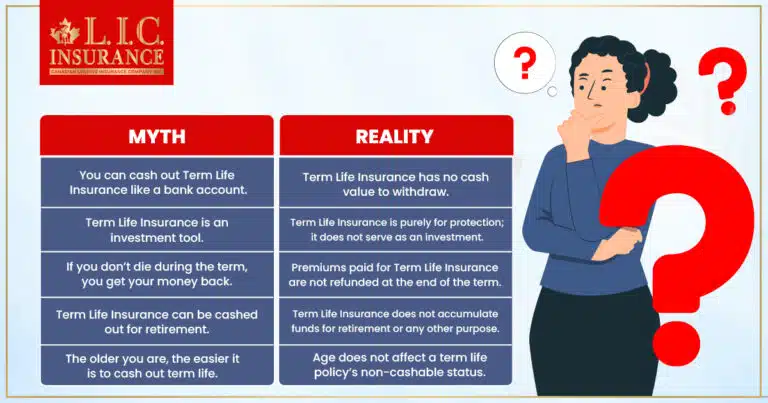
Why You Should Use An Insurance Broker?

Insurance brokers are licensed professionals who help individuals with their insurance needs, including identifying the right policy based on their specific needs and budget.

Why You Should Use An Insurance Broker?

By Canadian LIC, February 14, 2022, 8 Minutes

Why You Should Use An Insurance Broker

Insurance brokers are licensed professionals who help individuals with their insurance needs, including identifying the right policy based on their specific needs and budget.

What is an Insurance Broker, and what do they do?

Characteristics of a Good Insurance

A professional who is an expert in the field of insurance and provides professional advice and continuous service as per the needs of its customers whenever required is an insurance broker. If you are new to the world of insurance and don’t know what to do, then an insurance broker can make everything quite simple and smooth.

They research and provide the best possible insurance solutions as per individual needs. You get access to insurance which offers the best value and peace of mind with the knowledge of an insurance broker. An insurance broker looks after all your insurance needs, thus saving you your time, money and all the worry. They will suggest you a variety of products within your budget after assessing your exposure to risk.

You can gather more information on insurance brokers through the government website as well.

Who should go with an Insurance Broker?

The below-mentioned types of buyers get the most benefits from using an insurance broker to buy insurance:

Top 11 Benefits of Insurance Brokers in Canada

Below mentioned are the reasons you should use an insurance broker in Brampton:

Can we trust an Insurance Broker?

Insurance brokers usually get commissions from the insurance companies for the many types of insurance they sell if they are able to sell it successfully. These insurance agents work with a number of insurance providers, so there are very few chances of them having a monetary bias for any one particular product. Hence they are unbiased and impartial parties and provide you with a policy that would be in your budget as per your requirements from so many different insurance companies in their knowledge.

Do Insurance Brokers Understand the Products They Sell?

You will definitely be able to make a much better decision if you buy insurance through an insurance broker rather than directly from any insurance company. An insurance broker’s job is to have all the best knowledge about the best insurances available in the market from the best insurance companies and hence will advise you for one which is perfect for your budget. These insurance brokers in Canada are very well aware of the application requirements, coverage terms, and pricing.

Whatever insurance you are looking for, be it critical illness insurance, disability insurance, life insurance, etc., you can easily buy through an insurance broker in Ontario after comparing them with each other. Mostly all the insurance brokers cover all types of insurance, but you might find a few who specialize in specific ones. So if you want an expert opinion on a particular insurance, you can go to these types of insurance brokers in Canada.

The Benefits of Working with an Insurance Broker in Toronto

Alongside helping you choose the ideal insurance policy for you and your family, working with expert insurance brokers has its advantages. Here’s how you will benefit from hiring an insurance broker in Toronto before choosing a policy:

Get The Best Insurance Quote From Canadian L.I.C

Call 1 844-542-4678 to speak to our advisors.

Canadianlic best insurance quote

Some Tips On Choosing The Right Insurance Broker​

Although there is no established formula for finding the right broker for your insurance needs, what you should look for is someone who has a minimum set of attributes to shift through several policies and identify the right option for you. Here are some tips that can help you hire an insurance broker:

Process of Application

During the Application process, certain documents will be needed from you, such as:

There are certain insurance policies that might even require you to go for a Health Exam before the issue of the policy, but it has become really rare now. 

Whatever situations you might be facing for the type of insurance you are dealing with, you will have complete guidance and support from the insurance broker in Toronto you are working with. A few things to consider before making your decision to buy your policy are as follows:

If in case you have missed anything or want to add to your plan, your broker should be able to do that for you effortlessly. Once you have made up your mind, the insurance broker will complete the application process and will proceed with the payment process for you. If you are required to make a claim, the broker might also support you after the coverage gets life.

To learn more about the application process, you can read – Getting an Insurance Policy.

What is the cost of buying Insurance from the Best Insurance Broker in Canada?

An insurance broker is paid by insurance companies and not by clients. They cannot charge a fee; if they do, then it might be a scam. 

You only have to pay the fee for the insurance policy you buy but not any fee to the broker. The prices of different insurance policies vary to a great extent as per their type and coverage.

In fact, if you buy insurance from an insurance broker in Canada, it might be cheaper than buying directly from the insurance company. This happens because the insurance broker provides you with various discounts and also negotiates the price of the plan. You can even take the benefits of rebates by bundling different policies together.

Thus to put it in simple terms, you might experience a vast difference in the cost of insurance when you buy it through a broker but not in any case, you will have to pay fees to the broker. You will only have to pay the price of the insurance policy you are buying after you have made the decision to buy it.

Get The Best Insurance Quote From Canadian L.I.C

Call 1 844-542-4678 to speak to our advisors.

Other Insurance Buying Options​

You can even buy your insurance directly through the insurance company or work with an agent if you are not interested in buying through a broker. But if you do so, then you will lose the biggest benefit of comparing different insurances available in the market. If you decide to work with an agent, it is best advised to do your proper research so that you are able to grab the best deal for your plan. 

Final Thoughts

Hiring an insurance broker can be difficult, but if you choose our team at Canadian LIC in Toronto, you will be hiring a team of professionals who can help you get a tailored insurance policy at affordable premium rates. Please schedule a consultation today; we look forward to meeting you. We are based in Toronto.

The above information is only meant to be informative. It comes from Canadian LIC’s own opinions, which can change at any time. This material is not meant to be financial or legal advice, and it should not be interpreted as such. If someone decides to act on the information on this page, Canadian LIC is not responsible for what happens. Every attempt is made to provide accurate and up-to-date information on Canadian LIC. Some of the terms, conditions, limitations, exclusions, termination, and other parts of the policies mentioned above may not be included, which may be important to the policy choice. For full details, please refer to the actual policy documents. If there is any disagreement, the language in the actual policy documents will be used. All rights reserved.

Please let us know if there is anything that should be updated, removed, or corrected from this article. Send an email to Contact@canadianlic.com or Info@canadianlic.com

Your Comprehensive Guide For Money Back Life Insurance

When you listen to the term money-back, the chances are that you are immediately interested in the matter. There’s no reason why you shouldn’t be, after all, you’re getting back the funds that you have invested in a matter, which means that your investment was fruitful. However, with most insurances, this might not be the case. As you pay your premiums, you do not get them back if you have outlasted the term of the insurance without making a claim. However, you would be glad to know that you can get this amount back if you have chosen Whole-Life Insurance or Universal Life Insurance. Wondering how? Well, read on to find out.

Your Comprehensive Guide For Money Back Life Insurance

By Candian LIC,  July 30, 2021, 2 Minutes

Your Comprehensive Guide For Money Back Life Insurance

When you listen to the term money-back, the chances are that you are immediately interested in the matter. There’s no reason why you shouldn’t be, after all, you’re getting back the funds that you have invested in a matter, which means that your investment was fruitful. However, with most insurances, this might not be the case. As you pay your premiums, you do not get them back if you have outlasted the term of the insurance without making a claim. However, you would be glad to know that you can get this amount back if you have chosen Whole-Life Insurance or Universal Life Insurance. Wondering how? Well, read on to find out.

Simplifying Money-Back Life Insurance for you

When you’re applying for Universal or Whole Life Insurance, you know that the insurance term is so long that it can compare it to your whole life in terms of years. These terms can be anywhere between 90-110 years. You would also know that these policies have a cash-value component that increases over time as you pay your monthly premiums as a part of the premium is contributed to the cash component. However, the remaining percentage of the premium is treated as it is, making you think that you would never get it back.

You would be pleased to know that you would be getting the premium amount back with these policies if you plan smart when applying for the insurance. While the insurance company is drawing out the contract, customize it and add a money-back clause. Putting this money-back clause would enable you to get back the premium amount at the end of the maturity period. In the unfortunate event of you passing away, your beneficiaries will get the premium amount. The percentage varies depending on the paperwork, and you can discuss this matter with your financial advisor.

Several advantages of Money-Back Life Insurance

If you do add a Money-Back or an ROI clause to your insurance contract, there are several advantages that you will benefit from. Have a look at the list below to know what they are:

Coming back to the money-back clause, you may have to pay a high premium due to this. However, when you weigh in the benefits, you can see for yourself that in the long run, the policy can be a moneymaker; the choice would be up to to you, whether to opt for this or not.

Get The Best Insurance Quote From Canadian L.I.C

Call 1 844-542-4678 to speak to our advisors.

Canadianlic best insurance quote

The above information is only meant to be informative. It comes from Canadian LIC’s own opinions, which can change at any time. This material is not meant to be financial or legal advice, and it should not be interpreted as such. If someone decides to act on the information on this page, Canadian LIC is not responsible for what happens. Every attempt is made to provide accurate and up-to-date information on Canadian LIC. Some of the terms, conditions, limitations, exclusions, termination, and other parts of the policies mentioned above may not be included, which may be important to the policy choice. For full details, please refer to the actual policy documents. If there is any disagreement, the language in the actual policy documents will be used. All rights reserved.

Please let us know if there is anything that should be updated, removed, or corrected from this article. Send an email to Contact@canadianlic.com or Info@canadianlic.com

Guide to Term Life Insurance

Term Life Insurance is an affordable insurance policy that protects a fixed amount and period. The period could be for 10, 20, 30 years or more. This coverage makes sure your future is well-taken care of, no matter the circumstances. At Canadian L.I.C., we offer a wide range of Term Life Insurance policies for you to choose from. Give our team a call today to find out more information. We offer our services to individuals across Brampton and the surrounding areas.

Guide to Term Life Insurance

By Candian LIC, July 24, 2021, 5 Minutes

Guide to Term Life Insurance

Term Life Insurance is an affordable insurance policy that protects a fixed amount and period. The period could be for 10, 20, 30 years or more. This coverage makes sure your future is well taken care of, no matter the circumstances. At Canadian LIC, we offer a wide range of Term Life Insurance policies for you to choose from. Give our team a call today to find out more information. We offer our services to individuals across Brampton and the surrounding areas.

Quick and simple process

Term life insurance is the least expensive and most straightforward policy you can find. To become a policy owner, you do not need to provide any proof of medical health; you need to answer a few questions depending on the coverage you choose. The term of the policy starts from 5 years up to 40 years. The policy will expire after the insured has turned 85 years old. In the event that you outlive your insurance, you have the option to renew your policy. Your premiums will vary depending on your age and lifestyle but are guaranteed to stay the same for the term you have selected. If you sadly pass away within the term period, the amount would be paid to the beneficiaries you mentioned in the insurance policy. For further details, contact Canadian LIC today.

Why Is Term Life Insurance critical?

Term Life Insurance provides a security blanket for those families that depend solely on one person for financial support. In the event of your demise, they receive a lump-sum, tax-free amount to help them cover your funeral expenses, as well as to utilize the money as they see fit. It could be paying for your children’s education, maintaining their living standards, and much more. Give us a call today at 416 543 9000. We are available 24/7.

Affordable insurance coverage

This type of insurance coverage is suitable for people who need insurance protection for a limited period or a tight budget. It is an excellent option for business owners as this kind of insurance can cover employees for a certain period – for several years or until they retire. Term Life Insurance is an affordable insurance policy option if you are a young adult or a newly married couple.

Need help with the policies? Give us a call today!

Choosing the right Term Life Insurance policy to suit your needs can be stressful and complicated. At Canadian LIC, our team of expert insurance advisors will assist you every step of the way, ensuring you make the right decision. You can rest assured that we will educate you on all the options available and only proceed once you are satisfied with the policy. Do not hesitate to speak to our team to schedule an appointment, or call us at 416 543 9000 for further inquiries. We serve customers throughout the Brampton area.

Term Insurance: What You Should Know

When it comes to Life insurance, it doesn’t always have to be a life-long commitment. There are several policies that you can choose from, and term insurance is an ideal option. It offers affordable coverage for your significant expenses, so your dear ones are financially protected when it matters.

As a Life Insurance product, it guarantees a death benefit payout to the stated beneficiary in the contract within a specific period, generally 5-40 years. When you purchase this policy, your coverage amount and premiums will be locked in for the entire term of the policy’s tenure. Additional benefits include the payout being completely tax-free. If you want to know more about Term Insurance, read on.

How does Term Insurance work?

The first step is always to do your market research and find a company that can help you make the right decision and meet your insurance requirements. You can get in touch with Canadian LIC, and we will be more than happy to help.

Get The Best Insurance Quote From Canadian L.I.C

Call 1 844-542-4678 to speak to our advisors.

Canadianlic best insurance quote

Some factors that may affect the Insurance cost

Compared to Whole Life Insurance, Term Life Insurance is more affordable. However, certain factors can affect the expenses of the policy, and these would include:

Why would you need Term Insurance?

Term Life Insurance can act as a financial safety net for your family. In the situation of your untimely death, the payoff can cover your mortgage balance, pay the education costs of your children, and much more. You can find out more about the advantages of Term Insurance by getting in touch with the team at Canadian LIC; they are experts in the field.

They can also help you with several other insurance policies, such as Critical Insurance and Disability Insurance; give them a Call.

Reasons You Must Invest In A Term Life Insurance Policy

Buying insurance? Here are the five reasons for you to choose term life insurance plans!

Adulthood is almost synonymous with having to make a bunch of purchases, such as a life insurance policy. With the wide variety of choices available, it can get hard to decide which plan would work for you.

Term life insurance may not cross the minds of those willing to make longer commitments for their family, but it allows you to stay in charge of your finances and make changes at a later date.

5 Reasons A Term Life Insurance Policy Is A Good Investment

Get The Best Insurance Quote From Canadian L.I.C

Call 1 844-542-4678 to speak to our advisors.

Final Thoughts

Term life insurance is a policy that is not too complex in terms of how it functions. It protects your family’s financial needs in case something happens to you. In your absence, their lifestyle is not compromised as they will receive the lump-sum amount as death benefits. It does not bring in an investment angle or a money-back benefit, making it really simple to understand.

The workings of policy are not simple; they are equally simple to obtain and keep. The right insurance broker can help you determine the right plan quickly.

Term life insurance plans in Canada allow you to search for plans that are more affordable. This is because they last only for a pre-determined term and can be closed easily. These plans come with better rates and are often considered an affordable choice compared to other insurance plans.

The coverage, however the plan sounds simple, is sizeable. Like any other insurance policy plan in Canada, the final sum depends on your financial capability and your broker’s way of dealing with things.

As a plan that is considered to be affordable, it also provides premium benefits. The premiums are usually very affordable and can be covered even by someone who has just got their first job out of college. And it is always advisable to start a term life insurance plan as soon as you can, in early adulthood.

A term life insurance policy is a good investment for most of us as it is easy on the pocket and can provide our loved ones with sizeable coverage as well. Get in touch with a term life insurance provider in Canada. Contact Canadian LIC today.

Get The Best Insurance Quote From Canadian L.I.C
Call +1 844-542-4678 to speak to our advisors.
Get Quote Now

FAQs

Term Life Insurance policies typically range from 5 to 40 years, depending on the coverage you choose.

Generally, no medical proof is required, but you may need to answer some health-related questions based on the policy.

Yes, you can renew your Term Life Insurance policy once it expires or convert it to a permanent life insurance policy.

Premiums are influenced by factors such as age, health, lifestyle, and occupation.

Yes, the lump-sum payout from Term Life Insurance can be used for various expenses, including education costs for your children.

A Level Term Life Insurance Policy offers fixed premiums and a guaranteed death benefit throughout the entire term of the policy.

The above information is only meant to be informative. It comes from Canadian LIC’s own opinions, which can change at any time. This material is not meant to be financial or legal advice, and it should not be interpreted as such. If someone decides to act on the information on this page, Canadian LIC is not responsible for what happens. Every attempt is made to provide accurate and up-to-date information on Canadian LIC. Some of the terms, conditions, limitations, exclusions, termination, and other parts of the policies mentioned above may not be included, which may be important to the policy choice. For full details, please refer to the actual policy documents. If there is any disagreement, the language in the actual policy documents will be used. All rights reserved.

Please let us know if there is anything that should be updated, removed, or corrected from this article. Send an email to Contact@canadianlic.com or Info@canadianlic.com
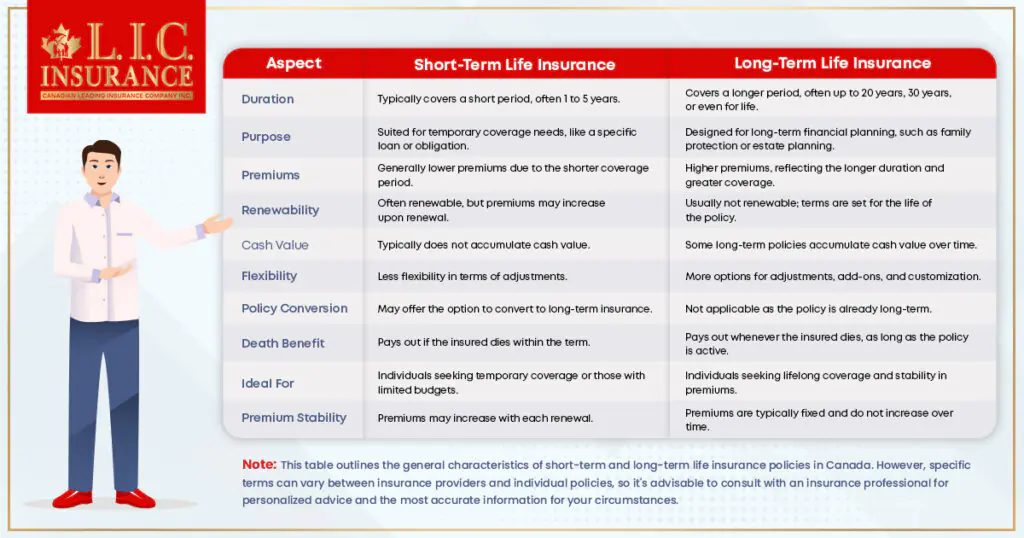
Why Get Term Life Insurance?

Sometimes insurance policies can seem out of reach if you are struggling with funds. Take a look at Term Life Insurance for an insurance policy that suits your budget and lifestyle.

Why Get Term Life Insurance

By Candian LIC, May 17, 2021, 8 Minutes

Why Get Term Life Insurance

Sometimes insurance policies can seem out of reach if you are struggling with funds. Take a look at Term Life Insurance for an insurance policy that suits your budget and lifestyle.

What is Term Life Insurance?

Known to be easy to understand and affordable, Term insurance is a plan that keeps your insurance costs the same for a set amount of time (known as the term.) You can renew it at the end of one term to start a new term. If you pass away while your policy is still in effect, the payment will go, tax-free, to your beneficiaries. You can convert this coverage to permanent insurance if you want to, without worrying about health, lifestyle, or occupation changes.

Benefits of Term Life Insurance

Things To Know Before Buying Term Life Insurance

Term life insurance is a policy that pays a death benefit to beneficiaries if the policyholder passes away within a certain period of time or before a certain age is reached. For example, your coverage can be for a fixed time period, or until you reach the age of 85.

Term Insurance is an easy-to-understand and affordable way to keep your family’s financial situation secure if anything ever happens to you. When you buy a Term Life Insurance policy, you need to decide on three things. You need to decide on the company you prefer, your preferred length of term, and the amount of coverage. You will be covered for the term by paying the premium.

Your Family Can Use The Funds For:

Some things you should know before buying Term Life Insurance

Amount of Coverage: Reviewing your financial goals and figuring out the amount of coverage you need, will help guide you to the right policy. Although working with an Insurance Advisor is recommended, you can add up debts, tuition, and mortgage, subtract what you would pay, and the difference would be the estimated needed coverage.

Length of Term: You can choose a fixed term, allowing you to easily budget, and save more of, your money. You can choose anywhere from 10 to 50 years of coverage or you can pick a term of coverage as per your need which will cover you for the selected term

Look Around: You will need to search for the right insurance for you. As with most life insurance policies, your health and other factors play a big role in coverage. Rates will also vary from company to company. An insurance agent can help you find what you need.

Being Healthy: Although most insurance applications take weeks, and you have to fill out documents, have an exam, and give information if you are healthy, the process can move along quicker. If you don’t have any health conditions, you may be able to have an agent use online applications to approve you quicker than usual. Even if you do have to wait several weeks, you can still get temporary coverage.

Term Life Insurance is usually more affordable than other plans because it only covers a set term and doesn’t build up cash value. For those who may be struggling financially, Term Life Insurance can give you insurance security without stressing your bank account.

Why You Must Invest In Term Life Insurance

If you are looking for affordable life insurance, perhaps you should consider Term Life Insurance. It is set up to keep your family financially stable if you pass away. Paying for such a policy is worth the peace of mind it will bring to you and your family.

What is Term Life Insurance?

Term Life Insurance is a very simple plan designed to give death benefits if the policyholder passes away during the plan’s term. This type of plan is a great choice for those who want to secure stability for the family after the policy holder’s death. Term Life Insurance usually has high coverage with affordable premiums. The coverage is set for a certain length of time, usually 10 to 50 years, and once the policyholder passes, the beneficiaries will have a payout from the policy.

Get The Best Insurance Quote From Canadian L.I.C

Call 1 844-542-4678 to speak to our advisors.

Canadianlic best insurance quote

How does It Work?

The insurance company will pay your beneficiaries the amount you agreed on if you pass away during the policy’s term. You agree to pay a monthly premium to the insurance company for the duration of the term.

Reasons to Consider Term Life Insurance

With Term Life Insurance, you can rest easy knowing your family will be financially secure if anything should ever happen to you. Ask about this type of insurance policy today.

Get The Best Insurance Quote From Canadian L.I.C

Call 1 844-542-4678 to speak to our advisors.

The above information is only meant to be informative. It comes from Canadian LIC’s own opinions, which can change at any time. This material is not meant to be financial or legal advice, and it should not be interpreted as such. If someone decides to act on the information on this page, Canadian LIC is not responsible for what happens. Every attempt is made to provide accurate and up-to-date information on Canadian LIC. Some of the terms, conditions, limitations, exclusions, termination, and other parts of the policies mentioned above may not be included, which may be important to the policy choice. For full details, please refer to the actual policy documents. If there is any disagreement, the language in the actual policy documents will be used. All rights reserved.

Please let us know if there is anything that should be updated, removed, or corrected from this article. Send an email to Contact@canadianlic.com or Info@canadianlic.com

The Benefits of Whole Life Insurance

Whole Life Insurance is exactly what it sounds like, a Permanent Insurance policy for your entire life. You and your beneficiaries will be in a permanent financial safety net till the day you pass away, or the term ends. It comes with a fixed premium, which means you won’t have to worry about variable rates now and then. Also, when it isn’t likely that you would opt to renew for another term. You see, for this type of plan, the term ends after 90 or 100 years. However, these shouldn’t be the only reason why you should opt for Whole Life Insurance. That’s why, to give you a clear understanding of what are the additional benefits that come with this policy, we have made a list below. Have a look.

The Benefits of Whole Life Insurance

By Candian LIC, June 16, 2021, 4 Minutes

The Benefits of Whole Life Insurance

Whole Life Insurance is exactly what it sounds like, a Permanent Insurance policy for your entire life. You and your beneficiaries will be in a permanent financial safety net till the day you pass away, or the term ends. It comes with a fixed premium, which means you won’t have to worry about variable rates now and then. Also, when it isn’t likely that you would opt to renew for another term. You see, for this type of plan, the term ends after 90 or 100 years. However, these shouldn’t be the only reason why you should opt for Whole Life Insurance. That’s why, to give you a clear understanding of what are the additional benefits that come with this policy, we have made a list below. Have a look.

The Cash Value:

Similar to permanent life insurance policies, whole life insurance also comes with a cash component which only accumulates over time. It is guaranteed to grow at a particular rate and can be used as an investment vehicle. Additionally, this component is also tax-sheltered throughout its lifetime.

You can withdraw the cash component at any time and can use it in:

However, you will have to keep in mind that it will deduct the loan amount from the death benefits if you borrow against the cash value and then pass away.

Let’s talk dividends:

If you’ve opted for a dividend-paying whole life insurance policy, there is a chance of a dividend cash-out in case the insurer performs better than expected. As a policyholder, you will be able to participate in the company’s profits after they have paid all death benefits and other business expenses.

No medical exams:

Generally, medical exams are not a component of life insurance policies, but they are always in the underwriting. However, choosing a guaranteed acceptance whole life insurance means you will have the option to skip detailed health questions and the medical exam.

Complete life coverage:

To reiterate, with whole life insurance, you get a policy for the entirety of your life. You can add your family member or any dear one as your beneficiary, and as long as you can pay the premium, you will reap the policy’s benefits.

These are to name a few; however, if you’re still not convinced about whether you should apply for this policy, contact Harpreet Puri. She’s an experienced insurance broker and can help you with your queries.

When Is Whole Life Insurance a Good Investment Strategy?

Under whole life insurance first

Well, before we get into the nitty-gritty of the matter, you have to understand what whole life insurance is. Often also referred to as permanent life insurance, this type of insurance is exactly what it says. The policy offers insurance coverage till you the day you die given that you keep on paying the monthly premiums.

A major feature of a whole life insurance plan is, there is a cash component value to it. If after some years you are not able to pay the premium amounts, the premiums that you have paid would be used to pay the monthly premium amount. This saves you from the headache of losing your insurance coverage.

Coming to the benefits, whole life insurance has a whole list of them. Some are mentioned below:

You can find out more about whole life insurance by getting in touch with Canadian LIC.

When does whole life insurance make sense?

Applying for whole life insurance sometimes can be an expensive option as you will have to pay the premiums throughout your life. However, in some instances, whole life insurance can be beneficial.

In the mentioned scenarios, whole life insurance may look like a good option but we advise you to get in touch with financial advisors for a better decision based on your requirements. Contact Canadian LIC and schedule an appointment today.

Get The Best Insurance Quote From Canadian L.I.C

Call 1 844-542-4678 to speak to our advisors.

Canadianlic best insurance quote

The above information is only meant to be informative. It comes from Canadian LIC’s own opinions, which can change at any time. This material is not meant to be financial or legal advice, and it should not be interpreted as such. If someone decides to act on the information on this page, Canadian LIC is not responsible for what happens. Every attempt is made to provide accurate and up-to-date information on Canadian LIC. Some of the terms, conditions, limitations, exclusions, termination, and other parts of the policies mentioned above may not be included, which may be important to the policy choice. For full details, please refer to the actual policy documents. If there is any disagreement, the language in the actual policy documents will be used. All rights reserved.

Please let us know if there is anything that should be updated, removed, or corrected from this article. Send an email to Contact@canadianlic.com or Info@canadianlic.com

What Is Life Insurance and How Does It Work?

Long-term goals: Throughout your life, you may have some dreams or goals that may be a bit difficult for you to achieve based on your financial condition. You will be pleased to know that some insurance policies are tied to certain investments which can help you achieve your goals

What is life insurance and how does it work

By Candian LIC, October 27, 2020, 4 Minutes

Everything You Need to Know About Mortgage Insurance

Long-term goals: Throughout your life, you may have some dreams or goals that may be a bit difficult for you to achieve based on your financial condition. You will be pleased to know that some insurance policies are tied to certain investments which can help you achieve your goals

Clearing your debts: Certain life insurance policies can help you in clearing our different types of debts such as auto loans, home loans and more. Don’t leave your family in a financial crisis, choose a life insurance policy today.
Secure the future of your loved ones even when you are gone: This is one of the major reasons why you should get life insurance. In the event when you pass away, what happens to your family? How will they sustain financially? Life insurance can take care of this matter and see to it that your family has financial stability.

Business investments: Life insurance policies are not only for you and your family. It can also protect your business from a financial crisis as well. There are two options available; term insurance, which can for a period of 10, 20, 30 years and full life insurance. For further details call us.

Save on taxes: You can also save on taxes by getting life insurance. The premium that you pay is eligible for tax benefits
Money back clause: You can add a money-back clause (ROI) in your life insurance agreement which means, you with getting a complete refund of the whole amount at the end of your tenure.

Who Needs Life Insurance

How often have you thought about getting life insurance? What were your reasons for passing on the opportunity? If you are wondering if life insurance is for you, now might be the right time. For many, life has brought so many changes in the past year. Maybe now you have a home or family of your own and are beginning a new stage in your life.

What is life insurance?

The simplest definition of life insurance is: life insurance is a type of financial coverage that is paid to a beneficiary upon the death of the policy holder (you.) There are various kinds of policies, and it is a good idea to speak to an insurance broker at Canadian LIC to see which one is right for you, your situation and budget. Three simple things you should consider when looking for life insurance are: Dependants, Income, and Financial Responsibilities.

Why should I get life insurance? Are there any benefits to having a life insurance policy?

Here are four simple reasons you should get life insurance.

During this time, everyone has different financial needs, and worries. To find a policy that suits you the best now, is important. With so many policies, there is something for everyone, even those who think they can’t afford this type of insurance. Remember, no one thinks about getting life insurance when things are going well, and they are healthy and young. That, however, is actually the best time to take control and get insurance. Even the smallest, life insurance policy brings peace of mind. You will be comforted knowing you have taken care of your loved ones, no matter what happens in the future.

Get The Best Insurance Quote From Canadian L.I.C

Call 1 844-542-4678 to speak to our advisors.

Reasons to buy life insurance

Often, you hear someone say how important having life insurance is. Perhaps now you have a home or family of your own and you are beginning a new stage in your life. You may be wondering if life insurance is for you.

What exactly is life insurance?

One way of describing it is: life insurance is financial coverage to be paid to a beneficiary upon the death of the policyholder. There are countless types of policies, and it is a good idea to do your homework to see which one is right for you and your situation. Three things to consider when searching for life insurance are income, dependents, and financial obligations.

Now you may ask, “Why should I get life insurance? Are there any benefits to such a policy?” Below are four reasons you should buy life insurance.

Everyone has different financial needs, and it is important to find a policy that suits you the best. There are policies for everyone, even those who think they can’t afford life insurance. No one really thinks of getting life insurance when they are young and full of health, but that is the best time to take charge and get some. Life insurance brings peace of mind, even with the smallest policy. It will comfort you knowing your loved ones are taken care of, no matter what, in the future.

How does it work?

To understand how a life insurance plan would work for you, we will have to first understand what are the kinds of life insurance plans available.

1. Term Life Insurance:

A term life insurance provides coverage only if the person passes away within a specified period of time. With this policy, the end of the term insurance can be set depending on a time duration or as an age limit.

It involves a consistent requirement of premiums and will be considered void if even one is missed. Term Life Insurance also works only if the event happens within the specified time period. If not, the beneficiaries do not receive any payouts.

2. Whole Life Insurance

The second type of coverage works without an age limit or a time period specification. The beneficiaries will be eligible to receive payments as long as you have ensured that the payments are being made at the right time for it.

Another thing whole life insurance has is the cash value. If you were to sell your whole life insurance, you would be able to get money instead of it. It builds up over time according to your premium payment.

3. Universal Life Insurance

Universal life insurance combines the benefit of an investment account with an insurance policy. The value of the policy may wax or wane depending on the kind of investments you have made.

This type of insurance also holds cash value and it can be used as collateral for a loan.

The insurance market has a variety of plans that help you curate one which suits your family the best. Taking help from an insurance broker from Canadian LIC Inc and can help you find the right one at the right price with more ease and comfort. They are experienced individuals who know the market like the back of their hand.

Get in touch with an expert and get your peace of mind. Connect with Canadian LIC for your life insurance today.

Life Insurance for Children

Life insurance is for everyone, even children. Although we don’t seem to talk about children needing life insurance, it is a way of protecting an act of love. Even if your children are still dependant on you, there are reasons why such a policy is a good idea. So, let’s see how important children’s life insurance is, and see if it is a great idea for your family.

As with all life insurance policies, life insurance policies for children are contracts with insurance companies. However, children’s policies are more focused on providing financial protection for the life of the child, but still include protection if the child pre-deceases you. This kind of insurance guarantees long term financial security to a dependant’s child. If your child has a hobby involving risky, such as scuba diving, motocross, or horseback riding, perhaps you should think about getting insurance.

The Benefits of Children’s life insurance:

There are several different types of Children’s Life Insurance. One is to have the child be a “rider.” The child “rides” on your policy and is called a term rider. This dependant is added to the parent’s policy. Term riders usually have less coverage, but because of that, are less expensive. Another type of life insurance for children is permanent or Whole Life insurance.  Whole life insurance has lifelong coverage, and is an independent policy that does not have an expiry date. This policy is solely the children.

Getting life insurance for a child is a big and personal decision to be made, and it’s a decision that requires some discussion and research. To choose the best available option for your family, ask your insurance broker at Canadian LIC to advise you. Let your decision be comfortable knowing you have the best information available to protect your family.

Get The Best Insurance Quote From Canadian L.I.C

Call 1 844-542-4678 to speak to our advisors.

Canadianlic best insurance quote

Tips to save on your life Insurance

Deciding on life insurance is a big decision. You may feel that you can’t afford to have a good policy, but don’t worry, there are ways to save money while getting the best policy for you and your loved ones. Here are some ideas to help save money on your life insurance.

There is a policy out there for everyone, and these five simple points will guide you on saving money with your life insurance.

The above information is only meant to be informative. It comes from Canadian LIC’s own opinions, which can change at any time. This material is not meant to be financial or legal advice, and it should not be interpreted as such. If someone decides to act on the information on this page, Canadian LIC is not responsible for what happens. Every attempt is made to provide accurate and up-to-date information on Canadian LIC. Some of the terms, conditions, limitations, exclusions, termination, and other parts of the policies mentioned above may not be included, which may be important to the policy choice. For full details, please refer to the actual policy documents. If there is any disagreement, the language in the actual policy documents will be used. All rights reserved.

Please let us know if there is anything that should be updated, removed, or corrected from this article. Send an email to Contact@canadianlic.com or Info@canadianlic.com

Life Insurance Policy Form