- Connect with our licensed Canadian insurance advisors
- Shedule a Call


BASICS
- Is Infinite Banking A Smart Financial Strategy?
- Understanding the Infinite Banking Concept
- Why Infinite Banking Appeals to Canadians Seeking Financial Freedom
- How Infinite Banking Strategy Helps Build Financial Independence
- Challenges and Misconceptions About Infinite Banking
- Who Should Consider Infinite Banking for Financial Freedom?
- How to Start Your Infinite Banking Journey
- Key Advantages of the Infinite Banking Strategy
- A Day-to-Day Struggle: Why More Canadians Are Exploring Infinite Banking
- Potential Drawbacks You Should Know
- The Future of Infinite Banking in Canada
- Is Infinite Banking a Smart Financial Strategy?
COMMON INQUIRIES
- Can I Have Both Short-Term and Long-Term Disability Insurance?
- Should Both Husband and Wife Get Term Life Insurance?
- Can I Change Beneficiaries on My Canadian Term Life Policy?
- What Does Term Life Insurance Cover and Not Cover?
- Does Term Insurance Cover Death?
- What are the advantages of Short-Term Life Insurance?
- Which Is Better, Whole Life Or Term Life Insurance?
- Do Term Life Insurance Rates Go Up?
- Is Term Insurance Better Than a Money Back Policy?
- What’s the Longest Term Life Insurance You Can Get?
- Which is better, Short-Term or Long-Term Insurance? Making the Right Choice
IN THIS ARTICLE
- What is the minimum income for Term Insurance?
- How Does Income Affect Your Term Life Insurance Policy?
- Can You Buy Term Life Insurance Online with a Low Income?
- How Can You Lower Your Term Life Insurance Cost?
- How Much Term Life Insurance Do You Need?
- Can Your Term Life Insurance Policy Be Adjusted Over Time?
- Why Term Life Insurance Is Ideal for Lower-Income Canadians
- Final Thoughts
- More on Term Life Insurance
Canada’s 2026 Study Permit Cap Exemptions: What International Students Need To Know About Eligibility And Insurance

By Pushpinder Puri
CEO & Founder
- 11 min read
- December 19th 2025
SUMMARY
Canada’s 2026 study permit cap exempts master’s and doctoral students at public institutions, offering faster processing and clear PGWP pathways. International Student Insurance Policy Canada options remain essential, covering International Student Insurance requirements for travel, dependents, and medical care. We support international students with insurance, eligibility, and timely study permit applications.
Introduction
The rules have changed, and not everyone gets a fresh start. Canada’s new immigration template for international students is a tighter, slimmer model laser-focused on graduate-level talent — and if you’re thinking about studying here starting in 2026 or later, the time to figure out where you rank is from now until that door closes even more.
By January 2026, a cap on federal study permits is set to come into full force in Canada—a limit on the number of new international students who can enter the country. But here is the catch: If you’re currently in pursuit of a master’s or academic doctoral degree at a public university, there’s an exception; you are exempt.
This adjustment, featured on the newly-released 2026-2028 Immigration Levels Plan, the handiwork of Immigration, Refugees and Citizenship Canada (IRCC), is the government’s bid to offset immigration pressures with actual capacity on the ground — housing, healthcare, infrastructure — and still pull in smarts from around the world.
We’ve assisted thousands of international students with insurance, documentation, and planning for their academic future. And here’s what this 2026 change actually means for you.
Who Is Exempt From Canada’s Study Permit Cap In 2026?
If you’re thinking of a PhD or master’s program in Canada, you just dodged a bullet.
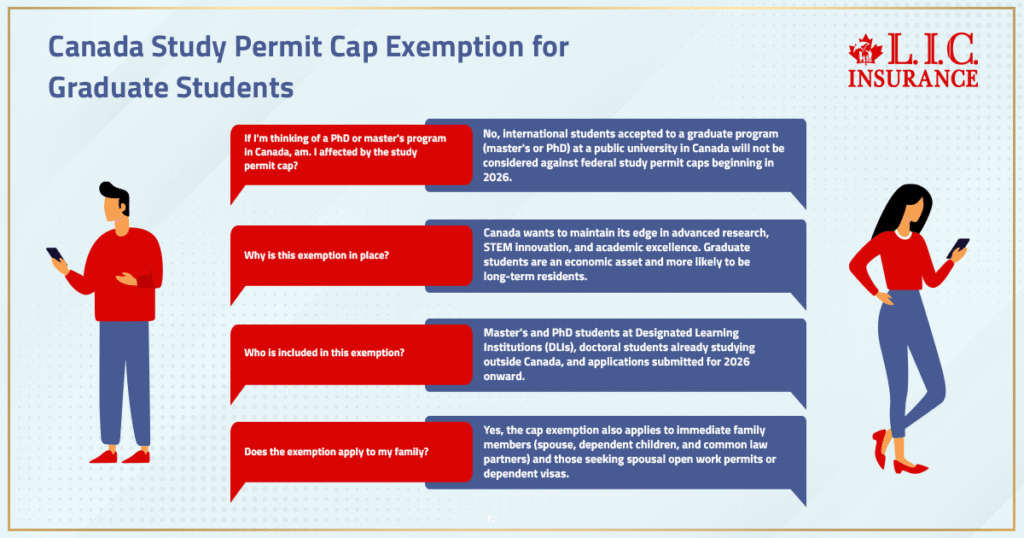
Among the IRCC cap exemptions is an international student accepted to a graduate program (master’s or PhD) at a public university in Canada, who will not be considered against federal study permit caps beginning in 2026.
This exemption isn’t random. Canada has no appetite to sacrifice its edge in advanced research, STEM innovation, and academic excellence. Graduate students are an economic asset and statistically more likely to be long-term residents.
🧠 This includes:
- Master’s and PhD students at Designated Learning Institutions (DLIs)
- Doctoral students already studying outside Canada
- Applications submitted for 2026 onward
🔓 Cap exemption also applies to:
- Immediate family members (spouse, dependent children, and common law partners)
- Those seeking spousal open work permits or dependent visas
Public universities are safe zones — private institutions or unlicensed colleges are not exempt from the national study permit cap.
Faster Processing For Doctoral Applicants From Outside Canada
It is not just that Canadian universities have been failing to recruit international PhD students, in part because of increased global competition. Canada just fired back.
As of January 2026, IRCC commits to processing applications from doctoral students outside of Canada within a time frame of 14 days.
And that includes faster processing for your family — whether it is your spouse, dependent children, or common law partner, if they are coming with you.
➡️ This is limited to only doctoral students applying from outside France. So, if you’re thinking about moving, now’s your moment.
Already, we are seeing this policy shift affect trends in graduate applicants, particularly from South Asia, the Middle East, and West Africa.
Help with mandatory documents (legalization) for proof of relationship or criminal record checks? Our staff can walk you through the entire process.
Canada’s Immigration Levels Plan 2026–2028: Why the Shift Matters
Let’s get into the policy math. Under the new plan:
📊 Canada will cap new international student arrivals at:
- 155,000 in 2026
- 150,000 in 2027
- 150,000 in 2028
This is down from previous levels that crossed 800,000+ temporary residents annually, a figure many experts argue strained public services.
These new study permits will only apply to:
- Students attending DLIs for 6+ month programs
- Not counted: students under visitor visas, short-term programs, or in curriculum licensing agreements at unapproved private institutions
The message is clear: Canada wants fewer and more quality long-term contributors.
🎯 Goal: Keep the temporary resident population — including students, foreign workers, and other non-permanent entrants — below 5% of the total Canadian population by 2027.
This impacts everything from post-graduation work permit pathways to permanent residence eligibility.
How This Impacts Private Colleges And College Programs
Not all institutions are created equal anymore.
Students applying to private colleges or hybrid curriculum licensing agreements will still face tight competition under the national study permit cap.
👎 These students:
- Must get a territorial attestation letter
- Won’t benefit from the cap exemption
- May face longer study permit application timelines
So if you’re considering college programs, verify your school’s DLI status and check your PGWP eligibility — not all private institutions qualify anymore.
🎓 Canadian LIC advises: Apply only to DLIs that guarantee PGWP eligibility after graduation — especially if you plan to apply for express entry or other immigration streams later.
Insurance Requirements For International Students: What You Can’t Skip
Every international student must show proof of Health Insurance Coverage to meet International Student Health Insurance Requirements — and if you don’t, your study permit application could be rejected.
Here’s what you need:
✅ Travel Insurance for international students
✅ Emergency medical coverage
✅ Prescription, dental, and accidental coverage
✅ Pre-existing condition disclosure (if applicable)
✅ Return transportation clause
🛡️ Canadian LIC’s International Student Insurance Policy Canada options include:
- Affordable plans for graduate students
- Bundles for dependent children and common-law partners
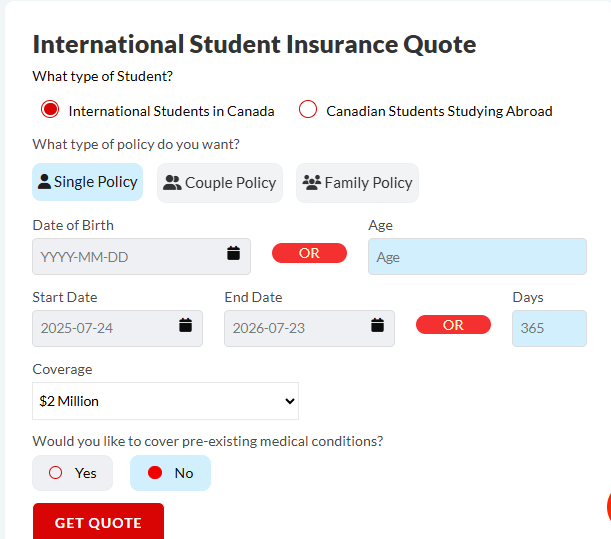
- Instant International Student Insurance quote online access
- Full International Student Insurance Coverage aligned with IRCC standards
💸 Worried about price? The International Student Insurance cost varies by age, program length, and province. But with our team, you’ll always get the best value.
How To Apply Early And Stay Ahead Of The Cap
⏰ Timing will make or break your 2026 application.
As we approach the intake cap, we recommend all students:
- Apply early — submit your study permit application 6–9 months in advance
- Get your attestation letter (PAL) if required
- Confirm your program is eligible and at a designated learning institution
- Budget for tuition fees, living expenses, and insurance
- Ensure clean criminal record documentation
📌 Some programs will offer expedited processing or fast processing, especially if tied to government-prioritized sectors (AI, climate tech, healthcare).
We’re seeing IRCC prioritize top talent and students in STEM fields, public health, and advanced research — especially those applying for PhD programs with accompanying family members.
What Canadian LIC Recommends Right Now
If you’re a prospective student, or even a family member of one, don’t wait for the chaos to start in 2026.
We’re already seeing clients from across the globe fast-track their paperwork, apply for study permit caps exemptions, and secure early International Student Insurance Coverage.
Here’s what our advisors are helping students with right now:
- Preparing and reviewing study permit applications
- Ensuring PGWP and permanent residence eligibility
- Getting a quick, compliant International Student Insurance quote online
- Structuring bundled insurance plans for students with common law partners, dependent children, or spousal open work permits
Whether you’re pursuing a doctorate in Toronto or a master’s in Vancouver, your path to Canada starts with the right plan — and Canadian LIC is ready to walk that road with you.
Final Thoughts: Canada’s Message To The World
The cap on study permits may appear to be a barrier, but it is in fact a clear signal.
Canada is not closing doors — it is refining who gets through. An example of the cap exemption for graduate students that reflects a national strategy: less is more (ipso facto).
🎓 Ph.D. students and master’s-level talent are now at the front of the queue in Canadian immigration priorities.
📈 IRCC pledges major improvements in student integration, permanent settlement, and domestic workforce development.
If you have the grades and goals — and the right insurance in place — this move could serve as the gateway to your future.
Need Help With Insurance, Application, Or Eligibility?
We have helped over 10,000+ international students across Ontario, BC, and Atlantic provinces get compliant, protected, and approved.
Let us quote, protect, and guide your Canadian academic journey.
👉 Start with an International Student Insurance quote online — fast, simple, compliant.
👉 Or talk to a licensed advisor about your application, family documentation, and PGWP strategy.
Get The Best Insurance Quote From Canadian L.I.C
Call +1 416-543-9000 to speak to our advisors.
Get Quote Now
FAQs
As part of your study permit application, students will need to have identity papers, a letter of acceptance, proof of financial support, and health insurance. If applicable, graduate students should include certification letters or evidence of cap-exempt eligibility. Quick processing is about precision and timing. Our advisors ensure every detail is in place.
Yes, students in Canada who change programs or institutions are still eligible under the limit for study permits, being exempt. If your school is not a designated learning institution, then your eligibility for a PGWP in the future may also be affected. Discuss changes with Canadian LIC before making a switch to prevent loss of status.
Students who also enter on a visitor visa will not be added to the cap unless they apply for a study permit at a DLI. They do, however, have to leave the country and re-enter or take an approved inland application route. Our team regularly assists foreign nationals who are looking to change status lawfully and seamlessly.
When applying for an International Student Insurance Policy in Canada, plans with common law partners or dependent children, the total premium increases but stays bundled affordably. We offer coverage tailored to graduate students with families, aligning with International Student Health Insurance Requirements and provincial healthcare gaps.
If you apply late and the intake cap is full, your study permit may be denied or delayed to the next cycle. The cap is enforced tightly across educational institutions, especially private colleges. With our help, we ensure you’re ahead of application deadlines, insurance-ready, and filed early.
To qualify for a post-graduation work permit, your program must be full-time, over 8 months, and offered by a designated learning institution. Programs at unrecognized private institutions or delivered through certain curriculum licensing agreements may not meet eligibility. We can verify your eligibility for the program before you enroll.
Spouses of eligible graduate students can apply for spousal open work permits if the primary applicant is enrolled in a PGWP-eligible DLI. This includes common law partners of both master’s and PhD students, depending on the application. Our advisors help your family members meet all criteria for approval.
For doctoral students, top choices include extended International Student Insurance Coverage with mental health, prescription drugs, and lab testing. We customize affordable International Student Insurance Policy Canada plans for those with research-based workloads, often needing enhanced support.
Without the proper provincial attestation letter or territorial attestation letter, most applications from non-exempt categories will be denied or flagged as incomplete. This affects applicants outside the graduate students’ cap exemption. We ensure every document is filed correctly, especially when study permits are under pressure.
The government requires proof of living expenses, tuition fees, and financial readiness for a full year. Delayed funding won’t stop your study permit application, but IRCC may request further evidence. We help students prepare strong documentation showing sufficient funds and reliable support systems.
Yes, students rejected due to the study permit cap can reapply in the next intake or switch to a qualifying graduate program. Those who apply with our help often benefit from faster processing, stronger files, and a verified International Student Insurance quote online before resubmission.
According to IRCC trends, graduate students—especially in STEM, healthcare, or public policy—integrate well into the economy. Their work-study timeline supports Canadian experience class pathways and long-term permanent residence. We align your application with these future immigration goals from day one.
Yes, many temporary residents—including current international students—face stricter scrutiny on extensions, switching programs, or applying for new permits. The 2026 framework is about reducing the overall immigration system footprint. We review your entire case to ensure continued compliance under changing regulations.
The Express Entry system increasingly values Canadian university graduates, especially doctoral students in research-focused fields. Completing your studies at a public DLI under the international student program gives you a stronger CRS score. With insurance and eligibility secured, our clients are more application-ready.
If you’re a PhD student on a valid permit, you can leave Canada temporarily for research, family, or personal travel. Make sure your return transportation, re-entry visa, and insurance coverage remain valid. We include travel extensions and International Student Insurance cost flexibility in every custom plan.
Key Takeaways
- Canada’s 2026 study permit cap limits new international student arrivals to 155,000, but master’s and doctoral students at public institutions are exempt.
- Doctoral students applying from outside Canada will benefit from 14-day faster processing, including for accompanying family members and common law partners.
- Students enrolling in college programs at private institutions or under curriculum licensing agreements are not exempt from the national cap and may face delays.
- International Student Insurance Policy Canada coverage is mandatory for permit approval, and Canadian LIC provides tailored insurance plans for graduate students and dependents.
- Applicants must prepare a complete study permit application, including attestation letters, proof of sufficient funds, and compliant International Student Insurance Coverage.
- Choosing a designated learning institution (DLI) is critical for PGWP eligibility, long-term permanent residence, and inclusion in express entry pathways.
- Canadian LIC helps students and their families secure compliant coverage, get an International Student Insurance quote online, and prepare for policy changes well before application deadlines.
Sources and Further Reading
- IRCC: Supplementary Information for the 2026–2028 Immigration Levels Plan
Official breakdown of Canada’s immigration targets, policy priorities, and strategic student caps. - CIC News: IRCC Exempts Graduate Students From Study Permit Cap, Offers Faster Processing for Doctoral Students
Covers the cap exemption, who qualifies, and IRCC’s focus on master’s and PhD programs. - CIC News: What International Students Need to Know About Canada’s 2026–2028 Immigration Levels Plan
Outlines study permit quotas, timelines, exemptions, and institutional eligibility. - The PIE News: Canada Exempts Certain Grad Students From 2026 Study Caps
Third-party education source discussing the impact of permit caps on global student mobility. - IRCC: Provincial and Territorial Attestation Letters Requirement
Explains PAL/TAL requirements for applicants subject to the 2026 cap. - IRCC: Open Data on International Students and Temporary Residents
Detailed stats on study permits, DLIs, temporary residents, and permit outcomes. - ICEF Monitor: Canada Launches Incentives to Recruit More Master’s and PhD Students
Industry insights on Canada’s new direction in graduate student recruitment and immigration goals.
Feedback Questionnaire:
We’re here to support international students through the evolving study permit and insurance landscape in Canada. Please take a moment to answer a few quick questions — your input helps us help others like you.
✅ Thank you for your time! A licensed insurance advisor may reach out to assist based on your responses.
IN THIS ARTICLE
- Canada’s 2026 Study Permit Cap Exemptions: What International Students Need To Know About Eligibility And Insurance
- Who Is Exempt From Canada’s Study Permit Cap In 2026?
- Faster Processing For Doctoral Applicants From Outside Canada
- Canada’s Immigration Levels Plan 2026–2028: Why the Shift Matters
- How This Impacts Private Colleges And College Programs
- Insurance Requirements For International Students: What You Can’t Skip
- How To Apply Early And Stay Ahead Of The Cap
- What Canadian LIC Recommends Right Now
- Final Thoughts: Canada’s Message To The World
- Need Help With Insurance, Application, Or Eligibility?
Sign-in to CanadianLIC
Verify OTP