- Connect with our licensed Canadian insurance advisors
- Shedule a Call


BASICS
- Is Infinite Banking A Smart Financial Strategy?
- Understanding the Infinite Banking Concept
- Why Infinite Banking Appeals to Canadians Seeking Financial Freedom
- How Infinite Banking Strategy Helps Build Financial Independence
- Challenges and Misconceptions About Infinite Banking
- Who Should Consider Infinite Banking for Financial Freedom?
- How to Start Your Infinite Banking Journey
- Key Advantages of the Infinite Banking Strategy
- A Day-to-Day Struggle: Why More Canadians Are Exploring Infinite Banking
- Potential Drawbacks You Should Know
- The Future of Infinite Banking in Canada
- Is Infinite Banking a Smart Financial Strategy?
COMMON INQUIRIES
- Can I Have Both Short-Term and Long-Term Disability Insurance?
- Should Both Husband and Wife Get Term Life Insurance?
- Can I Change Beneficiaries on My Canadian Term Life Policy?
- What Does Term Life Insurance Cover and Not Cover?
- Does Term Insurance Cover Death?
- What are the advantages of Short-Term Life Insurance?
- Which Is Better, Whole Life Or Term Life Insurance?
- Do Term Life Insurance Rates Go Up?
- Is Term Insurance Better Than a Money Back Policy?
- What’s the Longest Term Life Insurance You Can Get?
- Which is better, Short-Term or Long-Term Insurance? Making the Right Choice
IN THIS ARTICLE
- What is the minimum income for Term Insurance?
- How Does Income Affect Your Term Life Insurance Policy?
- Can You Buy Term Life Insurance Online with a Low Income?
- How Can You Lower Your Term Life Insurance Cost?
- How Much Term Life Insurance Do You Need?
- Can Your Term Life Insurance Policy Be Adjusted Over Time?
- Why Term Life Insurance Is Ideal for Lower-Income Canadians
- Final Thoughts
- More on Term Life Insurance
What Is The Average Income Of Insurance Agents In Canada?


By Harpreet Puri
CEO & Founder
- 10 min read
- February 18th, 2026
SUMMARY
What is the average income of insurance agents in Canada? The content explains how earnings vary based on experience, product type, province, and support system. It highlights how life insurance policies and term life insurance plans impact commissions, what new agents can expect, and what top earners at Canadian LIC are doing differently. Includes real numbers, first-year expectations, career growth, and how structure affects success.
Introduction
"Can I really make a living as an Insurance Agent?"
It is among the initial questions that we hear. They may be new graduates, sales experience immigrants, and professionals who have changed their careers in the wake of burnout, but the question remains: Is this sustainable?
The short answer?
Yes, however, how much money you make will be determined by your choice of being an insurance agent, the location of your work, the extent of your hustle, and what kind of support system you have behind you.
We have agents who were not doing so hot in the beginning and are making 6 figures a year now, and those who gave up before they could earn their first 10,000. The difference wasn’t luck. It was the clearness, education, and order.
This in-depth article will explore:
- Real numbers: What insurance agents in Canada are earning in 2025
- Income ranges by role: captive vs. independent, salaried vs. commission-based
- The impact of product type (life, health, investments)
- What top-performing agents are doing differently
- What Canadian LIC offers new agents to scale sustainably
- What to expect in the first 12 months — and beyond
First, Let's Break Down the Numbers
What Is the Average Income for Insurance Agents in Canada?
According to recent industry data (2025–early 2026):
- Overall national average (base + modest commissions): $50,000–$60,000 per year
- Total earnings, including commissions, vary widely and commonly exceed this range
- Entry-level agents (Year 1–2): $30,000–$50,000
- Mid-career (Year 3–5): $60,000–$100,000+
- Top-tier agents (5+ years, strong book + renewals): $100,000–$250,000+
These numbers vary significantly based on:
- Province
- Licensing level (LLQP only vs. MFDA / CIRO-licensed for investments)
- Commission structure
- Support and marketing budget
- Client base (retail vs. corporate)
Income by Product Type
| Product Type | Typical Commission | Recurring Revenue? | Client Frequency |
|---|---|---|---|
| Term Life Insurance | 40–80% first-year | No | Once every 10–20 years |
| Whole Life/Permanent | 50–90% first-year | Yes (renewal trials) | Low |
| Critical Illness | 40–70% first-year | No | Moderate |
| Disability Insurance | 40–60% first-year | Some renewal | Moderate |
| Investment (Seg Funds) | 3–6% upfront + 0.5–1% annual trailer | Yes | High |
| Group Benefits | 10–15% of premium | Yes | High |
The key takeaway? Income isn’t just about what you sell. It’s about what you build.
Agents who focus on building a base of renewable income products create consistency. Those who sell mainly term insurance face feast-or-famine cycles — unless they scale fast.
What Influences an Agent's Income in Canada?
1. Agency Structure: Captive vs. Independent
Captive Agents (e.g., working for one company):
- Lower-income ceiling
- Less control over product choice
- Higher training and stability upfront
- Some base salaries or leads
Independent Agents (like at Canadian LIC):
- Full control over products and schedule
- No ceiling on commissions
- Need to self-generate leads
- Much higher upside (and pressure)
Our agents are independent but supported, meaning they have access to 30+ insurance carriers, full product flexibility, and in-house mentorship, but still operate with entrepreneurial freedom.
2. Province & Licensing
Agent incomes are generally higher in:
- Ontario
- British Columbia
- Alberta
Where there’s:
- More wealth concentration
- Higher cost of living (larger policies)
- More immigrant populations need education-based sales
Also, those licensed to offer segregated funds or other investment-linked products consistently out-earn those restricted to life-only licenses.
3. Marketing and Lead Generation
We’ve seen new agents outperform veterans because they:
- Worked referral networks
- Used digital marketing (email, Instagram, LinkedIn)
- Partnered with real estate agents, mortgage brokers, or immigration consultants
- Hosted webinars and local community talks
Your income is directly tied to how visible and active you are, not just how “experienced” you are.
How Client Needs and Cost of Living Shape Insurance Agent Earnings
When people ask how much insurance agents make or how much do insurance brokers make, they often overlook one major factor: why Canadians buy insurance in the first place.
Across the country, the average cost of living in Canada has risen steadily. Housing, groceries, childcare, and healthcare costs are putting pressure on families — especially in provinces like Ontario. This reality directly influences insurance agent income, insurance broker pay, and the types of products that sell consistently.
Clients are no longer just looking for basic coverage. They want protection that fits real financial risks — which is where income opportunity expands for advisors who understand planning, not just policies.
Life, Health, and Protection Products That Drive Income
While life insurance remains the foundation of most practices, agents who diversify tend to earn more over time.
Insurance agents for health insurance, disability coverage, and critical illness protection often see stronger retention because these products address immediate concerns such as income loss and medical expenses. These solutions also contribute meaningfully to life insurance agent commission rates in Canada, particularly when bundled with life coverage.
Another growing area is long-term care insurance, especially as Canadians live longer and government support remains limited. Advisors who can explain long-term care needs position themselves as planners, not product sellers — which increases trust and referral rates.
This is one reason the average income of a life insurance agent varies so widely across the country.
Financial Planning Using Life Insurance
Top-earning independent insurance agents rarely sell life insurance in isolation.
Instead, they focus on financial planning using life insurance — integrating protection with retirement planning, estate strategies, and tax efficiency. This approach naturally increases policy size and long-term client value.
When clients search for the best life insurance plans, what they’re really seeking is guidance. Advisors who educate clients on term versus permanent insurance, and how coverage fits into their broader financial picture, consistently outperform transactional sellers.
This planning-first mindset plays a major role in explaining how much do life insurance
Emergency Planning and Real-World Risk
One area clients often underestimate is the importance of emergency funds for financial crisis situations. Many Canadians lack sufficient savings to cover job loss, illness, or unexpected expenses.
This gap creates a natural opening for insurance discussions — particularly disability insurance, critical illness coverage, and income protection strategies. Advisors who can clearly explain these risks often see stronger client engagement and higher close rates.
Ontario-Specific Income Factors
In Ontario, earnings are influenced by both cost of living and client expectations. This is why insurance agent salary Ontario and experienced insurance broker salary Ontario figures tend to trend higher than the national average.
Clients in Ontario often carry larger mortgages and higher living expenses, leading to larger policy sizes. This also explains interest in topics like property and casualty insurance broker salary Ontario, as many consumers prefer advisors who understand their full insurance landscape — even when referrals are involved.
When people ask what factors influence insurance broker salary in Ontario, the answer usually comes down to:
- Product mix
- Client education
- Renewal income
- Ability to solve real financial problems
Leads, Visibility, and Sustainable Growth
Finally, income growth depends heavily on opportunity flow. Access to qualified Canadian life insurance leads — combined with referrals and community presence — allows advisors to scale without burning out.
Independent insurance agents who combine planning-based conversations with consistent lead generation tend to build more predictable income and stronger long-term practices.
Ultimately, insurance agent Canada income levels are shaped by relevance. Advisors who understand cost-of-living pressures, client fears, and long-term planning needs consistently outperform those focused only on quick sales.
This is why insurance broker income, insurance brokers salary, and insurance agent earnings vary so widely — and why the most successful advisors build practices around education, protection, and trust.
Canadian LIC's Perspective: What Income Really Looks Like Year by Year
We mentor new agents from Day 1, and we’ve seen consistent earning patterns based on dedication, not background.
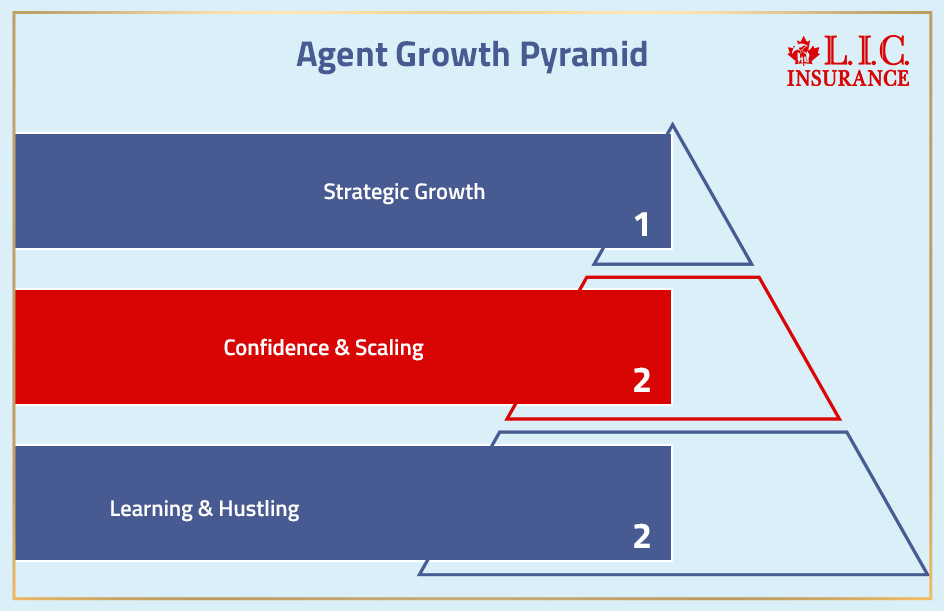
Year 1: Learning and Hustling
- Focus: Licensing, product knowledge, and generating leads
- Common Income Range: $30,000–$50,000 (results vary based on activity and time commitment)
- Traits: High rejection, slow start, wins from family/friends, lots of free training sessions
- Canadian LIC Advantage: Weekly 1-on-1 coaching, joint appointments with top agents, done-for-you marketing materials
Year 2–3: Confidence and Scaling
- Focus: Referrals, cross-selling, developing retention strategies
- Common Income Range: $55,000–$85,000
- Traits: Steady monthly sales, first referrals start coming in, growth from repeat clients
- Canadian LIC Edge: CRM access, automation tools, product-matching engine, internal client referral pool
Year 4+: Strategic Growth and Specialization
- Focus: Niching down (e.g., Super Visa, business insurance, retirement planning)
- Common Income: $100,000–$250,000+
- Traits: Team building, managing assistants, automating follow-ups, and revenue from trials
- Canadian LIC Bonus: Eligibility for performance bonuses, travel incentives, exclusive top-tier carrier contracts
What Top-Earning Agents at Canadian LIC Do Differently
We work closely with advisors earning over $200K per year — and here’s what sets them apart:
They follow a calendar-based sales system (not random outreach)
They teach, not sell — by helping people understand what they didn’t know
They upsell protection and investment together (e.g., life + CI + RRSP)
They ask for referrals early
They reinvest in their brand — websites, lead funnels, and content
Our top performers are not always the flashiest, but they are consistent, coachable, and connected.
Questions We Get from Aspiring Agents
- Is there a base salary?
Not at Canadian LIC. However, we do offer commission advances, joint case closings, and lead-sharing pools.
- Do you get benefits?
As independent advisors, you can enroll in discounted advisor benefit plans through our partners.
- Do I need to be great at sales?
You need to be great at helping people understand financial risk — the rest is teachable.
- Can I do this part-time?
Yes — but part-time input leads to part-time output. Many of our full-time agents started part-time, and we have a growth track just for them.
What New Agents Often Get Wrong
- Thinking one product will make them rich
- Relying only on family/friends
- Fearing rejection instead of building confidence
- Wasting hours on paperwork without automation
- Quitting before momentum kicks in
Success in insurance is not about hype. It’s about systems, mentorship, and follow-through.
What Canadian LIC Provides to Help You Grow
- Full access to 30+ insurance providers (life, health, investments, group)
- Dedicated onboarding coach and 90-day action plan
- One-click CRM system for tracking leads and clients
- Weekly live training (sales, product, compliance)
- Custom client proposals with illustrations and comparisons
- Co-branded marketing materials
- Lead support for qualifying agents
- Incentive trips, contests, and MDRT-track programs
Our mission isn’t to hire the most people — it’s to help the most people succeed.
Final Thoughts: Is Insurance a Good Career in 2025?
If you’re asking this question, you’re probably looking for more than just a paycheque.
You’re looking for:
- Autonomy
- Purpose
- Income you control
- The ability to make a real impact
Insurance agents in Canada could earn on average 62K, however the true earning capacity is much higher in those who are guided and committed.
We think that financial guidance must be founded on trust, and professions must be founded on openness. That is why we do not whitewash the difficult stuff – and why we do not leave you alone to it.
When you are willing to explore how this path may suit you, then we should discuss it.
Get The Best Insurance Quote From Canadian L.I.C
Call +1 416-543-9000 to speak to our advisors.
Get Quote Now
Frequently Asked Questions — Average Income of Insurance Agents in Canada
Yes — but not overnight. At Canadian LIC, we’ve seen agents hit six figures within 3–5 years by building client relationships, offering full protection solutions (life + critical illness + investments), and consistently following up. It takes structure, not luck.
Most first-year agents we coach earn between $30,000 and $50,000. Some earn more by going full-time right away and leveraging joint cases with our senior advisors. Others work part-time to get their feet wet, then scale. Either way, your income is tied to how many conversations you start, not just how many policies you sell.
At Canadian LIC, we work on a commission-based model, but with support, coaching, and lead access. Some banks or direct carriers may offer a small salary or base stipend, but your earning ceiling is limited. Our agents grow their income as their client base and skills grow, without caps.
Products with recurring revenue, like whole life insurance, segregated funds, and disability insurance, often create stronger long-term income. Critical illness and mortgage coverage offer good upfront payouts. The key is to offer full protection, not just one product.
We hear this question often. Captive agents (tied to one company) get basic tools and fewer choices. At Canadian LIC, you’re independent with full backing, which means more product options, better commissions, and unbiased advice for your clients. It’s more work upfront, but more growth long term.
No. What you need is empathy, discipline, and a willingness to learn. Some of our top performers were teachers, nurses, tech workers, and even newcomers to Canada. We teach you how to have real conversations, not push products.
No one likes starting there, but it happens. We help you go beyond your warm circle with online marketing tools, community strategies, and scripts that actually work. The goal is to build a referral-based practice that doesn’t depend on chasing friends forever.
That’s what sets Canadian LIC apart. We don’t leave you on your own with a login and a product binder. You get:
- 1-on-1 coaching
- Weekly team calls
- Joint client meetings
- Access to our quoting tools and CRM
- Fast support when you need it
You’re in business for yourself, but never by yourself.
Most new agents complete their LLQP license within 4–8 weeks. From there, you can write your first policy within a month. We help you set up fast, from contracts to quoting software to compliance.
That’s the beauty of this industry. Your license is portable, your clients are yours, and the renewal income you earn stays with you. Many agents turn this into a second-income stream, semi-retirement plan, or full-blown business — whatever fits your life.
Key Takeaways
- The average income of insurance agents in Canada ranges from $62,000 to $68,000, with top performers earning $120,000 to $250,000+ based on experience, product mix, and effort.
- First-year agents typically earn between $30,000–$50,000, especially when supported by mentorship and access to diverse product options like at Canadian LIC.
- Selling life insurance policies, term life insurance plans, and disability or investment-linked products creates opportunities for both upfront income and long-term residuals.
- Agents offering renewable products like whole life, critical illness, and segregated funds build stable income faster than those focused only on one-time sales like term life.
- Working independently with full support (like Canadian LIC’s model) allows for higher commissions and broader product choice compared to captive agency roles.
- Geographic location and licensing level (LLQP vs. MFDA) significantly impact earning potential, with Ontario, BC, and Alberta offering stronger opportunities.
- Top earners at Canadian LIC follow systems, invest in marketing, build referral pipelines, and focus on client education, not sales scripts.
- Canadian LIC provides tools like weekly coaching, CRM access, custom marketing, and lead programs to help agents grow sustainably.
- The industry offers real long-term career potential, but income is directly tied to hustle, relationship-building, and consistency, not shortcuts.
Sources and Further Reading
To support the data and insights in your blog “What is the Average Income of Insurance Agents in Canada?”, here are authoritative sources and further reading links:
Salary Data & Industry Averages
- Indeed: Insurance Agent Salary in Canada
Provides up-to-date average salary figures for insurance agents across Canada, including regional breakdowns and job listings.
https://ca.indeed.com/career/insurance-agent/salaries - PayScale: Life Insurance Agent Salary in Canada (2025)
Offers average, entry-level, and experienced agent salary data, as well as factors affecting compensation.
https://www.payscale.com/research/CA/Job=Life_Insurance_Agent/Salary - Learnedly: How Much Does an Insurance Agent in Canada Make?
Explores salary ranges by experience and product type, and discusses the impact of licensing and commission structures.
https://learnedly.com/llqp-blog/insuranceagentsalaryincanada - LinkedIn (Insurance Business Canada Magazine): How Much Do Insurance Agents Make in Canada?
Summarizes national averages and discusses commission opportunities and career potential.
https://www.linkedin.com/posts/insurance-business-canada-magazine_how-much-do-insurance-agents-make-in-canada-activity-7272702979764285440-ZAyd
Mentorship, Training, and Career Growth
- Experior Financial: Mentoring and Training for New Agents
Explains the value of mentorship, how to find a mentor, and strategies for career development in insurance sales.
https://usa.experiorfinancial.com/mentorship-program-for-agents/ - World Financial Group: Agent Training & Support
Details the training, support, and professional development resources available to new and experienced agents.
https://www.worldfinancialgroup.com/opportunity/training-support
These resources provide comprehensive information on earnings, career progression, mentorship, and the factors that influence insurance agent income in Canada.
Feedback Questionnaire:
IN THIS ARTICLE
- What Is The Average Income Of Insurance Agents In Canada
- First, Let's Break Down the Numbers
- What Influences an Agent's Income in Canada?
- Canadian LIC's Perspective: What Income Really Looks Like Year by Year
- What Top-Earning Agents at Canadian LIC Do Differently
- Questions We Get from Aspiring Agents
- What New Agents Often Get Wrong
- What Canadian LIC Provides to Help You Grow
- Final Thoughts: Is Insurance a Good Career in 2025?
Sign-in to CanadianLIC
Verify OTP